


- 1. Key Takeaways
- 2. What Does a Mobile App Consultant Do?
- 3. What a Mobile App Consultant Does at Each Stage of Your App
- 4. What You Should Have in Hand After an Engagement
- 5. Mobile App Consultant vs App Developer vs Agency
- 6. When Should You Hire a Mobile App Consultant?
- 7. How Much Does a Mobile App Consultant Cost?
- 8. How to Choose the Right Mobile App Consultant
- 9. How Boomdevs Solves the "What Should We Build?" Problem
- 10. Frequently Asked Questions
- 11. Get Your App Plan Right Before You Pay for the Build
Summarize with
You have an app idea and three agency quotes that look nothing alike. Someone tells you to talk to a mobile app consultant first, and you’re left wondering: what does a mobile app consultant do, exactly?
A mobile app consultant helps you decide what to build, how to build it, and what it should cost before development starts. Think of them as paid judgment, not extra hands.
Below, we answer “what does a mobile app consultant do?” with their duties, deliverables, and when hiring one pays off.
Key Takeaways
- The job: A mobile app consultant turns an app idea (or a struggling app) into clear decisions on scope, platform, architecture, budget, and risk.
- The output: You walk away with documents and decisions, such as a roadmap, a tech blueprint, a scoped MVP, and an estimate. You don’t get a finished app unless the consultant also builds.
- Consultant vs developer: A developer writes code you’ve already defined. A consultant helps you define the right thing before the code gets written.
- When to hire one: Before a big build, when quotes disagree wildly, when an existing app keeps breaking, or when you can’t judge technical advice yourself.
What Does a Mobile App Consultant Do?
Every decision you’d otherwise make by gut feel, a mobile app consultant makes with evidence. They check whether the idea holds up, pick the platform and stack, and shape the plan your developers will follow.
The work falls into three jobs: decide what to build, de-risk how it gets built, and oversee whether it’s being built right. Some consultants do only the first job. Others stay for all three.
The Short Answer: Judgment Before Code
So, what does a mobile app consultant do? In short, they sell you a better decision, not more output. A good test for any engagement is to ask what exists once the money is spent: an answer, or a working app.
That difference matters because mobile app consulting covers very different services under one title. One firm’s “consultant” is a senior developer who builds.
Another’s is a strategist whose work ends before any code exists. So you’ll want to read past the label to what’s actually being sold.
Core Responsibilities
Ask what does a mobile app consultant do on a real project, and the answer is usually some mix of these eight duties, roughly in this order:
- Product strategy: Clarifying who the app is for, what problem it solves, and how you’ll measure success.
- Feasibility check: Testing whether the idea works commercially and technically before you fund a build.
- Platform and tech stack choice: Native iOS and Android, or cross-platform, based on your users and budget.
- Architecture planning: Backend, APIs, data flow, and third-party integrations sized for the growth you expect.
- UX advisory: Reviewing user flows, onboarding, and wireframes, the parts of mobile app design that decide whether people stay past the first session.
- Cost and timeline estimate: Turning scope into a realistic budget with phases and milestones.
- Security and compliance: Flagging what your data and industry require, such as HIPAA for health data or PCI DSS for payments.
- Launch and post-launch guidance: App store readiness, analytics setup, and what to improve after real users arrive.
You won’t need all eight every time. A founder validating an idea needs the first four most. A company with a live app usually needs the last three.
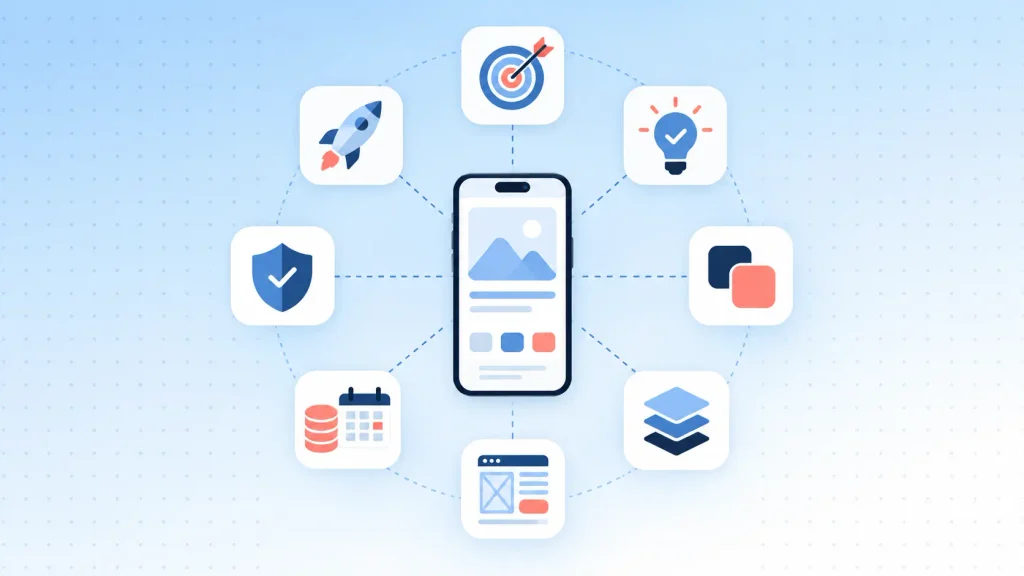
Most of these duties target the same planning gaps that explain why mobile apps fail: no clear user, the wrong stack, and no plan for life after launch.
Catching those on paper is far cheaper than catching them in the app store reviews.
Who They Work With on Your Side
A consultant sits between your business goals and your technical team. They translate what you want into specs developers can build, and translate developer pushback into plain trade-offs you can judge.
On a typical engagement, they’ll talk to:
- You (the founder or product lead): For goals, budget, constraints, and final calls.
- Designers: To check that flows and wireframes match what users actually need.
- Developers and QA: To review architecture, code quality, and testing plans.
- Other stakeholders: Sales, ops, or compliance, if the app touches their work.
The best consultants make you a sharper decision-maker, not a dependent one. By the end, you should understand why each choice was made.
What a Mobile App Consultant Does at Each Stage of Your App
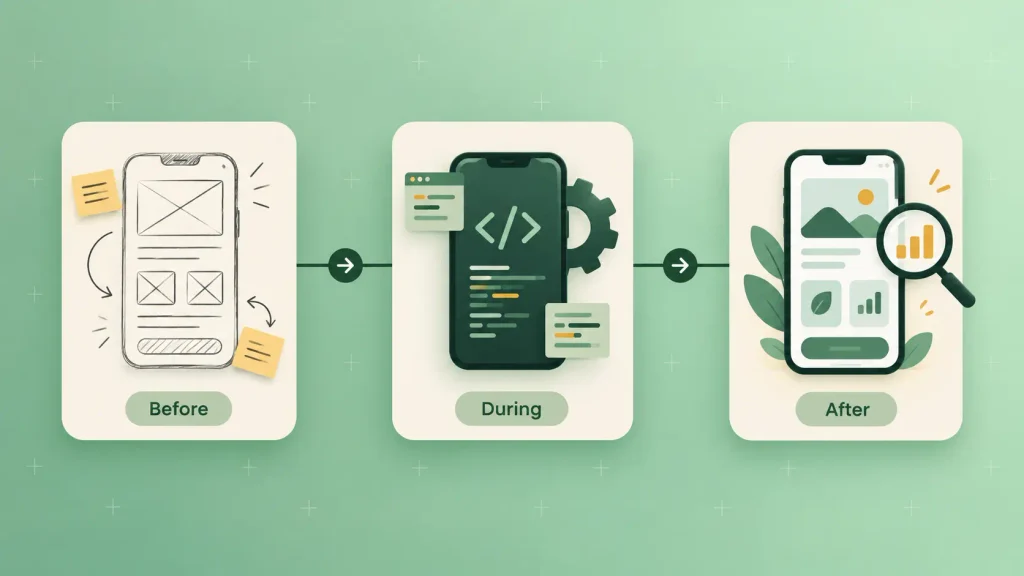
The answer to what does a mobile app consultant do changes depending on where your app is. Here’s how it maps across the lifecycle:
| Stage | What the consultant does | What you walk away with |
| Before you build | Validates the idea, scopes the MVP, picks the stack | A scoped plan and a credible estimate |
| During the build | Reviews architecture, code, and progress | Fewer surprises and an honest status read |
| After launch | Audits performance, UX, and security | A prioritized fix list or modernization plan |
The earlier you bring one in, the cheaper their advice is to act on. Changing a plan costs a meeting. Changing a shipped app costs a sprint, or several.
Before You Build: Discovery, Feasibility, and Platform Choice
Pre-build work is where a consultant earns the most. Their job here is to stop you from paying to build the wrong thing.
Expect them to run workshops on your goals, study competitors, and cut the feature list down to the smallest version that proves the idea. That trimmed scope is what becomes your mobile MVP, the first release you put in front of real users.
Platform choice also gets settled here. Native Android apps are built with Google’s toolchain, the Android SDK, while native iOS apps use Apple’s tools, so going native means two codebases to maintain.
A cross-platform framework like Flutter or React Native lets one codebase serve both stores, which usually lowers cost but can limit deep device features.
During the Build: Technical Oversight and Quality Gates
Some consultants stay on while your developers build. In this phase, they act as your technical second opinion.
That usually means reviewing pull requests or architecture decisions, checking estimates against real progress, and setting quality gates such as crash-free session targets before release.
If you’re a non-technical founder, this is often the only way to know whether “almost done” means what it sounds like.
After Launch: Audits, Modernization, and Growth
For an app that’s already live, the consultant’s main tool is the audit. They look at what you have, find what’s weak, and rank what to fix first.
A full audit usually covers five areas:
- UX and UI: Where users get confused, stuck, or drop off.
- Code quality: Maintainability, structure, and hidden technical debt.
- Security: How data is stored, sent, and protected.
- Compliance: Whether the app meets the rules of your industry and region.
- Device and OS compatibility: How the app behaves across phones and operating system versions.
When the audit shows the foundation itself is the problem, the next step is application modernization: refactoring, a redesign, or a move to a newer stack.
Once that’s done, regular mobile app maintenance and support keep the improvements from eroding with every OS update.
Advising on AI Features in Mobile Apps
AI features are now a regular part of mobile app consulting conversations, and few guides on this topic cover them. A consultant helps you decide whether AI belongs in your app at all, and if so, where it should run.
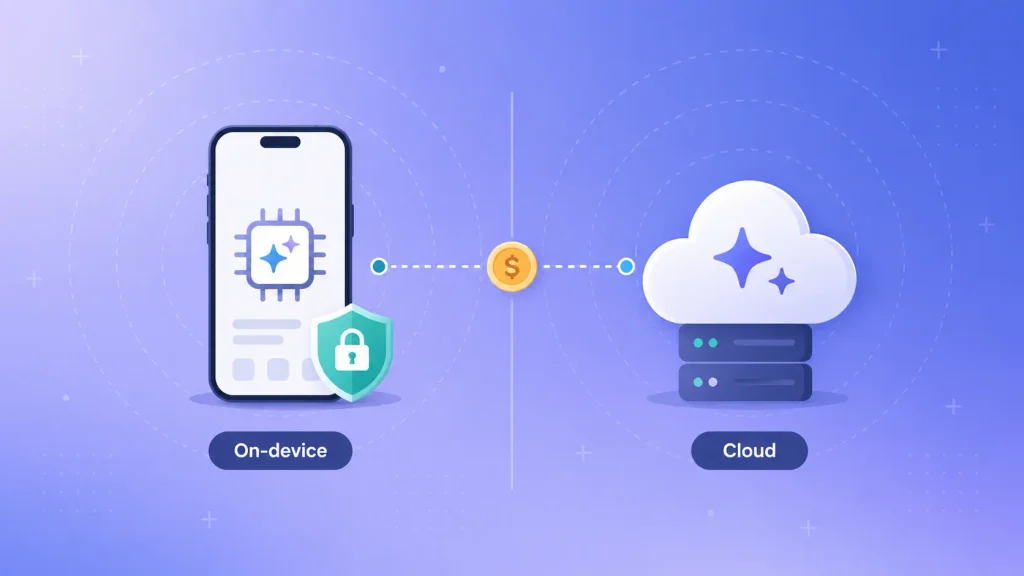
The core questions they’ll work through with you:
- On-device or cloud: On-device models (via Core ML on iOS or ML Kit on Android) work offline and keep data local. Cloud models are more capable, but every call costs money and adds latency.
- Cost per user: A feature that calls a paid AI API on every tap can quietly break your unit economics as you grow.
- Privacy and disclosure: What user data the feature sends out, and how you explain that to users and app stores.
- Fallback behavior: What the app does when the AI is slow, wrong, or unavailable.
Adding a model to an app you already have is mostly an AI integration problem, not a rebuild, and a consultant can tell you which one you’re facing. The honest answer is sometimes “not yet,” when a simpler rule-based feature does the job better.
What You Should Have in Hand After an Engagement
Before you sign up for mobile app consulting, ask one question: what will I hold at the end? If the answer is vague, the engagement will be too.
For a pre-build engagement, a solid deliverable set looks like this:
- Product brief: Goals, target users, success metrics, and what’s deliberately out of scope.
- Scoped MVP feature list: Prioritized, with “must have” clearly separated from “later.”
- Technical blueprint: Recommended platform, stack, architecture diagram, and the reasoning behind each choice.
- UX artifacts: User flows and wireframes, or a clickable prototype.
- Estimate and roadmap: Cost range, phases, milestones, and the assumptions behind the numbers.
- Risk register: What could go wrong (integrations, compliance, third-party dependencies) and how to reduce it.
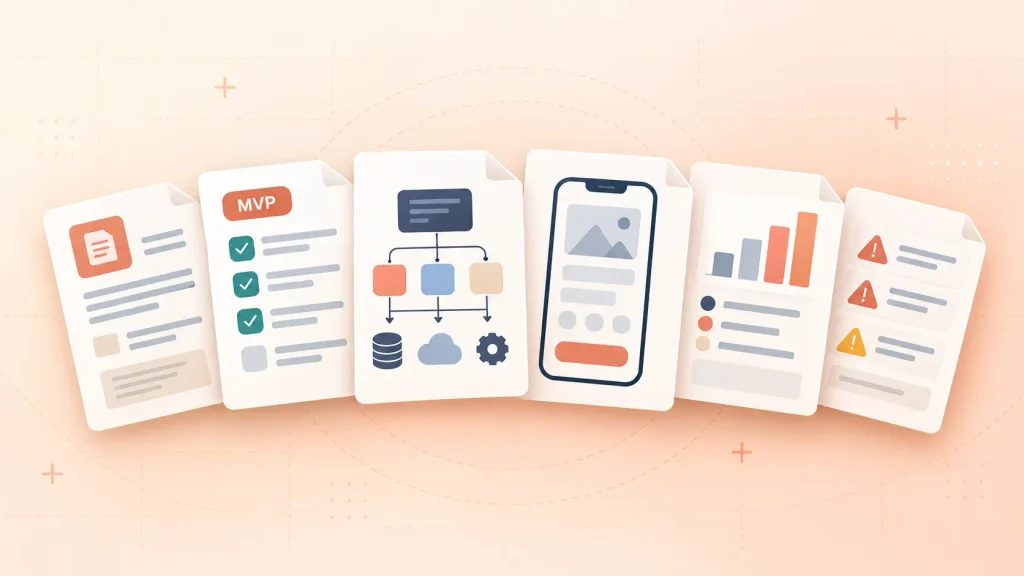
For an existing app, swap the first three for an audit report and a ranked action plan. Either way, these documents should be good enough that any competent team could build from them, not only the consultant’s own.
That last point is your best quality check. If the deliverables only make sense to the person who wrote them, you’ve bought a sales pitch, not a plan.
Mobile App Consultant vs App Developer vs Agency
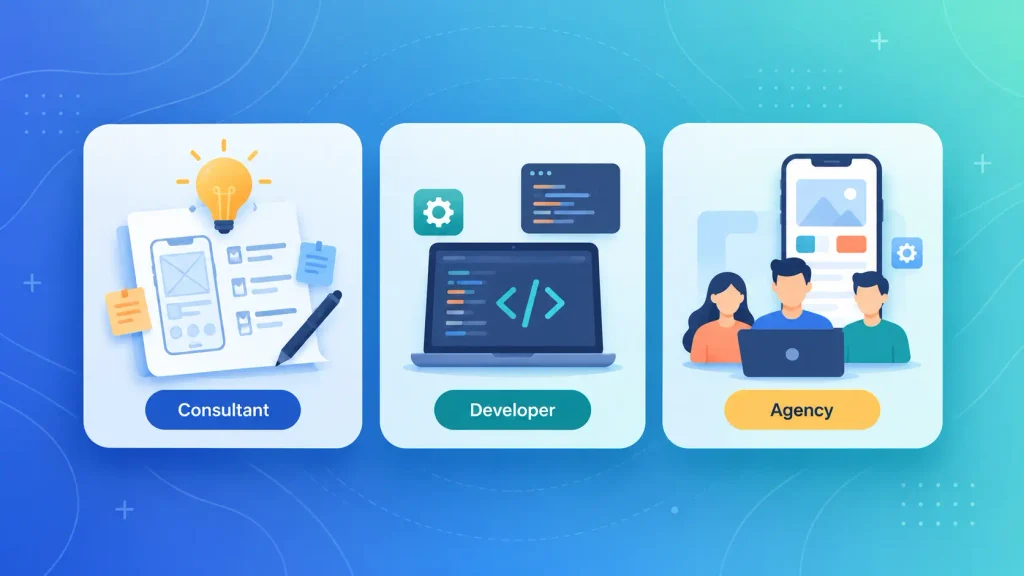
These three roles overlap, which is why the decision gets confusing. Mobile app consulting is really a specialized branch of software development consulting, focused on one product rather than your whole tech setup. Here’s how it compares with the other two options:
| Who | What you’re buying | What it ends in | Best when |
| Mobile app consultant | Expert judgment and planning | Decisions and documents | You’re unsure what or how to build |
| App developer | Hands to write code | Working features | Scope is already clear |
| Development agency | A full team for the build | A shipped app | You want design, build, and QA in one place |
In practice, many agencies offer consulting as the first phase of a build. That’s fine, as long as you know the advice comes from the same people who’d like to sell you the build.
The handoff is the moment that matters. Once the plan is settled, a mobile app development team takes the blueprint and turns it into designed, coded, and tested screens, and a good consultant makes that handoff boring.
Do Mobile App Consultants Write Code?
Sometimes. What does a mobile app consultant do beyond advice? That depends on the seller, and the job title won’t tell you.
Freelance consultants and staffing marketplaces often place senior developers who advise and build. Agencies usually treat consulting as the planning phase before their own team codes. Independent advisory firms tend to stop at documents, audits, and recommendations.
So I’d suggest asking directly in the first call: “Will you write any of the code, or only advise?” Both answers are fine. Not knowing which one you’re paying for is the problem.
When Should You Hire a Mobile App Consultant?
You should hire one when the cost of a wrong decision is bigger than the consultant’s fee. That’s usually true before a large build and when a live app is losing users or money.
Signs You Need One
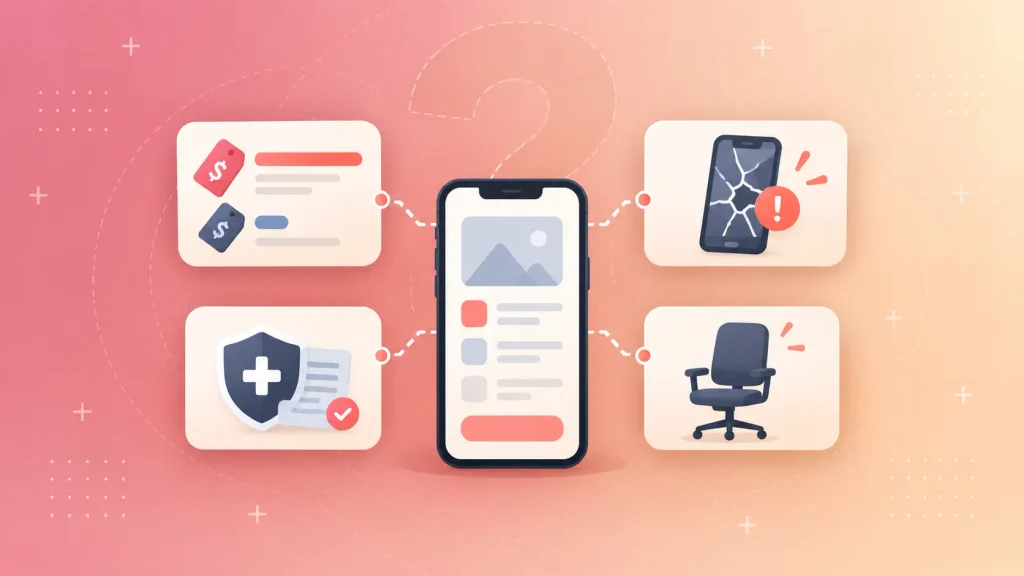
A consultant is likely worth it if any of these sound familiar:
- Quotes don’t agree: Two agencies quote very different prices and timelines for the “same” app, and you can’t tell who’s right.
- You can’t judge technical advice: Your developers recommend a stack or a rebuild, and you have no way to check it.
- The app keeps breaking: Crashes, slow screens, or bad reviews keep coming back after “fixes.”
- You’re entering a regulated space: Health, finance, or payments, where compliance mistakes are expensive.
- Your developer left: You own an app nobody on your team fully understands.
Any one of these is a decent reason. Two or more, and skipping the consultant usually costs you more than hiring one.
When a Consultant Is the Wrong Hire
A consultant isn’t always the right call, and good ones will say so. Here’s when your money is better spent elsewhere:
- You already know what’s broken: If you can name the bug, pay for the fix. A separate opinion adds a step without adding much.
- You need daily hands, not advice: If the plan is clear and you need features shipped, hire developers or a team.
- You need ongoing leadership: If you need someone owning technical decisions every week, a fractional CTO fits better than a one-off engagement.
Being honest about this saves you money and a few weeks. It also tells you something about any consultant who insists you need them regardless.
How Much Does a Mobile App Consultant Cost?
Consulting fees depend on scope, seniority, and region, so most firms quote per engagement rather than publishing a rate card. The most useful way to judge a consulting fee is against the build it’s protecting.
For scale, Clutch’s mobile app pricing guide reports that most app projects reviewed on its platform cost between $10,000 and $49,999, with app development companies typically charging $25 to $49 per hour.
A consulting phase is a slice of that kind of budget, spent to make sure the rest goes to the right features.
You’ll usually see one of three billing models:
| Engagement model | How it’s billed | Best for |
| Hourly | Per hour of review or advice | Quick audits, second opinions, code reviews |
| Fixed price | One price for a defined scope | Discovery, feasibility studies, MVP scoping |
| Retainer | Monthly fee for ongoing access | Oversight during a build or after launch |
Fixed-price discovery is the most common starting point for new apps, since you know exactly what you’ll get. Hourly work suits a live app where you need a fast, focused read.
A few things push any quote up or down:
- Scope: A single UX review costs far less than full discovery plus architecture.
- Industry rules: Health and finance apps need compliance expertise, which raises the fee.
- Seniority: Consultants who’ve shipped similar apps charge more, and usually save more.
- Location: Rates vary widely between North America, Europe, and South Asia.
The cost question that matters most isn’t the fee itself. It’s what a wrong platform choice or an unvalidated feature set would cost you to undo later.
How to Choose the Right Mobile App Consultant
The right consultant has shipped apps like yours, explains trade-offs in plain language, and tells you things you’d rather not hear. You can test for all three before you sign anything.
What to Prepare Before the First Call
You’ll get far more from a first conversation if the consultant can see your situation clearly. An evening of prep usually doubles the value of the call:
- Your goal in one sentence: What you want to be true in three to six months.
- Your target users: Who they are and what problem the app solves for them.
- Your budget range and deadline: Even rough numbers change the advice.
- Any existing assets: Wireframes, a pitch deck, competitor apps you admire, or past quotes.
- For a live app: A test login, read-only code access, and a list of your top three problems.
The more of this you bring, the less of the first call goes to basic fact-finding. You’ll spend that time on actual advice instead.
Questions to Ask
These questions separate experienced consultants from polished salespeople:
- Which apps similar to mine have you worked on, and what happened after launch?
- Will you write code, or only advise?
- What exactly will I have in hand when the engagement ends?
- Who will do the work: you, or a junior team member?
- What would you tell me not to build?
- How do you handle it if your recommendation turns out wrong mid-project?
Question five is the most revealing. A consultant who can’t name anything to cut is probably planning to sell you all of it.
Red Flags to Watch For
Some warning signs should end the conversation:
- Promises before questions: Committing to a price or timeline before understanding your goals.
- One stack for everything: Recommending the same framework for every client, whatever the use case.
- Vague deliverables: “Strategic guidance” with no named documents at the end.
- No real case studies: Polished screenshots but no results, numbers, or references you can call.
- IP left unclear: If ownership of the plans, designs, and code isn’t spelled out in the contract, walk away.
None of these are subtle once you know to look. Trust the pattern over the pitch.

How Boomdevs Solves the “What Should We Build?” Problem
Boomdevs runs mobile app consulting as a fixed first phase: discovery, feasibility, platform choice, and a scoped plan you own outright. With 10+ years of experience and 3.5K+ projects delivered, the team has seen most of the ways an app plan can go wrong.
The deliverables are written so any team can build from them. If you choose to build with Boomdevs afterward, the same people carry the plan into iOS, Android, Flutter, or React Native development. If you don’t, you still keep everything.
Frequently Asked Questions
Is a mobile app consultant worth it for a startup?
Usually, yes, if you’re about to spend real money on a build. A consultant helps you cut the feature list down to what proves your idea, which often saves more than the fee. If your budget is very small, a short paid review of your plan is a cheaper middle ground.
What is the difference between mobile app consulting and mobile app development?
Mobile app consulting decides what to build and how, through strategy, feasibility, architecture, and estimates. Mobile app development is the actual design, coding, testing, and launch. Many firms offer both, with consulting as the first phase.
Can a mobile app consultant audit my existing app?
A strong consultant combines hands-on mobile engineering experience (native and cross-platform) with product and business thinking. They should understand architecture, UX, security, and app store rules, and explain all of it to a non-technical founder clearly.
What skills does a mobile app consultant need?
Yes. An audit is one of the most common engagements for live apps. It typically reviews UX, code quality, security, compliance, and device compatibility, then ranks what to fix first.
How long does a mobile app consulting engagement take?
It depends on scope. A focused review of an existing app can take days, while full discovery for a new product usually runs several weeks. Ask for a timeline tied to specific deliverables, not just a number of hours.
Get Your App Plan Right Before You Pay for the Build
Most expensive app mistakes are planning mistakes that only show up after launch. A few weeks of the right advice up front can save you months of rework later.
Now that you know what does a mobile app consultant do, the next step is simple: if you’d like a clear scope, a stack recommendation, and an honest estimate, book a free consultation with Boomdevs and let’s scope it right.