


- 1. Why Mobile Apps Fail?
- 1. You Built Something Nobody Urgently Needs
- 2. You Built Everything Before Testing Anything
- 3. The First Session Doesn't Deliver Value
- 4. The App Is Confusing or Overloaded
- 5. It Crashes, Lags, or Breaks on Real Devices
- 6. There's No Reason to Come Back
- 7. You Launched Into Silence
- 8. It Looks Like Every Other App in the Category
- 9. The Business Model Doesn't Add Up
- 10. You Stopped Listening After Launch
- 11. The Wrong Build Partner or Tech Foundation
- 2. What Mobile App Failure Looks Like in Numbers (2026)
- 3. How to Tell Which Reason Is Killing Your App
- 4. How Boomdevs Fixes Apps Before They Fail
- 5. Frequently Asked Questions
Summarize with
Your app went live last month. The first wave of installs felt like proof. Now most people open it once, and nobody comes back.
If that sounds familiar, you’re not alone, and it’s rarely bad luck. Below are the 11 reasons why mobile apps fail. They come from startup post-mortems, fresh 2026 retention data, and the rescue projects that keep landing on our desk.
If three or more sound like your app, you know where to start.
Key Takeaways
- Most apps don’t fail at launch. They fail in the first few weeks, when users decide the app isn’t worth reopening.
- The root cause is usually weak product-market fit, not bad code. Running out of money is how the story ends, not why it happens.
- On iOS, the average app keeps only 5.3% of its users by Day 30. Android is lower, at 3.8%.
- Getting new users to one meaningful action in their first session is the biggest lever you control.
- Nearly every failure on this list is cheaper to prevent before launch than to fix after it.
Why Mobile Apps Fail?
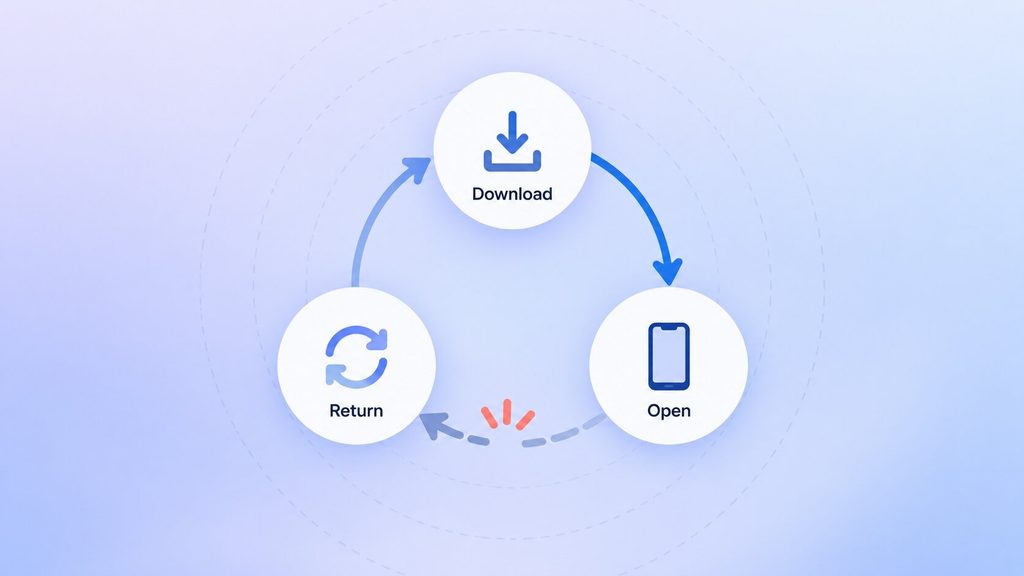
Mobile apps fail when they never earn a place in someone’s routine. The download happens. The habit never forms, and every reason below is a different way of breaking that loop.
The data points upstream, too. CB Insights studied 431 VC-backed startups that shut down since 2023. Running out of capital topped the list at 70%, but poor product-market fit (43%) explains why the money dried up in the first place.
So the reasons apps fail rarely start with the tech. They start with what you chose to build, how the first session feels, and whether anything brings users back. Here are all 11, roughly in the order they tend to hit.
1. You Built Something Nobody Urgently Needs
People liking your idea isn’t the same as people needing your app. Friends say “I’d use that.” Then they don’t.
That gap between polite interest and real need is where most mobile app failure begins. An app earns its spot when it fixes a frequent, annoying problem better than whatever people do today. If the current workaround is “good enough,” you’re competing with inertia, and inertia usually wins.
You’ll likely recognize the warning signs:
- Downloads without repeat opens: people try it once because nothing pulls them back.
- “Nice idea” feedback: users praise the concept but can’t say when they’d actually use it.
- Workarounds still win: people keep using a spreadsheet, a WhatsApp group, or a notes app instead.
- Growth stops when ads stop: paid spend is doing all the work.
I’d suggest testing demand before a single screen gets designed. Talk to real target users, put up a landing page, and see who joins a waitlist. If nobody signs up for the waitlist, they won’t install the app either. If you’d rather not guess, it can help to bring in a mobile app consultant before you build.
2. You Built Everything Before Testing Anything
Version one often ships with every feature from the pitch deck. It feels thorough. In practice, it means months of work before you learn whether anyone cares.
Over-engineering burns the two things an early app can’t spare: budget and time to learn. Every extra feature is also one more thing to test, maintain, and explain during onboarding.
A lean MVP flips the order. You ship the one workflow that proves your core value, watch how real users behave, then build what the data asks for. A focused mobile MVP tells you more, sooner, than a full build ever will.
The same logic holds if your app leans on AI features. This walkthrough of a validation-first product development process shows how to stage the risk.
3. The First Session Doesn’t Deliver Value
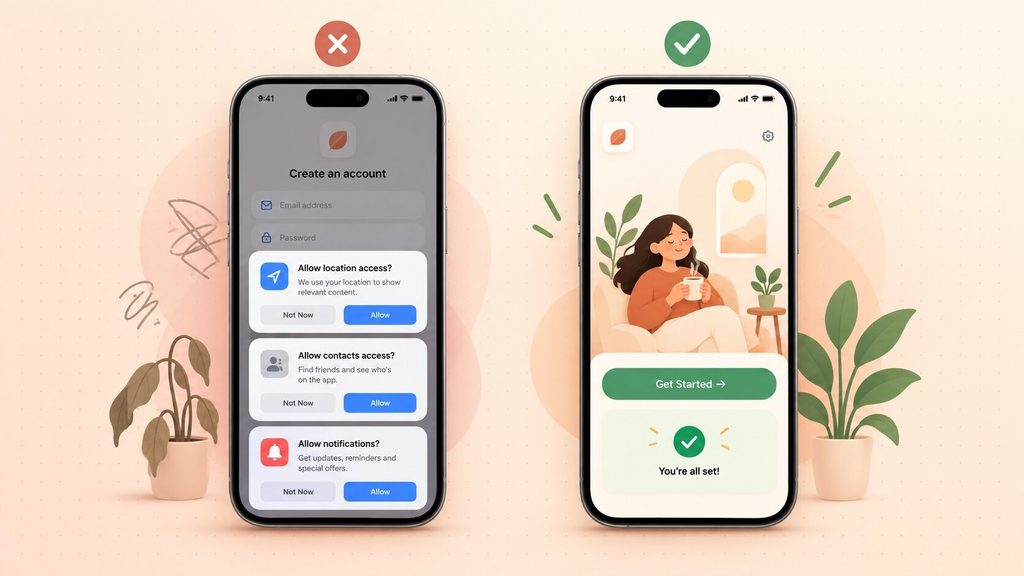
The first few minutes decide more than any marketing campaign. If someone can’t reach the “oh, this is useful” moment quickly, they leave. Most never return.
UXCam’s research makes the point sharply: users who complete a meaningful action in their first session are 2 to 3 times more likely to still be active on Day 30. That’s why time to value is the early metric worth obsessing over.
Weak user onboarding tends to break in the same places:
- Sign-up walls: you ask for an account before showing anything worth signing up for.
- Permission overload: location, contacts, and notifications, all requested on the first screen.
- Tutorial slideshows: swipe-through cards that users skip without reading a word.
- No clear first win: the home screen shows everything, so it points to nothing.
The fix is usually subtraction. Let people try the core action first, then ask for sign-up and permissions at the moment each one makes sense.
4. The App Is Confusing or Overloaded
Feature creep is sneaky. Each addition makes sense in a planning meeting. Together, they bury the one action users came for.
Clutter shows up as extra taps, hidden menus, and screens trying to do three jobs at once. Users don’t study your interface. If they can’t find something at a glance, they assume it isn’t there.
It’s worth running a blunt test. Hand the app to someone who has never seen it and ask them to finish your core task without help. Every pause, squint, and wrong tap goes on your redesign list, and these mobile UI/UX best practices can help you decide what to fix first.
If the same usability problems keep coming back, the issue may be the design team itself, so it’s worth learning how to vet a UX design partner before your next redesign.
5. It Crashes, Lags, or Breaks on Real Devices
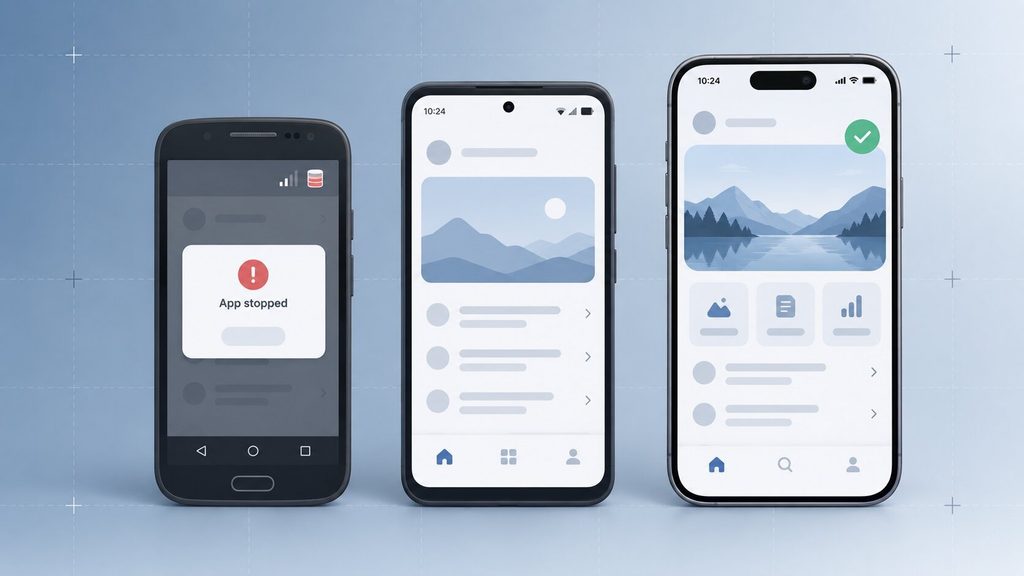
Users have almost no patience for bugs. In an older but still widely cited Qualitest survey, 88% of users said they’d try a problematic app three times or fewer before deleting it.
The trap is testing only on your team’s phones. Your real users are on older Android models, patchy mobile data, and nearly full storage. An app that flies on a new flagship can stutter everywhere else.
Solid beta testing should cover:
- A realistic device spread: budget and older phones, not just the latest models.
- Real network conditions: slow and dropping connections, not only office Wi-Fi.
- Crash monitoring from day one: so your crash rate is a number you watch, not a surprise in the reviews.
One bad release can undo months of good ratings. Testing is cheaper than rebuilding that trust.
6. There’s No Reason to Come Back
Some apps deliver value once, then have nothing new to offer. The user got what they came for. Why would they open it again?
That’s what a weak app retention rate looks like up close. Retention isn’t a marketing add-on. It gets designed into the product through saved progress, content that changes, and reminders tied to something the user actually cares about.
Ask yourself one uncomfortable question: what’s different in your app tomorrow for this user? If the honest answer is “nothing,” people will drift away, and churn will quietly eat whatever growth you paid for.
Push notifications won’t paper over that gap. Irrelevant pings tend to speed up uninstalls, not prevent them.
7. You Launched Into Silence
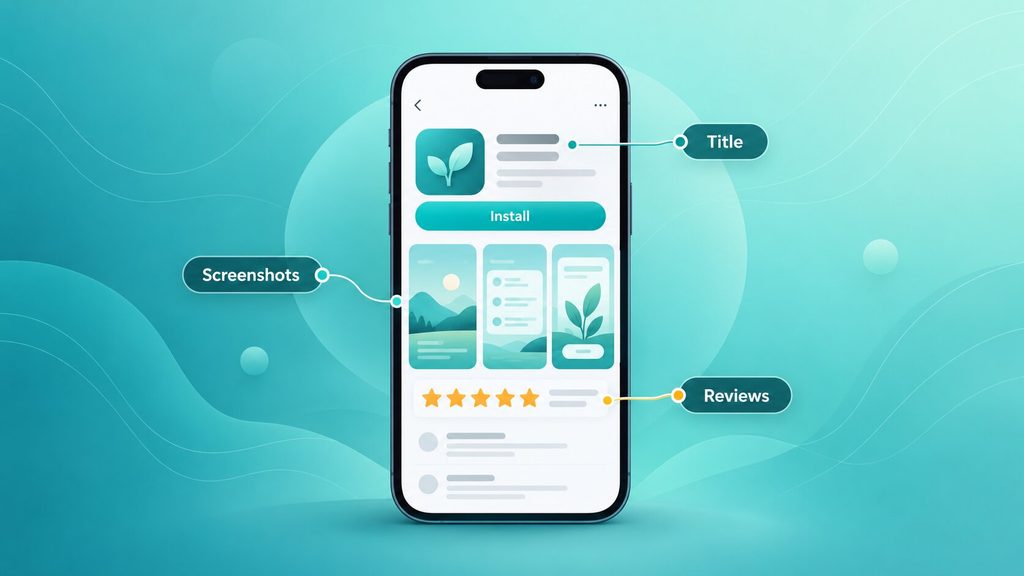
“Build it, and they’ll come” doesn’t hold up in app stores this crowded. Good apps sink without a launch plan all the time.
Discovery starts well before release. You need an audience waiting, a store listing that converts, and a clear reason to pick you over the top result in someone’s search.
The most common launch mistakes look like this:
- No pre-launch audience: zero waitlist, zero early testers, zero reviews on day one.
- Weak app store optimization (ASO): a vague title, generic screenshots, and keywords nobody searches.
- Talking to everyone: broad messaging that lands with no one in particular.
- Paid-only growth: ads bring installs, but nothing keeps them coming once spend stops.
Organic discovery compounds over time. Paid acquisition only rents attention. You’ll want both, but in that order.
8. It Looks Like Every Other App in the Category
Your users don’t compare your app to your roadmap. They compare it to the app already on their phone. If yours isn’t clearly better at something specific, habit wins.
Differentiation doesn’t require a brand-new category. You can be faster, simpler, built for a narrower audience, or better at the one moment that matters most. What you can’t be is “the same, but ours.”
Here’s a quick gut check. Try finishing the sentence “People switch to us because…” in under 10 words. If you can’t, neither can your store listing.
9. The Business Model Doesn’t Add Up
Plenty of apps that users genuinely like still shut down. The math just never worked. The same CB Insights analysis tied 19% of recent failures to unsustainable unit economics.
Usually the monetization strategy was an afterthought. Either the free tier gives away everything worth paying for, or the paywall shows up before users trust the product. Both leave you with users who cost money and return none.
Budget is the other half. The build is only the first bill. Hosting, OS updates, support, and marketing keep going long after launch, and underfunding them is how decent apps slowly rot.
10. You Stopped Listening After Launch
Launch is when the real feedback starts. Yet many teams ship, celebrate, and jump to the next feature idea without checking how people use what’s already live.
Without analytics, you’re guessing. Cohort analysis shows whether each new group of users sticks around longer than the last one. Reviews and support tickets tell you why they don’t.
Updates matter just as much. Every major iOS and Android release can break something that worked yesterday. Planning for ongoing app maintenance and support keeps a working app from quietly turning into a broken one.
11. The Wrong Build Partner or Tech Foundation
Cheap early decisions get expensive later. Rushed architecture turns into technical debt: new features take longer, fixes break unrelated screens, and performance drops as your user base grows.
Your development partner shapes most of that. A team that only takes orders builds exactly what you asked for, including the parts you shouldn’t have. A good partner pushes back.
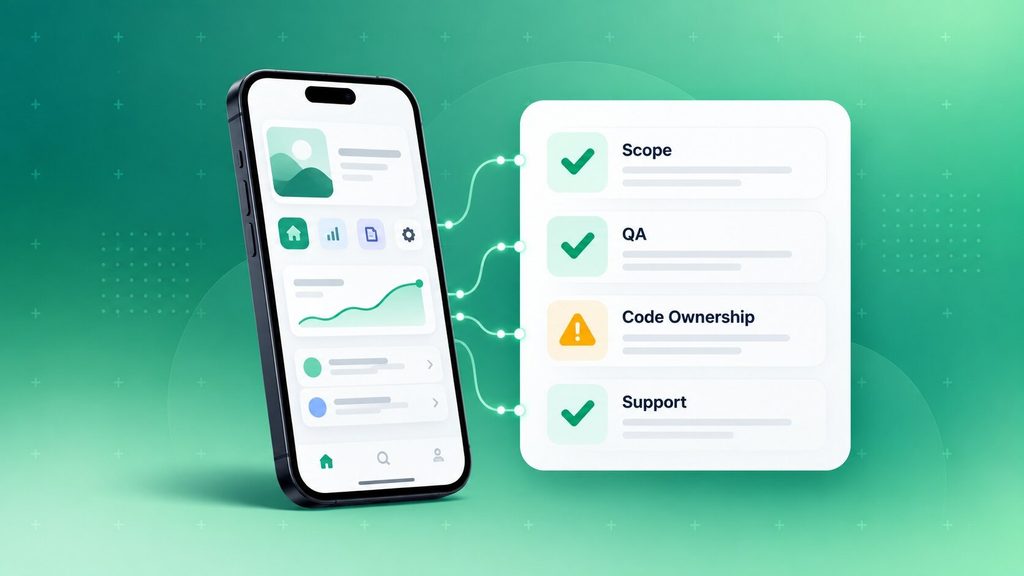
Before you sign anything, it’s worth asking:
- What would you cut from version one? Good partners have opinions about scope.
- How do you test before release? Look for real devices and a defined QA process.
- Native or cross-platform, and why? A cross-platform Flutter build suits many startups, but the answer should depend on your app.
- Who owns the code and the store accounts? If that answer is fuzzy, walk away.
- What happens after launch? Support should be planned, not improvised.
The specific answers matter less than whether the team has clearly thought about the questions before.
What Mobile App Failure Looks Like in Numbers (2026)
Before you decide your app is failing, it helps to know what “normal” looks like. Even healthy apps lose most new users within a month.
Retention Benchmarks by Platform
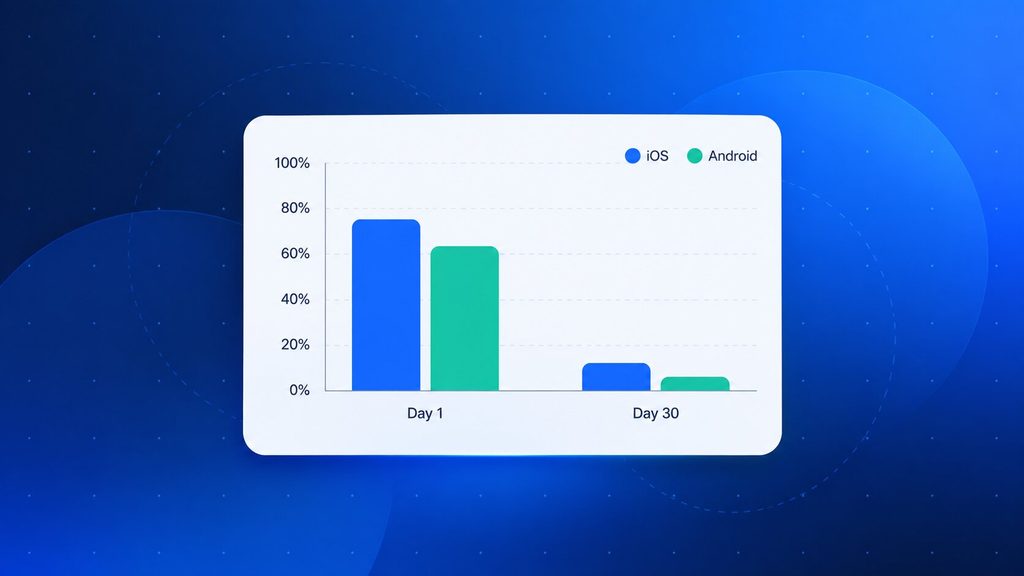
Here’s where the average app lands, based on the latest benchmark data from Business of Apps and UXCam‘s 2026 figures:
| Metric | Benchmark | Source |
| iOS Day 1 retention | 25.4% | AppsFlyer via Business of Apps |
| iOS Day 30 retention | 5.3% | AppsFlyer via Business of Apps |
| Android Day 1 retention | 20.2% | AppsFlyer via Business of Apps |
| Android Day 30 retention | 3.8% | AppsFlyer via Business of Apps |
| Day 30 median, all categories | 4% | UXCam |
| Day 30, strong performers | 5 to 8% | UXCam |
So a 4% Day 30 number isn’t automatically a crisis. What matters is your category’s benchmark and whether each new cohort retains better than the one before it.
How Fast Users Uninstall Apps
Uninstalls are the sharper signal. AppsFlyer’s latest uninstall report found that more than one in every two installed apps gets removed within 30 days. That data covers Android only, since iOS uninstall tracking has been limited since iOS 15.
Category makes a big difference. Dating and gaming apps carry the highest uninstall rate, while travel (29.2%) and news apps (27.3%) sit at the low end.
How to Tell Which Reason Is Killing Your App
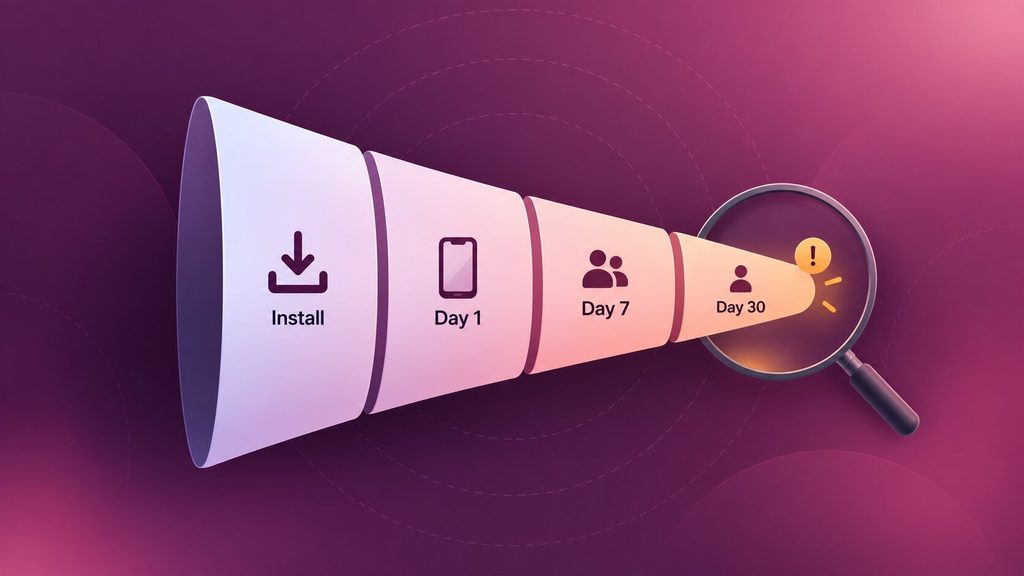
You probably don’t have all 11 problems. Most struggling apps have two or three, and the symptoms point straight to them if you know where to look.
You can use this table to match what you’re seeing to its likely cause:
| What you’re seeing | Likely cause | What to check first |
| Installs, but almost no Day 1 returns | First-session value (#3) | Onboarding completion rate |
| Good Day 1, steep drop by Day 7 | No return loop (#6) | Repeat use of the core feature |
| Few installs despite good reviews | Discovery and ASO (#7) | Store listing conversion rate |
| Reviews mentioning crashes | Performance and QA (#5) | Crash rate by device and OS |
| Users stay, revenue doesn’t | Business model (#9) | Free-to-paid conversion |
| Every release takes longer | Technical debt (#11) | Time to ship small changes |
| Nobody sticks, whatever you change | No real need (#1) | User interviews, not dashboards |
Start with the row that matches your biggest drop-off. Fixing one root cause usually moves more than tweaking five symptoms. If you’d like a second pair of eyes on where your app is leaking users, mobile app consulting is built for exactly that kind of diagnosis.
How Boomdevs Fixes Apps Before They Fail
Most of the reasons above trace back to decisions made before anyone writes code. That’s where Boomdevs puts the effort.
Across 10+ years and 3.5K+ delivered projects, the pattern has stayed consistent. Here’s what it looks like in practice:
- Validation before build: we pressure-test the idea and cut version one down to what proves value.
- QA on real devices: testing covers the older phones and weak networks your users actually have.
- Support after launch: analytics, updates, and fixes are planned from the start, not bolted on later.
It’s less glamorous than a big launch. It’s also what keeps apps alive past Day 30.
If you’re planning an app, or watching one lose users right now, book a free consultation with Boomdevs and get an honest read on what to fix first.
Frequently Asked Questions
Do Most Mobile Apps Fail?
Most apps fail to hold on to their users, yes. Across categories, the median app keeps only about 4% of users by Day 30. Business failure is harder to measure, but low retention is where most of it starts.
What Percentage of Apps Fail?
There’s no reliable single number. Figures like “99.5% of apps fail” circulate widely without clear, current sources. Retention is the better measure: the average iOS app keeps about 5.3% of users by Day 30, and Android keeps about 3.8%.
Why Do People Uninstall Apps?
The usual reasons are no clear value in the first session, bugs or crashes, and too many demands up front, like forced sign-ups and permission requests. According to AppsFlyer, more than half of installed Android apps are removed within 30 days.
What Is a Good App Retention Rate?
Every day brings an opportunity to refine skills and adapt to new challenges. This week, I explored improving API performance by optimizing response payloads and implementing caching strategies. Understanding these techniques has enhanced my approach to building scalable and efficient applications.
Can a Failing App Be Saved?
Often, yes, as long as people genuinely need what it does. Apps held back by onboarding, performance, or discovery problems can recover with focused fixes. Apps with no real market need rarely do, and pivoting early is usually the smarter move.