


- 1. Key Takeaways
- 2. How to Build a Minimum Viable Product in 7 Steps
- Step 1: Name the Problem and the One User Who Has It
- Step 2: Write Down Your Riskiest Assumption
- Step 3: Set Success Metrics and a Kill Threshold Before You Build
- Step 4: Pick the Cheapest MVP Type That Answers Your Question
- Step 5: Map the Core User Flow and Cut Features With MoSCoW
- Step 6: Build the Core Flow on a Boring, Proven Stack
- Step 7: Launch to Early Adopters, Measure, and Decide
- 3. Which MVP Build Path Fits Your Situation?
- 4. What to Leave Out of Your Minimum Viable Product
- 5. How AI Changes the MVP Build in 2026 (and What It Doesn't)
- 6. Common Mistakes When You Build a Minimum Viable Product
- 7. How Long and How Much: A Quick Reality Check
- 8. How Boomdevs Helps You Build an MVP That Proves Something
- 9. Frequently Asked Questions
Summarize with
You have a feature list with 40 items on it. A developer quoted you six months. Your runway covers eight, if nothing slips.
That’s usually when you realize you don’t need the whole product yet. You need proof.
Here’s how to build a minimum viable product that tests your riskiest idea with real users. You’ll get seven steps, the right MVP type for your question, and a list of what to leave out.
Key Takeaways
- An MVP is an experiment, not a smaller product. It exists to test one assumption with real users.
- Write your success metric and your kill threshold down before anyone writes code.
- Pick the cheapest of the types of MVP that can still answer your question. Sometimes that’s a landing page, not an app.
- Cut any MVP features that don’t help prove the assumption. Your must-have list should feel uncomfortably short.
- After launch, make a clear call: double down, pivot, or stop.
How to Build a Minimum Viable Product in 7 Steps
The short answer to how to build a minimum viable product: name one problem, find the riskiest assumption behind your solution, and ship the smallest thing that tests it with real users. Everything else waits.
If you want the full definition first, start with what an MVP is in software development. Then come back here for the build itself.
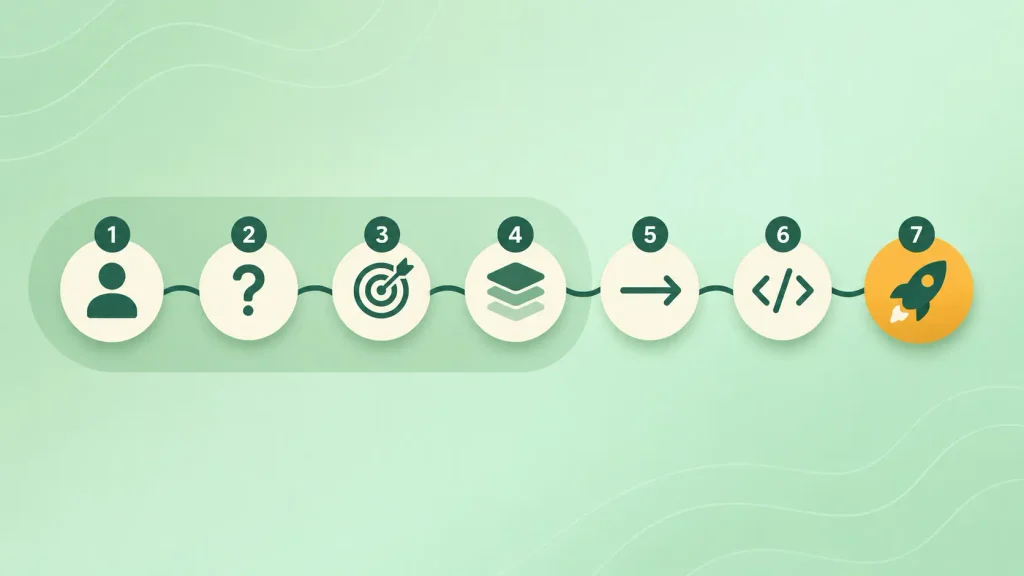
The MVP development process, in seven steps:
- Name the problem and the one user who has it.
- Write down your riskiest assumption.
- Set success metrics and a kill threshold.
- Pick the cheapest MVP type that answers your question.
- Map the core user flow and cut features.
- Build the core flow on a proven stack.
- Launch, measure, and decide.
When you’re figuring out how to build an MVP, steps one to four cost almost nothing. They’re also where most of the savings happen, so don’t rush them.
Step 1: Name the Problem and the One User Who Has It
The first step in how to build an MVP is surprisingly simple. Write a single sentence: “[Product] helps [specific user] do [specific outcome] without [specific pain].” If you need two audiences to fill it in, you’re describing version three.
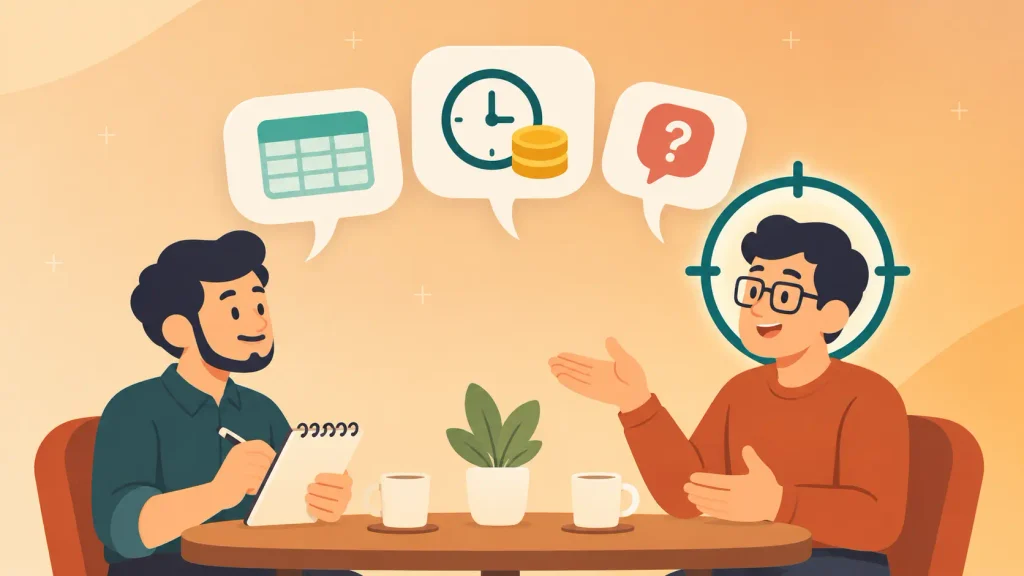
Then you’ll want to talk to people who actually have the problem. Steve Blank, whose customer development work shaped the MVP idea, puts it bluntly in his path to the minimum viable product: get out of the building and test your guesses against real customers.
In those conversations, you’ll want to learn:
- How they handle it today: the spreadsheet, the workaround, the tool they half-like.
- What it costs them: time, money, missed revenue, or just daily frustration.
- What they’ve already tried: if the answer is “nothing,” the pain may not be real.
- Who pays for a fix: the user and the buyer are often different people.
Friends and family don’t count here. If you’re not sure where to find real prospects, structured user research and market insights can shortcut the search.
Step 2: Write Down Your Riskiest Assumption
Your product idea rests on a stack of guesses. Your MVP should test the one most likely to kill the business if it’s wrong.
Here’s a simple way to find it:
- List every assumption your idea depends on. “Users will upload their own data.” “Clinics will pay monthly.” “People trust a new brand with payments.”
- Score each one on impact (how bad if you’re wrong) and on uncertainty (how little you actually know).
- Multiply the two scores.
- Pick the top one. That’s what your MVP tests.
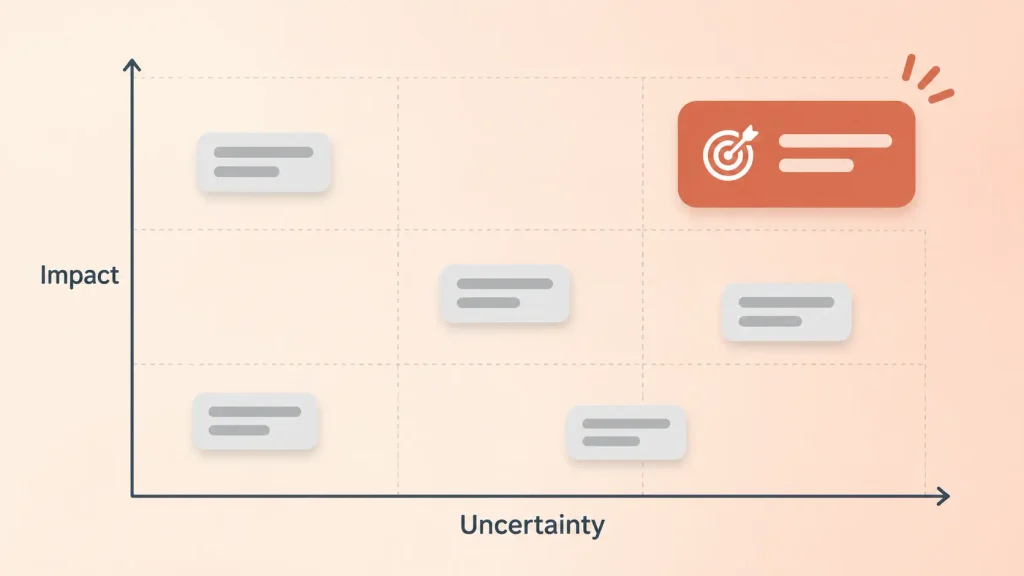
Most founders discover their riskiest assumption isn’t technical at all. It’s usually about demand or willingness to pay. If you haven’t checked demand yet, it’s worth reading how to validate an app idea before going further.
Step 3: Set Success Metrics and a Kill Threshold Before You Build
You’ll want to decide what “it worked” means before you launch. It’s the step founders skip most often when they learn how to build a minimum viable product, and it’s the one that keeps you honest. Otherwise, every result looks like a partial win, and you keep building on hope.
Two or three metrics tied to your assumption are plenty. Next to each, write the number that would make you stop:
| Metric | What it tells you | The decision it drives |
| Activation | Do new users reach the core value? | Fix onboarding or rethink the flow |
| Week-one retention | Do they come back without a nudge? | Persevere or question the problem |
| Conversion to paid or pre-order | Will anyone pay? | Validate the business, not just interest |
| Core action completion | Does the main feature get used? | Keep, simplify, or cut it |
That last column is the whole point. A metric that doesn’t change a decision is just a dashboard.
Here’s the uncomfortable part. I’d suggest writing your kill threshold where your co-founder or investor can see it, because that makes moving the goalposts much harder.
Step 4: Pick the Cheapest MVP Type That Answers Your Question
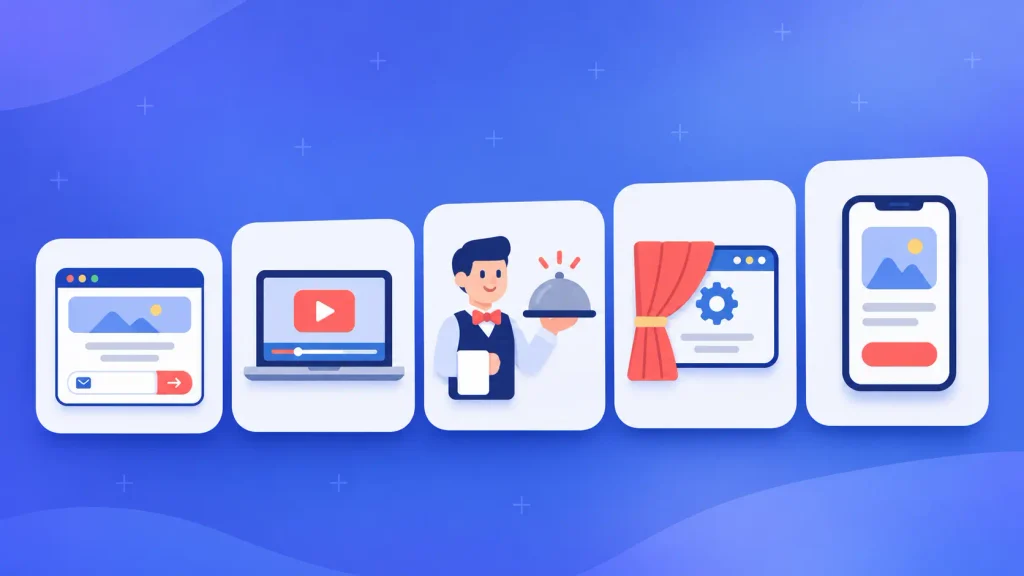
Not every MVP needs code. There are several types of MVP, and the format should follow the question you’re testing, not your preference for what to build.
Match the question to the format:
| The question you’re testing | MVP type | Signal to watch |
| Does anyone want this? | Landing page with a waitlist | Sign-up rate from targeted traffic |
| Can I explain the value? | Explainer or demo video | Sign-ups and replies after viewing |
| Will people pay for the outcome? | Concierge (you deliver it by hand) | Paid repeat orders |
| Do users value the experience if it “just works”? | Wizard of Oz (manual work behind an automated front end) | Usage and retention |
| Will they use the core feature regularly? | Single-feature product | Activation and retention |
Dropbox is the classic proof that video can be enough. According to TechCrunch’s account of the Dropbox MVP, Drew Houston’s demo video took the beta waiting list from 5,000 to 75,000 people overnight.
The catch is that a waitlist proves interest, not payment. If willingness to pay is your riskiest assumption, a concierge MVP or a pre-order tells you far more.
Step 5: Map the Core User Flow and Cut Features With MoSCoW
Before you list MVP features, it helps to sketch the path a user takes from arrival to the moment they get value. Sign up, set up, do the core action, see the result, come back.
Every screen should move someone along that path. A clickable prototype from a UI/UX design team can show whether the flow makes sense before development starts.
From there, you can sort every feature with MoSCoW:
- Must have: the core action from your one-sentence problem statement. No MVP without it.
- Should have: real improvements to the core experience. Most won’t make version one.
- Could have: nice extras. Park them.
- Won’t have (yet): everything else. Write them down so people feel heard, then leave them out.
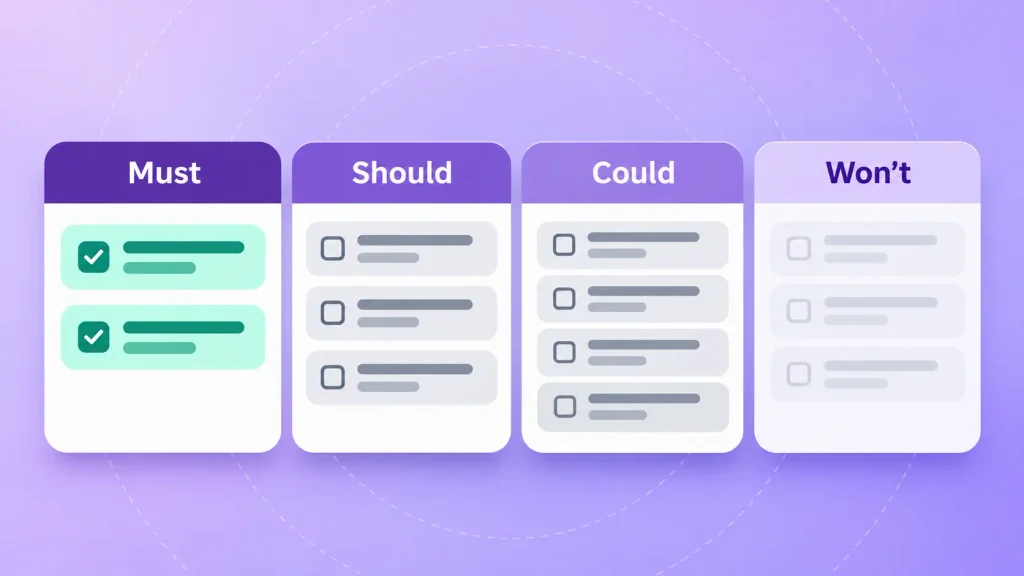
If shipping the must-have list doesn’t slightly embarrass you, you’ve scoped version two. This is exactly where MVP design and product strategy earns its keep, because an outside voice can say “no” with less friction than anyone on the founding team.
Step 6: Build the Core Flow on a Boring, Proven Stack
Your MVP tests your idea, not your engineering ambitions. You’ll move fastest with tools your team can ship and maintain without a fight.
A few defaults keep speed and quality on the same side:
- Buy the commodity parts. Authentication, payments, email, and notifications already exist as services. Integrate them.
- Pick a mainstream stack. It’s easier to hire for and easier to hand over later. If you’re torn, here’s how to choose the right tech stack for a web app.
- Keep the architecture clean. The classic trap is code so rushed that success forces a rewrite. Clear separation between parts costs little now.
- Instrument before launch. Tracking for your Step 3 metrics goes in during the build, not after.
Speed matters here. Every extra week before launch is another week your assumption goes untested.
Step 7: Launch to Early Adopters, Measure, and Decide
I’d suggest launching to the small group most desperate for your solution, not to everyone. Early adopters forgive rough edges and give you sharper feedback.
This is the build-measure-learn loop that Eric Ries laid out in The Lean Startup: ship, watch what people actually do, and adjust. It’s worth pairing your numbers with a few user calls, since data shows you what happened and conversations tell you why.
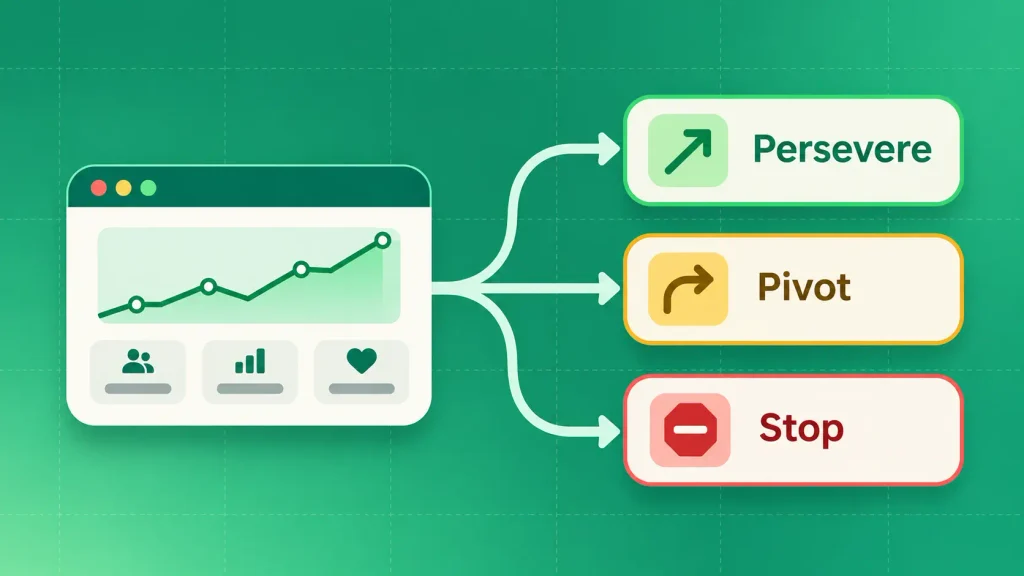
When the data comes in, compare it with the threshold you wrote in Step 3 and make one of three calls:
- Persevere: the metric cleared the bar. Fix the biggest drop-off and deepen the core action.
- Pivot: results are mixed. Change the audience or the use case before you change the product.
- Stop: the metric missed badly. An MVP that dies early is far cheaper than a full product that dies late.
All three are good outcomes. The only bad one is not deciding.
Which MVP Build Path Fits Your Situation?
Choosing how to build a minimum viable product depends on how technical you are, how much you’ll need to change the product later, and how sensitive your data is. There’s no single best option, only the one that fits your constraints.
Here’s how the common paths compare:
| Path | Best for | Main risk | Skip it if |
| No-code tools | Simple workflows and internal tools | You hit the platform’s ceiling | You need custom logic or scale |
| AI app builders | A quick clickable test of demand | Code that’s hard to extend or secure | You handle payments or sensitive data |
| Freelancers | A narrow, well-defined scope | You become the project manager | Nobody on your team can review the work |
| MVP agency | Non-technical founders needing a full team | Picking a team that only builds what you ask | You already have strong engineers in-house |
| In-house team | Long-term products you’ll scale | Months of hiring before you ship | You haven’t validated demand yet |
You don’t have to commit to one path forever. A landing page or no-code test first, then a proper build once demand shows up, is a perfectly sane MVP development process.
If you go the agency route, look for a team that challenges your feature list instead of just quoting it. If you’d like a second opinion on your scope, Boomdevs’ startup MVP development team offers a free scoping call.
What to Leave Out of Your Minimum Viable Product
The hardest part of scoping isn’t deciding what to build. It’s agreeing on what to skip.
Here’s a test you can apply: for every feature, ask which assumption it helps you prove. No answer means it waits.
Features that almost never belong in version one:
- Polished admin panels: a spreadsheet or a basic internal page works for the first users.
- Referral and loyalty programs: you can’t grow word of mouth for a product nobody has proven yet.
- Advanced reporting: your users need the core result, not charts about it.
- Integrations few people asked for: build the one your first users actually rely on.
- Custom animation and heavy branding: clean and clear beats impressive at this stage.
- Every edge case: handle the common path well and support the rest by hand.
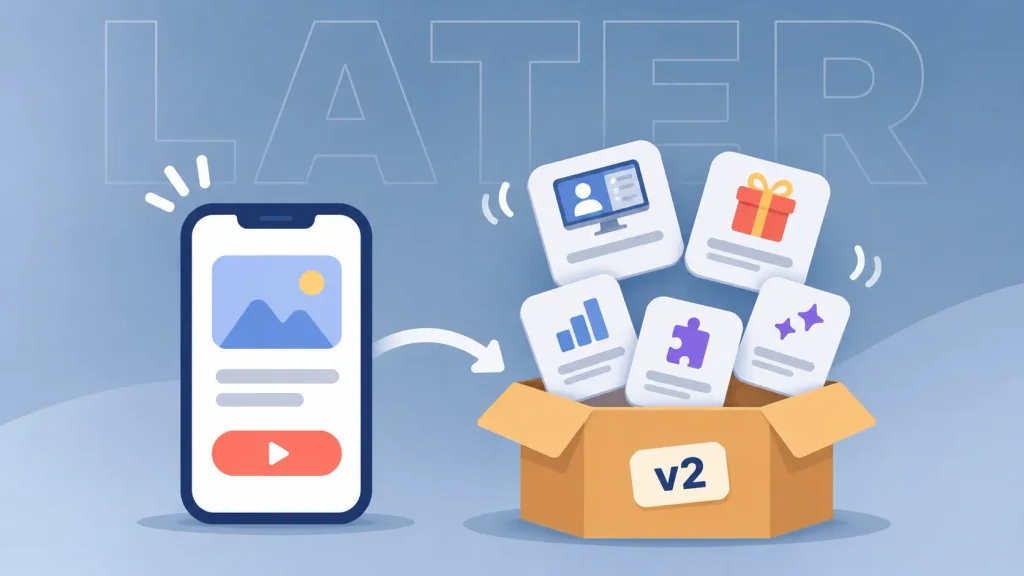
Each of these can be defended on its own. Together, they’re how a lean MVP quietly turns into a build that eats your runway.
How AI Changes the MVP Build in 2026 (and What It Doesn’t)
AI coding tools can now produce screens, database models, and basic APIs in hours. That makes the build faster, but it doesn’t change the basics of how to build a minimum viable product. You still have to know which assumption you’re testing.
AI also creates a new trap. A prototype that “works” in week one can hide security gaps and messy architecture that only surface once real users arrive.
A sensible split looks like this:
- Let AI handle the scaffolding: standard screens, forms, boilerplate, and test drafts.
- Keep senior people on the core: architecture, business logic, payments, and anything touching user data.
- Review before production: treat AI output as a first draft, never a finished product.
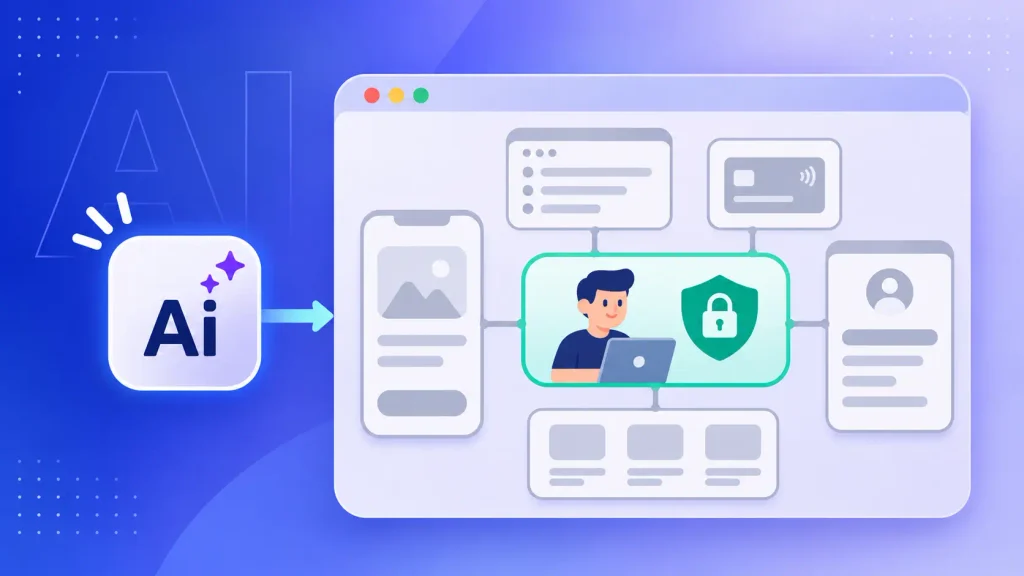
The real shift is where the bottleneck sits in the MVP development process. Building is no longer the slow part. Deciding what’s worth building is.
Common Mistakes When You Build a Minimum Viable Product
Most MVPs fail for process reasons, not technical ones. A March 2026 CB Insights analysis of 431 shut-down VC-backed startups found that 70% ran out of capital. The same report points to poor product-market fit, cited in 43% of cases, as one of the deeper reasons that money dried up.
The mistakes that lead there are predictable:
- Scope creep: “minimum” turns into a year-long build because nobody cut the MVP features with MoSCoW.
- No success metric: you launch, data arrives, and nobody agreed what counts as validated.
- Testing interest, not payment: free sign-ups feel like traction but prove little about revenue.
- Building for everyone: a product aimed at a broad audience rarely compels anyone.
- No launch plan: shipping is different from getting your first users. It’s one of the reasons mobile apps fail after launch.
Every one of these traces back to skipping one of the seven steps. That’s good news, because process is fixable.
How Long and How Much: A Quick Reality Check
Your timeline and budget depend almost entirely on how hard you cut in Step 5. The tighter the scope, the faster and cheaper the build.
For realistic ranges, see our breakdown of how long it takes to build an MVP and the full guide to SaaS MVP development cost. Both go phase by phase, so you can map them to your own feature list.
How Boomdevs Helps You Build an MVP That Proves Something
You don’t need a team that builds everything on your list. You need one that helps you find the smallest thing worth building, then ships it well.
Boomdevs works with founders across the whole MVP development process: scoping the riskiest assumption, cutting the feature list, designing the core flow, and building on architecture that survives the next funding round. The team has delivered 3.5K+ projects across startups and scaleups.
If you’re a non-technical founder, you get a senior team that makes the technical calls with you, not for you.
Ready to scope your first version properly? Book a free MVP strategy call with Boomdevs and leave with a clear plan for what to build first and what to leave out.
Frequently Asked Questions
What should a minimum viable product include?
The must-have MVP features are the one core action that delivers your main value, plus the basics that make it usable, like sign-up and simple data handling. Everything else waits. If a feature doesn’t help test your riskiest assumption, it belongs in a later version.
What’s the difference between an MVP and a prototype?
A prototype is usually a clickable mockup that tests whether a design makes sense. An MVP puts something real in users’ hands to test whether they’ll use it and pay for it. A prototype asks “can they use it?” An MVP asks “will they come back?”
How long does it take to build an MVP?
It depends on your scope, your platform, and how many integrations you need. Coded MVPs usually take weeks to a few months, while a landing page or concierge test can run in days. Our guide to MVP timelines breaks it down phase by phase.
Can a non-technical founder learn how to build an MVP?
Yes. Some types of MVP need no code at all: you can test demand yourself with a landing page, a demo video, or a concierge service. For a coded product, no-code tools work for simple flows, while an experienced MVP team is the safer route once you handle payments, user data, or plan to scale.
What comes after a successful MVP?
You iterate toward product-market fit. Fix the biggest drop-off in your funnel, deepen the core action users already value, and only then add features. On the technical side, plan time to harden security and code quality before you scale.