


- 1. Key Takeaways
- 2. What Is the SaaS Development Process?
- 3. The Stage by Stage Process of SaaS Development
- 4. How Much Does the SaaS Development Process Cost?
- 5. In-House vs. Outsourced: Building Your SaaS Development Team
- 6. How AI Is Changing the SaaS Development Process in 2026
- 7. Common SaaS Development Mistakes That Derail Timelines
- 8. How Boomdevs Helps You Build a SaaS Product
- 9. Frequently Asked Questions
Summarize with
You have a solid SaaS idea. What you don’t have is a real plan for building it.
Most founders skip straight to code. They never map the SaaS development process first. Then a rushed MVP breaks under its first 100 real users.
This guide breaks the SaaS development process into eight clear stages, from validating the idea to scaling after launch. You’ll know exactly what to do at each one, and why it matters, before you write a single line of code.
Key Takeaways
- The SaaS development process runs through eight stages: discovery, requirements, design, architecture, MVP build, testing, launch, and post-launch iteration.
- A lean MVP typically takes three to six months. A full-featured product usually takes six to 12 months.
- Budgets generally cluster from around $15,000 for a bare-bones proof of concept to $150,000 or more for a feature-rich, enterprise-ready product.
- Multi-tenancy, not raw feature count, is what actually separates SaaS architecture from a typical web app.
- Whether you hire in-house or bring in a development partner shapes your timeline more than which tech stack you pick.
What Is the SaaS Development Process?
The SaaS development process is the full cycle of designing, building, and continuously improving a cloud-hosted product that customers reach through a browser instead of installing on their own machines. It does not end at launch. Every release, support ticket, and churn number feeds back into the next iteration.
That loop is what separates it from a traditional software project. Traditional development plans everything up front, ships once, and treats the release as the finish line. A SaaS product treats the release as the starting line.
| Aspect | SaaS Development Process | Traditional SDLC |
|---|---|---|
| Structure | Continuous, iterative | Linear, phase by phase |
| Release model | Rolling updates, several times a month | Versioned releases, months apart |
| “Done” | Never; the product keeps evolving | Complete at launch |
| Hosting | Multi-tenant cloud | Often installed locally |
| Feedback loop | Built into every sprint | Collected after each release cycle |
That constant feedback loop is why the eight stages below rarely run in a straight line. Discovery and iteration both show up more than once, because this process treats validation as an ongoing habit rather than a phase you finish and move past.
For a wider view of how this compares to product development in general, it’s worth reading how an AI product development process handles the same overlapping loop.
The Stage by Stage Process of SaaS Development
We will reveal the exact process of SaaS development in the following sections. Let’s dive in!
Stage 1: Discovery & Validation
Every SaaS development process should start here, and most that fail skip it. Discovery answers one question before you write a single requirement: does a specific group of people have a problem painful enough to pay you for?
Validating the Problem Before the Solution
You are not testing whether your idea is clever. You are testing whether the problem is real enough that a stranger would pay to make it go away.
Skip this step and the odds are not in your favor. Startup failure research points to the same cause more than any other: 42% of startups fail because there was no real market need for what they built, ahead of running out of money or losing to a competitor.
Structured discovery interviews should uncover:
- The current workaround: what a spreadsheet, a competitor’s tool, or a manual process is standing in for your product today.
- The trigger: the moment that pushes someone to go looking for a fix.
- The willingness to pay: whether they have budget and authority to buy, not just an opinion.
- The frequency: how often the pain shows up, since a rare annoyance rarely becomes a subscription.
10 to 20 structured interviews with people who match your target buyer will tell you more than a hundred survey responses from people who don’t.
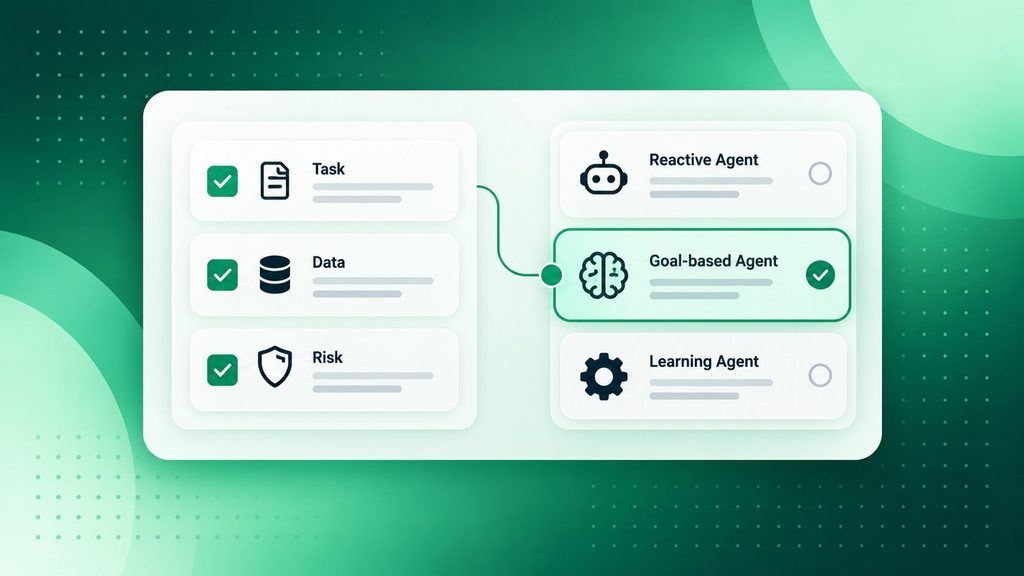
Testing Product-Market Fit Before You Build
A validated problem still isn’t the same as product-market fit. The Sean Ellis test, one of the more widely used PMF benchmarks in SaaS, asks early users a blunt question: how would you feel if you could no longer use this product? If fewer than 40% say “very disappointed,” you don’t have fit yet. You have interest.
Dropbox never built a working product before testing this. Founder Drew Houston released a short demo video explaining the idea, and it generated tens of thousands of signups before a single line of the syncing engine existed. That signal, not a finished app, is what justified the build that followed.
Once demand looks real, the process moves from proving the problem to defining exactly what you’re building.
Stage 2: Requirements & Planning
Skip requirements, and you’ll pay for it later. Teams that document what they’re building upfront catch design flaws while they’re still cheap to fix, not after they’re baked into working code.
Writing a Software Requirements Specification (SRS)
A software requirements specification is the document your whole team works from. It spells out what the product does, who it’s for, and where the technical limits sit, before anyone opens an IDE.
- Functional requirements: what the product actually does, such as user login or a billing flow.
- Non-functional requirements: performance targets, uptime commitments, and security baselines.
- Compliance needs: GDPR, HIPAA, or SOC 2, depending on who you’re selling to.
- Integration requirements: the third-party tools your product needs to talk to on day one.
A clear SRS doesn’t need to run a hundred pages. It needs to answer the same question the same way for everyone reading it.
Agile or Waterfall: Which Fits a SaaS Build
Waterfall locks in scope early, builds in sequence, then tests and ships once. That works when requirements genuinely won’t change. In a SaaS development process, they almost always do. User feedback, competitor moves, and early usability testing all reshape priorities mid-build.
Agile breaks the work into short sprints instead, with a review after each one. Nearly every SaaS team ends up here, because a subscription product can’t afford to wait a year between chances to course-correct.
Stage 3: UX/UI Design & Prototyping
Design work has one job beyond making the product look good: get someone to their first real result as fast as possible. A confusing first session is one of the more common reasons early users churn before they ever become paying customers, and one widely cited consumer-experience study found that most online shoppers won’t return after a single bad one.
Designing for Multi-Tenancy From Day One
Most SaaS products serve many customers from one shared codebase, and that changes what the interface needs to do. A support agent, an account admin, and a finance lead looking at the same product need different views of it, not just different permissions.
- Role-based access: limiting what each user type can see and touch.
- Customizable dashboards: letting different roles surface the data that matters to them.
- White-label options: useful if you’re selling into agencies or resellers who need their own branding.
- Clear system-state feedback: so one tenant’s heavy usage never looks, to another tenant, like the product is broken.
Prototyping Before a Line of Code Is Written
A clickable prototype in Figma or a similar tool costs a fraction of what a coded screen does, and it catches a confusing flow just as well. Five to 10 usability sessions against a prototype, before development starts, is the cheapest structural fix you’ll make in this whole process.
Stage 4: Choosing Your Tech Stack & Architecture
The technical decisions you make here are the hardest ones to reverse once real customers depend on the product, so they deserve more scrutiny than picking whatever framework your team already knows.
Monolith vs. Microservices for an Early-Stage SaaS
| Approach | Best For | Watch Out For |
|---|---|---|
| Monolith | Most MVPs and early-stage products | Can get unwieldy past a certain team size |
| Microservices | Products needing independent scaling or multiple teams | Adds real operational overhead early on |
Most teams building their first version are better served starting with a well-structured monolith. Splitting into microservices before you have paying customers usually adds complexity you don’t have the traffic to justify yet.
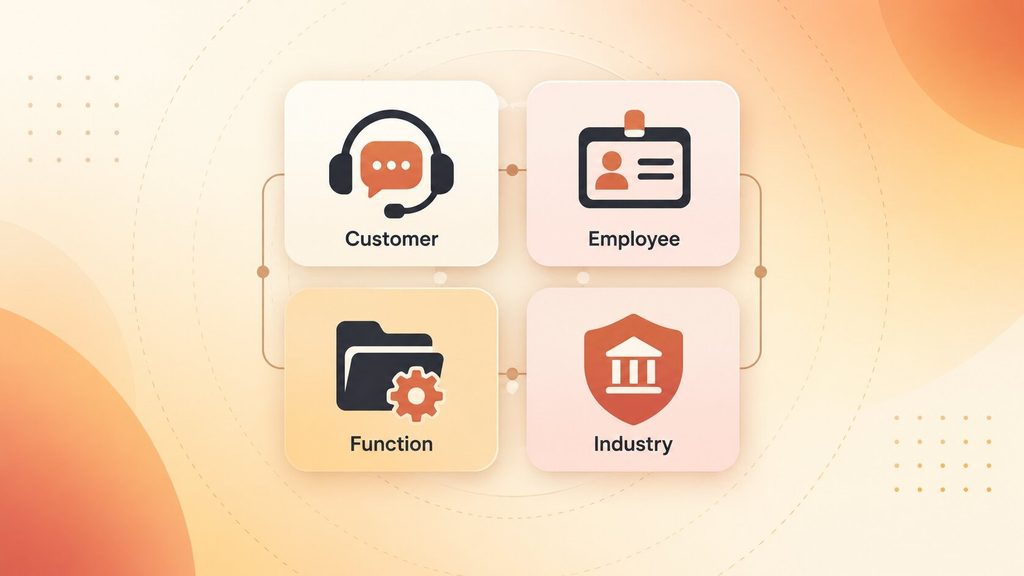
The Three Multi-Tenancy Models
How you isolate customer data shapes your cost, your security posture, and how fast you can onboard a new account.
- Silo model: a separate database per customer. Highest isolation, highest operational cost, common for enterprise accounts handling sensitive data.
- Bridge model: one shared database with a separate schema per customer, a middle ground between isolation and cost.
- Pool model: a fully shared database with row-level security. The cheapest to run, but it demands strict, well-tested access controls.
AWS documents all three approaches in detail, and many SaaS products end up blending them: a pooled model for smaller accounts, a siloed one reserved for premium or regulated customers.
Stage 5: MVP Development
MVP development is the stage in the SaaS development process where an idea finally becomes real software, but an MVP is not a stripped-down version of your final product. It’s the smallest thing you can ship that still proves your core hypothesis with real users and real usage data.
Prioritizing Features (MoSCoW and RICE)
- MoSCoW: sorts features into must-have, should-have, could-have, and won’t-have-for-now.
- RICE: scores each feature on reach, impact, confidence, and effort, then ranks by the result.
Either framework works. What matters is using one consistently, so “nice to have” features stop sneaking into your MVP scope through sheer persistence.
MVP vs. MMP
A minimum viable product tests whether your idea holds up. A minimum marketable product, often shortened to MMP, is the next version up: still lean, but complete enough that you’d feel comfortable actually selling it. Most SaaS teams ship an MVP to a small group first, then graduate to an MMP once the core hypothesis has held.
If you’d rather not staff this stage from scratch, SaaS MVP development is usually the fastest way to get a testable version in front of real users.
Stage 6: Testing & Quality Assurance
Testing is one of the most overlooked stages of the SaaS development process; it’s not a phase you run once before launch. It runs inside every sprint, because a live cloud product accumulates bugs the moment code stops being tested continuously.
What to Test, Layer by Layer
- Unit tests: confirm individual components behave correctly.
- Integration tests: confirm services talk to each other properly.
- Performance tests: confirm the system holds up under real load.
- Security tests: confirm sensitive data is actually protected.
- Usability tests: confirm real users can complete tasks without getting stuck.
A CI/CD pipeline that runs these automatically on every commit is what keeps this from becoming a manual bottleneck later.
Running a Structured Beta
Internal testing catches the obvious problems. It rarely catches the ones your own team is too familiar with the product to notice.
Fifty to 100 beta users who genuinely match your target customer, not just anyone who signed up early, is usually enough to surface the edge cases that matter: where onboarding stalls, which flow confuses people, and whether the product feels trustworthy enough to hand real data to.
Stage 7: Deployment & Launch
Launch day is not the finish line, and treating it like one is how avoidable outages happen. Deployment strategy and go-to-market planning both need to be settled before you flip the switch, not during.
Zero-Downtime Deployment (Blue-Green)
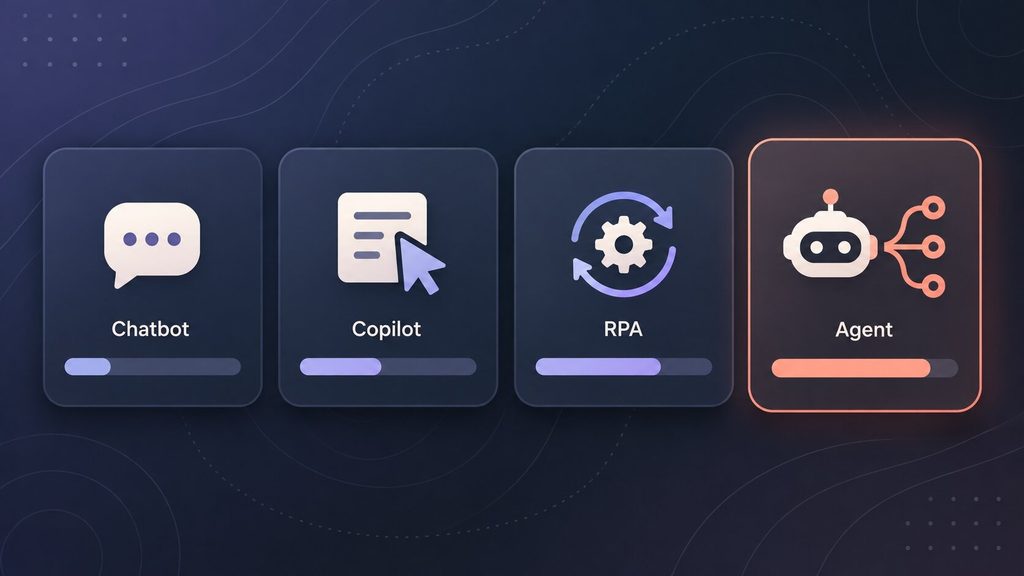
Because customers pay for continuous access, even a short outage costs you more in a SaaS business than in most other software categories. Blue-green deployment solves this by running two identical environments side by side.
- Deploy the new version to the idle environment.
- Test it thoroughly under production-like conditions.
- Switch live traffic over once it checks out.
- Keep the old environment ready for an instant rollback if something breaks.
Your Go-to-Market Checklist
- Ideal customer profile: who this launch is actually for.
- Support infrastructure: a knowledge base, a ticketing system, and someone watching it.
- Analytics wired up: so day-one usage data isn’t lost.
- A soft launch first: a limited release that catches problems before the full public one.
Skipping the soft launch to hit a date is one of the more expensive shortcuts in this whole process. The audience that finds your bugs first is usually the audience you were trying hardest to impress.
Stage 8: Post-Launch Iteration & Scaling
Real usage is where your assumptions get tested against actual behavior, not survey answers. This stage never really ends for a SaaS product.
The Metrics That Actually Tell You Something
| Metric | What It Tells You |
|---|---|
| Activation rate | Whether new users reach real value quickly |
| Churn rate | How many customers you’re losing each period |
| MRR | Whether recurring revenue is trending the right way |
| Net revenue retention | Whether existing customers are worth more or less over time |
Watch activation and churn together. Strong signups paired with weak activation almost always points to onboarding friction, not a marketing problem.
When (and How) to Scale Infrastructure
What handles 500 users rarely handles 50,000 without changes. Rising cloud costs without matching revenue, slower response times at peak hours, and support tickets shifting from feature requests to performance complaints are the usual early warning signs.
- Horizontal scaling: adding more application instances behind a load balancer.
- Auto-scaling: adjusting resources automatically as demand shifts.
- CDN optimization: cutting latency for users far from your primary servers.
Scaling too early carries its own cost. Optimizing for a million users before you’ve confirmed product-market fit at a thousand usually just adds complexity you don’t need yet.
How Much Does the SaaS Development Process Cost?
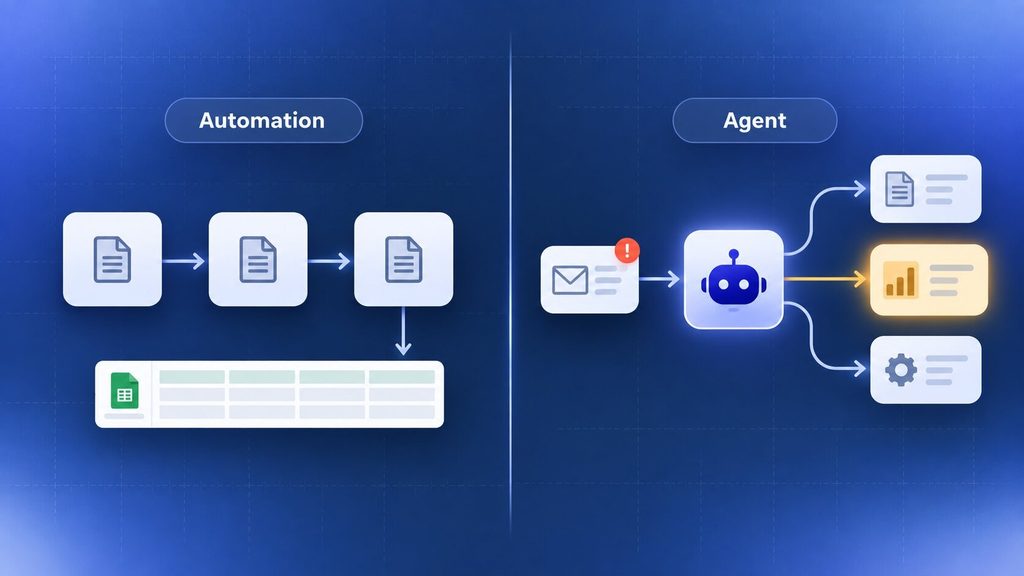
Costs across the SaaS development process vary widely, but they tend to cluster around a few recognizable tiers depending on scope and who’s building it.
| Tier | Typical Cost Range | What You Get |
|---|---|---|
| Proof of concept | $15,000 to $35,000 | One core workflow, minimal integrations |
| MVP | $35,000 to $75,000 | Essential features, basic multi-tenancy |
| Full-featured product | $75,000 to $150,000 | Complete feature set, real integrations, polished UX |
| Enterprise-grade or AI-enabled | $150,000 and up | Advanced compliance, AI features, custom architecture |
Ongoing hosting, support, and maintenance typically add another 10% to 30% of your initial build cost every year after launch, so budget for that beyond the sticker price of the build itself.
In-House vs. Outsourced: Building Your SaaS Development Team
Neither option is universally right for every SaaS development process. The better question is which trade-offs you can actually live with, given your timeline and your budget.
The Roles a SaaS Build Actually Needs
| Role | What They Own |
|---|---|
| Product manager | Vision, roadmap, prioritization |
| Solution architect | System design, technology decisions |
| Backend and frontend developers | Building the product itself |
| UI/UX designer | User flows, prototypes, visual design |
| QA engineer | Testing and quality control |
| DevOps engineer | CI/CD pipelines and infrastructure |
In-House, Outsourced, or Hybrid: How to Decide
Hiring in-house gives you the most control and the deepest institutional knowledge, but it’s slow. Recruiting a single senior backend developer can take months, and you’re paying full-time salaries whether or not the workload justifies it yet.
Staff augmentation or a fully outsourced team gets you moving faster, since you’re tapping into people who’ve already shipped similar products. If you’re weighing that decision more broadly, it’s worth reading up on what to look for in a software development consultant before committing to either path.
A hybrid model, a small in-house product team paired with an outsourced engineering partner, is what most funded SaaS startups actually land on. You keep vision and customer relationships close, and borrow execution capacity for the parts that don’t need to live inside your company forever.
How AI Is Changing the SaaS Development Process in 2026
AI is no longer a feature you bolt onto a SaaS product near the end. It’s reshaping decisions made as early as the architecture stage.
Gartner forecasts that 40% of enterprise applications will ship with task-specific AI agents by the end of 2026, up from under 5% just a year earlier. That shift changes what “done” looks like for a modern SaaS build.
- Architecture decisions now include an AI layer: where agent context and memory live, which model providers you integrate with, and how agents communicate with each other.
- Development itself moves faster: AI-assisted coding, automated test generation, and AI-drafted documentation are cutting real weeks off delivery timelines for teams using them well.
- Pricing models are shifting: when an AI agent handles a whole workflow instead of a person clicking through it, per-seat pricing stops making sense, and usage-based or outcome-based models take over.
- The security surface has grown: prompt injection and data poisoning are now real threats this process has to plan for, not hypothetical ones.
None of this makes the eight stages above obsolete. It just means Stage 4’s architecture decisions and Stage 6’s testing checklist both need an AI-specific line item they didn’t need two years ago.
If AI-native SaaS development is genuinely part of your roadmap, it’s worth reading further on what AI SaaS actually means in practice before you commit architecture decisions to it.
One market reminder underlines the stakes: in February 2026, a wave of agentic AI product launches wiped an estimated $285 billion off SaaS company valuations in a single 48-hour window, a sharp signal that investors are already pricing in which SaaS products are built to work with agents and which aren’t.
Common SaaS Development Mistakes That Derail Timelines
Most SaaS timelines don’t blow up from one dramatic failure. They blow up from a handful of decisions made too early or too late.
- Skipping validation to “just start building”: the fastest way to ship a well-engineered product nobody needed.
- Confusing an MVP with a cheap version of the full product: an MVP should be small on purpose, not small because the budget ran out.
- Bolting on multi-tenancy after launch: retrofitting tenant isolation into a single-tenant codebase costs far more than designing for it back in Stage 4.
- Treating testing as a pre-launch checklist: bugs caught in production cost far more to fix than the same bugs caught mid-sprint.
- Picking a tech stack before deciding who’s building it: the “best” framework on paper is the wrong one if your team, in-house or outsourced, doesn’t actually know it well.
Most of these trace back to the same root cause: skipping a stage in this process because it feels slower, when it’s usually the stage that saves the most time later.
How Boomdevs Helps You Build a SaaS Product
Boomdevs has run the SaaS development process end-to-end for startups and scaleups across fintech, healthcare, and e-commerce, backed by over 10 years of experience and 3,500-plus delivered projects.
Whether you need a full team to take an idea from discovery through launch, or a dedicated partner to fill a specific gap in an existing team, the goal stays the same: a product built on a foundation that won’t need to be rebuilt a year in.
Ready to move past the planning stage? Get a free SaaS development consultation with Boomdevs and leave with a realistic scope and timeline for your specific product.
Frequently Asked Questions
What Are the Stages of the SaaS Development Process?
The SaaS development process runs through eight stages: discovery and validation, requirements and planning, UX/UI design and prototyping, choosing your tech stack and architecture, MVP development, testing and QA, deployment and launch, and post-launch iteration and scaling. Most teams cycle back through discovery and iteration continuously after launch, rather than treating them as one-time phases.
How Long Does It Take to Build a SaaS Product?
A focused MVP typically takes three to six months with an experienced team. A full-featured product with a broader feature set and integrations usually takes six to 12 months. AI-powered features, compliance requirements, and integration complexity all tend to push timelines toward the longer end.
How Much Does SaaS Development Cost?
Costs generally range from around $15,000 for a bare-bones proof of concept to $150,000 or more for a full-featured, enterprise-ready product. Ongoing hosting and maintenance typically add another 10% to 30% of the build cost each year after launch.
Should I Build My SaaS Product In-House or Outsource It?
It depends on your timeline and how much control you need over daily decisions. In-house teams offer more control but take longer to hire and cost more to run full-time. Outsourcing or staff augmentation moves faster and taps into people who’ve already shipped similar products. Many funded SaaS startups land on a hybrid: a small in-house product team paired with an outsourced engineering partner.
What’s the Difference Between an MVP and an MMP?
An MVP, or minimum viable product, is the smallest version of your product that tests your core hypothesis with real users. An MMP, or minimum marketable product, is the next step up: still lean, but complete enough that you’d feel comfortable actually selling it rather than just testing it.