


- 1. Key Takeaways
- 2. How to Choose a UI/UX Design Agency in Nine Steps
- Step 1: Name the Problem and the Metric You Want to Move
- Step 2: Decide What Kind of Design Partner You Need
- Step 3: Build a Shortlist of Three to Five Agencies
- Step 4: Read Case Studies for Decisions, Not Screenshots
- Step 5: Test Their Research and Validation Process
- Step 6: Meet the People Who Will Actually Do the Work
- Step 7: Check How Design Gets Into Code
- Step 8: Score Every Agency Side by Side
- Step 9: Start With a Paid Pilot, Then Lock the Contract
- 3. Questions to Ask a UI/UX Agency Before You Sign
- 4. Common Mistakes and Red Flags When Hiring a UI/UX Agency
- 5. Should Your Design Agency Also Build the Product?
- 6. How Much Does a UI/UX Design Agency Cost?
- 7. How Boomdevs Fixes the Design-to-Development Gap
- 8. Frequently Asked Questions
Summarize with
You’ve got three agency proposals open in three tabs. Every portfolio looks polished, and every pitch promises a user-centered process. Yet the prices sit miles apart.
Picking wrong costs you more than the fee. You lose months of runway, and your developers inherit screens nobody ever tested.
Here’s how to choose a UI/UX design agency in nine steps. You’ll get a scorecard, the questions worth asking, and the contract clause most founders miss.
Key Takeaways
- Start with the problem and the metric you want to move, not with portfolios. That one-page brief filters agencies for you.
- Shortlist three to five agencies, then judge their case studies on decisions and results, not screenshots.
- Ask who will do the work, how they test with real users, and how design reaches your developers.
- Score finalists on a weighted scorecard, then run a small paid pilot before the big contract.
- Get ownership of the Figma source files and design system in writing. If an agency resists, walk away.
How to Choose a UI/UX Design Agency in Nine Steps
Choosing a UI/UX design agency comes down to one test. Can this team show how its design decisions moved a business metric? The nine steps below help you run that test the same way on every agency, so you compare evidence instead of pitches.
Step 1: Name the Problem and the Metric You Want to Move
Before you open a single portfolio, you’ll want a one-page brief. It’s the cheapest filter you have. Agencies that can’t respond to it specifically rule themselves out.
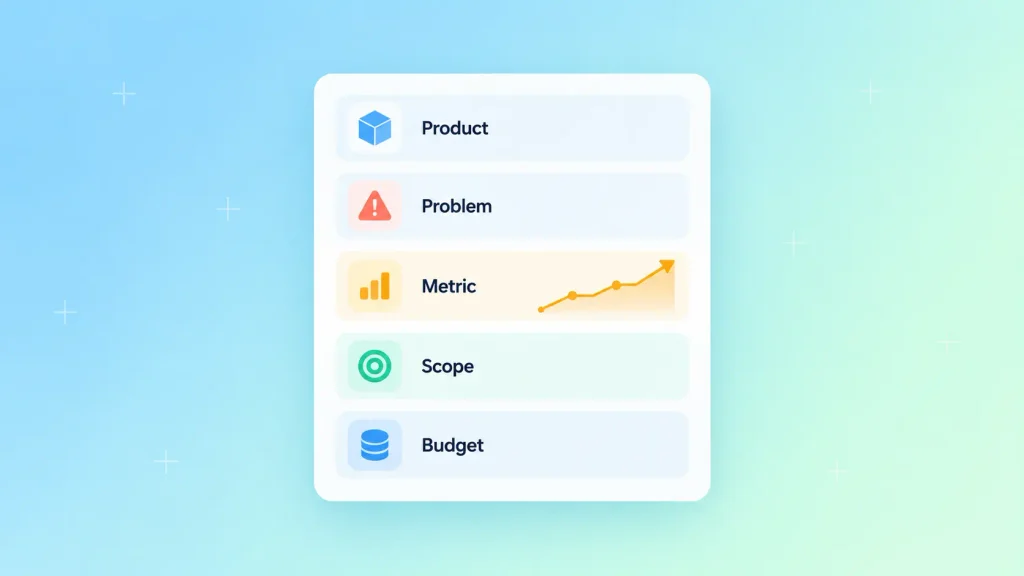
Your brief only needs a handful of things:
- The product: a SaaS dashboard, mobile app, marketplace, internal tool, or something not built yet.
- What’s broken: low trial-to-paid conversion, a confusing onboarding flow, or support tickets about the same screen.
- The metric: the one number this project should move, like activation rate or checkout completion.
- The scope: a UX audit, one feature, a full redesign, or a new product from scratch.
- A budget range: not an exact figure, just enough that nobody wastes a discovery call.
If you can’t name the metric yet, fix that first. An agency will happily design without one. You’ll just have no way to judge the result.
Step 2: Decide What Kind of Design Partner You Need
Not every design job needs you to hire a UI/UX design agency. The right partner depends on your scope, how fast you ship, and whether you already have designers or developers in-house.
Here’s how the main options compare:
| Option | Best for | Watch out for |
| Freelance designer | A few screens, tight budget | Availability, no research or QA backup |
| Specialist UI/UX agency | Research-heavy redesigns | Handoff gaps with a separate dev team |
| Full-service agency | Brand, web, and product at once | Thinner UX depth per project |
| Design + development studio | New products and MVPs going straight to build | Design treated as a step before code |
| Embedded designers | A product team with no designer | You still own direction and process |
| In-house hire | A long-term product with constant iteration | Hiring time and full salary cost |
There’s no universal winner here. If this is your first app, our guide to what mobile app design actually covers helps you scope it. And if you already run a product team, embedded UI/UX designers can fill the gap without a full agency engagement.
Step 3: Build a Shortlist of Three to Five Agencies
When you hire a UI/UX design agency, three to five finalists is the sweet spot. Fewer and you can’t compare. More, and every call starts to blur into the last one.
You’ll find good candidates in a few places:
- Clutch: verified client reviews you can filter by service, budget, and location.
- Dribbble and Behance: a quick read on visual quality, though not on process.
- Referrals: founders who’ve hired an agency can tell you what the proposal left out.
- Specific searches: “fintech UX agency” or “B2B SaaS product design agency” beats a generic query.
At this stage, you’re only checking fit. Similar products, a style you can live with, a budget in range. The deep vetting starts next.
Step 4: Read Case Studies for Decisions, Not Screenshots
A portfolio shows what an agency’s work looks like. A case study shows how the team thinks, and that thinking is what you’re paying for.
A strong case study answers four questions, in this order:
- What problem did the client face, in business terms?
- What did research uncover that the client didn’t already know?
- Which design decisions came from that research, and what got rejected?
- What changed after launch, with a number attached?
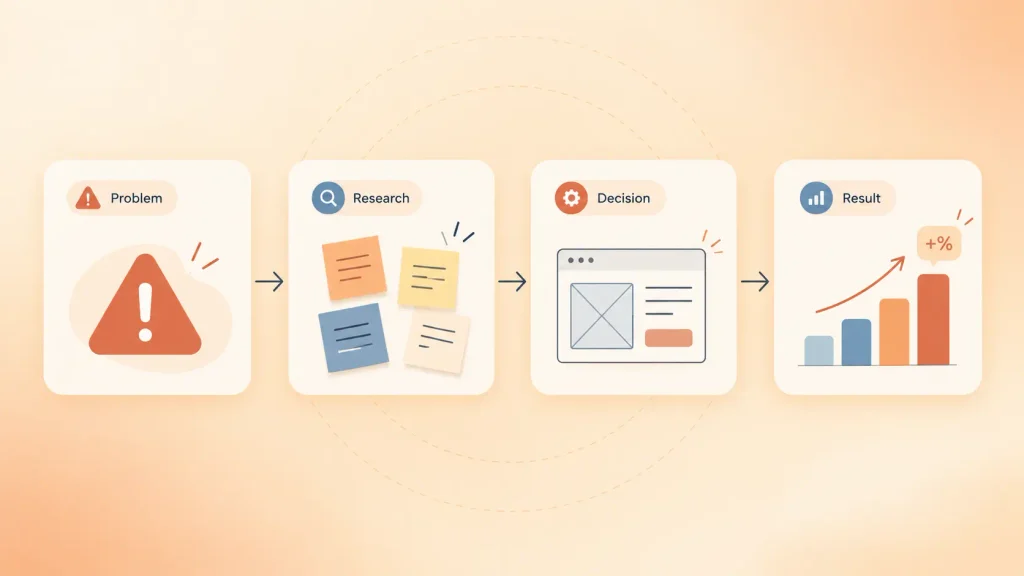
When a case study jumps from “the brief” to “the final screens,” the thinking in between probably didn’t happen. It’s worth asking to see one messy artifact too: a wireframe, a research synthesis, a test recording. Teams that do the work have these lying around. For the principles good case studies tend to show, our web app design best practices is a useful benchmark.
Step 5: Test Their Research and Validation Process
User research is where agencies differ most, and where weak ones cut corners first. Skipping it is common, too. In McKinsey’s study of 300 public companies, more than 40% still weren’t talking to end users during development.
Ask the agency what they’d test, when, and with how many people. Good answers tend to be small and frequent. Nielsen Norman Group’s research shows each extra participant in a single round teaches you less, so several small test rounds beat one big test at the end.
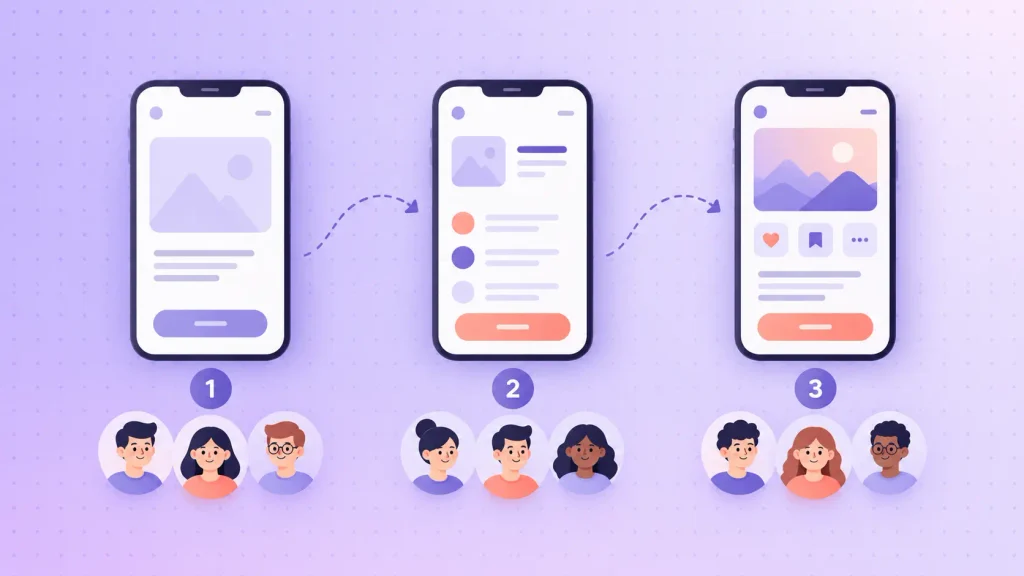
Solid research usually includes some mix of:
- User interviews during the discovery phase, before any screens exist.
- Usability testing on wireframes and prototypes, ideally across more than one round.
- Analytics and support-ticket review when you already have a live product.
- A UX audit when you’re redesigning rather than starting fresh.
One more tell is worth checking. Ask how they handle findings that contradict your assumptions. An agency that has never told a client “your users don’t want this” probably isn’t doing real research.
Step 6: Meet the People Who Will Actually Do the Work
Some agencies pitch with senior designers and deliver with juniors. It’s common, and you can avoid it with one request: meet your actual team before you sign.
These questions get you there quickly:
- Who is the lead designer on my project, and what have they shipped?
- Is there a dedicated researcher, or does the designer cover research too?
- How many other clients is this team carrying right now?
- What happens if someone leaves mid-project?
Small teams that combine roles are perfectly fine. You’re checking seniority and attention, not job titles. If you’re unsure what each role covers, here’s a quick look at UI designer vs UX designer.
Step 7: Check How Design Gets Into Code
Developer handoff is the step most hiring guides skip, and it’s where projects quietly fall apart. Beautiful Figma files mean little if your engineers have to guess spacing, states, and edge cases.
Before you sign, ask what your developers will actually receive:
- A design system: reusable components and styles, not dozens of one-off screens.
- Interaction states: loading, empty, error, and success, for every key component.
- Annotated specs: spacing, breakpoints, and behavior notes your team can build from.
- A walkthrough: at least one session where a designer takes your engineers through the files.
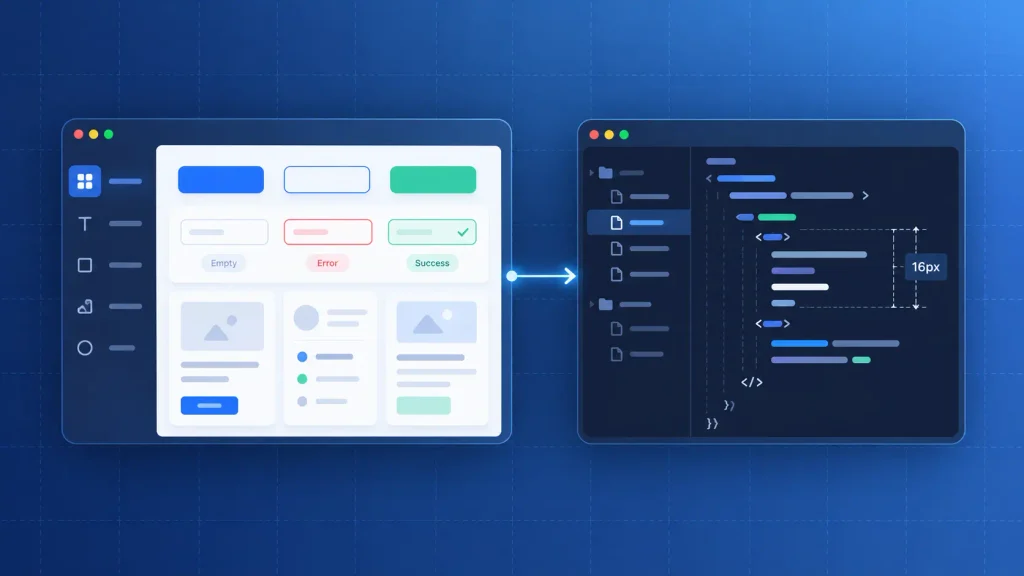
It also helps to ask whether designers talk to engineers during design, not only at the end. Catching an unbuildable idea in week two is cheap. Catching it in sprint six isn’t. Our breakdown of the custom web design process shows where those check-ins belong.
Step 8: Score Every Agency Side by Side
Gut feel after three friendly calls is unreliable. A weighted scorecard forces you to compare the same things across every agency, and it shows where the real tie-breakers sit.
Here’s a starting scorecard you can use as your UI/UX agency checklist. Rate each agency from 1 to 5 per row, then multiply by the weight:
| Criterion | Weight | What a 5 looks like |
| Relevant case studies | 20% | Similar product, problem, and measured result |
| Research and testing | 20% | Named methods, several test rounds |
| Team seniority | 15% | You’ve met your lead designer |
| Developer handoff | 15% | Design system plus documented states |
| Communication | 15% | Clear proposal, fast follow-up, written recaps |
| Commercial terms | 15% | Transparent scope, IP transfer, defined revisions |
The weights are yours to change. If your developers are stretched thin, handoff might deserve 25%. What matters is deciding your priorities before the pitches start, not after.
Step 9: Start With a Paid Pilot, Then Lock the Contract
When you’re figuring out how to choose a UI/UX design agency, a small paid project is the most honest test you can run. You see how the agency asks questions, takes feedback, and documents work, for a fraction of the full budget. Good pilot formats include a UX audit, a redesign of one flow like onboarding, or a one- to two-week design sprint.
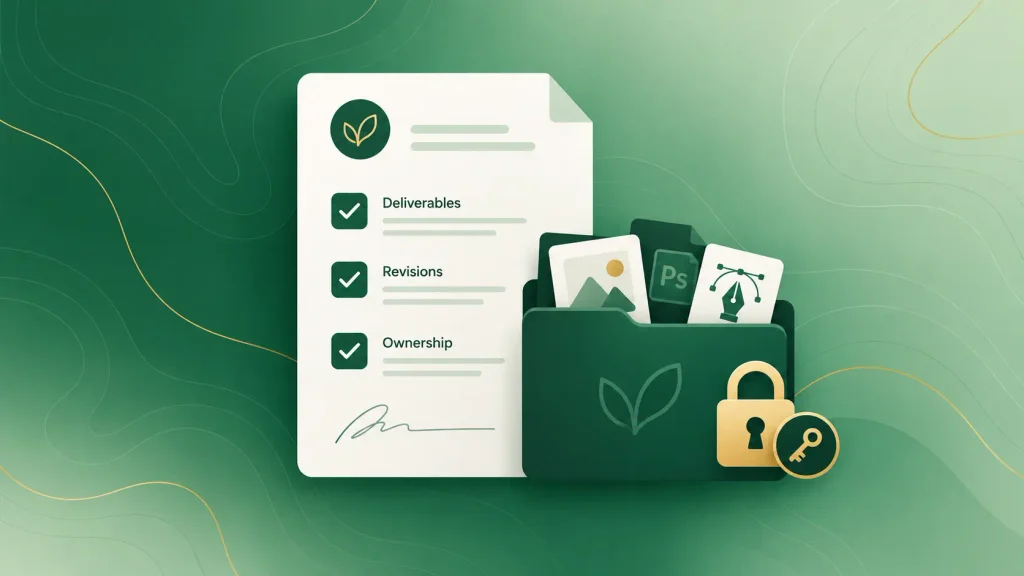
If the pilot goes well, the contract is where you protect yourself. Treat this as your UI/UX agency checklist before signing. It should spell out:
- Deliverables per milestone: named screens, flows, prototypes, and specs, not a line that just says “UI design.”
- Ownership: you own the final designs, Figma source files, and design system once invoices are paid.
- Revision rounds: how many are included, and what counts as one.
- Change requests: how new scope gets priced and approved before work begins.
- Exit terms: what you keep if the engagement ends early.
Treat IP ownership as a dealbreaker. If an agency won’t transfer full rights to the source files, walk away.
Questions to Ask a UI/UX Agency Before You Sign
How an agency answers tells you more than what it answers. Specific, evidence-backed replies are a good sign. Vague ones usually mean the work will be vague too.
Here are eight questions to ask a UX agency, with what to listen for:
| Question | Good answer | Red-flag answer |
| Walk me through a project like mine | Problem, research, decisions, result | Jumps straight to final screens |
| How will you measure success? | Names a metric before design starts | “Users will love it” |
| Who exactly works on my project? | Names and portfolios, before signing | “We’ll assign the right team” |
| How many test rounds do you run? | Several small rounds on prototypes | One test at the end, or none |
| What do my developers receive? | Design system, states, specs, a walkthrough | “The Figma link” |
| What happens when our ideas conflict? | Settle it with user evidence | Agrees with everything you say |
| How do you price scope changes? | A written change-order process | “We’ll figure it out as we go” |
| What do I own when we’re done? | Everything, including source files | Hesitation, or licensing terms |
Short on time? Of all the questions to ask a UX agency, I’d start with the team, the testing, and the ownership. Those three answers predict most of what follows.
Common Mistakes and Red Flags When Hiring a UI/UX Agency
Knowing how to choose a UI/UX design agency also means knowing what to avoid. Most bad agency hires don’t start with a bad agency. They start with a rushed evaluation that missed signals sitting in plain sight.
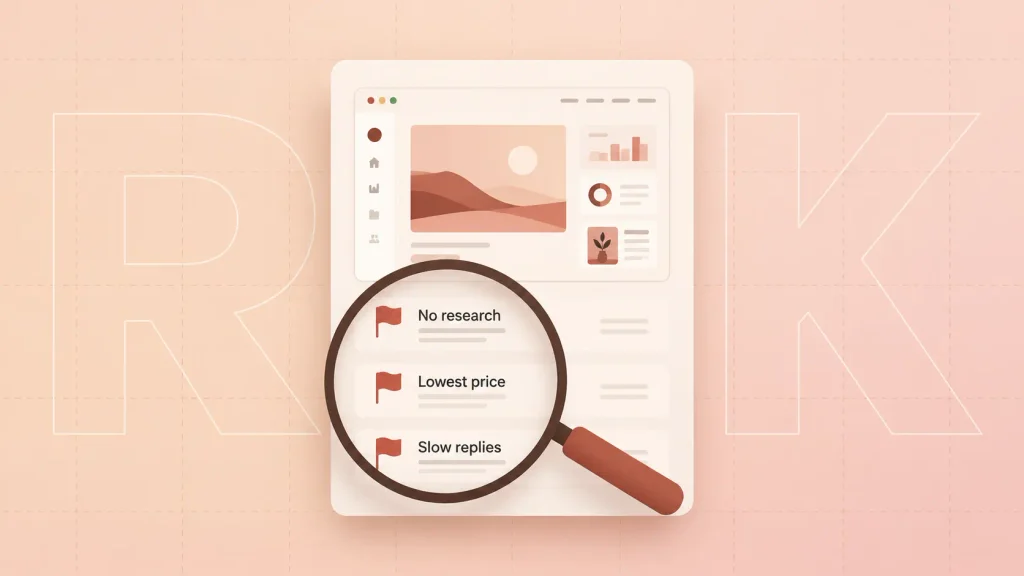
These are the ones to watch for:
- Choosing on looks alone: a gorgeous portfolio with no process behind it often means a visual shop wearing a UX label.
- Picking the cheapest quote: low prices usually get there by trimming research and testing, the parts you won’t notice until users struggle.
- Skipping reference calls: two calls with past clients take an hour and show how the agency handles problems, not just wins.
- No metric agreed upfront: without one, “done” means files delivered, not outcomes moved.
- Slow replies before you’ve signed: communication rarely improves after the contract. Choppy now usually means worse later.
- An agency that never pushes back: order-takers feel easy at first. They get expensive later.
The cost of these mistakes rarely shows up on launch day. It shows up months later, when users drop off, and nobody can say why. Our look at why mobile apps fail traces how early design decisions can sink a product long after the agency has moved on.
Should Your Design Agency Also Build the Product?
Sometimes yes, sometimes no. It depends on whether you already have engineers you trust, and how much risk you can absorb in a handoff between two companies.
When a Design-Only Studio Is the Better Call
A specialist studio makes sense when you already have strong developers in-house. It also fits research-heavy work, like a UX audit or a redesign of a product that’s already live. You get deep design focus, and your own team keeps control of the code.
The trade-off is coordination. You become the bridge between two teams, so you’ll want the Step 7 handoff steps in your UI/UX agency checklist and written straight into the contract.
When One Team for Design and Development Saves You Months
A combined team pays off most on new products and MVPs. Designers and engineers sit in the same standups, so feasibility questions get answered in hours rather than long email threads.
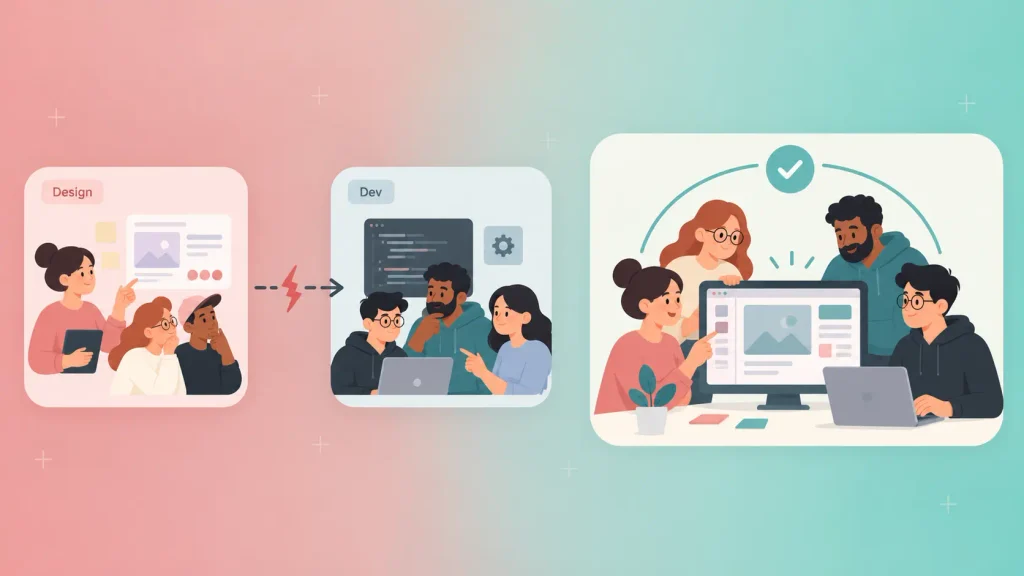
Here’s the trade-off side by side:
| Factor | Design-only studio | Design + development team |
| Best fit | Existing product, in-house devs | New product or MVP |
| Handoff risk | Higher, two companies involved | Lower, one team |
| Design depth | Often deeper specialism | Varies, so check case studies |
| Accountability | Split between partners | One partner owns the outcome |
One honest caveat: some combined shops treat design as a quick formality before the “real” work. Read their case studies for design decisions, not only shipped features. If you’re heading straight from design to build, a team that handles SaaS MVP development end to end can remove the handoff entirely.
Working With an Offshore Team: Time Zones and Overlap
Location matters less than overlap. You need a few shared working hours for live reviews, plus strong async habits like recorded walkthroughs and written recaps.
Offshore teams can also lower your UI/UX design agency cost considerably. In Clutch’s UX/UI pricing data, average hourly rates sit at $100 to $149 for US agencies, compared with $25 to $49 for agencies in India, Ukraine, and the Philippines.
It’s worth asking any offshore agency which clients they already serve in your time zone, and how review meetings run week to week. That answer tells you more than the rate card does.
How Much Does a UI/UX Design Agency Cost?
Most UI/UX design projects reviewed on Clutch land between $10,000 and $49,999. Longer engagements pull the average up sharply, though. Clutch’s UX pricing guide puts the average UX agency project at $84,973 over a typical 10 months.
The pricing model matters almost as much as the total UI/UX design agency cost. Here’s how the common ones compare:
| Pricing model | Best for | Main risk |
| Fixed project fee | Well-scoped work like an audit or one flow | Rigid scope, change orders add up |
| Hourly | Unclear scope or early discovery | Costs drift without weekly reporting |
| Monthly retainer | Ongoing product iteration | Paying for capacity you don’t use |
| Dedicated design team | You lead, they add capacity | You carry the management load |
Whatever the model, I’d suggest asking for a line-by-line breakdown of what’s included. Research, prototyping, and usability testing are worth checking first, since they’re the easiest items to price as extras. Not sure what your scope should cost? Talk your brief through with Boomdevs and get a realistic range before you request proposals.
How Boomdevs Fixes the Design-to-Development Gap
Boomdevs runs UI/UX design and development under one roof. The people designing your product work alongside the people building it, which closes the handoff gap Step 7 warns about.
With 10+ years in the business and 3.5K+ projects delivered, the team has taken products from first research to shipped code, from Flash.trade, a Solana perpetuals exchange, to Rooftop Saunas. Here’s what working with the Boomdevs UI/UX design team covers:
- Web and mobile app design for new products and redesigns.
- UI/UX consulting when you need a second opinion before committing to a build.
- Embedded designers who join your existing product team.
- Development by the same company, so design decisions survive the trip into code.
The fairest pitch is to hold Boomdevs to this guide on how to choose a UI/UX design agency. Ask the eight questions above, ask to meet your designers, and start with a small pilot if you’d like proof first.
If AI features are on your roadmap as well, the same vetting logic applies to choosing an AI consultancy.
Ready to scope your design project the right way? Book a free consultation with Boomdevs and leave with a clear plan for your product’s UX, whether or not you hire us.
Frequently Asked Questions
How long does a UI/UX design project take?
It depends on scope. A UX audit or a single redesigned flow is far shorter than a full product design. Clutch’s review data puts the typical UX project at 10 months, so ask any agency to break its estimate down phase by phase.
Should I hire a UI/UX design agency or a freelancer?
A freelancer works well for a handful of screens or a tight budget. An agency makes more sense when you need research, testing, and design across a whole product. You also get backup if someone gets sick or leaves.
Can I hire a UI/UX agency for just a UX audit?
Yes, and it’s one of the smartest ways to start. An audit gives you a prioritized list of usability problems. It also shows you how the agency thinks before you commit to a bigger project.
What should a UI/UX agency deliver at the end of a project?
At minimum, you should get editable Figma source files, a design system, documented interaction states, and specs your developers can build from. Research findings and test recordings belong in the handover too. Make sure the contract transfers ownership of all of it to you.
How many UI/UX agencies should I talk to before choosing?
Three to five is usually right. Fewer leaves you nothing to compare against, and more turns every call into the same pitch. The Step 8 scorecard keeps your finalists comparable.