


- 1. Key Takeaways
- 2. How Much Does Custom Software Development Cost in 2026?
- 3. What Drives Custom Software Development Cost?
- 4. How Much Do Software Developers Charge Per Hour?
- 5. Which Pricing Model Fits Your Project?
- 6. What Does Custom Software Cost After Launch?
- 7. Custom Software vs Off-the-Shelf: What Costs Less in Five Years?
- 8. Does AI Make Custom Software Cheaper to Build?
- 9. Why Software Budgets Blow Up, and How to Stop It
- 10. How Do You Estimate Custom Software Cost Before You Hire?
- 11. How to Reduce Custom Software Development Cost Without Cutting Quality
- 12. How Boomdevs Fixes Runaway Software Budgets
- 13. Frequently Asked Questions
- How Much Does Custom Software Cost for a Small Business?
- Why Is Custom Software So Expensive?
- How Long Does It Take to Build Custom Software?
- How Much Does It Cost to Maintain Custom Software Each Year?
- Is Custom Software Cheaper Than SaaS in the Long Run?
- How Much Do Software Developers Charge per Hour?
- Is Fixed Price or Time and Materials Better?
Summarize with
Custom software development cost runs from $30,000 to $100,000 for most projects and past $200,000 for enterprise builds, according to GoodFirms’ 2026 survey.
So, how much does custom software cost for your project? That range alone won’t tell you. Your integrations, your data migration, your compliance needs, and your team’s location decide where you land.
This guide breaks down each lever, shows what you’ll pay after launch, and explains how to get an estimate you can trust before you sign anything.
Key Takeaways
- For most projects, custom software development cost lands between $30,000 and $100,000. Large builds start above $100,000, and enterprise builds pass $200,000.
- Clutch’s reviewed projects average $132,480 over about 13 months, yet its typical project falls between $10,000 and $49,000.
- Complexity, integrations, security needs, and team location move your custom software development cost more than anything else.
- Budget 10% to 20% of the build cost every year to keep the software healthy.
- Pay for a discovery phase before you accept a quote. It’s the cheapest way to find out what you’re really buying.
How Much Does Custom Software Development Cost in 2026?
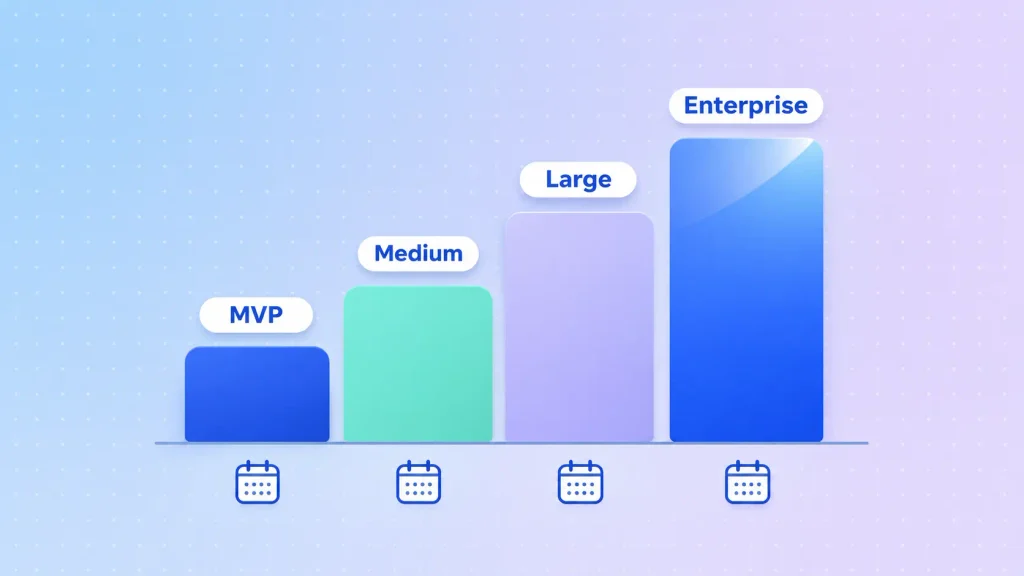
Most custom software projects cost between $30,000 and $100,000, based on GoodFirms’ survey of more than 100 software companies. About two-thirds of those firms put their typical project in that band. Large builds start above $100,000, and enterprise work passes $200,000.
The Sourced Ranges, Side by Side
Two public datasets give you a solid anchor for custom software development cost 2026 benchmarks. GoodFirms surveys the companies that build software, and Clutch collects pricing from verified client reviews. Here’s how they line up:
| Source and scale | Cost | Timeline |
| GoodFirms: small or MVP | Under $30,000 | 1 to 3 months |
| GoodFirms: medium | $30,000 to $100,000 | 3 to 6 months |
| GoodFirms: large | $100,000 to $200,000 | 6 to 12 months |
| GoodFirms: enterprise | $200,000+ | 12 to 24 months |
| Clutch: typical reviewed project | $10,000 to $49,000 | Not reported |
| Clutch: average reviewed project | $132,480 | About 13 months |
Read the Clutch rows closely. Its typical band tops out at $49,000, yet its average sits far higher, which suggests a few long, expensive projects pull the average up. Budget against the band that matches your scope, not against the average.
One caveat applies to both sources. Nearly 86% of GoodFirms respondents were start-ups to medium-sized companies, so the survey reflects small and mid-market pricing more than giant enterprise programs.
Cost by Project Size and Type
Project type sets the order of magnitude for your custom software development cost, and GoodFirms breaks out several common builds:
| Project type | Typical range |
| Small website | $3,000 to $15,000 |
| Medium website | $15,000 to $50,000 |
| Simple mobile app | $5,000 to $50,000 |
| Medium-complexity mobile app | $50,000 to $150,000 |
| AI-powered MVP | $50,000 to $125,000 |
| Medium AI-powered build | $125,000 to $250,000 |
Treat these as starting points, not quotes. If you’re pricing one specific build, our guides to custom web app development cost and mobile app development cost go line by line, and the breakdown of what an AI product costs to build covers the AI tier.
Not sure which category your idea falls into? Browsing real custom business software examples helps you match your needs to a tier.
Why Two Quotes for the Same Software Rarely Match
You’ve probably seen it already: two proposals for the same idea, with totals far apart. The gap usually isn’t greed or padding. It comes from what each quote assumes.
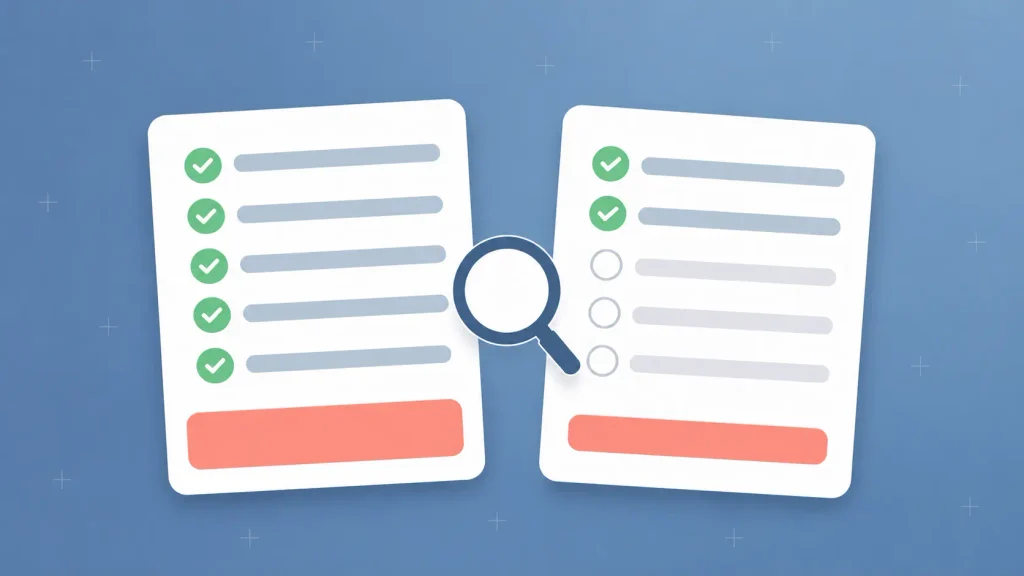
- Different scope: One quote includes an admin panel and reporting. The other treats them as phase two.
- Different team locations: GoodFirms found that 56.3% of surveyed firms charge $20 to $50 an hour, while 10.9% charge $100 to $250.
- Different inclusions: Design, QA, project management, and post-launch support may or may not sit inside the number.
- Different integration counts: One provider prices two connections, and another assumes six.
- Different risk pricing: A fixed price often carries a cushion for the risk the provider is absorbing.
Before you compare totals, line the quotes up on scope, inclusions, and rates. A cheaper quote usually has less inside it, and it’s worth knowing exactly what.
What Drives Custom Software Development Cost?
Complexity drives it most. In GoodFirms’ survey, 95.3% of firms said that the more complex the project, the higher the cost. Nearly 79% pointed to the tech stack, and nearly 72% pointed to team size and makeup.
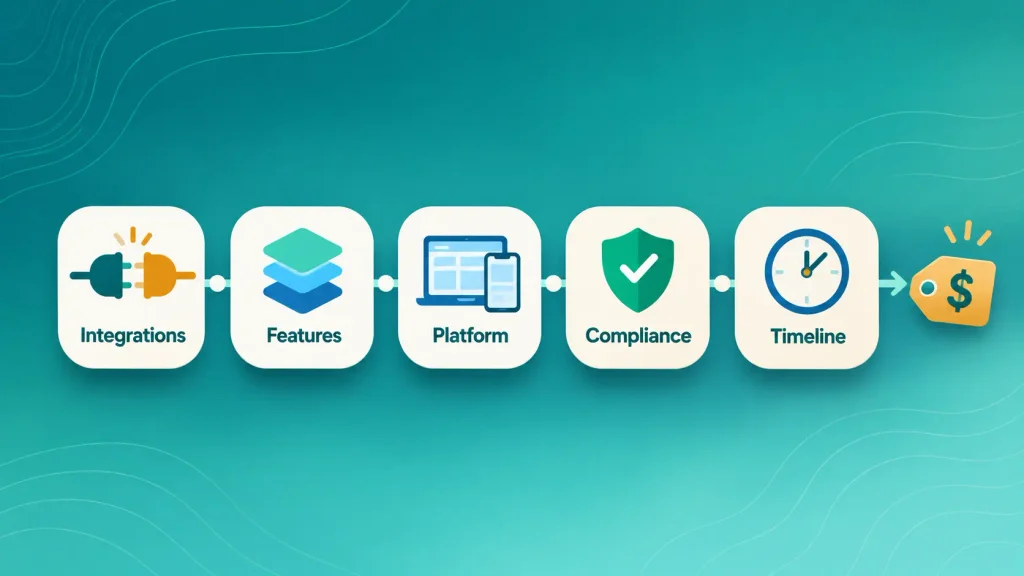
Five levers account for most of the swing between a modest quote and a big one.
Integrations and Data Migration
Every system you connect brings its own login rules, error behavior, and test environment. Two integrations are a small job. Six, with a legacy system in the mix, is a project inside your project.
Data migration works the same way. Moving years of records means cleaning, reshaping, and checking them before cutover. If your plan connects a CRM, a payment provider, and an ERP, say so early so it’s priced into your custom software development cost. Boomdevs’ software integration service exists for exactly this work.
Features, Complexity, and Screen Count
Every feature costs design time, build time, testing time, and maintenance time later. A single screen with a form is cheap. A screen with approval rules and role-based views is not.
These features add the most to a build:
- Role-based access with different views per user type
- Payments and subscription billing
- Real-time updates, chat, or notifications
- Reporting dashboards with live data
- AI features that need clean data and model integration
Prioritize ruthlessly, because every feature adds to your custom software development cost. The features you cut from release one are the cheapest ones you’ll ever build.
Platform and Design Depth
A web-only product is usually the cheapest starting point. Add iOS and Android and you add separate interfaces, device testing, and ongoing updates. Cross-platform frameworks narrow that gap, but they don’t erase it.
Design depth matters too. A clean, standard interface costs less than custom animations and bespoke components. Decide how much polish your first release truly needs. You can always refine the look in a later release, once real users show you what matters to them.
Security, Compliance, and Industry
If you’re in healthcare, fintech, or another regulated space, expect extra work on encryption, access controls, audit logs, and documentation. That work is easier and cheaper to build in from day one than to retrofit after a customer asks for it.
Tell your provider which rules apply to you before they quote. It changes the scope, and it’s the one part of custom software development cost you can’t negotiate away.
Timeline and Team Size
A faster timeline usually means a bigger team working in parallel, which adds coordination cost. GoodFirms found that 42.6% of surveyed firms cite time-to-market pressure as a cost driver.
If your launch date is flexible, say so. A relaxed schedule gives your provider room to staff the project more efficiently.
Here’s the whole picture in one place:
| Lever | Pushes cost up | Keeps cost down |
| Integrations | Legacy systems, many connections | A few well-documented APIs |
| Features | Roles, payments, real-time, AI | A tight first release |
| Platform | Web plus iOS and Android | One platform to start |
| Compliance | Healthcare, finance, audits | Built in from day one |
| Timeline | Compressed launch, large team | Flexible schedule, small team |
The pattern is consistent. Anything you decide early stays cheap, and anything you discover late gets expensive.
How Much Do Software Developers Charge Per Hour?
Most software firms charge between $20 and $50 an hour, according to GoodFirms, and Clutch’s data shows most listed companies at $24 to $49. Higher bands exist for a reason, though. GoodFirms matched each hourly band to a typical buyer:
| Hourly band | Share of surveyed firms | Typical buyer |
| Under $20 | 12.5% | Small experiments and MVPs |
| $20 to $50 | 56.3% | SMEs wanting cost-effective builds |
| $50 to $100 | 12.5% | Mid-sized firms and funded startups |
| $100 to $250 | 10.9% | Enterprises with high-security needs |
| Above $250 | 7.8% | Fortune 500 and strategic consulting |
Software development hourly rates are one input, and they aren’t the whole price. Your cost equals the rate times the hours, and a lower rate that needs more hours or more rework can cost you more in total.
I’d suggest picking a band that matches your risk. A mission-critical platform with strict compliance rules rarely belongs in the cheapest tier.
Which Pricing Model Fits Your Project?
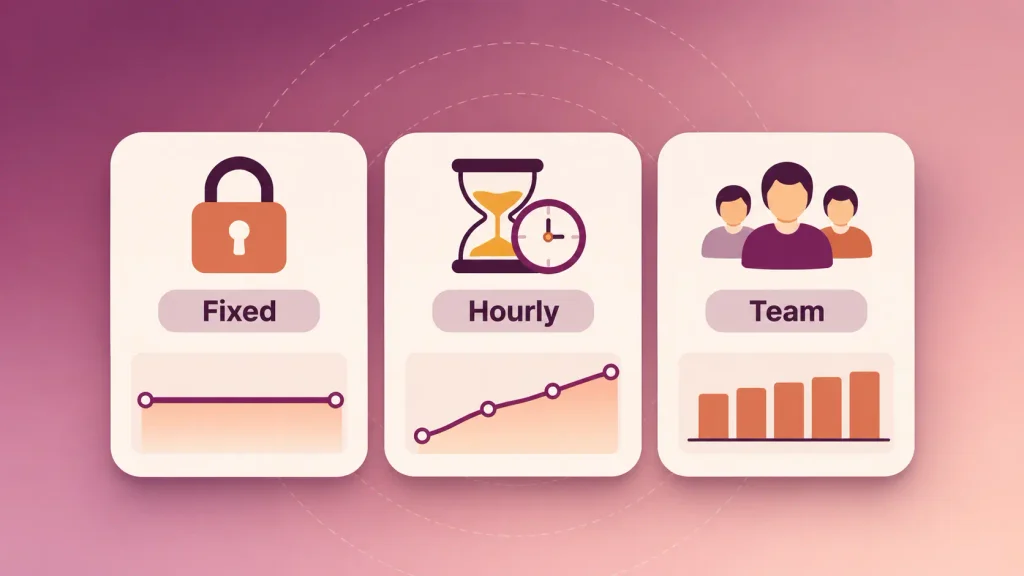
Pick the model by how stable your scope is. Fixed price suits a tightly defined build, time and materials suits work you’ll learn your way through, and a dedicated team suits a product that keeps evolving.
| Model | Best for | Who carries overrun risk | Watch for |
| Fixed price | Clear scope, MVPs, small builds | Mostly the provider, priced in | Change orders and rigid scope |
| Time and materials | Evolving requirements | You | No built-in cost ceiling |
| Milestone-based | Medium to large projects | Shared | Vague milestone definitions |
| Dedicated team | Long-running products | You, for direction | Paying for idle capacity |
GoodFirms found that 81.3% of firms offer time and materials, 65.6% offer fixed price, and 59.4% offer dedicated teams. On payments, 68.8% of firms bill by milestone. You’ll often see a hybrid: hourly work with payments tied to delivered milestones.
If you can’t describe your scope in a few pages, fixed price will likely cost you in change orders. If you can, it gives you the most predictable budget.
What Does Custom Software Cost After Launch?
Plan on spending 10% to 20% of your original custom software development cost each year to keep software running, according to GoodFirms. That’s your upkeep: bug fixes, security patches, updates, and performance tuning.
Maintenance and Running Costs
Skipping maintenance doesn’t save money. It moves the bill to a worse moment, usually a security issue or an outage. Many teams hand this work to the people who built the product, and Boomdevs’ software maintenance and support covers monitoring, patches, and feature updates.
Running costs also include cloud hosting, third-party licenses, and monitoring tools. They grow with your users and your data, so ask your provider how the hosting bill scales.
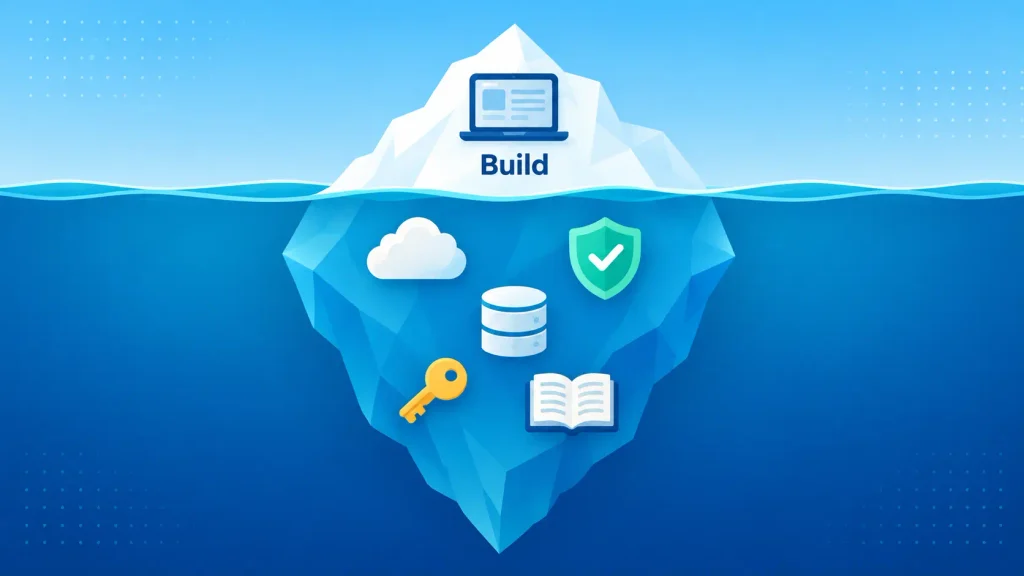
Hidden Costs Teams Forget
Most budgets price the build and forget everything around it, so the true custom software development cost ends up higher than planned. Check your plan for these:
- Discovery and planning before the first line of code
- QA, security testing, and user acceptance testing
- Data migration from your current system
- Third-party licenses and API usage fees
- Cloud hosting and monitoring
- User training and documentation
- Scope changes, which GoodFirms found raise cost by 10% to 25% when they happen
Add them up before you approve a budget, not after.
Want a number for your own project? Get a Free Project Estimate and a Boomdevs engineer will walk you through scope, timeline, and a cost breakdown. Boomdevs’ KpiClock project replaced three workforce tools with one platform and reported 70% cost savings for a 50-user team.
Custom Software vs Off-the-Shelf: What Costs Less in Five Years?
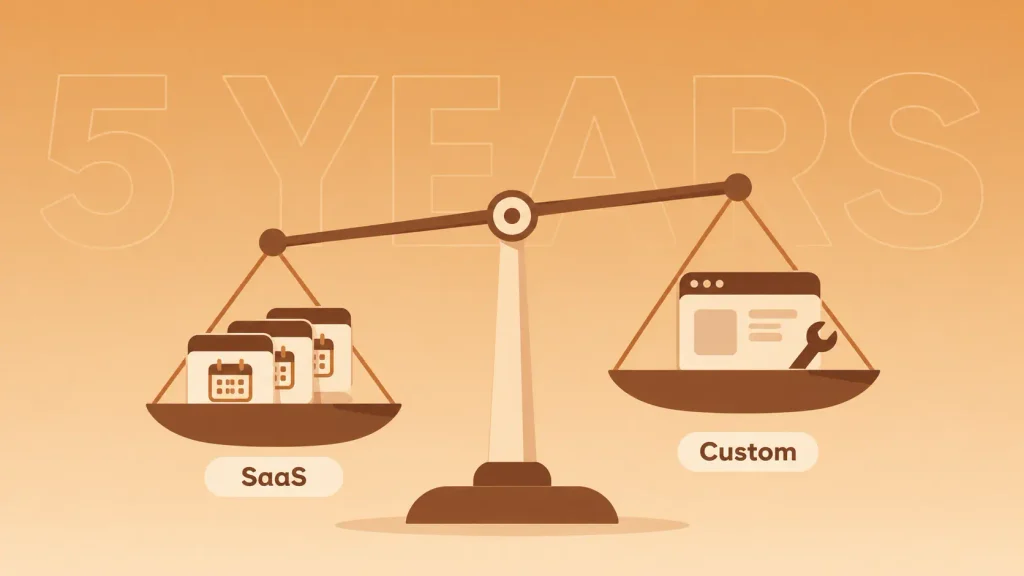
Off-the-shelf software costs less on day one, and custom software often costs less once you count licenses, workarounds, and limits. Which side wins depends on how unusual your workflow is and how fast you’re growing.
Our full comparison of custom software vs off-the-shelf walks through the decision. For the cost side, a simple test helps. Add up your current license fees and the hours your team spends on workarounds, then compare that against the build cost plus 10% to 20% a year in upkeep.
You can also measure the return directly:
- Estimate your annual benefit: savings from retired tools, hours saved, and errors avoided.
- Subtract your annual running cost.
- Divide the result by your total build cost.
The KpiClock project is a real example. One platform replaced three tools, and the case study reports 70% cost savings for a 50-user team. Your numbers will differ, but the method holds.
Does AI Make Custom Software Cheaper to Build?
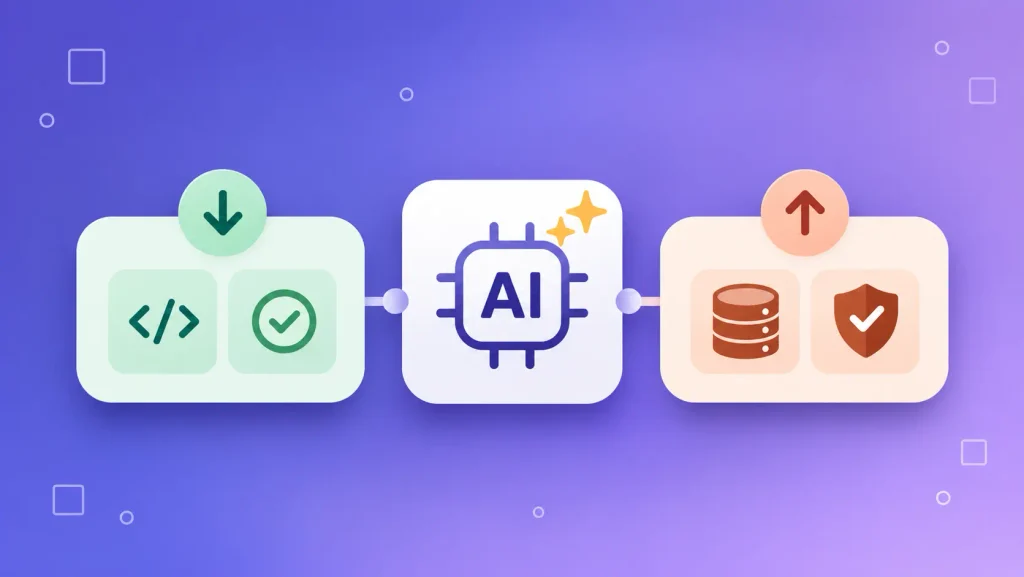
AI tools cut some costs and add others, and the net effect is smaller than the hype suggests. GoodFirms found that 90.6% of surveyed firms use AI to plan, code, and test, and about 61% expect it to trim costs by 10% to 25%.
The same survey shows the other side. AI integration alone can raise project cost by up to 30%, because of data readiness, model integration, and compliance work. And one respondent noted that AI is making projects bigger for the same budget rather than cheaper.
Independent research adds caution. In a randomized trial by METR, 16 experienced developers worked through 246 tasks in mature codebases. They took 19% longer with AI tools allowed, though they had expected to finish 24% faster. METR notes the result may not apply to every setting, and the tools have changed since early 2025.
Here’s how that translates to your budget:
- Likely to help: Documentation, testing support, and repetitive code patterns
- Unlikely to shrink: Discovery, architecture, integrations, security review, and data migration
- Likely to add cost: AI features inside your product
Ask any provider you’re considering how they use AI, and whether their software development cost estimation reflects it. A good answer is specific about where it saves hours.
Why Software Budgets Blow Up, and How to Stop It
Software projects overrun more than almost any other kind of IT work. A McKinsey and Oxford study of large IT projects found they ran 45% over budget on average, ran 7% over time, and delivered 56% less value than predicted. It also found that software projects carry the highest risk of cost and schedule overruns.
That study covers projects with initial price tags above $15 million, so your project is likely far smaller. Read it as a warning about the pattern, not a forecast for your budget. One finding does scale down: every additional year a project runs raised cost overruns by 15%.
At smaller scale, scope creep is the usual culprit. GoodFirms found that 65.6% of surveyed firms said scope creep typically raised cost by 10% to 25%, and 86% said changing client needs came up again and again.
Three habits protect you:
- Lock scope in writing before the build starts. Anything not on the list goes into a later release.
- Hold a contingency. I’d suggest at least the 10% to 25% range scope creep typically adds.
- Ship in short cycles. You see real progress every few weeks, so problems surface while they’re cheap.
How Do You Estimate Custom Software Cost Before You Hire?
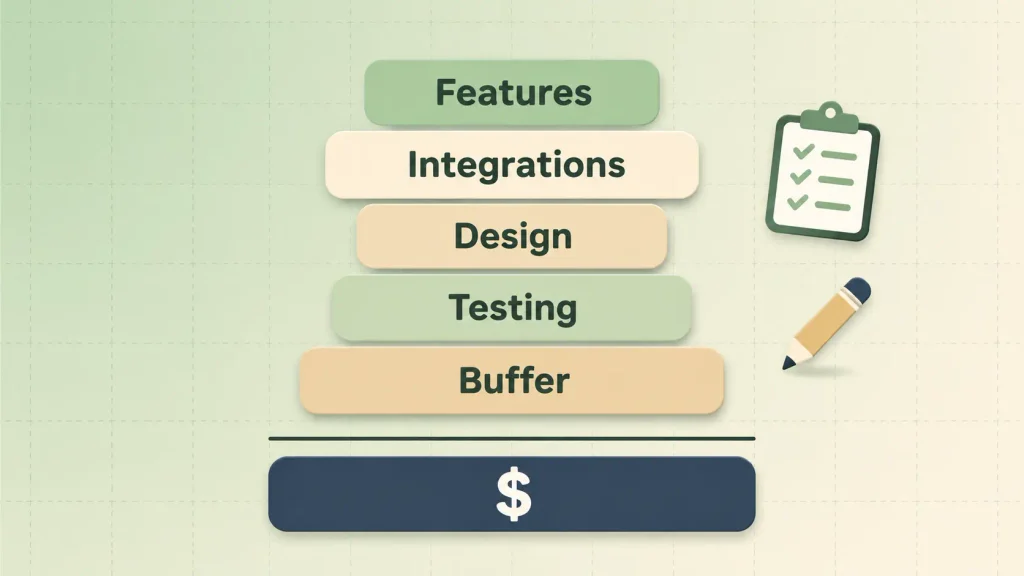
The most reliable answer to how much does custom software cost comes from pricing the work in pieces, then adding the pieces. GoodFirms describes its software development cost estimation formula this way: base project cost, plus feature cost multiplied by a complexity factor, plus integrations, design, testing, and maintenance. Its complexity factor runs from 1x for a simple MVP to 2x for an enterprise-grade platform.
The Estimate Formula
Here’s a practical way to run your own software development cost estimation before you talk to anyone:
- List every feature and rank each as must-have, should-have, or later.
- Estimate hours per feature with your provider, then multiply by the software development hourly rates in your quote.
- Add integrations and data migration as their own lines.
- Add design, QA, and project management.
- Add a contingency, then add the first year of running costs.
The result won’t be exact, but it turns custom software development cost 2026 averages into a number that fits your project. It gives you a range you can test against real quotes, and it shows you which lines drive the total.
Why Paid Discovery Beats a Free Quote
A free quote built on a 30-minute call is a guess, not real software development cost estimation. A paid discovery phase replaces the guess with decisions. It’s where scope, architecture, and risks get settled before the big spend starts.
A good discovery should hand you these:
- A prioritized backlog for your first release
- An architecture plan and a list of every system you’ll connect
- A data migration assessment based on your real records
- A risk list with an owner for each risk
- An estimate stated as a range, with its assumptions
Boomdevs works this way on its software development consulting engagements, so you get a clear project scope, timeline, and cost breakdown before development begins. Discovery also gives you an exit. If the estimate doesn’t fit your business case, you’ve learned that early and you keep the plan.
Questions to Ask Every Provider
These questions separate a real estimate from a sales number:
- What’s included in this price, and what isn’t?
- Which assumptions would change the total?
- How do you handle scope changes mid-build?
- What does the first year of running costs look like?
- Who owns the code when we finish?
Write the answers down and keep them with the contract. If a provider dodges any of these, treat that as a signal about how the rest of the project will go.
How to Reduce Custom Software Development Cost Without Cutting Quality
You reduce custom software development cost by deciding more before you build and building less at first. Cutting quality is the expensive way to save money, because the bill returns as rework.
- Start with an MVP. Build the smallest version that proves the idea, then add features based on real use. Our guide to SaaS MVP development cost shows how that plays out.
- Write requirements down. Clear scope is the most repeated advice among the firms GoodFirms surveyed.
- Reuse proven tools. Open-source components and standard integrations beat building everything from scratch.
- Automate testing and deployment. Catching bugs early costs far less than fixing them after launch.
- Choose the right team, not the cheapest one. A lower rate that causes rework is no bargain.
- Cut features, not testing. Postponing a nice-to-have costs you nothing today. Skipping QA costs you later.
None of these requires sacrificing quality. They all require making hard calls early.
How Boomdevs Fixes Runaway Software Budgets
Most budget trouble starts before development does: vague scope, hidden integrations, and quotes that don’t show their assumptions. Boomdevs starts with discovery, so you see a scope, a timeline, and a cost breakdown before a single line of code is written.
From there, the team builds in agile sprints with continuous testing, so you see working software and spot problems early. After launch, the same team stays on to monitor performance and ship updates. You aren’t handed off to a stranger.
The results show it. Boomdevs built the Rooftop Saunas booking platform in 90 days with five dedicated developers, replacing their manual booking work, as the case study describes. KpiClock replaced three tools with one platform.
If you’re weighing a build, Boomdevs’ custom software development team can give you a scoped estimate that shows its work.
Get a scoped cost breakdown for your project. Book a Free Strategy Call to walk through your features, integrations, and budget with a Boomdevs engineer.
Frequently Asked Questions
How Much Does Custom Software Cost for a Small Business?
GoodFirms puts small or MVP builds under $30,000, usually delivered in one to three months. Most small-to-mid projects land between $30,000 and $100,000. Your number depends on features, integrations, and who builds it.
Why Is Custom Software So Expensive?
Most of your custom software development cost pays for a team’s time: developers, designers, QA, and project managers. Two GoodFirms respondents estimated that 50% to 70% of total cost ties to those roles. Software built around your exact workflow also needs more design and testing than a product sold to thousands of customers.
How Long Does It Take to Build Custom Software?
GoodFirms reports three to six months for medium projects and six to 12 months for large ones. Boomdevs says a focused web app or internal tool can launch in eight to 12 weeks, and larger enterprise platforms typically take four to six months. Clutch’s reviewed projects average about 13 months.
How Much Does It Cost to Maintain Custom Software Each Year?
Plan on 10% to 20% of the original build cost per year, according to GoodFirms. That covers bug fixes, security patches, updates, and performance work. Ask your provider to show the first-year figure in your estimate.
Is Custom Software Cheaper Than SaaS in the Long Run?
It can be, but it depends on your license fees, your workarounds, and how well the software fits your process. Compare your yearly spend on current tools against the build cost plus annual upkeep. Our custom vs off-the-shelf guide walks through the full decision.
How Much Do Software Developers Charge per Hour?
Most firms charge $20 to $50 an hour, and Clutch lists most companies at $24 to $49. Enterprise-grade work commonly sits in the $100 to $250 range, according to GoodFirms. Location, seniority, and project risk explain why software development hourly rates spread so widely.
Is Fixed Price or Time and Materials Better?
Fixed price works when your scope is clear and stable. Time and materials works when requirements will change as you learn. Many projects blend the two, with hourly work and milestone payments.