Let’s Build Something
Exceptional
Have a project in mind? Let’s turn it into something amazing.

Mohammad Robin
Founder & CEOBook a FREE Strategy Call
Mohammad Robin
Founder & CEOBook a FREE Strategy Call
KpiClock.com – Replacing Three Workforce Tools With One All-in-One Platform
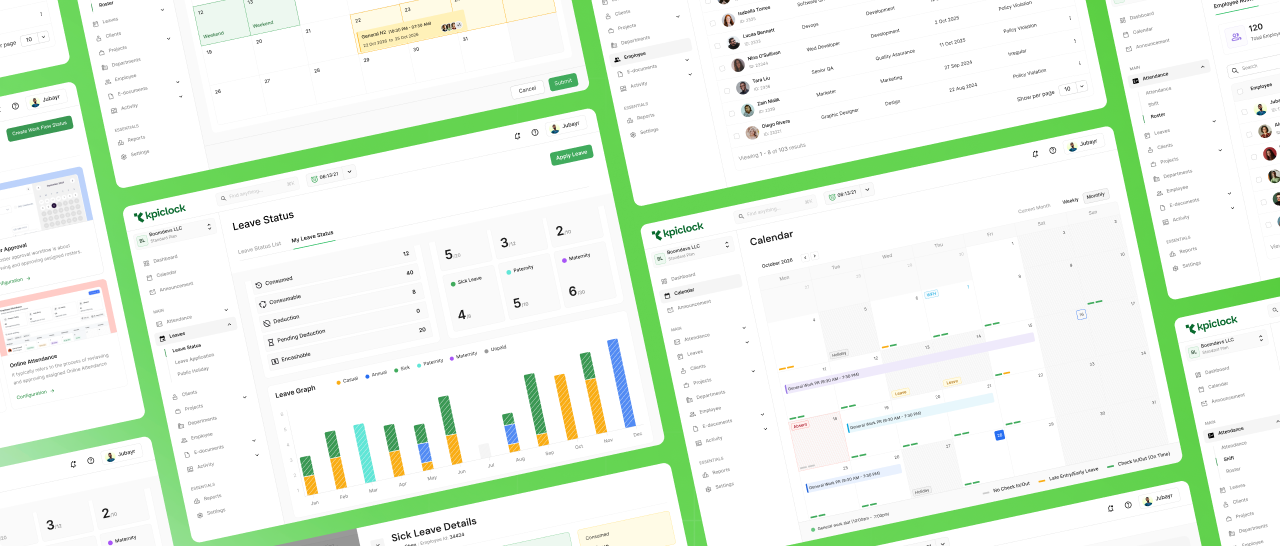
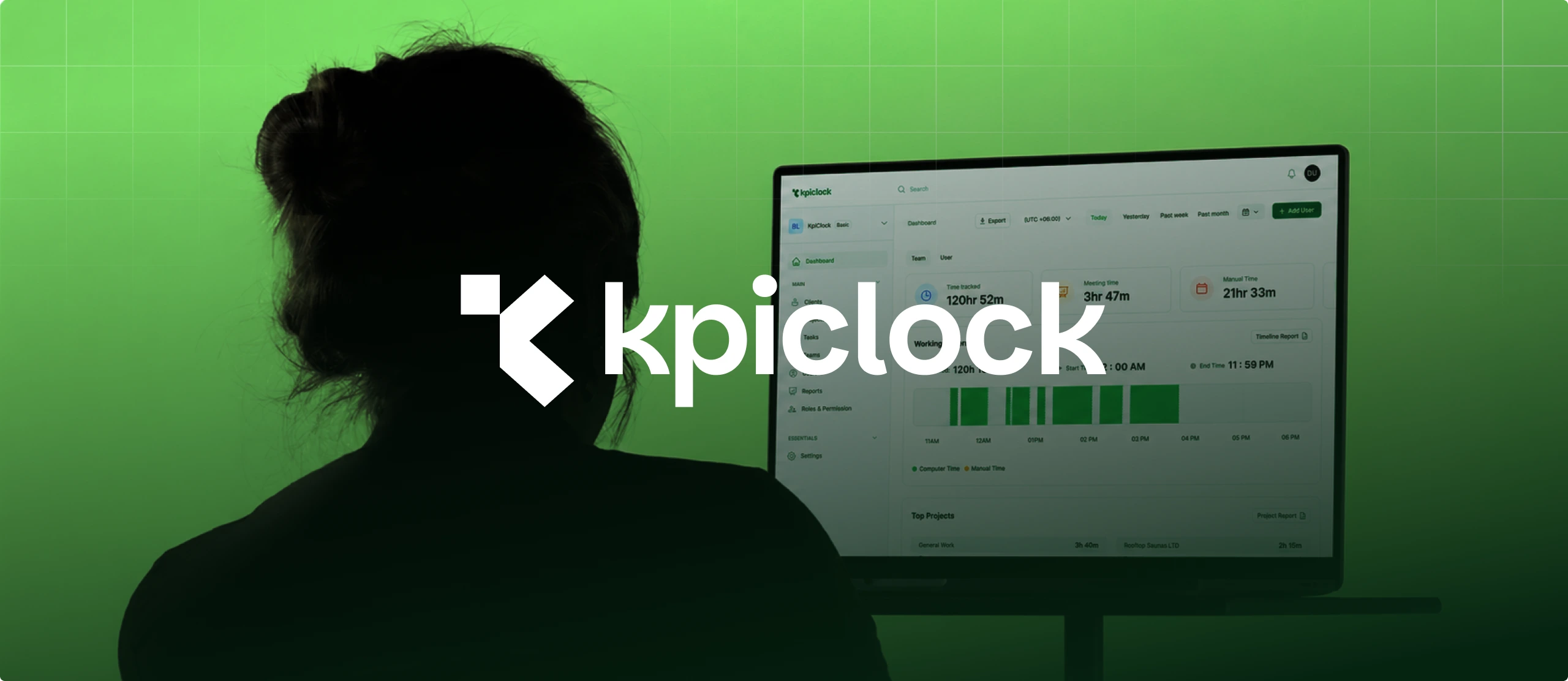
KpiClock is an all-in-one team management platform that combines time tracking, attendance, leave management, productivity monitoring, and ESIGN-compliant document signing in a single workspace. The platform replaces Hubstaff, BambooHR, and DocuSign for growing teams, with native desktop apps for Windows, Mac, and Linux and permission-based dashboards for admins, managers, and employees.
Industry
SaaS / HR Tech
Services
UI/UX Design
Web Design
Web Development
SaaS App Development
Timeline
3 months
Website
Tools Replaced by One Platform
Cost Savings for a 50-User Team
Average Team Setup Time


“Boomdevs built our entire backend from scratch and helped bring the whole platform to life. We’re running our real operations on it in beta right now — time tracking, monitoring, the desktop apps, all of it — and it held up. They also took our complicated all-in-one pitch and made it feel simple and credible, then shipped our entire Framer site in three weeks. It looks like the work of a company far bigger than us.”
Technology Company

The Challenge
KpiClock came to Boomdevs with an aggressive product promise: replace Hubstaff for time tracking, BambooHR for HR, and DocuSign for eSign — with one affordable platform. That promise only works if the software genuinely does all three, reliably, from the first release.
This meant the first version could not be a narrow MVP built to test the market. To be credible against entrenched, well-funded incumbents, KpiClock had to launch with a broad feature set where every module worked well enough that real teams would trust it to run their operations. Alongside the platform, the client needed a marketing website capable of making that same case to a skeptical audience. The challenge broke down into:
• Breadth With Reliability: Shipping a dozen interconnected modules — tracking, monitoring, desktop apps, integrations, reporting — that all had to work together from day one.
• Multi-Tenant Trust: Managing live work data for multiple companies simultaneously, with strict role-based access and a data model that stays consistent across web and desktop.
• A Credibility Problem in Marketing: A brand-new SaaS competing with billion-dollar incumbents had to look more credible than its size, not less — and prove its cost savings rather than simply claim them.
Project Scope
Boomdevs was responsible for building both the platform and the go-to-market presence:
• Backend Architecture & Development: A Laravel backend architected for a data-heavy, multi-tenant SaaS with complex permission logic.
• Frontend Development: A fast, responsive dashboard experience built in React and Next.js, connected through a clean API layer.
• Desktop Application Development: Native applications for Windows, Mac, and Linux, syncing back to the web platform.
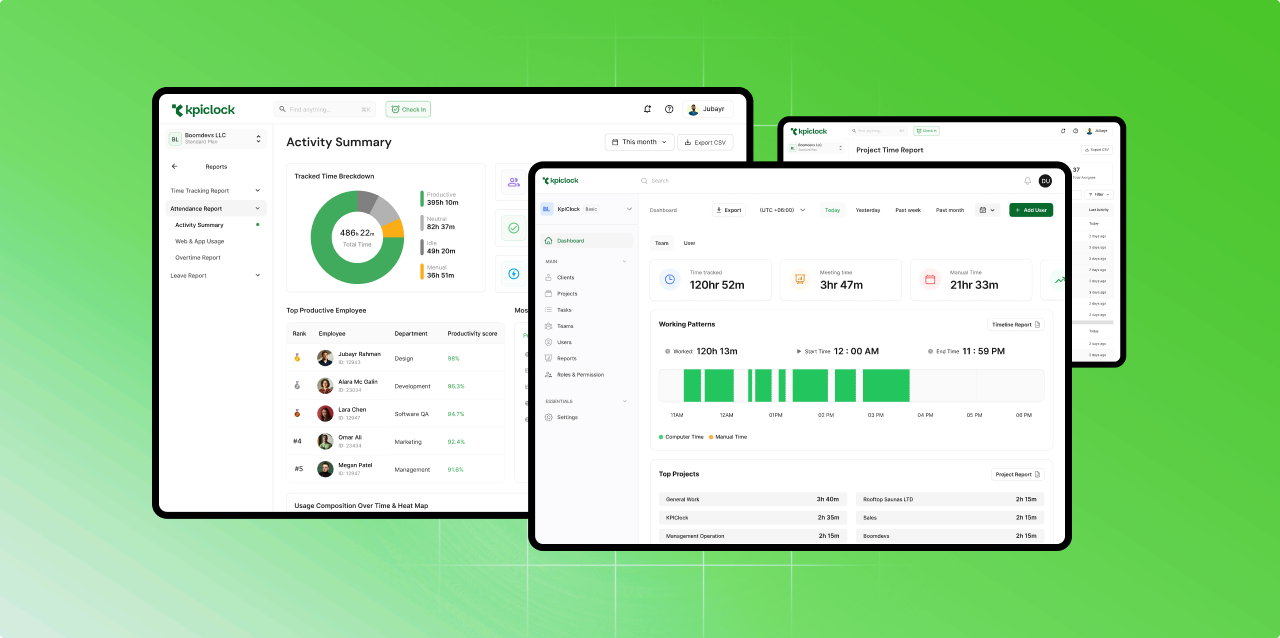
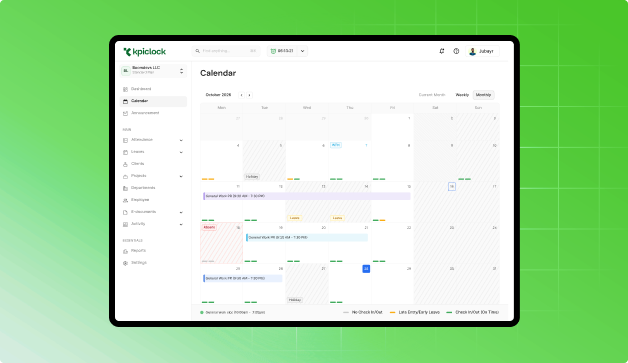
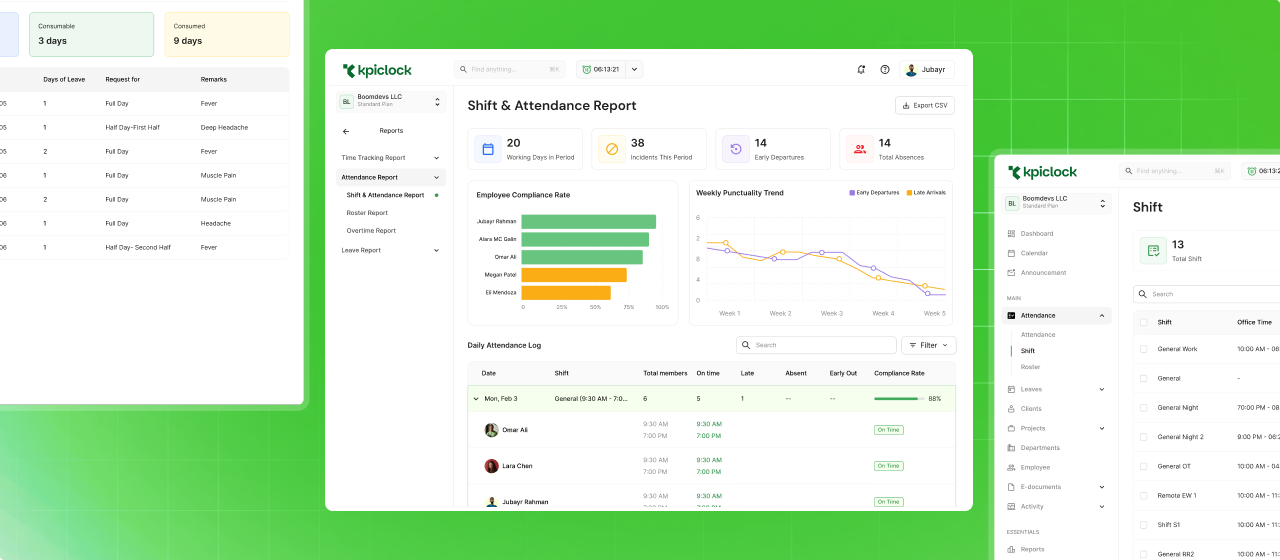
• Multi-Role Dashboard Design: Distinct, permission-based experiences for Admins, Team Leads and Managers, and Employees.
• Marketing Website Design & Build: An 11-page marketing site designed and built in Framer, delivered launch-ready in three weeks.
Key Features
Some of the key features that were critical for the project included:
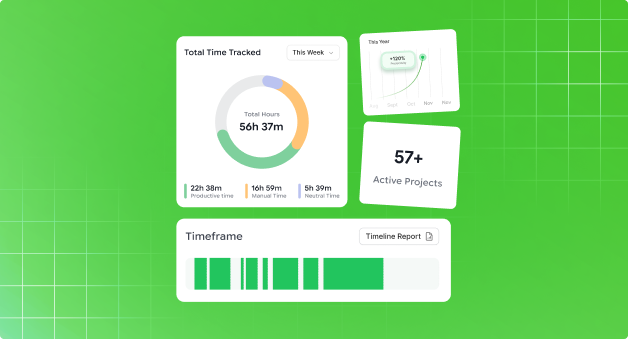
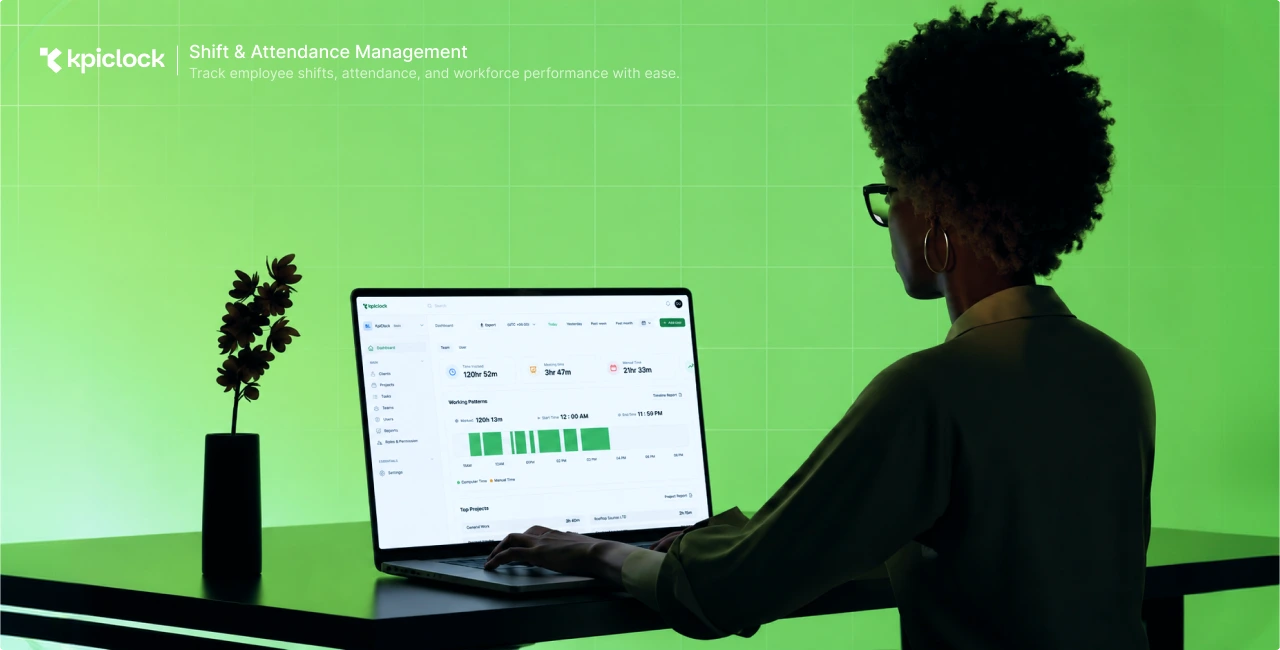
• Time Tracking: Manual and automatic tracking across unlimited projects and tasks, with billable versus non-billable logic and offline sync.
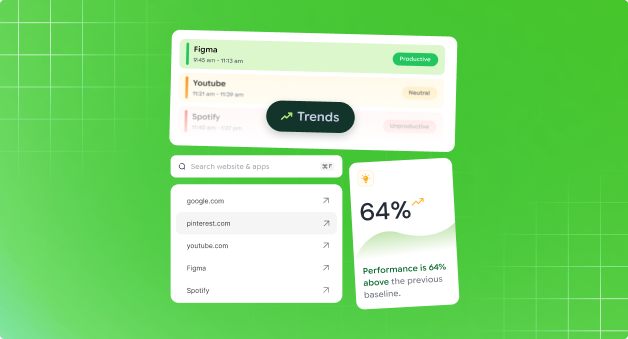
• Productivity Monitoring: Activity tracking with app and URL monitoring, plus optional screenshots with a blur mode so teams handling NDA or sensitive work can monitor productivity without exposing confidential content.
• Desktop Applications: Native apps for Windows, Mac, and Linux that track time and activity locally, work offline, and reconcile reliably with the web dashboard.
• Project Tool Integrations: One-click connections to ClickUp, Jira, Trello, Asana, Linear, and Monday.com, all mapped into one consistent internal model.
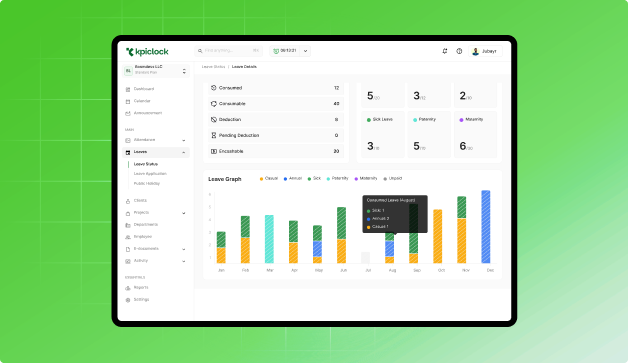
• Multi-Role Dashboards: Permission-based experiences tailored to Admins, Team Leads and Managers, and Employees, each seeing only what their role requires.
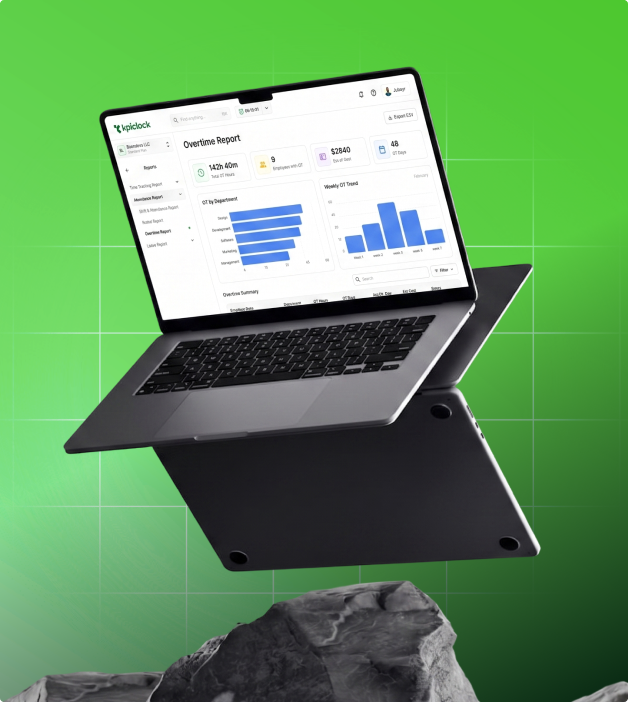
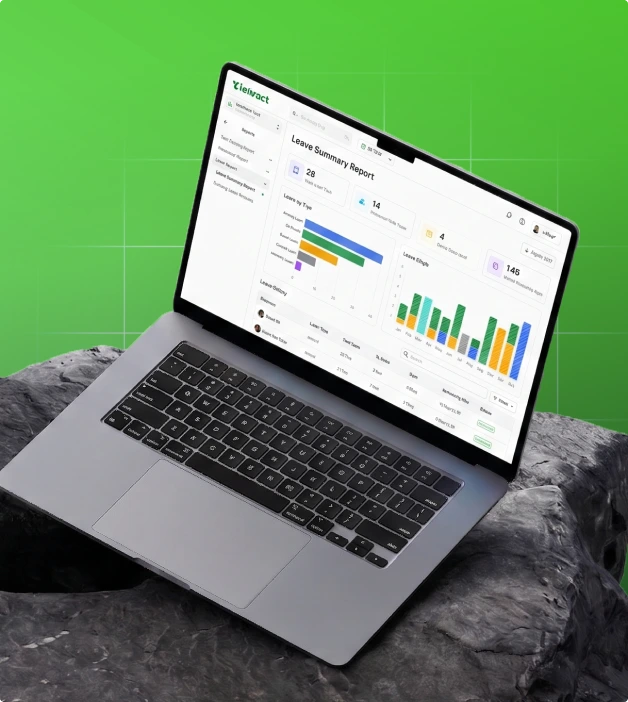
• Reports & Analytics: Timesheets, productivity, and attendance reporting, exportable to CSV, Excel, and PDF.
• Admin Panel: End-to-end management across users, teams, clients, and projects.
• Interactive Cost Comparison Tool: The strongest sales asset on the marketing site — a direct, honest cost comparison against Hubstaff, Time Doctor, and the BambooHR plus DocuSign stack, showing real monthly cost and annual savings.
• Tabbed Product Demo Module: A “See KpiClock In Action” section letting visitors explore time tracking, teams, clients, projects, tasks, and leave without leaving the page.
Challenges
The most significant challenges were:
• Desktop Apps Syncing to the Web Platform: Building native apps across three operating systems that track locally, work offline, and sync back without duplicating or losing data was the single hardest piece of the build. Offline sync is deceptively brutal.
• Productivity Monitoring With a Privacy Layer: Capturing activity and optional screenshots, then applying blur so sensitive content is never exposed, required getting both the capture pipeline and the privacy layer right.
• Time Tracking That Has to Be Trustworthy: In this category, if the numbers are ever wrong, the product is dead. Manual tracking, automatic tracking, offline sync, and billable logic all had to reconcile to exactly the same truth.
• Integrations at Scale: Every external tool has its own API and quirks. Wiring six of them into one consistent internal model took real work.
• The Comparison Table: The most persuasive element on the marketing site was also the hardest to make feel clean. Fitting time tracking, screenshots, attendance, leave, eSign, setup time, and cost-per-50-users into a table that stayed honest, scannable, and premium — especially on mobile — took significant iteration.
Process & Strategy
We followed a structured process across both the platform and the website:
01
Research
02
Design
03
Development
04
Launch
Technologies Used
The following tools and technologies were utilized:
Back-end


Front-end


Design and Wireframing


Results & Outcomes
We successfully built one of the fastest Solana-based blockchain platforms available, providing a seamless user experience for over 1 million active daily users. Key outcomes include:
• Live in Beta: KpiClock is running in beta with the client’s own company and two partner companies using it daily for real operations — time tracking, monitoring, and the desktop apps all in production use.
• Full Feature Breadth at Launch: Rather than a single-feature MVP, the first release shipped time tracking, productivity monitoring, desktop apps across three operating systems, six integrations, multi-role dashboards, reporting, and a full admin panel.
• Website Delivered in Three Weeks: An 11-page, fully responsive Framer site launched with clear positioning against three entrenched competitors and an interactive tool that proves the cost savings rather than claiming them.
• Client-Managed Going Forward: The CMS structure lets a non-technical team edit and extend the site independently, with no ongoing development dependency.
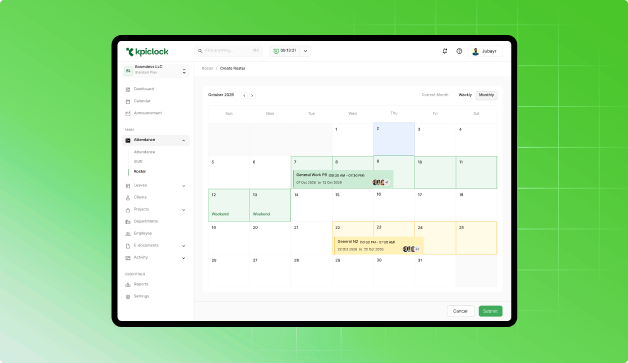
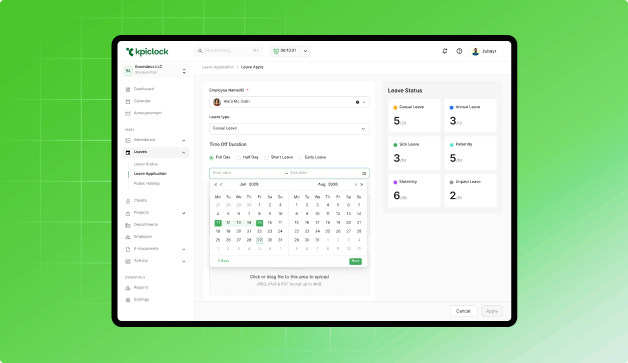
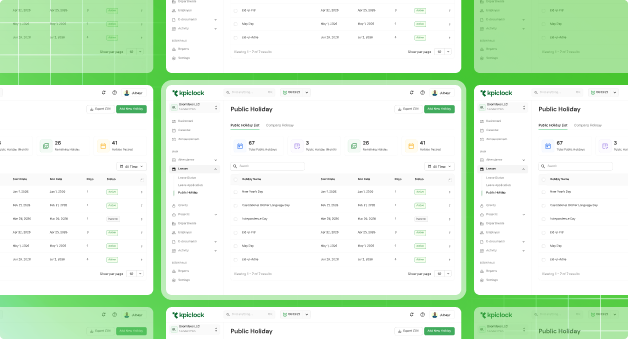
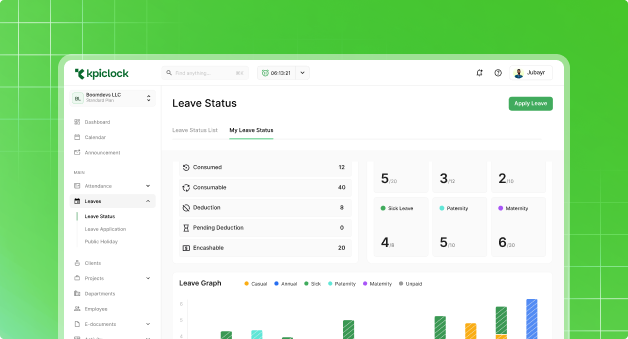
• Roadmap Driven by Real Usage: Live beta data is now shaping Phase 2, currently in progress: attendance management, leave management, and ESIGN-compliant document signing.
Conclusion
The KpiClock project demonstrates Boomdevs’ ability to deliver both sides of a product launch — the platform itself and the go-to-market presence that sells it. Anyone can build one feature. The hard part, and the part that makes an all-in-one platform real, is making a dozen of them work together reliably from day one. KpiClock now has a broad, working, multi-tenant SaaS platform built from scratch in roughly three months, and a website credible enough to sell it against three billion-dollar incumbents.