


- 1. Key Takeaways
- 2. What Are SaaS Pricing Models?
- 3. The 10 SaaS Pricing Models Explained
- 4. Which SaaS Pricing Models Are Companies Using in 2026?
- 5. How to Choose the Right SaaS Pricing Model
- 6. What Your Pricing Model Means for Your Product Build
- 7. How to Test and Change Your Pricing Model
- 8. How Boomdevs Solves the Pricing-Flexibility Problem in SaaS Builds
- 9. Frequently Asked Questions
Summarize with
You’re about to launch, and the pricing page is still blank. Seats, usage, credits, tiers: every competitor seems to charge a different way.
SaaS pricing models are the rules that decide what a customer pays for, whether that’s people, usage, features, or results. The model isn’t the price itself. It’s the meter the price runs on. Below, you’ll find all 10 models, the 2026 data, and a way to pick yours.
Key Takeaways
- A SaaS pricing model is the billable unit (seats, usage, credits, features, or outcomes), and it matters more than the number you put next to it.
- Hybrid pricing, a base fee plus a variable component, is now the most popular model among B2B software companies.
- Pick the model by asking one question: if a customer doubles their usage, do they get double the value?
- Every model has a build cost. Usage, credit, and outcome pricing need metering and spend controls that flat or seat pricing never does.
- Expect to change your model. Three in four software companies changed pricing or packaging in the past year.
What Are SaaS Pricing Models?
A SaaS pricing model is the structure that decides how a customer’s bill grows. Per-seat pricing grows with headcount. Usage pricing grows with consumption. Outcome pricing grows with results.
The thing that grows is called your value metric. Get it right and customers pay more only when they get more, which makes upgrades feel fair. Get it wrong and your best customers feel punished for using the product.
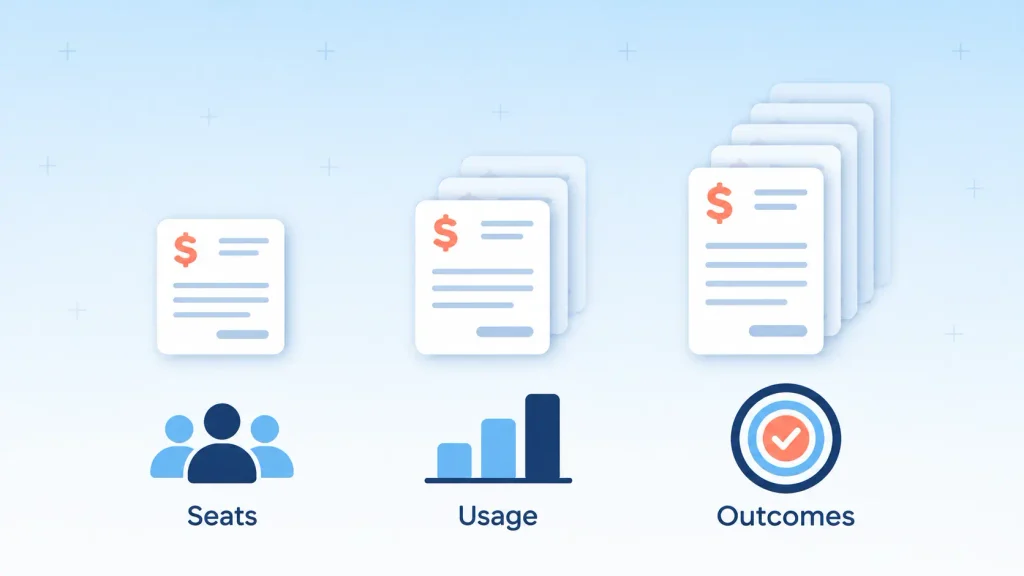
Here’s how the 10 models compare at a glance:
| Model | You charge for | Main risk |
| Flat-rate | Access to the whole product | Big accounts pay the same as small ones |
| Per-user (seat) | Each named user | Customers ration seats |
| Active-user | Users who actually log in | Harder to forecast revenue |
| Tiered | Bundles at set price points | Poorly drawn tier lines |
| Feature-based | Access to specific capabilities | Key features feel locked away |
| Freemium | Nothing, until users upgrade | Free users who never convert |
| Usage-based | Consumption (API calls, data, tasks) | Bill shock |
| Credit-based | Prepaid units spent across features | Buyers can’t translate credits to value |
| Hybrid | Base fee plus a variable component | Harder to explain |
| Outcome-based | Results (a resolved ticket, a booked meeting) | Disputes over who caused the result |
No row on that table is “best.” Each one trades simplicity against fairness in a different place, and the rest of this guide is about finding the trade you can live with.
Pricing Model vs Pricing Strategy
People use the two terms interchangeably, but they answer different questions. Your pricing model is what you charge for. Your pricing strategy is how you decide the number.
The four strategies you’ll see most often:
- Value-based: price on what the result is worth to the customer. This is usually the anchor.
- Competitive: price against the alternatives. Useful as a sanity check, risky as the whole plan.
- Cost-plus: add a margin to your cost to serve. Treat it as a floor, never a target.
- Penetration: price low to win share, then raise later. It works only if you plan the raise from day one.
In practice, you’ll combine them. Value sets the anchor, competitors tell you if you’re out of range, and cost tells you where you can’t go.
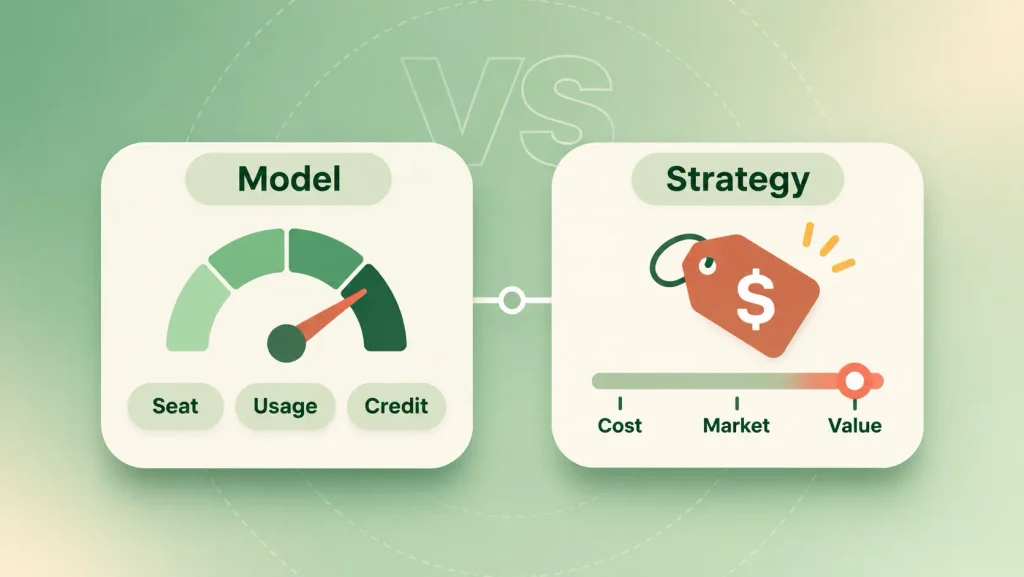
The 10 SaaS Pricing Models Explained
Each model below fits a specific kind of product. Read them with your own value metric in mind, because the “right” model is mostly a question of what your customers think they’re buying.
Flat-Rate Pricing
Flat-rate pricing charges every customer one price for the whole product. Basecamp is the classic example: one plan, unlimited users, no calculator needed.
It’s the fastest model to launch and the easiest to sell. The catch shows up later. A 500-person company pays what a five-person team pays, so your revenue stops growing even as your best accounts grow.
Per-User (Seat-Based) Pricing
Per-seat pricing charges for each person with a login. Jira, Slack, and most CRMs work this way, because each added teammate genuinely adds value.
Your customers can budget it in seconds, and your revenue rises as their team does. The downside is behavioral. Buyers start rationing seats, sharing logins, and leaving occasional users out, which quietly caps your adoption.
Active-User Pricing
Active-user pricing bills only for people who actually used the product in a billing period. Slack popularized it so companies could roll a tool out widely without paying for empty seats.
It removes the “who actually needs access?” debate inside your customer’s company. In exchange, your revenue now moves with engagement, which makes forecasting harder for you and invoices less predictable for them.
Tiered Pricing
Tiered pricing packages features, limits, or support into a few plans at different price points. HubSpot and Notion both run this way, with plans that move from individuals to enterprises.
Tiers let one pricing page serve wildly different buyers, and they create a natural upgrade path. Most SaaS companies start here. The work is in drawing the lines: too many tiers stall the decision, and a feature placed in the wrong tier frustrates the people who need it most.
At the top end, most tiered pages end in a “Contact sales” plan. That custom, quote-based tier suits complex enterprise deals, though it adds friction for anyone who wants to buy without a call.
Feature-Based Pricing
Feature-based pricing ties each plan to the capabilities it unlocks rather than to volume. Basic plans cover the core job, and higher plans add advanced reporting, integrations, or admin controls.
This works when the line between basic and advanced use is obvious to your customers. When it isn’t, a buyer who needs one premium feature ends up paying for 10 they don’t want, and resents it.
Freemium Pricing
Freemium gives users a permanently free version with limits, then charges when they need more. Slack, Notion, and Figma all grew this way.
Freemium is different from a free trial. A trial gives full access for a set time, then stops. A freemium plan never expires, so it only pays off when a clear trigger (more storage, more history, more teammates) pushes users to upgrade.
Without that trigger, free users stay free. You still pay to host and support them.
Usage-Based Pricing
Usage-based pricing, also called pay-as-you-go or metered billing, charges for consumption: API calls, data processed, messages sent, or tasks run. AWS, Twilio, and Snowflake all price this way.
It suits products where usage and value move together. Customers start small, which lowers the barrier to entry, and your revenue grows as they do without a single upsell call.
The trade-off is predictability on both sides:
- For your customer: a busy month means a bigger bill, which finance teams dislike.
- For you: a slow month for them is a slow month for you, so revenue gets harder to forecast.
That’s why pure usage pricing works best when customers can see and control their consumption in real time.
Credit-Based Pricing
Credit-based pricing sells a pool of prepaid units that customers spend across different actions. One lookup might cost one credit, while a heavy AI task might cost 50. Clay and Miro both use credits for this reason.
Credits let you price actions that cost you wildly different amounts behind one simple purchase. They’re spreading fast: Growth Unhinged’s 2026 survey of 230+ software companies found 29% already use AI credits, and another 33% plan to add them within a year.
Be careful, though. If customers can’t tell what a credit buys, they stop trusting the bill. The survey’s author, Kyle Poyar, points out that buyers juggling separate credit systems from many tools get worn down fast.
Hybrid Pricing
Hybrid pricing combines a fixed base, usually seats or a platform fee, with a variable charge for usage, credits, or outcomes. Datadog runs a version of it, and Microsoft is adding AI credits to GitHub Copilot on top of its seat pricing.
You get predictable baseline revenue plus upside as customers grow. Your customers get a known floor for budgeting. Hybrid is the most common model today, but it’s also the hardest to explain on one pricing page.
The detail that decides whether hybrid works is the ratio. Set the base fee too high and you lose small accounts. Set it too low and nearly all your revenue rides on the volatile usage line.
Outcome-Based Pricing
Outcome-based pricing charges for a result instead of access or activity. Fin, Intercom’s AI support agent, bills $0.99 per outcome on top of seat plans. You pay when the agent actually resolves something.
It’s the purest form of value alignment, and it makes a strong sales pitch. Few companies run it as their main model yet. In Growth Unhinged’s 2025 report, only 5% said outcome-based pricing was their primary model, while 25% expected it to be by 2028.
Outcome pricing needs results that are measurable, clearly caused by your product, and consistent across customers. If any of those is shaky, expect billing disputes.
Which SaaS Pricing Models Are Companies Using in 2026?
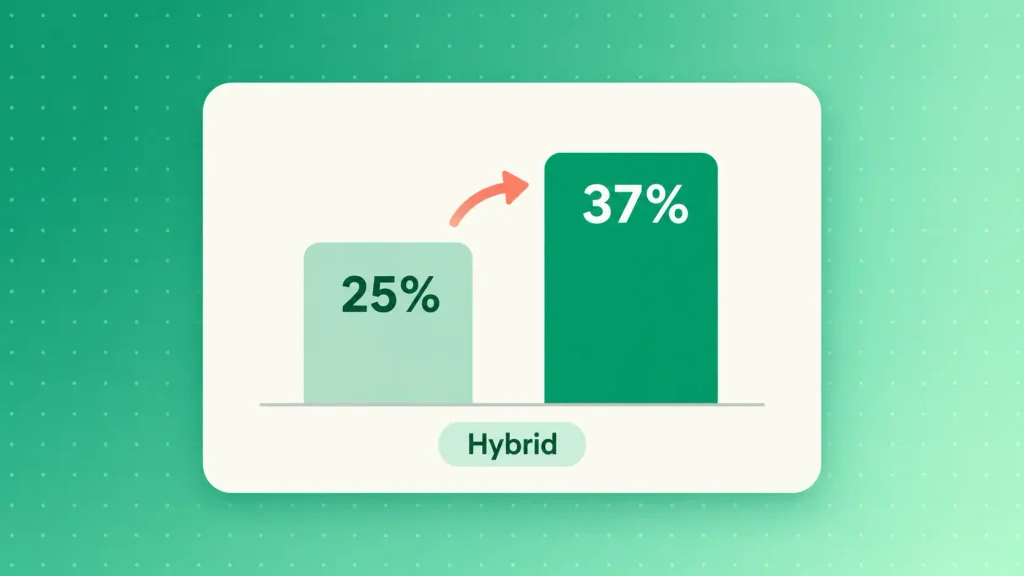
Hybrid pricing is now the single most common SaaS pricing model, and the shift is happening fast. The clearest 2026 picture comes from Growth Unhinged’s State of B2B Monetization survey, which polled 230+ software and AI companies.
What the 2026 data shows:
- Hybrid leads: 37% of companies have a hybrid model, up from 25% of the same respondents a year earlier.
- Startups favor flat fees: businesses under $5M ARR lean most on flat-fee subscriptions, at 37% adoption.
- Large companies hold on to seats: 29% of companies above $150M ARR still use per-seat pricing.
- Everyone is changing: three in four companies changed pricing or packaging within the past year.
- Few are happy: the most common pricing complaint is not enough expansion revenue, especially for flat-fee and seat-based companies.
Margins point the same way. In Chargebee’s 2025 monetization report, a survey of 473 finance, product, and go-to-market leaders, 67% of companies on hybrid pricing expected better margins, against 32% of those on pure usage pricing.
The pattern is easy to read. You start simple, then add a variable layer once you know what heavy users actually consume.
Why Per-Seat Pricing Is Losing Ground
Per-seat pricing assumes value grows with the number of people logging in. AI breaks that link. When an agent does the work of several people, your customer needs fewer seats while getting more value, and a seat-priced product earns less from its own success.

Costs changed too. A traditional SaaS feature costs almost nothing to serve one more time, but every AI call has a real compute bill. The 2026 Growth Unhinged survey put the median target margin for AI features at about 50%, well below the 70% to 80%+ typical for SaaS.
That’s why most teams now separate access from consumption: seats or a platform fee for access, plus credits or usage for the AI work.
If AI is becoming part of what your product does, the unit economics deserve their own model. Our guide to AI SaaS development decisions walks through inference cost per billable event, and our AI SaaS development team can help you test those numbers before you publish a price.
How to Choose the Right SaaS Pricing Model
Choosing a SaaS pricing model comes down to matching four things: your value metric, your costs, your buyer, and your stage. When all four point at the same model, you have your answer. When they conflict, you usually end up with a hybrid.
Start With Your Value Metric
Ask one question: if a customer doubles their usage, do they get roughly double the value?
If yes, a usage-based or credit model fits, because price and value move together. If the answer is “not really,” your product delivers value through access, and seats, tiers, or a flat fee will feel fairer.
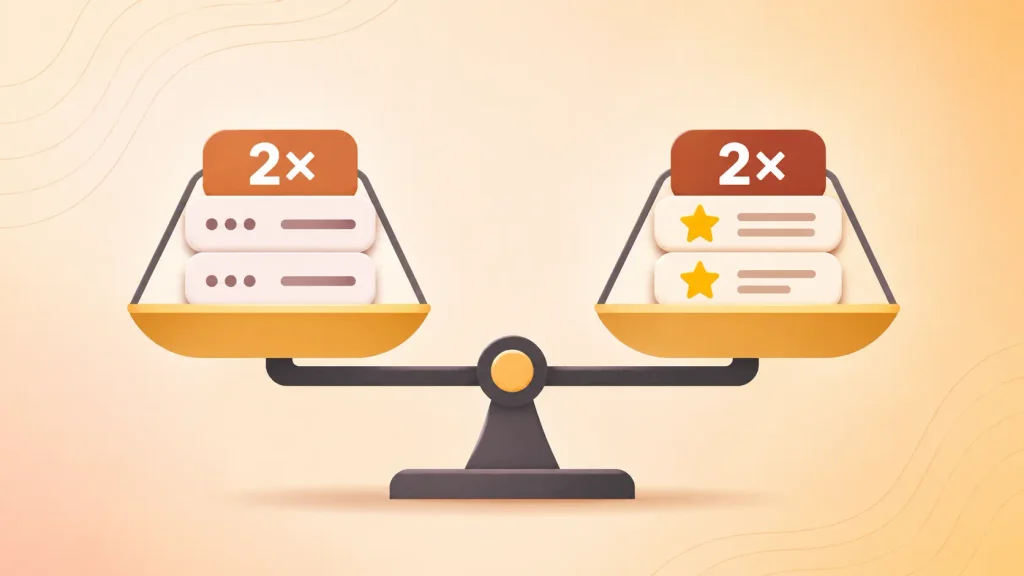
Some products don’t fit either pattern cleanly. A tool that closes support tickets or books meetings delivers a result, and outcome pricing starts to make sense there.
Match the Model to Your Cost Structure
Your pricing model has to survive your own costs. If serving a heavy customer costs you much more than serving a light one, you need a variable component, or your best users will erode your margin.
This matters most for AI products, where inference is a real per-request cost. A flat plan with “unlimited AI” can look generous at launch and turn unprofitable as usage climbs. If you’re still estimating those costs, our breakdown of AI SaaS development cost covers both build and running costs.
Match How Your Buyer Budgets
Who signs the contract shapes which model feels safe.
A developer or technical lead usually understands per-request pricing and can justify it. A finance lead or COO, on the other hand, wants a number they can put in next year’s budget, and a variable invoice creates friction at every renewal.
If you sell to both, a hybrid with a committed base and included usage tends to satisfy each side.
Match Your Stage
Early on, simple beats clever. You don’t yet know how customers will use the product, so a flat fee or two or three clear tiers lets you launch, learn, and avoid building billing logic you might throw away.
The data backs this up: in the Growth Unhinged 2026 survey, flat fees are the most common model below $5M ARR. Once you have usage history, you can see where heavy users cluster and price that layer properly. If you’re scoping an early product now, our SaaS MVP development team can help you keep the first version lean, and our SaaS MVP cost guide shows how billing scope affects the budget.
Here’s how those signals translate into a starting point:
| If your value scales with… | Start with | Add later |
| Number of people using it | Per-seat or tiered | Active-user billing or usage add-ons |
| Volume of work processed | Usage-based with tiers | Commits and volume discounts |
| Actions with uneven costs | Credit-based | Separate rates for heavy actions |
| Business results you control end to end | Hybrid with an outcome fee | Pure outcome pricing |
| None of the above, value is steady | Flat-rate or tiered | A premium tier |
Treat the table as a starting point, not a verdict. Your first model is rarely your last.
What Your Pricing Model Means for Your Product Build
Your SaaS pricing model is also an engineering decision. Flat and seat pricing need little more than subscriptions and a seat count.
Usage, credit, and outcome pricing are different. They need systems that measure, store, and bill every event accurately. Those systems are expensive to bolt on after launch.
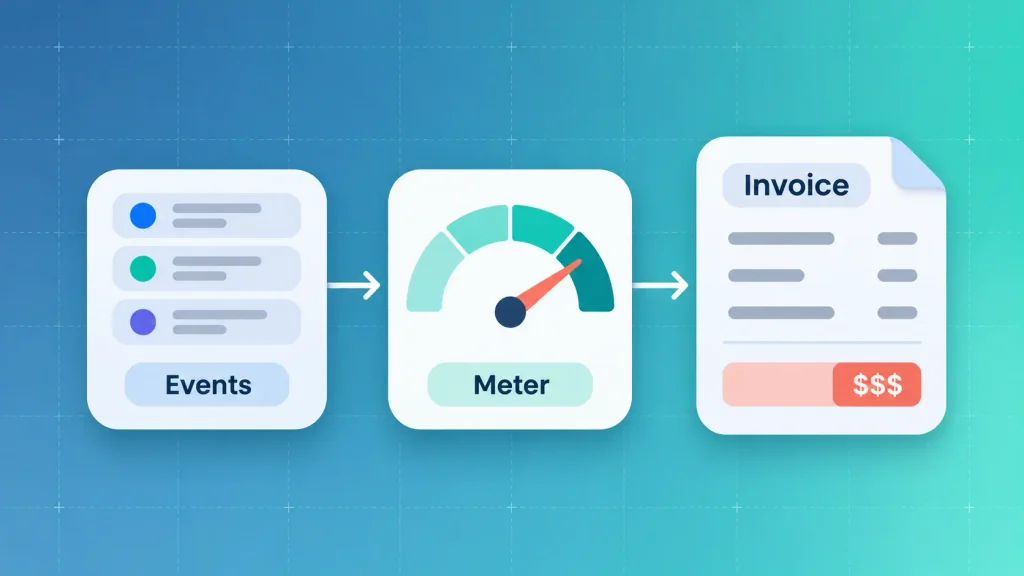
Here’s what each model asks you to build:
| Model | What you have to build | What usually breaks |
| Flat-rate or tiered | Plans, trials, upgrades, proration | Plan changes mid-cycle |
| Per-seat or active-user | Seat counting, role permissions, true-ups | Seat counts drifting from invoices |
| Usage-based | Event metering, aggregation, rating, usage dashboards | Missed or double-counted events |
| Credit-based | Credit ledger, burn rates, rollover rules, top-ups | Customers can’t see their balance |
| Hybrid | Everything above, plus included allowances and overages | Confusing invoices |
| Outcome-based | Outcome definitions, attribution logs, dispute handling | Arguments over what counted |
The lesson: pick a model your product can actually operate. A clever pricing page on top of fragile metering creates billing disputes, and billing disputes create churn.
This is also why pricing belongs in your first planning sessions, not your last sprint. Our step-by-step SaaS development process puts the business model ahead of the feature list for exactly this reason.
How to Prevent Bill Shock in Usage and Hybrid Pricing
Bill shock happens when a customer’s invoice is far higher than they expected. It’s the fastest way to turn a happy usage customer into a cancellation.
You can prevent most of it with controls your customers can see:
- Included allowances: bundle a set amount of usage into the base plan, so normal months carry no surprises.
- Alerts: notify customers as they approach their allowance or budget, not after they pass it.
- Spend caps: let customers set a hard limit, or pause usage until they approve more.
- Committed tiers: offer a discount for committing to a usage level up front.
- A live usage view: show consumption in the product, not only on the invoice.
A simple test: if a customer can’t quickly estimate next month’s bill, your pricing will cause friction at renewal.
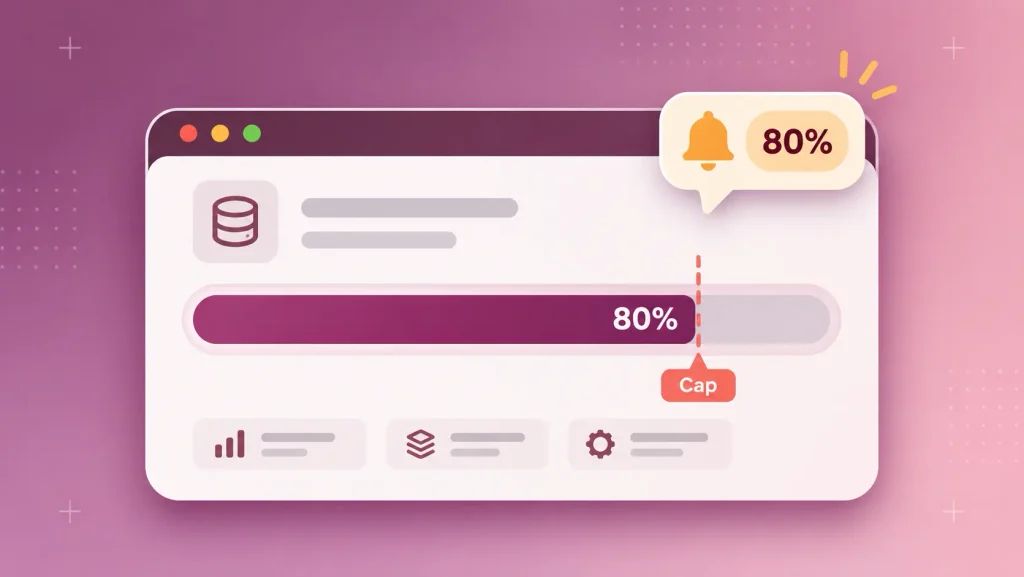
Getting these controls right is mostly a build question. If you want your billing designed around the model you choose, our SaaS development team can scope the metering, allowances, and spend controls with you before development starts.
How to Test and Change Your Pricing Model
Pricing changes are now routine, so you’ll want a safe way to run them. Chargebee’s 2025 report found 70% of companies raised prices in 2024, yet 40% didn’t tie those increases to perceived customer value. Testing is how you avoid being in that 40%.
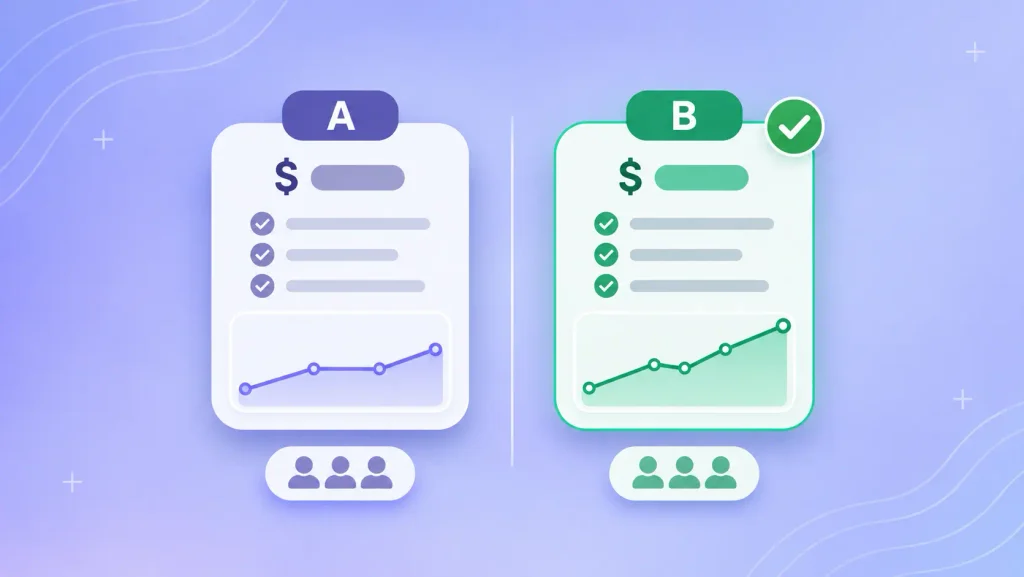
A sequence that keeps the risk small:
- Test on new customers first. They have no old price to compare against, so their reaction reflects the market.
- Change one variable at a time. If you change the price, the limits, and the features together, you won’t know which one moved conversion.
- Roll out to a small share first. Watch early cancellations, downgrades, and price-related support tickets before you expand.
- Compare like with like. Measure 30-day customers against other 30-day customers, not against long-time accounts.
- Give it several weeks. Early numbers swing, so judge on net revenue and churn across the full cohort.
The same Chargebee survey found 83% of companies tested pricing before changing it, and those who acted within a month were more likely to succeed. Testing well doesn’t mean testing slowly.
Moving Existing Customers to a New Model
Existing customers need a different plan from new ones. They chose you at the old price, and a sudden switch reads as a broken promise.
A few approaches that soften the move:
- Grandfather for a set period: keep current customers on the old model through a renewal cycle or two, with clear notice of the change.
- Show the math: give each account its estimated bill under the new model before it takes effect.
- Offer a choice: some companies let customers pick between two models. Growth Unhinged found 29% now do this, up from 21% a year earlier.
Whatever you choose, explain why the model changed. “Your price now tracks what you actually use” lands far better than a bare new number.
Metrics That Tell You Your Pricing Works
A pricing model is working when revenue grows with customer success without driving customers away. Watch these:
- Net revenue retention (NRR): revenue from existing customers this year compared with last year, including expansion and churn.
- Expansion revenue: how much growth comes from upgrades and extra usage rather than new logos.
- Gross revenue churn: revenue lost to cancellations and downgrades.
- LTV to CAC ratio: whether a customer’s lifetime value comfortably exceeds what it costs to win them.
- Overage frequency: how often customers exceed their allowance, a signal your base plan is set wrong.
If margins improve but NRR drops, your value metric is probably off. Customers are paying more for something they don’t value more.
How Boomdevs Solves the Pricing-Flexibility Problem in SaaS Builds
Most pricing problems we see aren’t strategy problems. They’re build problems. A team picks per-seat pricing, hard-codes it into the product, and then can’t add usage tiers or credits a year later without months of rework.
Boomdevs maps the business model before writing the first line of code. Pricing tiers, user roles, and the billing logic for seats, usage, trials, and proration are designed in from day one, so your pricing can change without a rebuild. For Rooftop Saunas, that meant replacing off-the-shelf booking software with a modular SaaS platform built around how the business actually sells.
You can see the full approach on our SaaS development services page. If you’re choosing a pricing model and want to know what it will take to build, book a free strategy call and leave with a clear plan for the billing system your model needs.
Frequently Asked Questions
What Is the Most Common SaaS Pricing Model?
Hybrid pricing is the most common SaaS pricing model in 2026. It combines a fixed base fee, usually seats or a platform fee, with a variable charge for usage or credits. Growth Unhinged’s 2026 survey found 37% of software companies use it.
What Is the Best Pricing Model for a SaaS Startup?
Most startups do best with a simple model: a flat fee or two or three clear tiers. Simple pricing lets you launch and learn without building complex billing too early. Once you have real usage data, you can add a variable layer where heavy users cluster.
Is Usage-Based Pricing Better Than Per-Seat Pricing?
Neither is better in general. Usage-based pricing fits products where value grows with consumption, such as APIs, data, and AI features. Per-seat pricing fits collaboration tools where each extra user adds value. Many companies now combine both in a hybrid model.
How Often Should a SaaS Company Change Its Pricing?
Review pricing on a regular cadence rather than waiting for a crisis. Three in four software companies changed pricing or packaging in the past year, so yearly review is a reasonable minimum. Test changes on new customers first, and give existing customers advance notice.
What Does Hybrid Pricing Mean in SaaS?
Hybrid pricing means a customer pays a predictable base amount plus a variable amount tied to use or results. A common example is a per-seat subscription with AI credits on top. It gives buyers a budget floor while letting your revenue grow with heavy usage.