


- 1. Key Takeaways
- 2. How Much Does AI SaaS Development Cost in 2026?
- 3. Where Your AI SaaS Budget Goes: The SaaS Layer and the AI Layer
- 4. What Drives AI SaaS Development Cost?
- 5. What Does It Cost to Run an AI SaaS Product After Launch?
- 6. How Your Pricing Model Changes What You Build
- 7. AI SaaS Gross Margins: The Number Your Budget Has to Protect
- 8. How to Budget Your AI SaaS Build in Phases
- 9. Where AI SaaS Budgets Blow Up
- 10. What to Prepare Before You Ask for an AI SaaS Quote
- 11. How Boomdevs Fixes Unpredictable AI SaaS Budgets
- 12. Get a Real Number for Your AI SaaS Build
- 13. Frequently Asked Questions
Summarize with
AI SaaS development cost runs from about $20,000 for a focused MVP to $500,000 or more for an enterprise platform. That range on its own won’t help you plan a budget.
Your AI SaaS development cost comes down to your model approach, how clean your data is, how you isolate tenants, and how you plan to charge.
This guide breaks down what you’ll pay to build it, what you’ll pay to run it, and where budgets usually break.
Key Takeaways
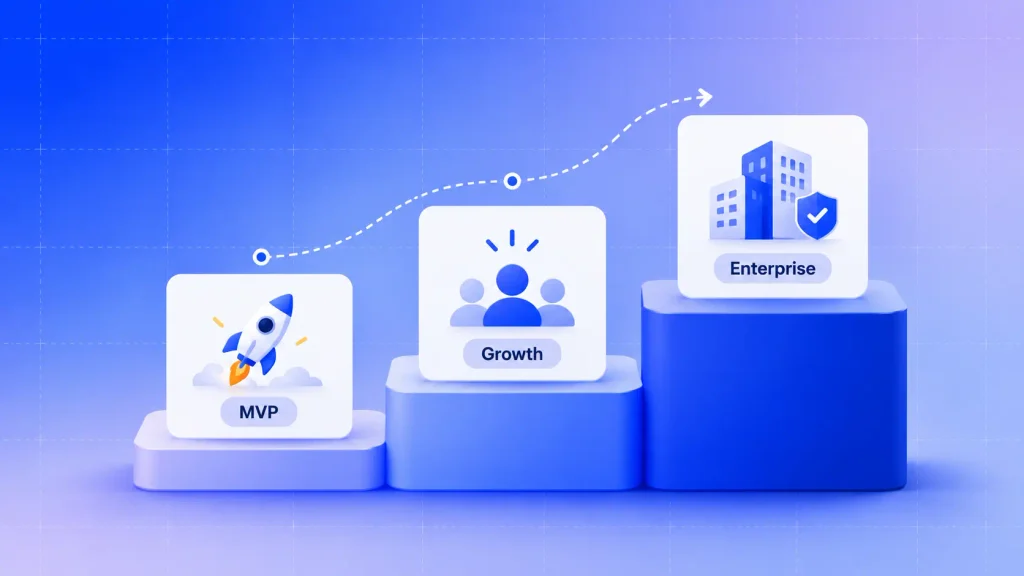
- Your AI SaaS development cost usually runs $20K to $80K for an MVP, $80K to $200K for a growth-stage platform, and $200K to $500K+ for enterprise.
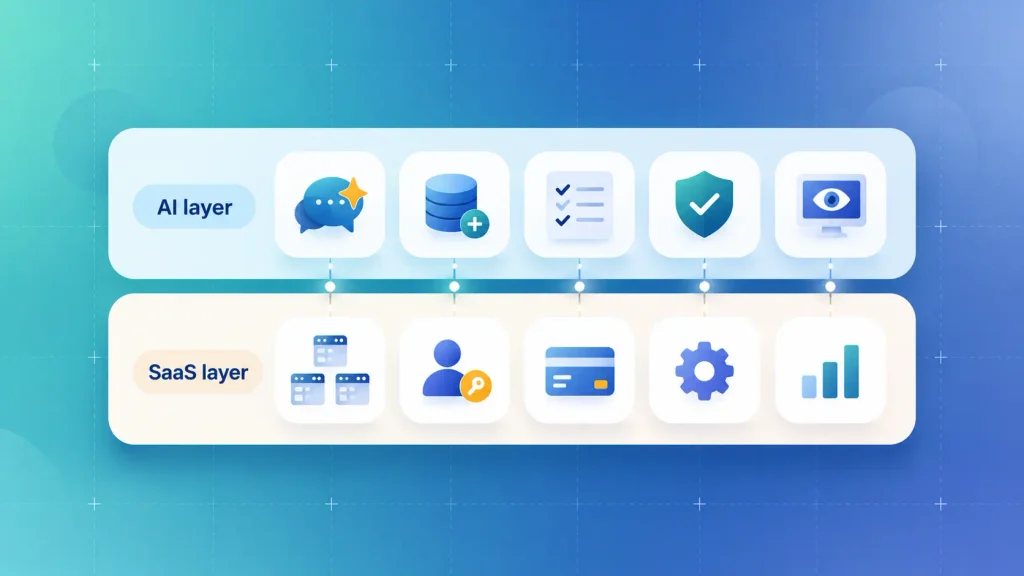
- You pay for two layers: the SaaS layer (tenants, billing, admin) and the AI layer (model, retrieval, evaluation).
- Running costs never stop. Your AI SaaS inference cost grows with every active user, so tokens per customer matter more than price per token.
- Your AI SaaS pricing model shapes your build. Usage-based plans need metering that seat-based plans don’t.
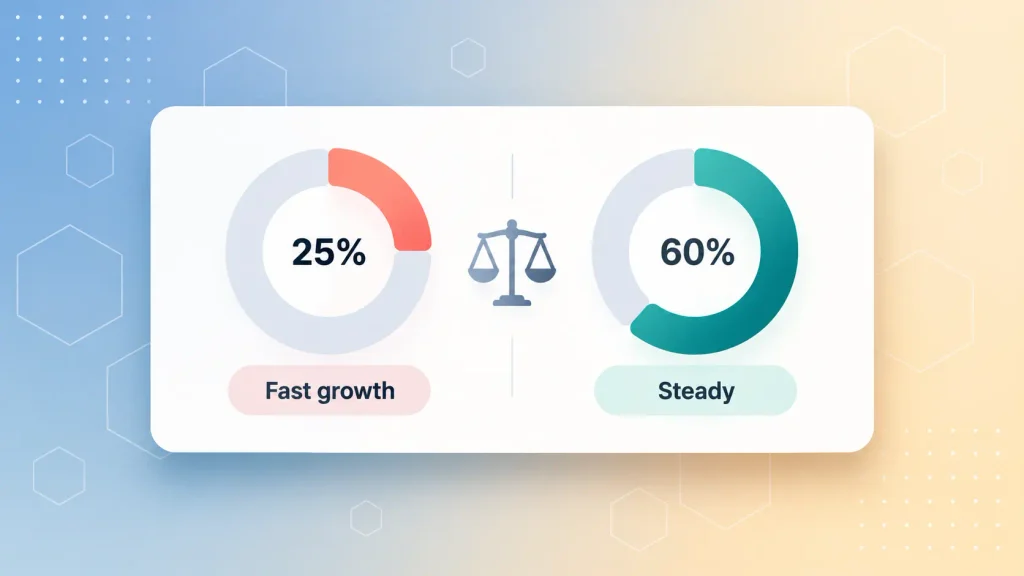
- Plan around gross margin, not just build cost. The fastest-growing AI startups average about 25% gross margins, against roughly 60% for steadier peers (Bessemer Venture Partners).
How Much Does AI SaaS Development Cost in 2026?
The cost to build an AI SaaS product usually lands between $20,000 and $500,000+. Where you fall depends on how much product you need on day one, and how custom the AI has to be.
If you’re still deciding whether your idea is a true AI SaaS product or an AI feature inside an existing app, it’s worth settling what actually makes a product AI SaaS first.
That one call moves the budget more than any single feature. The tiers below follow how Boomdevs scopes AI SaaS development projects.
Cost by Product Tier
These AI SaaS development cost ranges come from Boomdevs’ published AI product pricing, with timelines from real delivery schedules:
| Tier | What You Get | Typical Cost | Typical Timeline |
| AI SaaS MVP | One core AI workflow, hosted model, basic auth and billing | $20K to $80K | 8 to 12 weeks |
| Growth-stage platform | Multi-tenancy, RAG or tuned model, usage metering, integrations | $80K to $200K | 16 to 24 weeks |
| Enterprise AI platform | SSO, audit logs, compliance, multiple models, custom pipelines | $200K to $500K+ | 6 to 12+ months |
The jump between tiers rarely comes from the AI alone. It comes from what bigger buyers expect around it: isolation, permissions, and proof of compliance.
Why AI SaaS Costs More Than a Plain SaaS App or an AI Feature
A plain SaaS app has predictable costs. Once it’s built, serving one more user costs very little.
An AI feature inside a single company’s tool skips most of the SaaS plumbing. AI SaaS stacks both, which is why the cost to build an AI SaaS product sits above either one. You need everything a subscription product needs, plus an AI layer that costs money every time a customer uses it.
Three costs show up in AI SaaS that a normal SaaS budget never covers:
- Per-request spend: every prompt, summary, or agent step hits a model you pay for.
- Quality work that never ends: AI output drifts in ways normal code doesn’t, so you’ll keep evaluation sets and prompts up to date.
- Tenant-aware AI: each customer’s data has to stay out of every other customer’s answers.
That last one is the cost first quotes underestimate most often.
Where Your AI SaaS Budget Goes: The SaaS Layer and the AI Layer
Any quote for your AI SaaS development cost gets easier to read once you split it into two layers. One is the product your customers log into. The other is the intelligence inside it.
Looking at them separately helps you spot where an estimate is padded, and where it’s suspiciously thin.
The SaaS Layer
This is the subscription product itself. If you’ve priced a regular SaaS build before, most of it will look familiar, and the SaaS MVP cost breakdown covers it line by line. For an AI product, you can expect these pieces:
- Multi-tenancy: separate data, settings, and limits for every customer account.
- Auth and roles: sign-up, SSO for larger buyers, and permissions inside each account.
- Billing: plans, trials, invoices, and usage limits tied to AI consumption.
- Admin tools: a back office so your team can manage accounts without touching the database.
- Product analytics: event tracking that shows which AI features people actually use.
Cutting corners here rarely saves money. It usually comes back later as rework.
The AI Layer
This is where your product earns its “AI” label. The model-side cost drivers get a full treatment in the guide to what AI products cost to build, so here’s the short version for SaaS:
- Model access: a hosted LLM API, an open-source model you host, or a mix of both.
- Retrieval: a vector database and pipelines that pull each tenant’s own documents into answers (RAG).
- Evaluation: test sets that check accuracy before every release.
- Guardrails: filters, fallbacks, and human review for risky outputs.
- Observability: logs of prompts, responses, latency, and spend per tenant.
If a quote lists “AI integration” as one line, with nothing on evaluation or observability, it’s worth asking where those went. They’re the parts that keep a good demo from breaking in production.
What Drives AI SaaS Development Cost?
Six decisions move your AI SaaS development cost more than anything else. Most of them happen before anyone writes code, which is good news: you control them.
Model Approach: API, RAG, or Fine-Tuning
Starting on a hosted LLM API is the cheapest way in, and the easiest way to keep your AI SaaS MVP cost down. You pay per token and skip training entirely.
RAG adds a retrieval layer, so answers use your customers’ own data. Fine-tuning or training a model costs the most, and it rarely makes sense for a first release. The key considerations in AI SaaS development explain when each approach earns its price.
Data Readiness
Clean, structured data is cheap to work with. Scattered PDFs, messy spreadsheets, and missing labels are not.
If your AI needs customer documents, you’ll want to budget for ingestion, cleaning, and chunking. That work is invisible in a demo and very visible on an invoice.
Multi-Tenant Data Isolation
Every SaaS product needs tenant isolation. AI makes it harder.
Your vector store, caches, prompt logs, and training data all have to respect tenant boundaries. One shared index that leaks a customer’s content into someone else’s answer can end an enterprise deal on the spot.
Usage Metering and Billing Logic
A seat-based plan only needs to count users. An AI plan usually counts requests, tokens, or credits per account.
That means metering, quota enforcement, overage handling, and dashboards that show customers what they’ve used. It’s real engineering, and it often goes missing from early estimates.
Compliance: SOC 2, HIPAA, GDPR
Selling to healthcare, finance, or larger companies adds audit logs, retention rules, and security reviews. Each framework adds build work plus recurring audit costs.
If your first customers will ask for SOC 2, it pays to plan for it now. Retrofitting compliance onto a finished product is slower and more expensive.
Team Model and Location
Hourly rates vary widely by region and engagement model. An in-house AI team also carries recruiting time, salaries, and benefits before it ships anything.
The trade-offs are laid out in in-house vs outsourced AI development. In short, a dedicated partner team usually gets you to launch faster, while in-house pays off once AI becomes your long-term core.
Here’s how each driver tends to push your budget:
| Driver | Pushes Cost Up | Keeps Cost Down |
| Model approach | Training or fine-tuning from day one | Starting on a hosted API |
| Data readiness | Scattered, unlabeled data | Structured, accessible data |
| Tenant isolation | Retrofitted after launch | Designed in the first sprint |
| Billing logic | Credits, overages, and usage tiers | Simple per-seat plans |
| Compliance | SOC 2 or HIPAA required at launch | Added when enterprise deals appear |
| Team model | Hiring a full team from scratch | An experienced partner team |
Most of the cheaper options are timing choices, not shortcuts. The one exception is tenant isolation, which costs far less to design in than to bolt on.
What Does It Cost to Run an AI SaaS Product After Launch?
Launch is when a different kind of bill starts. Regular SaaS hosting grows slowly with users. Your AI SaaS inference cost grows with every request those users make.
Inference Cost per Tenant: A Worked Example
Price per token tells you very little about your real AI SaaS inference cost. What matters is how many tokens one customer burns each month.
Here’s a simple way to estimate it. The inputs below are illustrative, so you can swap in your own usage and your provider’s current rates:
- Requests per user. Say each active user triggers 200 AI requests a month.
- Tokens per request. Prompt, retrieved context, and response might total 3,000 tokens.
- Tokens per user. That’s 600,000 tokens per user each month.
- Blended rate. At an assumed $5 per million tokens, each user costs about $3 a month.
- Cost per tenant. A 50-seat customer would cost you around $150 a month in inference.
If that customer pays $20 a seat, inference takes 15% of their $1,000 monthly bill. That looks fine on average.
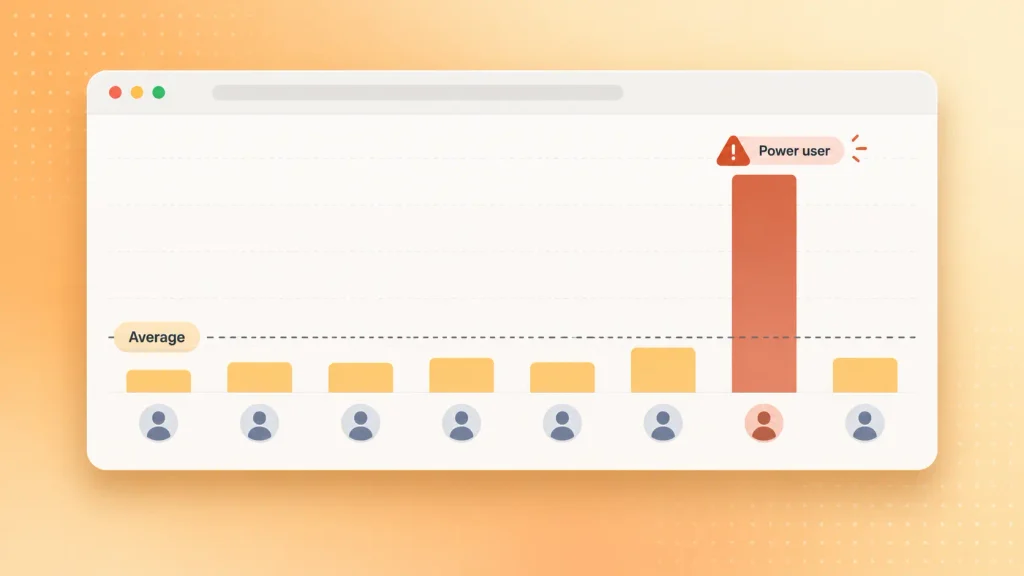
Now picture one power user running 10 times the average. Without usage limits, your best-paying accounts can quietly turn into your least profitable ones.
Hosting, Monitoring, and Model Updates
Inference isn’t the only recurring line. You’ll also carry:
- Cloud hosting: app servers, databases, vector storage, and background jobs.
- Monitoring: logging, tracing, and per-tenant spend dashboards.
- Model migrations: providers retire models, so prompts and evaluations need retesting when you switch.
- Ongoing tuning: new evaluation cases and fixes for edge cases real users find.
It’s safest to treat these as part of the product forever, not as post-launch cleanup.
Why Token Prices Fall but Your Bill May Not
Model prices are dropping fast. Andreessen Horowitz’s analysis found that, for a model of equivalent performance, inference cost falls about 10x every year. A GPT-3-level score cost $60 per million tokens in 2021 and about $0.06 three years later.
That doesn’t mean your bill shrinks. Cheaper tokens invite heavier use: longer context, more agent steps, more AI features. Your cost per token falls while your tokens per customer climb.
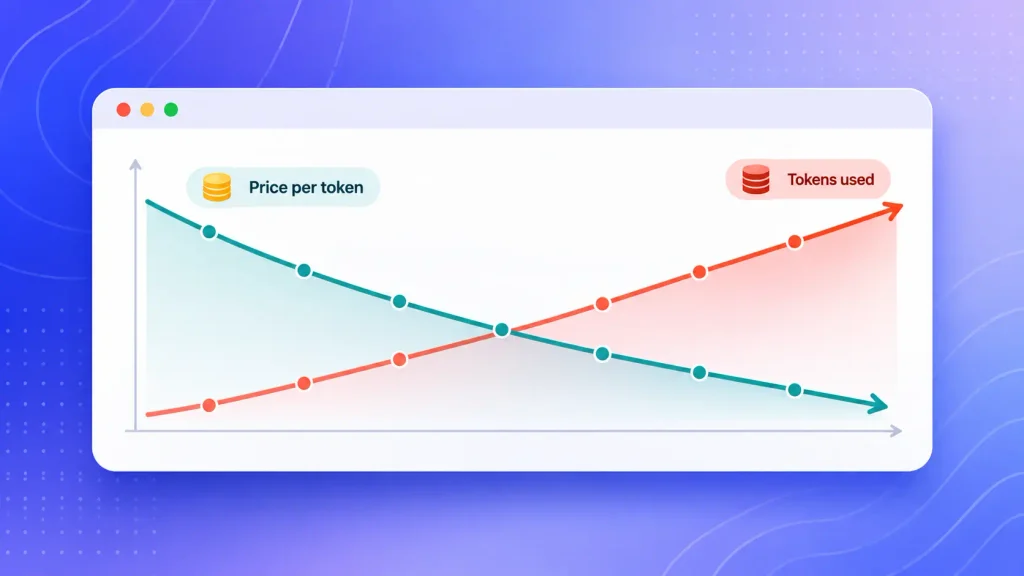
So I’d suggest tracking both numbers from your first paying customer.
How Your Pricing Model Changes What You Build
Pricing isn’t only a go-to-market decision. It decides part of your architecture, and so part of your build cost.
AI pricing is still moving. ICONIQ’s 2026 State of AI snapshot found 58% of AI companies still include a subscription or platform fee, 35% use consumption-based pricing, and 18% use outcome-based pricing. And 37% plan to change their pricing model within the next 12 months.
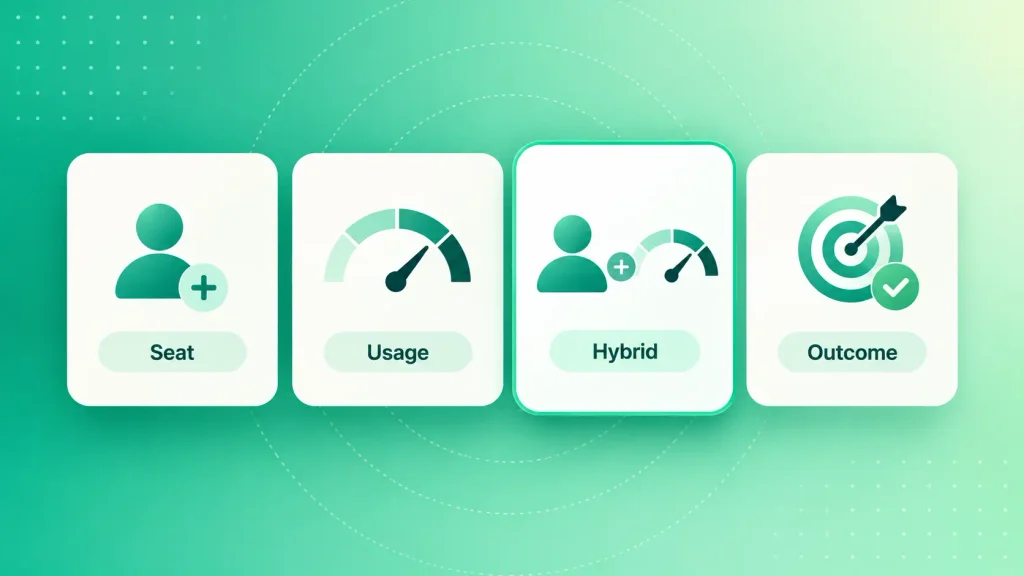
Here’s what each model asks your product to support:
| Pricing Model | What You Need to Build | Margin Risk |
| Per seat | User counts and plan tiers | Heavy AI users erode margin |
| Usage or credits | Metering, quotas, overage billing, usage dashboards | Lower, if limits are enforced |
| Hybrid (platform fee plus usage) | Seat logic and metering together | Balanced, but more complex |
| Outcome-based | Result tracking tied to invoices | Hardest to forecast |
Since so many companies expect to switch, it’s smart to build billing that can change plans without a rewrite. A hybrid setup gives you the most room to adjust later.
AI SaaS Gross Margins: The Number Your Budget Has to Protect
Build cost is a one-time number. Gross margin decides whether the business works.
Traditional SaaS earned its reputation on high margins because serving one more user was nearly free. AI changes that. Bessemer’s State of AI 2025 found the fastest-growing AI startups average only about 25% gross margins, while steadier high-growth AI companies hold around 60%.
ICONIQ’s respondents expect margins to reach about 52% on average in 2026. Either way, AI SaaS runs thinner than the software you’re used to.
Before you approve a build, it’s worth running a quick per-account check:
- Inference cost: using the worked example above.
- Hosting and support: spread across your expected number of customers.
- Revenue: at your planned price.
- Margin: revenue minus both costs, tested against your heaviest realistic user.
If the math only works for average users, your pricing or your model choice needs another look before development starts.
How to Budget Your AI SaaS Build in Phases
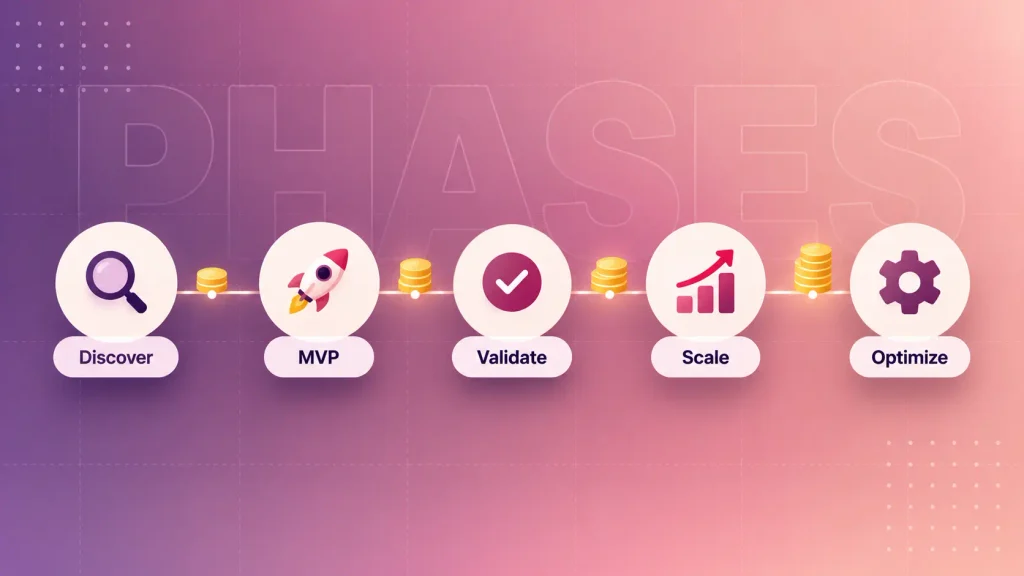
The safest budgets don’t fund the whole vision at once. They release money as each phase proves something.
- Discovery and architecture. Lock scope, tenant model, data sources, and pricing logic. Most overruns get prevented here.
- MVP. Ship one core AI workflow on a hosted model to pilot customers. The guide to what to build first in an AI SaaS MVP helps you trim this phase, and a SaaS MVP development team can run design and build in parallel.
- Validation. Measure usage, accuracy, and inference cost per tenant with real customers.
- Scale. Add RAG, integrations, SSO, and compliance once buyers ask for them.
- Optimize. Route simple requests to cheaper models, cache repeat answers, and tighten prompts to cut spend.
Each phase hands you real data before the next, bigger check. That’s how a modest plan avoids turning into a surprise invoice.
Where AI SaaS Budgets Blow Up
Most overruns don’t come from bad developers. They come from costs nobody wrote down at the start.
These are the ones that come up most:
- Scope that grows with every demo: once stakeholders see AI working, the feature list expands.
- Model deprecation: your provider retires the model you built on, and everything needs retesting.
- Late evaluation: quality problems found after launch cost more than ones caught in testing.
- Retrofitted isolation: splitting shared data after customers are onboarded is slow and risky.
- Unlimited AI usage: plans without quotas let a few accounts drive costs up.
- Prompt rework: prompts that shine on test data often need tuning on real customer data.
A contingency line covers most of these. If a quote has no buffer at all, I’d suggest asking how the team handles change requests.
What to Prepare Before You Ask for an AI SaaS Quote
The better your inputs, the tighter your quote. Before your first call, it’s worth pulling together:
- The problem and the user. One sentence on who it’s for and what the AI does for them.
- Your core workflow. The single path a customer takes that must work at launch.
- Your data. Where it lives, what format it’s in, and who owns it.
- Buyer requirements. SSO, SOC 2, HIPAA, data residency, or none yet.
- Your pricing idea. Seats, usage, or hybrid, even as a rough guess.
- Timeline and budget range. Teams scope a 10-week build very differently from a 10-month one.
The step-by-step guide on how to build an AI SaaS product goes deeper on each of these. With this list ready, quotes from different teams get much easier to compare.
How Boomdevs Fixes Unpredictable AI SaaS Budgets
AI SaaS budgets tend to break in the same three places: vague scope, AI costs nobody modeled, and tenancy bolted on late. Boomdevs plans around all three from the first sprint.
- Scoped before it’s priced: discovery settles the tenant model, data plan, and pricing logic before the estimate is final.
- Inference modeled up front: you see projected cost per tenant next to your planned price.
- Phased delivery: a focused MVP in eight to 12 weeks, then scale once real usage backs the plan.
- Support after launch: monitoring, model migrations, and cost tuning stay part of the work.
With 3.5K+ projects delivered and 350+ startup founders served, the team has seen most of the ways a budget slips. If you need AI inside an existing product rather than a full SaaS platform, AI product development may be the better fit.
Get a Real Number for Your AI SaaS Build
Ranges put you in the right ballpark. A scoped estimate tells you what your product will cost to build, and what each tenant will cost to run.
Book a free 30-minute scoping call with Boomdevs and walk away with a phased plan, a budget range, and an inference cost model for your idea.
Frequently Asked Questions
How Much Does an AI SaaS MVP Cost?
Most AI SaaS MVPs cost $20,000 to $80,000. That usually covers one core AI workflow on a hosted model, basic authentication, and simple billing. Delivery typically takes eight to 12 weeks.
How Long Does It Take to Build an AI SaaS Product?
A focused MVP takes about eight to 12 weeks. A full product with integrations and custom AI pipelines takes 16 to 24 weeks. Enterprise platforms with compliance work can run six to 12 months or longer.
Is It Cheaper to Use an LLM API or Host Your Own Model?
An API is almost always cheaper to start, since you skip infrastructure and training. Self-hosting can make sense later, once usage is high and predictable. Many products end up hybrid, sending simple tasks to cheaper models.
What Does an AI SaaS Product Cost to Run Each Month?
It depends mostly on usage. Inference scales with requests per user and tokens per request, on top of hosting, monitoring, and maintenance. The most reliable forecast comes from modeling cost per tenant before launch.
Does AI SaaS Cost More Than Regular SaaS?
Yes, both to build and to run. You need the full SaaS layer plus an AI layer with evaluation and guardrails. Every AI request also carries a cost, which is why AI products often run lower gross margins than traditional SaaS.