


- 1. Key Takeaways
- 2. Python vs Java for Web Development: Head-to-Head Comparison
- 3. What Is Python?
- 4. What Is Java?
- 5. Differences Between Java and Python
- 6. Python vs Java: Which One Should I Pick for My Web Development Project?
- 7. Can You Use Java and Python Together?
- 8. Python vs Java for Web Development: Job Market and Career Prospects
- 9. Python or Java: Which Language Is Right for You?
- 10. How Boomdevs Helps You Pick and Build the Right Stack
- 11. Frequently Asked Questions
Summarize with
Your web app is scoped, and the backend shortlist is down to two names. Java vs Python for web development sounds like a settled debate. It isn’t, because both languages run serious products with loyal teams behind them.
When it comes to Java or Python for web development, the honest answer depends on your situation, not on which one is better. It comes down to how fast you need to ship and how much traffic you expect. Here’s a simple way to work out which side you’re on.
Key Takeaways
In the Java vs Python for web development debate, Python is usually the better pick when you need to launch fast, add AI or data features, or work with a small team. Java is usually the better pick for high-traffic, long-lived systems where strict typing, concurrency, and predictable performance matter most. Many products use both.
- Pick Python for MVPs, internal tools, data-heavy dashboards, and any product where AI features sit close to the core.
- Pick Java for payment flows, high-concurrency APIs, regulated systems, and large codebases that many engineers will touch for years.
- Is Java faster than Python? At runtime, usually yes, but Python usually gets you to a working release sooner.
- Hiring matters as much as syntax. The language your team (or partner) already knows well often beats the “better” one on paper.
- You don’t have to choose forever. A Java core with a Python AI service is a common, stable pattern.
Python vs Java for Web Development: Head-to-Head Comparison
If you only have two minutes, this table gives you the trade-off on the criteria that actually move a web project. Both languages build the server side of a custom web application. Your frontend will most likely run on JavaScript or TypeScript either way.
Here’s how they compare where it counts:
| Criteria | Python | Java |
| Time to first release | Faster, less code per feature | Slower start, more setup |
| Runtime performance | Good for most web apps | Stronger under heavy load |
| Concurrency | Async works well; threads improving | Mature threads plus virtual threads |
| AI and data features | Best-in-class libraries | Possible, smaller ecosystem |
| Type safety | Optional type hints | Strict static typing |
| Main web frameworks | Django, FastAPI, Flask | Spring Boot, Jakarta EE |
| Best fit | MVPs, SaaS, AI products | Enterprise, fintech, high traffic |
The pattern is clear. Python buys you speed of development, and Java buys you speed and safety at runtime. The rest of this guide helps you decide which of those your product needs more.
What Is Python?
Python is a general-purpose language known for short, readable code. On the web, it runs your server logic, talks to your database, and serves your API. You’ll mostly see it paired with one of three frameworks.
Its pull right now is hard to ignore. In the 2025 Stack Overflow Developer Survey, 57.9% of respondents said they had done extensive work in Python, a jump of seven percentage points in one year. The same survey shows FastAPI posting one of the biggest gains among web frameworks.
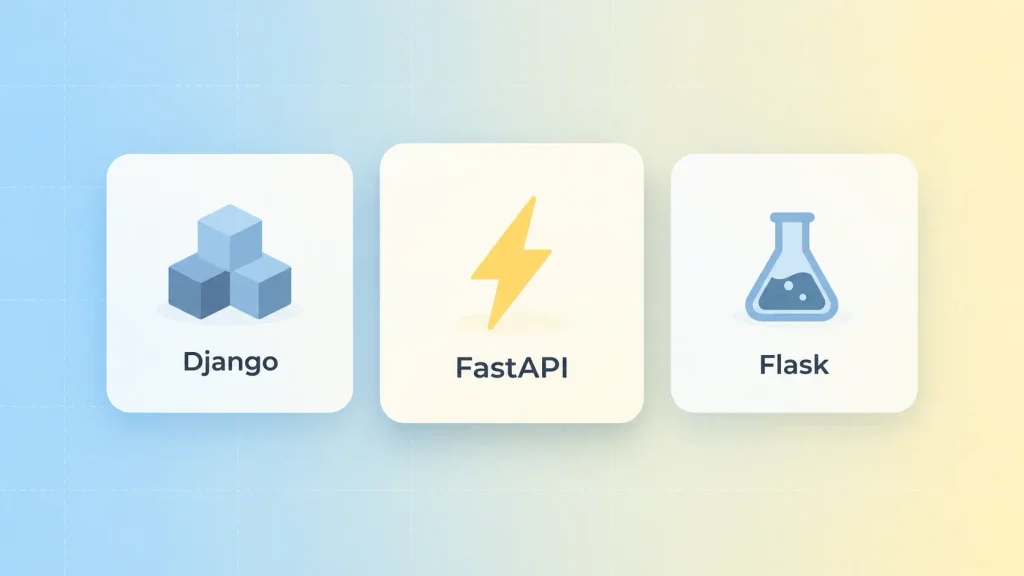
The three Python frameworks you’ll hear about:
- Django: a batteries-included framework with an admin panel, authentication, and an ORM out of the box. Good for content-heavy platforms and SaaS products.
- FastAPI: a modern, async framework for building APIs quickly, with automatic documentation. Popular for AI-backed products.
- Flask: a minimal framework for small services, prototypes, and internal tools.
Where Python Wins
Is Python better than Java? It is when your biggest risk is building the wrong thing slowly. Your team writes fewer lines per feature, so you can test ideas with real users sooner.
It’s also the default home for AI. If your roadmap includes recommendations, document parsing, chat, or analytics, you’ll find those libraries in Python first.
Where Python Struggles
Raw CPU speed is the weak spot. For most web apps, the bottleneck is the database or the network, so this rarely hurts. For compute-heavy endpoints, it can.
Dynamic typing is the other trade-off. Without discipline (type hints, tests, code review), a large Python codebase can get fragile as your team grows.
What Is Java?
Java is a compiled, strictly typed language that runs on the Java Virtual Machine (JVM). On the web, it powers backends that need to stay fast and stable under serious load. Most new Java web projects use Spring Boot.
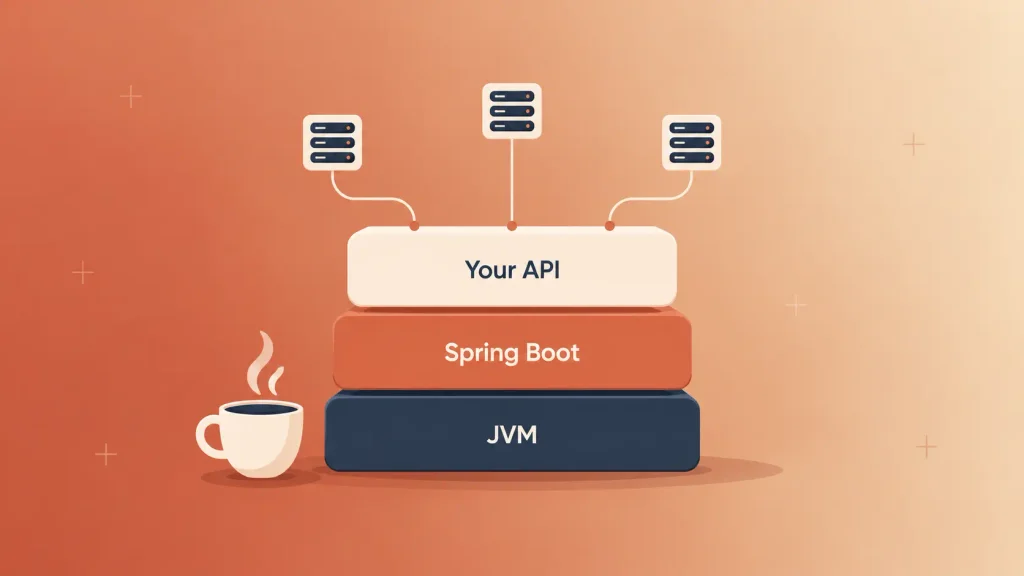
It’s still a mainstream skill. The same Stack Overflow survey found Java at 29.6% among professional developers, and 15.6% of professionals reported building with Spring Boot.
The Java options you’ll hear about:
- Spring Boot: the dominant choice for APIs, microservices, and enterprise backends, with a huge library ecosystem.
- Jakarta EE: the long-standing enterprise standard, common in older corporate systems.
- Quarkus and Micronaut: lighter frameworks built for fast startup in containers and serverless setups.
Where Java Wins
Java earns its place when mistakes are expensive. Strict typing catches whole classes of bugs before your code ever runs, which matters in payments, healthcare, and logistics.
Concurrency got a big upgrade too. Java 21 made virtual threads a standard feature, so your server can handle huge numbers of simultaneous requests without complex async code.
Where Java Struggles
You’ll write more code to do the same thing. That slows early iteration, and it can feel heavy for a small team testing an MVP.
Java apps also tend to use more memory, so hosting costs can run higher for small services. The AI library ecosystem exists, but it’s thinner than Python’s.
Differences Between Java and Python
The table above gives you the summary of Python vs Java for web development. This section explains the five differences that actually change your budget, timeline, or risk, so you can judge which ones apply to your app.
Speed and Performance: Is Java Faster Than Python?
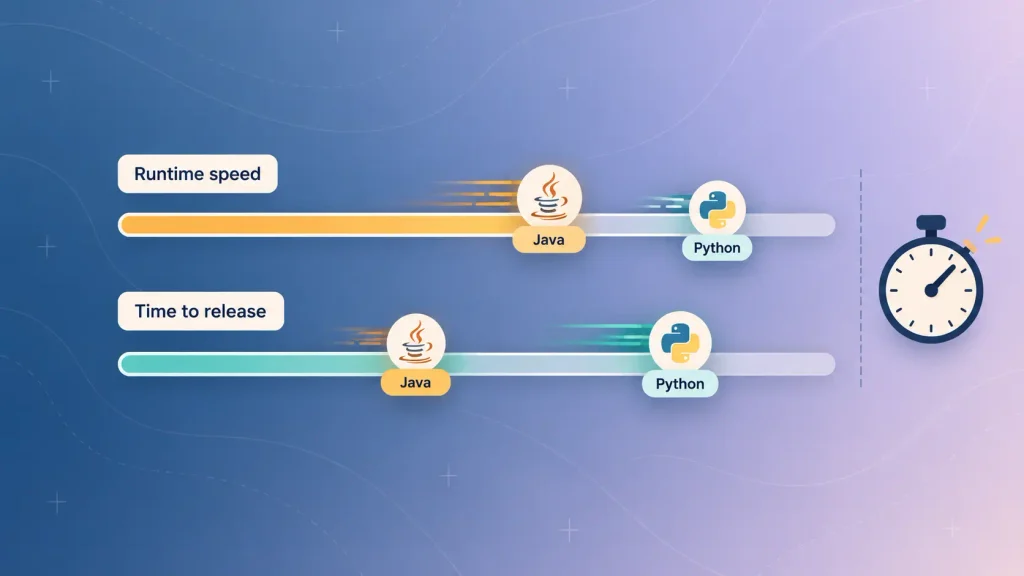
Yes, Java is usually faster at runtime. It compiles to bytecode, and the JVM optimizes hot code paths while your app runs. Python is interpreted, so pure CPU work runs slower.
But “faster” only matters if your app is CPU-bound. Most web requests spend their time waiting on a database or an outside API. In that world, a well-built Python app and a well-built Java app often feel the same to your users.
Concurrency and Scaling
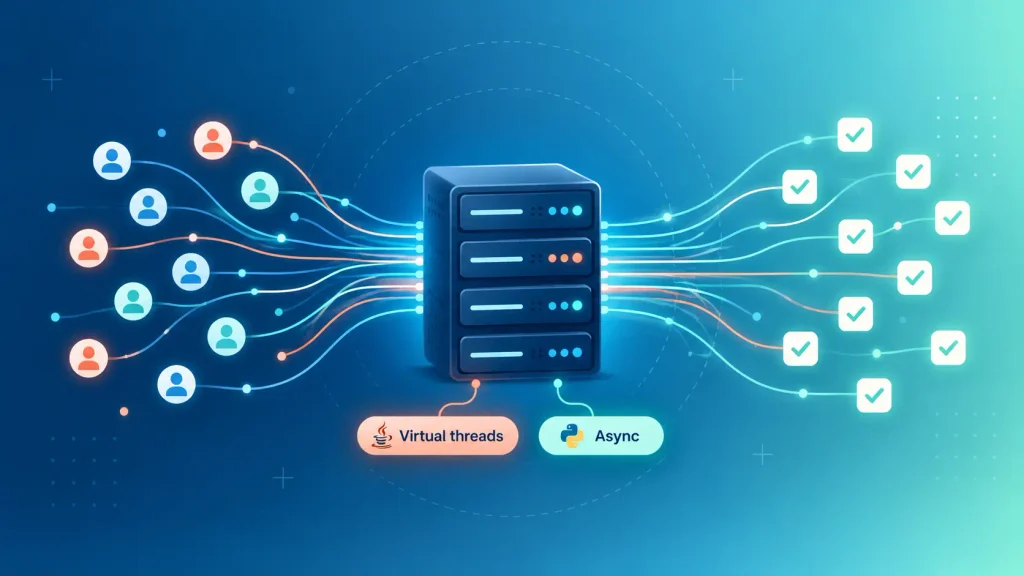
Concurrency decides how many users your server handles at once without slowing down. Java has a clear lead here, and virtual threads widened it.
Python is catching up. Its async frameworks handle I/O-heavy traffic well, and Python 3.14 moved the free-threaded build (without the Global Interpreter Lock) from experimental to officially supported. It’s still optional, though, and most production stacks don’t run it yet.
Development Speed and Code Size
This is where Python pulls ahead. The same endpoint usually takes fewer lines in Python, and fewer lines mean fewer places for bugs to hide early on.
If your goal is to put a working product in front of users within a quarter, that difference is real money. It also makes your codebase easier for a new hire to read on day one.
Type Safety and Long-Term Maintenance
Java forces you to declare types, and the compiler checks them. That feels slow at first and pays off later, when ten engineers are changing the same codebase.
Python gives you a choice. You can add type hints and checking tools, and most serious teams do. The difference is that Java enforces the discipline, while Python leaves it to your team.
Security
Neither language is secure by default. What protects you is the framework, your dependencies, and how your team writes code.
Both ecosystems are mature here. Spring Security and Django’s built-in protections cover the common web attacks well. Your partner’s review process matters more than the language you pick.
Python vs Java: Which One Should I Pick for My Web Development Project?
Pick the language that matches your product’s biggest risk. If the risk is building the wrong thing, choose Python. If the risk is the right thing breaking under load, choose Java.
Here’s how that plays out across common project types:
| Your situation | Better fit | Why |
| Startup MVP or SaaS v1 | Python | Ship and learn faster |
| AI-first product | Python | AI libraries live there |
| Data dashboards and analytics | Python | Strong data tooling |
| Fintech, payments, or banking | Java | Strict typing, proven at scale |
| High-concurrency APIs | Java | Virtual threads, JVM tuning |
| Large enterprise platform | Java | Long-term maintainability |
| Existing Java codebase | Java | Avoid a costly rewrite |
One more filter is worth running before you decide. Ask who will maintain the app in three years. A language your team knows well usually beats the “right” language your team is still learning.
If you’re still weighing the wider stack (frontend, database, hosting), our guide on how to choose the right tech stack for web apps walks through the full decision. And if you’re not yet sure you need a web app at all, the comparison of a web app versus a regular website is a good first stop.
Can You Use Java and Python Together?
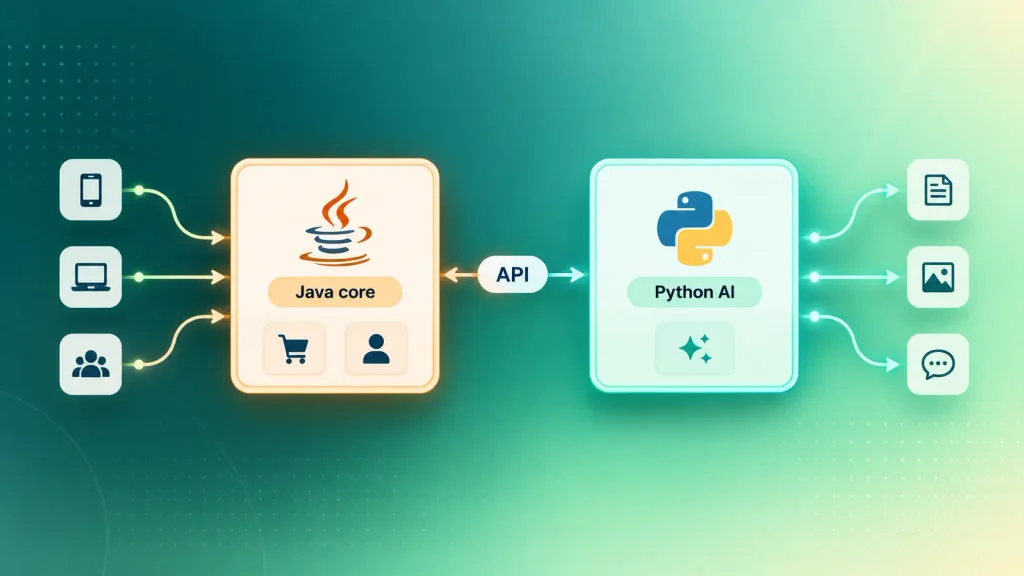
Yes, and many growing products do, which makes Java vs Python for web development less of an either-or choice. The usual pattern is a Java core for transactions and user accounts, with a separate Python service for AI or data work.
Your two services talk over an API, so each language does what it’s best at. Common ways this split shows up:
- AI features: a Python service handles recommendations, search, or document processing, while Java runs checkout and accounts.
- Data pipelines: Python cleans and analyzes data in the background, and Java serves it to users.
- Gradual modernization: you keep a stable Java system running and build new features in Python beside it.
The catch is extra complexity. Two languages mean two deployment pipelines and two skill sets to hire for. I’d suggest starting with one language and splitting only when a clear need appears.
If you already run an older Java system and want to add AI on top, an AI integration service can connect a Python model to your existing backend without a rewrite.
When the old system itself is the problem, legacy application modernization is the safer path.
Python vs Java for Web Development: Job Market and Career Prospects
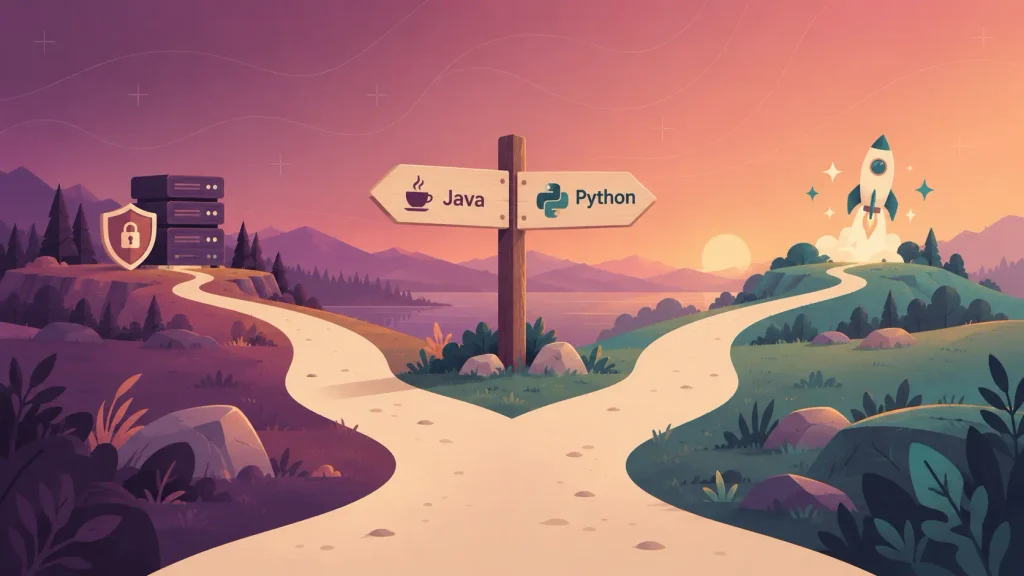
For a founder, this is really a hiring question. The language you pick decides how fast you can staff your team and how easily you can replace someone who leaves.
Both talent pools are large. Python has the bigger and faster-growing pool, as the 2025 survey data shows, with 71.8% of people learning to code using it. Java’s pool is smaller but deep in enterprise experience, especially in banking, insurance, and large SaaS.
What that means for you:
- Python hiring is easier for early-stage teams, and many engineers bring AI or data skills along with web skills.
- Java hiring often brings more experience with large systems, testing culture, and strict code review.
- Seniority matters more than language. A strong senior engineer in either language will outbuild two juniors in the “better” one.
If hiring in-house would slow you down, web developer staff augmentation lets you add pre-vetted Python or Java engineers to your team in weeks rather than months.
Python or Java: Which Language Is Right for You?
You now have the trade-offs of Python vs Java for web development, so it comes down to a few honest questions about your product. Answer them in order, and stop at the first clear yes.
- Do AI or data features sit at the core of your product? Choose Python.
- Do you need a working MVP in front of users within three months? Choose Python.
- Will you process payments or regulated data at high volume? Choose Java.
- Do you already run a Java system or have a Java-heavy team? Stay with Java.
- None of the above? Pick the language your team knows best.
Whichever you choose, the language is rarely what sinks a project. Unclear scope, weak architecture, and skipped testing do far more damage. It’s worth reading up on the custom web app development process so you know what a healthy build looks like, and checking what custom web app development costs before you lock a budget.
For a sense of how other languages fit in, our breakdown of whether C can be used for web development covers a less common option and where it makes sense. If neither Python nor Java feels like a clean fit, it’s worth widening your shortlist, since Node.js, C#, PHP, and Go each win specific workloads. Our guide to the best language for backend development walks through all six.
How Boomdevs Helps You Pick and Build the Right Stack
Choosing between Java and Python is easier with someone who has shipped both. Boomdevs starts every project with a short discovery phase, where you map your features, traffic, and AI plans to a stack before any code gets written.
From there, our custom web app development team designs, builds, and supports the product end to end. For example, the booking platform for Rooftop Saunas went from kickoff to launch in 90 days and replaced their manual work completely.
You also keep full ownership of the source code. That means you’re free to switch partners or bring the work in-house later, whatever language you pick. If you’d like a second opinion on your stack, you can book a free strategy call with our team.
Frequently Asked Questions
Is Java faster than Python?
Yes, Java usually runs faster, especially for CPU-heavy work and high concurrency. For typical web apps that mostly wait on databases and APIs, the difference is often small. Your architecture and caching tend to matter more than the language.
Is Python better than Java for web development?
Python is better for fast launches, small teams, and AI-heavy products. Java is better for large, high-traffic, long-lived systems. Neither is better for every project, so match the language to your biggest risk.
Is Java or Python easier to learn?
Python is easier for most people. Its syntax is shorter and closer to plain English, and you can build a working web API with very little code. Java takes longer to learn but teaches stricter habits that help on large codebases.
Which is better for backend development, Java or Python?
Both are strong backend languages. Java with Spring Boot leads for enterprise and high-concurrency backends. Python with Django or FastAPI leads for quick API development and anything involving AI or data.
Can Python handle enterprise web applications?
Yes. With good architecture, type hints, testing, and async frameworks, Python runs large production systems. Java is still the more common choice when strict compliance and very high concurrency are the top requirements.
What is the best web development language?
There’s no single best language. For the frontend, JavaScript and TypeScript dominate. For the backend, Python, Java, JavaScript (Node.js), and C# are all solid, and the right one depends on your product, team, and growth plans.