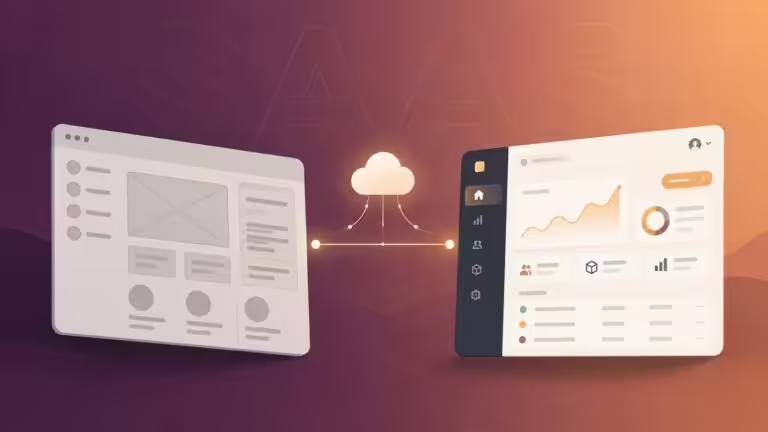



- 1. The Real Benefits of Custom Web Applications
- 2. What Are the Benefits of Custom Web Applications?
- 3. Custom Web Application vs. Off-the-Shelf Software
- 4. Which Businesses Benefit Most?
- 5. When a Custom Web App Might Not Be the Right Call
- 6. How Boomdevs Builds Custom Web Applications That Deliver These Benefits
Summarize with
Somebody on your team exported that CRM report to Excel again this morning. Same reason as last time: the tool still won’t group deals the way you actually sell.
That’s the tax every off-the-shelf platform charges. Small patches pile up. Eventually the software costs you more time than it saves.
The benefits of custom web applications come from removing that tax entirely. You get software shaped around how your business actually runs. Here’s what that looks like in practice.
The Real Benefits of Custom Web Applications
- Fit: the software adapts to your workflow instead of forcing you into someone else’s.
- Control: you own the security model, the data, and the roadmap outright.
- Growth: you scale without hitting a pricing tier or a feature ceiling.
- Cost: the upfront investment is higher, but you stop paying recurring fees for features you never use.
- Not universal: a custom build isn’t the right call for every business yet, and we’ll cover when it isn’t.
What Are the Benefits of Custom Web Applications?
Most “benefits of custom software” roundups just relabel features as advantages. The real benefits of custom web applications are simpler than that: your workflow stops fighting the software, and everything below follows from that one change.
Tailored to Your Exact Workflow
A custom web app automates the specific steps your business runs, not a generic template of them.
Off-the-shelf tools ship for the “average” version of your industry. Your actual process, the exception-handling, the approval chain, the way you price a rush order, gets bolted on afterward with spreadsheets and Slack messages instead of being built in.
A custom build bakes that exception into the software itself, instead of into someone’s memory. That shows up as things like:
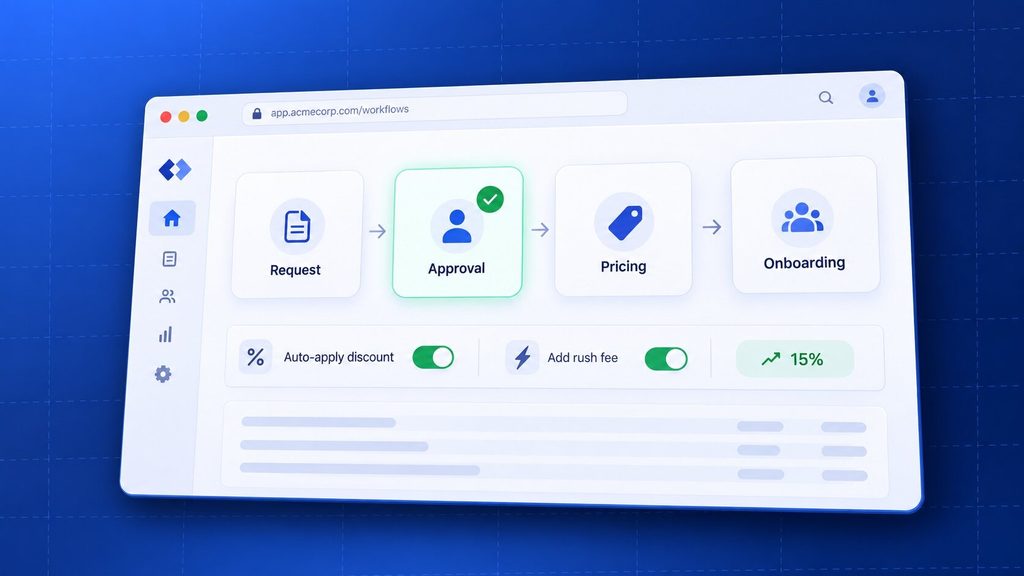
- Approval chains: route requests to the right person automatically, instead of chasing signatures over email.
- Pricing and quoting logic: apply your real rules (rush fees, volume discounts, regional pricing) without a manual override every time.
- Onboarding steps: walk a new client or employee through exactly the fields and checks your business requires, nothing more, nothing generic.
These are the benefits of custom web applications in practice: none of it needs a plugin marketplace or a clever workaround. It’s built in from day one. Teams that make the switch tend to say the same thing afterward: the software finally works for them instead of around them.
Stronger, More Controllable Security
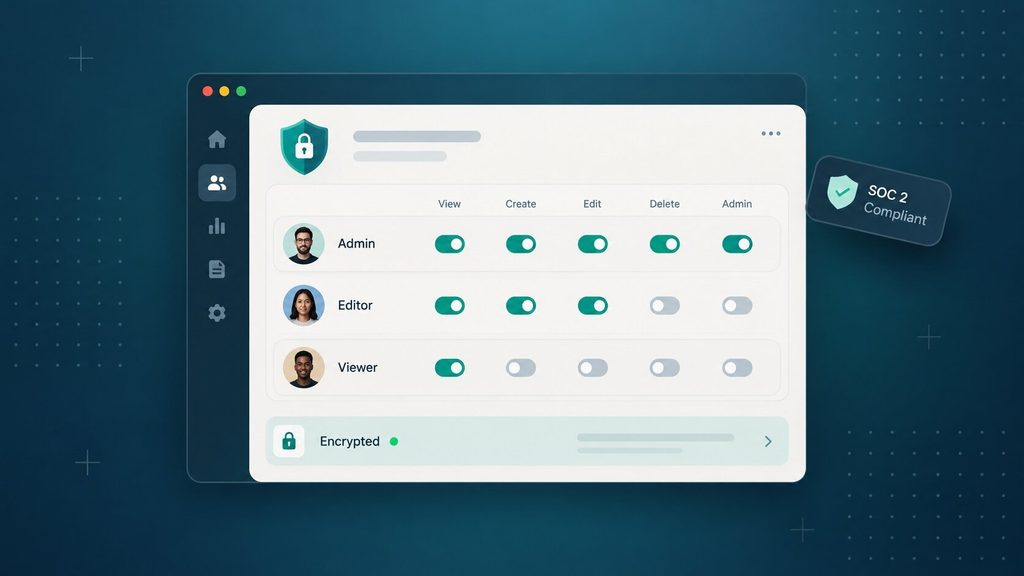
You decide exactly how your data gets encrypted, stored, and accessed, instead of trusting a shared platform’s default settings.
A healthcare clinic and a hobby blog running the same off-the-shelf software inherit the exact same security model, whether that fits either of them or not. A custom web application lets you build to the standard your business actually needs: HIPAA-grade controls for patient records, PCI compliance for payment handling, a strict role-based access model for financial data.
There’s a quieter one of the benefits of custom web applications too. Attackers who’ve spent months learning how a popular platform behaves have no equivalent playbook for a codebase built specifically for you.
Scalability That Grows With You
Add two hundred employees to most SaaS accounting tools, and the invoice jumps to the next pricing tier that same day, whether you touch the new features or not. A custom web application doesn’t work that way.
It runs on infrastructure you control, so growth becomes an engineering question instead of a renegotiation. Add users, add features, absorb a traffic spike, none of it requires a call to sales.
It also can’t be orphaned by a decision you had no say in. If a platform gets acquired or a product line gets shut down, you own the code, not a license to borrow it.
Direct Integration With Your Existing Stack
Right now, someone on your team probably copies numbers out of your accounting software into a spreadsheet every Friday, then emails it to whoever needs it. That’s the gap a pre-built connector never quite closes.
A custom build replaces the ritual with a direct connection between the two systems, so the number is just there, already current, for whoever needs it.
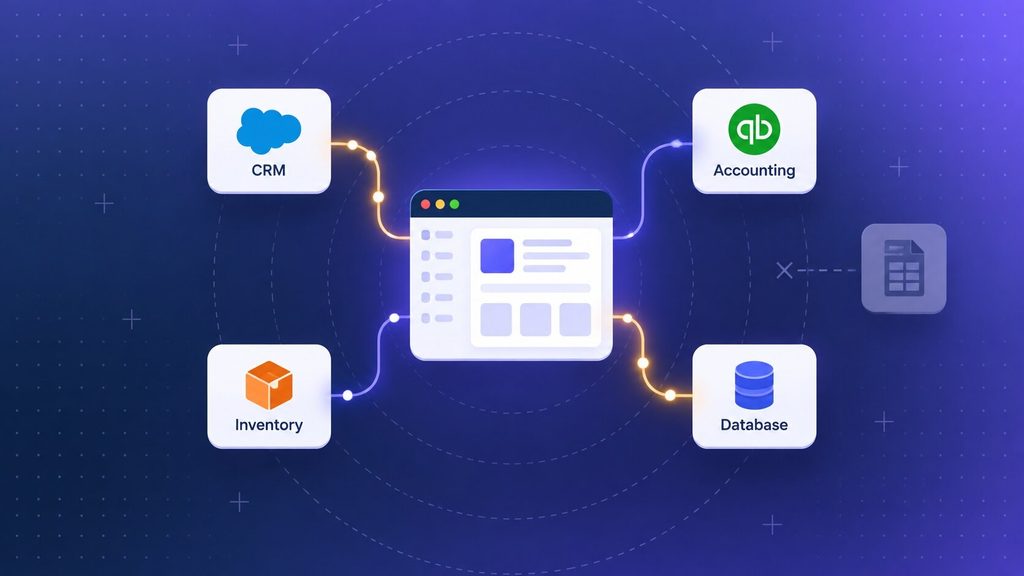
Most businesses run five or six systems that all need to talk to each other: a CRM, an accounting platform, an inventory tool, maybe a legacy database nobody wants to touch.
A custom web application builds the exact API integration each one needs instead of hoping a marketplace connector covers your case.
A Fully Branded User Experience
Picture a customer who’s just browsed your carefully designed site, then gets bounced to a payment page that looks like it was built by a different company. It was.
That handoff is where trust tends to leak out, even when the checkout itself works fine. A custom build keeps the same screens, the same voice, the same feel, the whole way through.
Progressive Web App techniques can even make that experience installable from a customer’s home screen, without the cost of building two separate native apps.
If you’re weighing custom design specifically rather than a full application, our breakdown of the benefits of custom web design covers the narrower version of this same argument.
Long-Term Cost Efficiency
Here’s the part most sales pages skip about the benefits of custom web applications: a custom build isn’t cheaper on day one. You’re paying for a software developer’s time, and in the United States that person now earns a median $135,980 a year, according to the Bureau of Labor Statistics.
What you’re buying out of is the other kind of expensive: a subscription bill that quietly climbs every time you add a seat or unlock a “power user” tier. Whether that trade actually pays off comes down to one question. Has your usage already outgrown the plan you’re on?
A Genuine Competitive Edge
If you and your closest competitor both run the same SaaS platform out of the box, you’re not really competing on software. You’re competing on who hustles harder inside the same tool everyone else has too.
A custom build changes that math. Maybe it’s a quote that goes out in minutes instead of days. Maybe it’s an onboarding flow that doesn’t lose half your signups at step three. Either way, it’s something a competitor can’t just buy off the same shelf you did.
Custom Web Application vs. Off-the-Shelf Software
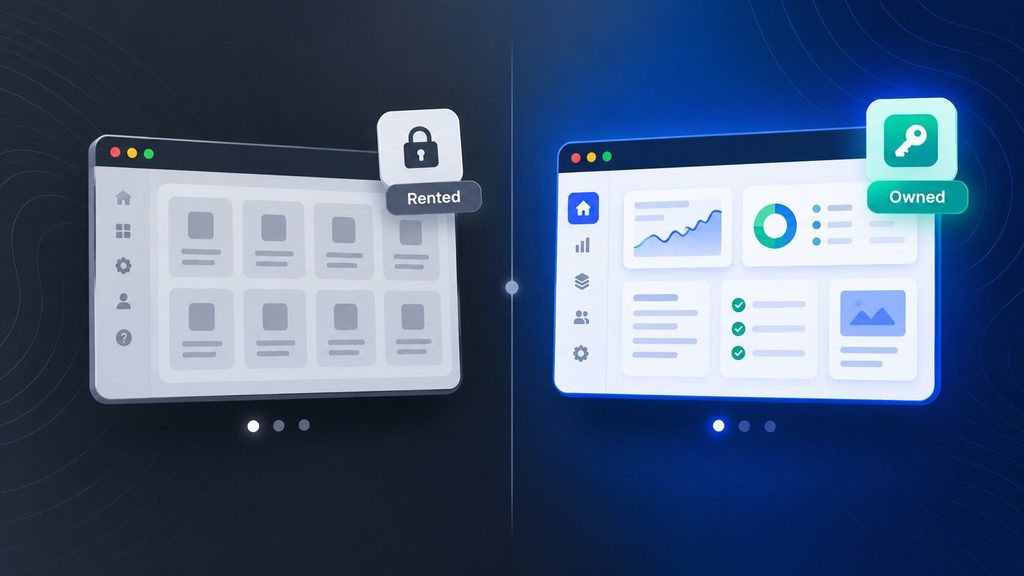
Price is the difference everyone argues about. The one that actually matters is who bends when reality doesn’t match the plan: you, or the software.
Here’s a side-by-side look at the benefits of custom web applications versus off-the-shelf software, stripped of the sales pitch on either side:
| Factor | Off-the-Shelf Software | Custom Web Application |
| Upfront cost | Low, subscription-based | Higher, one-time build |
| Long-term cost | Grows with users and features | Stable, no per-seat fees |
| Fit to your workflow | You adapt to the software | The software adapts to you |
| Ownership | You rent access | You own the code outright |
| Time to launch | Immediate | Weeks to months |
| Security model | Shared across every customer | Built to your exact standard |
| Room to scale | Capped by pricing tiers | Limited only by your infrastructure |
If you’re a five-person team still figuring out your own process, the left column is honestly the smarter bet for now. Once that process has settled and a generic tool is what’s slowing you down, the right column starts to win. The next section helps you tell which one you’re in.
Which Businesses Benefit Most?
A few industries feel the mismatch faster than everyone else.
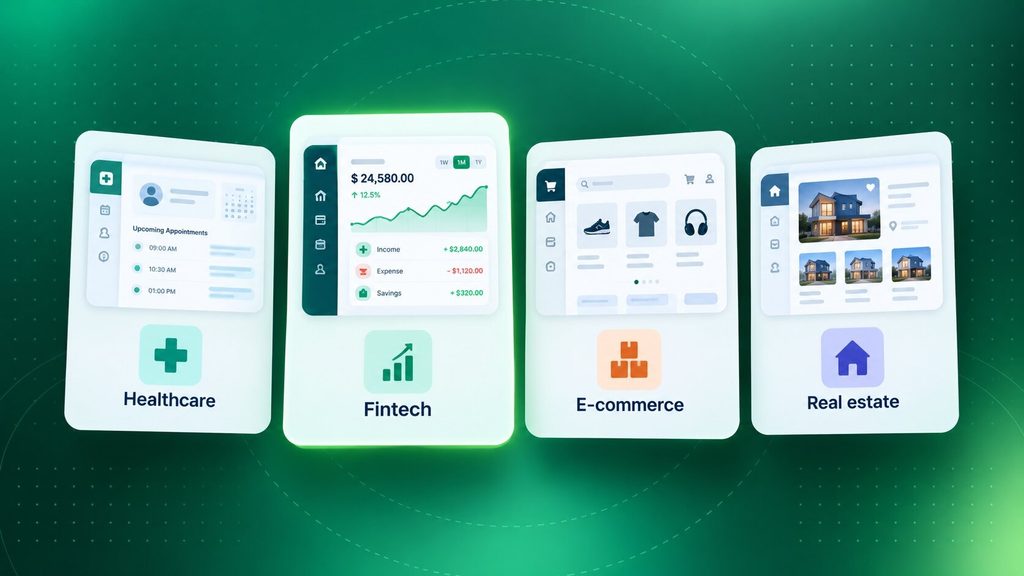
- Healthcare: HIPAA doesn’t bend for a booking app that was designed for hair salons and dentists’ offices at the same time. Patient portals and scheduling tools built to your actual compliance requirements avoid that mismatch from the start.
- Fintech: markets don’t wait for a feature request to clear a product committee. Boomdevs built the custom web platform behind Flash.trade, a Solana perpetuals exchange now handling over 1 million daily active users, at a scale a template product was never built to handle.
- E-commerce and logistics: the moment you’re managing stock across more than one warehouse, spreadsheets stop working and something eventually ships from the wrong location. Boomdevs’ work with Fulfillit.io took on exactly that kind of fulfillment logic, specific enough that no off-the-shelf platform handled it cleanly.
- Real estate: a listing site built for the average brokerage assumes an average sales process, and yours probably isn’t one. A custom portal follows your actual closing steps instead.
For a broader look at how this plays out across departments rather than industries, our guide to business software development breaks down the categories most companies eventually need custom-built.
When a Custom Web App Might Not Be the Right Call
Not everyone reading this needs to build anything yet, and it would be dishonest to pretend otherwise. A custom app earns its cost once a generic tool is actively costing you money or customers. Before that point, it’s mostly an expensive way to feel serious about your business.
Signs You’re Not Ready Yet
- Your process is still changing weekly. Build custom too early, and you’ll be redesigning core logic before the first version even ships.
- An existing tool already covers 80 to 90 percent of what you need. A custom app earns its cost for the remaining gap only once that gap is actually losing you money.
- You’re still validating the idea itself. If you don’t yet know whether customers want this at all, an MVP build proves the concept for a fraction of the cost, and a full custom platform can follow once demand is real.
If any of these sound familiar, that’s not a reason to abandon the idea. It’s a reason to wait a few months and revisit it once the workflow has settled.
Common Risks and How to Avoid Them
Custom software carries real project risk. The Standish Group’s long-running research on IT project outcomes puts the share of software projects that finish fully on time, on budget, and on scope at around 31 percent, which is a decent argument against skipping the planning phase.
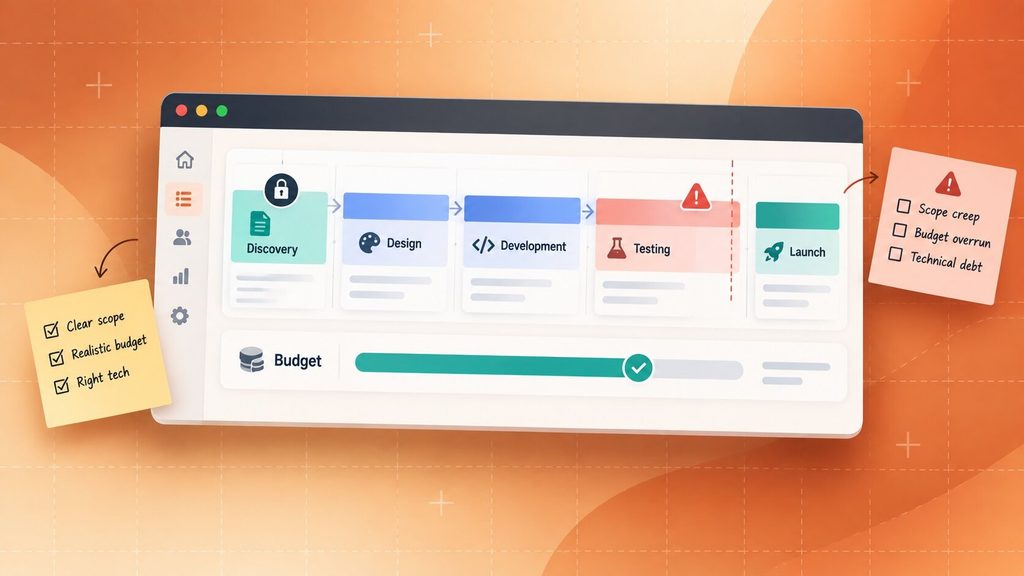
- Scope creep: somebody in a stakeholder meeting says “while we’re at it, can it also…” and a six-week build quietly becomes a four-month one. A locked discovery phase before development starts is the only real defense.
- Budget overruns: the fix here is boring, but it works. Fixed-scope phases beat one big number nobody actually believes.
- Poor adoption: you launch it, and three people log in the first week. Show your actual users the wireframes before a single line of code gets written, not the finished product.
- Technical debt: ship a shortcut to hit a deadline, and eighteen months later somebody has to reverse-engineer why the login page breaks every time it gets touched. Ask a potential partner how they review and document code now, not after you’re the one paying to untangle it.
None of these risks are arguments against building custom. They’re arguments for building it with a partner who plans for them upfront.
How Boomdevs Builds Custom Web Applications That Deliver These Benefits
Every one of the benefits of custom web applications listed above assumes the build itself is done well, which is the part most comparison articles skip entirely.
Boomdevs has spent 10+ years building custom web applications for founders and product leads who’ve outgrown generic tools, across fintech, healthcare, e-commerce, and real estate, with more than 3,500 projects behind that experience.
That track record runs through the same discovery-first process the risks above call for: scoping the real workflow before writing a line of code, whether the result is a single custom web application or a broader piece of custom software development.
If a spreadsheet, a workaround, or a bolted-on plugin is standing in for the software your business actually needs, let’s scope what a custom build would look like and get a straight answer on whether it’s worth it yet.
Frequently Asked Questions
What’s the Difference Between a Custom Web Application and a Regular Website?
A website mostly hands you information: hours, a phone number, a blog post. A web application asks you to log in and do something with your own data, like book a table or check an order status. Simple test: are you reading it, or working inside it?
Is a Custom Web Application Worth It for a Small Business?
Usually not on day one. Off-the-shelf tools and no-code platforms cover most small business needs cheaply and quickly. It’s worth revisiting once you’ve hit a wall a generic tool genuinely can’t solve, like a compliance requirement or a workflow no template supports.
How Long Does It Take to Build a Custom Web Application?
A simple internal tool can launch in a couple of months. A mid-complexity build, like a customer portal, typically runs four to eight months. A large enterprise platform can take a year or more, mostly depending on how many integrations and teams are involved.
How Much Does a Custom Web Application Cost?
Complexity drives the price far more than your company’s size does. A single-purpose tool solving one real problem is one of the cheaper builds out there. A platform juggling several user roles and multiple integrations is not. Skip anyone quoting a number before a discovery call; a published range can’t account for your specific mess of requirements.