


- 1. Key Takeaways
- 2. Best AI Agents for Sales at a Glance
- 3. 1. Artisan (Ava): Best for Outbound AI SDR Work
- 4. 2. Apollo.io: Best for Prospecting and Multichannel Sequences
- 5. 3. Clay (Claygent): Best for Account Research and Enrichment
- 6. 4. Drift by Salesloft: Best for Inbound Chat Qualification
- 7. 5. Conversica: Best for Lead Follow-Up and Reactivation
- 8. 6. HubSpot Breeze Agents: Best for Teams Already on HubSpot
- 9. 7. Salesforce Agentforce Sales: Best for Enterprises on Salesforce
- 10. 8. Microsoft Dynamics 365 Sales Agents: Best for Microsoft-Centered Teams
- 11. 9. Gong: Best for Call Analysis and Deal Risk
- 12. 10. Clari: Best for Forecasting and Pipeline Inspection
- 13. 11. A Custom-Built AI Sales Agent: Best When the Platforms Run Out
- 14. How to Choose the Right AI Agent for Your Sales Team
- 15. How Boomdevs Fixes Sales Agents That Don't Fit Your Process
- 16. Frequently Asked Questions
Summarize with
Your reps spend the morning updating the CRM and chasing replies. By lunch, last night’s demo requests still haven’t heard back. Every vendor selling AI agents for sales promises one that fixes this.
These are the 11 AI agents for sales worth a place on your shortlist, grouped by the job each one does. We picked them from the AI sales agents that keep showing up in industry roundups, then checked what each one actually automates. Start with your biggest bottleneck.
Key Takeaways
- Pick AI agents for sales by job, not by feature count. Artisan and Apollo cover outbound, Clay covers research, Drift and Conversica cover inbound, and Gong and Clari cover deal intelligence.
- Already living in one CRM? HubSpot Breeze, Salesforce Agentforce, or Microsoft’s Dynamics 365 agents are usually the fastest place to start.
- Data decides the result. An agent reading a messy CRM sends wrong messages faster than any rep could.
- Keep a person on the send button for first-touch outreach and pricing until the agent proves itself.
- Build custom when the platforms run out. If your data spans several systems or your sales rules are unusual, a custom agent beats stretching a platform.
Best AI Agents for Sales at a Glance
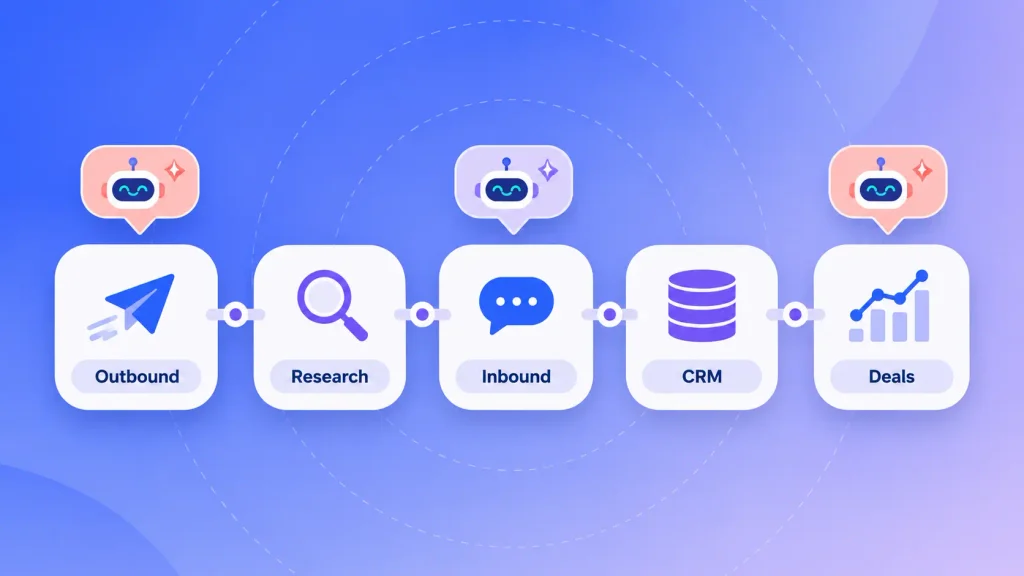
Among the best AI agents for sales, the right one for your team is the one built for your slowest step. A prospecting agent won’t fix a stale pipeline review, and a forecasting tool won’t answer a demo request at 9 p.m.
Here’s the full shortlist, ordered by where each tool sits in the funnel:
| Tool | Sales job | Best for | Pricing model |
| Artisan (Ava) | Outbound AI SDR | Scaling cold outreach | Quote-based |
| Apollo.io | Prospecting and sequences | Small to mid-size outbound teams | Free plan, per-seat tiers, credits |
| Clay (Claygent) | Account research and enrichment | Teams building custom lead lists | Free plan, monthly tiers |
| Drift by Salesloft | Inbound chat qualification | B2B sites with steady traffic | Quote-based |
| Conversica | Lead follow-up and reactivation | High lead volume, long nurture cycles | Quote-based |
| HubSpot Breeze agents | CRM-native prospecting and data | Mid-market teams on HubSpot | Included in paid tiers, some usage-based |
| Salesforce Agentforce Sales | CRM-native SDR and quoting | Enterprises on Salesforce | Tied to premium editions |
| Microsoft Dynamics 365 Sales agents | CRM-native qualification and prep | Microsoft-centered teams | Microsoft licensing plus capacity |
| Gong | Call analysis and deal risk | Coaching and deal inspection | Quote-based |
| Clari | Forecasting and pipeline inspection | Sales leaders and RevOps | Quote-based |
| Custom AI sales agent | Whatever your process needs | Multi-system data, unusual rules | One-time build plus running costs |
Notice how few of these compete head-to-head. Most teams end up running two or three, one per bottleneck.
What Counts as an AI Sales Agent
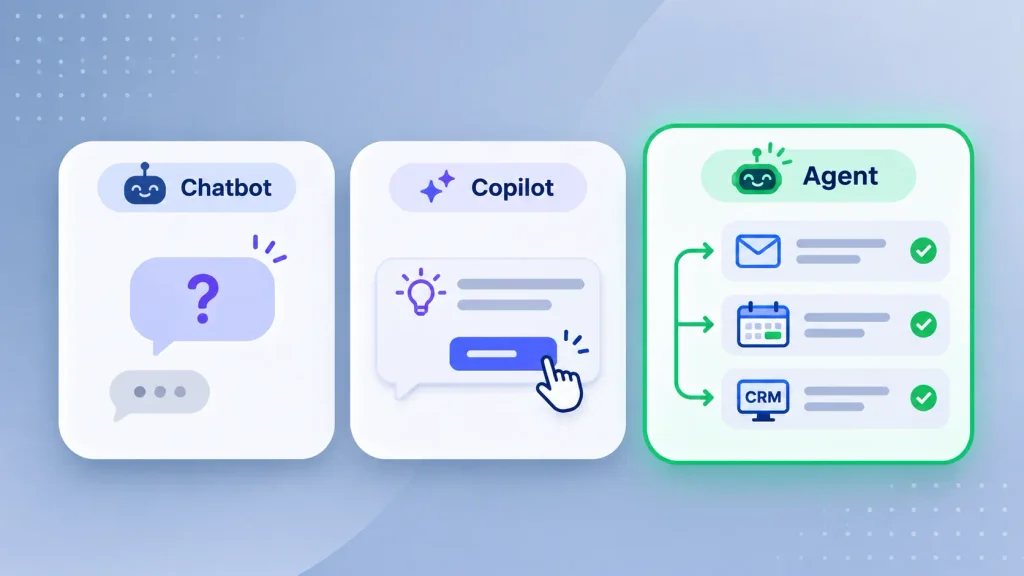
An AI sales agent takes a goal, reads your CRM and inbox, and then acts: it sends the follow-up, books the meeting, or updates the deal. A chatbot waits for questions. A copilot suggests and lets you click.
If you want the full map, here are the main types of AI agents and how they differ.
That line matters because the label on AI sales agents gets stretched. Gartner estimates only about 130 of the thousands of agentic AI providers are real, with many rebranding chatbots and assistants. Adoption is real, though: Salesforce found 54% of sellers have already used agents.
How We Picked These Tools
Boomdevs doesn’t sell any tool on this list, so nobody paid for a slot. Each pick had to clear four bars:
- It acts, not just suggests. The tool completes a sales task on its own, or drafts it for one-click approval.
- It connects to your systems. CRM, email, or calendar access is built in, not bolted on.
- It shows up repeatedly. Each tool appears across several independent sales roundups, not one.
- It has an honest weak spot. Every entry names one limitation, because every tool has one.
Pricing changes often, so the table shows how each tool charges, not a sticker price.
1. Artisan (Ava): Best for Outbound AI SDR Work
Artisan sells Ava as an AI SDR. She finds leads in a built-in B2B database, researches them, and runs personalized email and LinkedIn sequences without a rep writing each message.
- Best for: Teams that want more outbound pipeline without hiring more SDRs.
- Standout: Lead sourcing, research, and sequencing in one place.
- Watch out for: Reviewers say the messaging can feel generic, so plan to tune your playbooks.
- Pricing: Quote-based.
The deliverability tooling is the quiet strength of this AI SDR. Mailbox health monitoring, sending limits, and warm-up are built in, which matters once you’re sending at volume.
2. Apollo.io: Best for Prospecting and Multichannel Sequences
Apollo pairs a large contact database with AI-written sequences, intent signals, and a call assistant. You define your ideal customer profile, and it ranks fits using signals like site visits and email engagement.
- Best for: Small and mid-size teams doing their own outbound.
- Standout: Data, sequencing, and calling under one login.
- Watch out for: Users report weaker accuracy on mobile numbers in some regions, and credits run out fast on busy teams.
- Pricing: Free plan, then per-seat tiers with monthly credit limits.
It’s the most accessible entry point on this list. You can start free and learn the workflow before paying for seats.
3. Clay (Claygent): Best for Account Research and Enrichment
Claygent is Clay’s research agent. You ask it plain questions about a company, such as who was featured in its last case study, and it hunts the answer down across the web.
- Best for: Outbound teams that want full control over list building.
- Standout: Flexible, multi-source enrichment you can shape without code.
- Watch out for: The learning curve is steep without a technical person or onboarding help.
- Pricing: Free plan, then monthly tiers.
Clay’s real power is waterfall enrichment. It checks one data source, falls back to the next, and fills the gaps your CRM leaves.
4. Drift by Salesloft: Best for Inbound Chat Qualification
Drift puts a chat agent on your website that works like an inbound AI SDR: it engages visitors, qualifies them, and routes serious buyers straight to a rep’s calendar. It’s now part of the Salesloft platform.
- Best for: B2B companies with steady inbound traffic.
- Standout: Real-time qualification and routing tied to sales pipeline data.
- Watch out for: Results drop without real traffic, and complex routing often needs workarounds. If your flows are unusual, a custom sales chatbot may fit better.
- Pricing: Quote-based.
This is the most direct fix for slow speed to lead. A buyer who asks for a demo at night gets an answer and a meeting slot before leaving.
5. Conversica: Best for Lead Follow-Up and Reactivation
Conversica’s agents hold two-way conversations over email, SMS, and chat. They follow up with new leads, re-engage contacts that went quiet, and hand interested buyers to a rep.
- Best for: Mid-market and enterprise teams with high lead volume.
- Standout: Persistent, natural follow-up that runs for weeks without rep effort.
- Watch out for: It’s built for scale, so smaller teams may find the commitment heavy.
- Pricing: Quote-based, with enterprise contracts.
Of all the AI sales agents here, it’s the one for the leads your team never got to. Old webinar lists and stalled trials are where it tends to earn its keep.
6. HubSpot Breeze Agents: Best for Teams Already on HubSpot
Breeze is HubSpot’s AI layer. The prospecting agent researches target companies and drafts personalized outreach, and the data agent categorizes records and writes results back into CRM fields.
- Best for: Mid-market teams that run sales and marketing in HubSpot.
- Standout: No integration work, since your data already lives there.
- Watch out for: Sequence branching and forecasting are basic next to specialist tools.
- Pricing: Core Breeze features are free; agents sit in paid tiers, and some agent actions are billed by usage.
HubSpot also lets you choose between reviewing each message before it sends or letting the agent send on its own.
7. Salesforce Agentforce Sales: Best for Enterprises on Salesforce
Agentforce brings agents into Sales Cloud. Its SDR agent answers lead questions, books meetings, and passes the lead to a rep. A quoting agent drafts quotes inside your catalog and pricing rules, and the seller reviews before sending.
- Best for: Large sales orgs already standardized on Salesforce.
- Standout: Agents that respect your existing permissions, catalog, and pricing rules.
- Watch out for: The SDR agent requires premium editions plus Einstein for Sales, and advanced setups usually need an admin.
- Pricing: Bundled with premium Salesforce editions and add-ons.
That quoting piece is rare on this list. If your quotes involve bundles and discount approvals, it removes real busywork.
8. Microsoft Dynamics 365 Sales Agents: Best for Microsoft-Centered Teams
Microsoft’s Sales Qualification Agent works assigned leads against your criteria, checks fit and BANT, and drafts outreach. It runs in two modes: research only, or research and engage, where it sends and follows up.
- Best for: Teams that live in Outlook, Teams, and Dynamics.
- Standout: A clear switch between drafting and sending, built into the product.
- Watch out for: It shines inside the Microsoft stack and adds less if your team works elsewhere.
- Pricing: Microsoft licensing, with agent usage drawing on tenant capacity.
A separate Sales agent in Microsoft 365 Copilot preps meeting snapshots in Teams and summarizes threads in Outlook. It can connect to Salesforce too.
9. Gong: Best for Call Analysis and Deal Risk
Gong records and analyzes calls, emails, and meetings. It flags objections, competitor mentions, and stalled commitments, then drafts follow-ups and updates the CRM.
- Best for: Teams that run many calls and want better coaching and deal inspection.
- Standout: Deal risk signals pulled from real conversations, not rep memory.
- Watch out for: Reviewers mention occasional missed recordings and limited analytics customization.
- Pricing: Quote-based.
Coaching moves from gut feel to what was actually said on the call.
10. Clari: Best for Forecasting and Pipeline Inspection
Clari reads pipeline activity to forecast the quarter and flag deals that are slipping. Its agents inspect open opportunities, surface next steps, and summarize what changed.
- Best for: Sales leaders and RevOps teams.
- Standout: Forecast and deal health in one view, built from activity data.
- Watch out for: Individual reps get less from it than managers do.
- Pricing: Quote-based.
If your forecast call is mostly reps defending numbers, Clari changes that conversation.
11. A Custom-Built AI Sales Agent: Best When the Platforms Run Out
A custom agent is software built around your sales process rather than a platform’s idea of how you should sell. It reads the systems you actually use, follows your rules, and acts where a platform can’t reach.
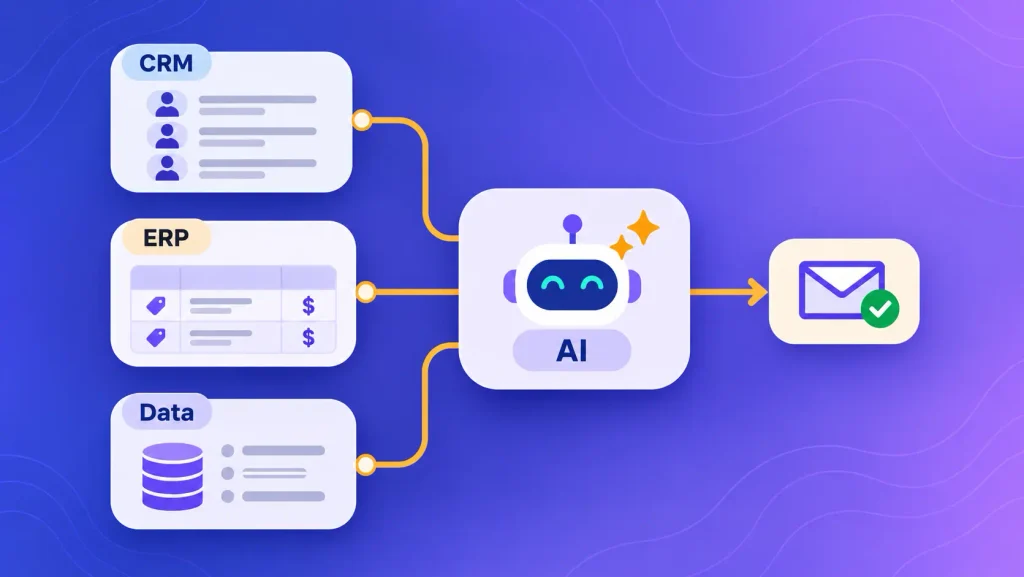
You’ll usually feel the need when off-the-shelf AI agents for sales stop fitting, often in one of these moments:
- Your data lives in several places. Deals in the CRM, pricing in an ERP, usage in a warehouse, and no single tool sees all three.
- Your rules are unusual. Eligibility checks, regional pricing, or approval chains that no template covers.
- Per-lead fees stop making sense. At high volume, usage-based pricing can outgrow the cost of owning the agent.
- The logic is your edge. Your qualification model or pricing logic is something you’d rather not hand to a third-party tool.
Building costs more upfront and takes longer than switching on a platform feature. That’s the custom vs off-the-shelf trade-off in a nutshell. Before committing, it’s worth reading what a custom AI agent costs to build and seeing how a first AI agent gets built, step by step.
- Best for: Teams whose process spans several systems or carries rules no platform supports.
- Standout: It fits your workflow exactly, and you own the logic and the data.
- Watch out for: You need a clear first use case, clean data, and someone to maintain it.
- Pricing: A one-time build, then hosting and model usage.
If two or more of those sound familiar, the guide below helps you test it.
Apollo section
How to Choose the Right AI Agent for Your Sales Team
You choose AI agents for sales teams well by naming the one step where deals stall, then matching an agent to that step. Everything else is a demo feature you won’t use.
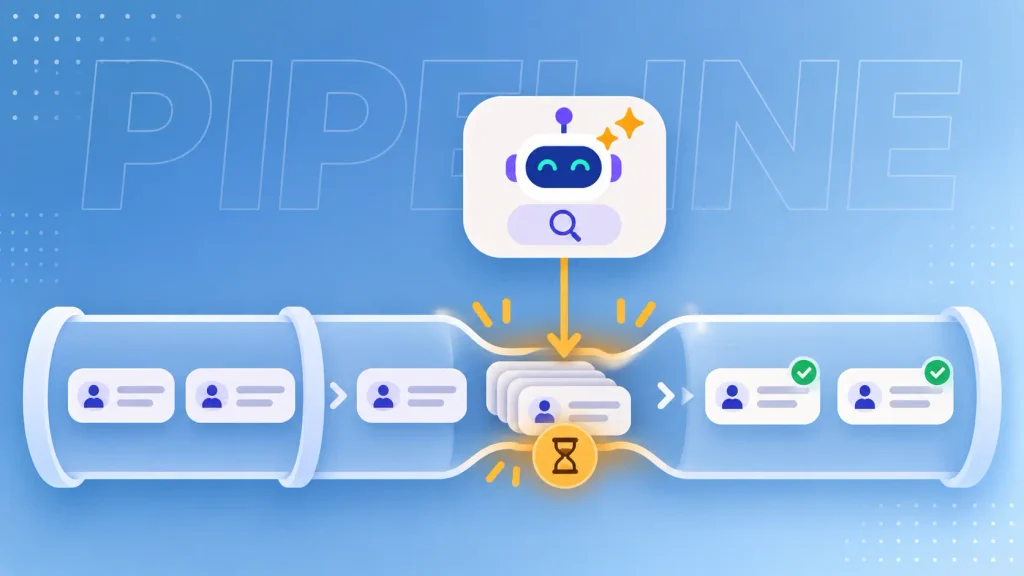
Start With Your Biggest Sales Bottleneck
Your slowest step tells you which agent to try first. The Salesforce data backs this up: sellers spend only 40% of their time actually selling, so the first agent should give back the hours your team loses most.
Match your bottleneck to a starting point:
| If your bottleneck is… | Start with | Tools from this list |
| Inbound leads wait hours for a reply | Inbound qualification agent | Drift, Conversica |
| Reps don’t have enough pipeline | Outbound SDR agent | Artisan, Apollo |
| Research eats rep time | Research agent | Clay |
| CRM records are always stale | CRM-native agent | HubSpot, Salesforce, Microsoft |
| Forecasts keep surprising you | Deal intelligence agent | Gong, Clari |
| Your process spans several systems | Custom agent | Built for you |
One agent, one bottleneck, one metric. Once that works, add the next. And if your bottleneck sits after the sale, post-sale agents built for customer service follow the same logic.
Check CRM and Data Fit Before the Demo
Every one of these AI agents for sales reads your CRM, so its output can only be as good as your records. Duplicate accounts, missing owners, and old job titles turn into wrong emails sent at machine speed.
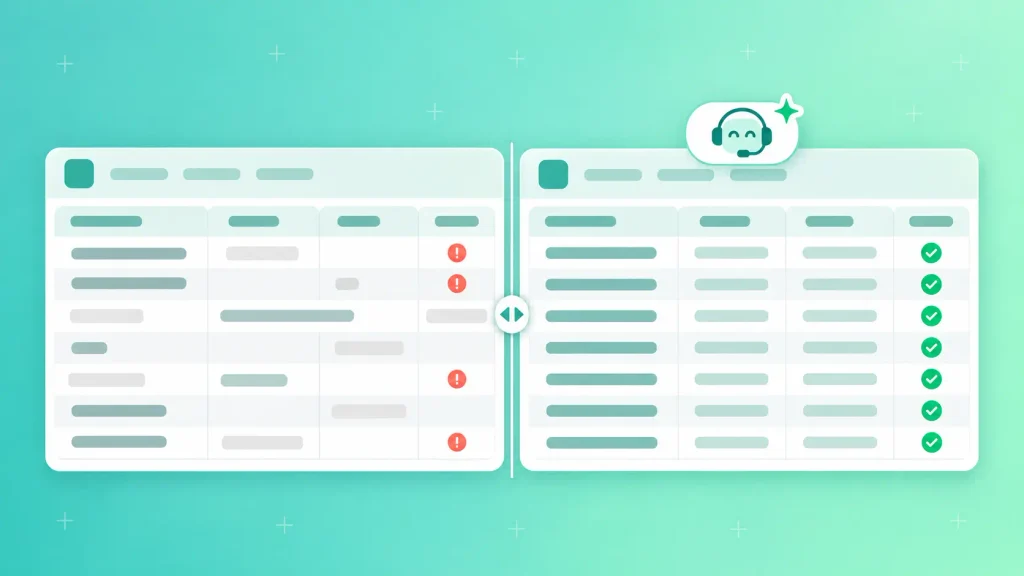
High performers seem to know this. In the same Salesforce study, 79% of high performers prioritize data hygiene versus 54% of underperformers, and 51% of sales leaders with AI say disconnected systems slow their AI work.
So run the demo on your own data, not the clean sample set. A tool that shines on demo records can stumble on yours.
Decide Which Actions Need Human Approval
The real question isn’t whether an agent can act alone. It’s which actions should wait for a person. Settle that before you compare tools, since products differ mainly in how much authority they take by default.
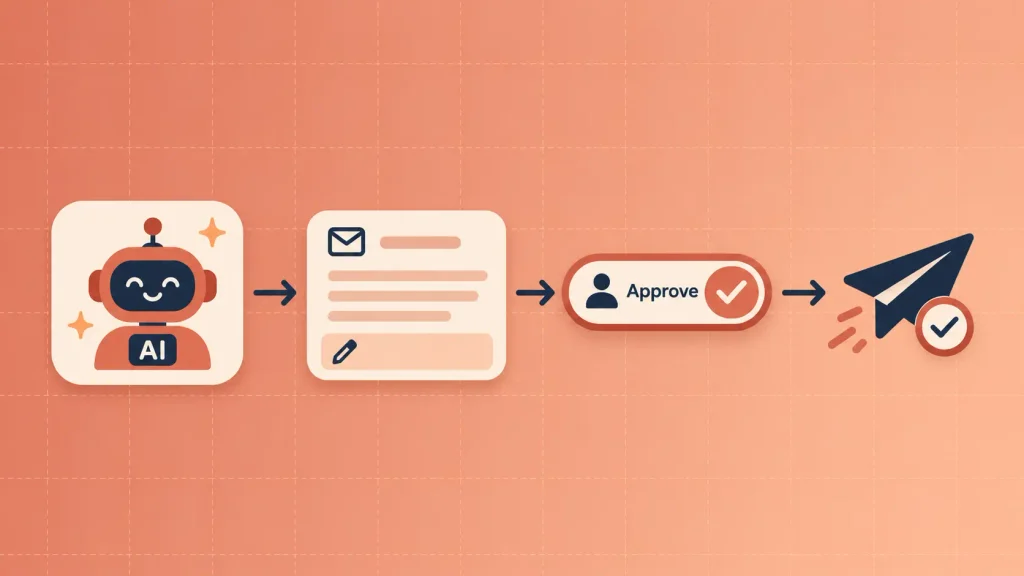
Here’s a sensible starting point:
| Action | Sensible default | Why |
| Research and drafting | Agent acts alone | Mistakes stay internal and cheap |
| First email to a named account | Rep approves | One bad message can burn an account |
| Pricing and discounts | Person commits | Price is a promise you have to keep |
| Bulk CRM updates | Person approves | Errors spread across hundreds of records |
| AI voice calls | Only with prior consent | U.S. law treats AI voices as artificial |
That last row isn’t a style choice. The FCC ruled that calls using AI-generated voices count as “artificial” under the TCPA, which means consent rules apply. If calling is part of your plan, an AI voice agent for sales calls needs consent checks designed in from day one.
Loosen the gates only as accuracy holds up in your logs. For the wider picture, these ethical guardrails for AI agents apply to sales agents too.
Buy, Build, or Blend
Most teams should buy first. Off-the-shelf AI agents for sales get you live in weeks, and you’ll learn what your process really needs.
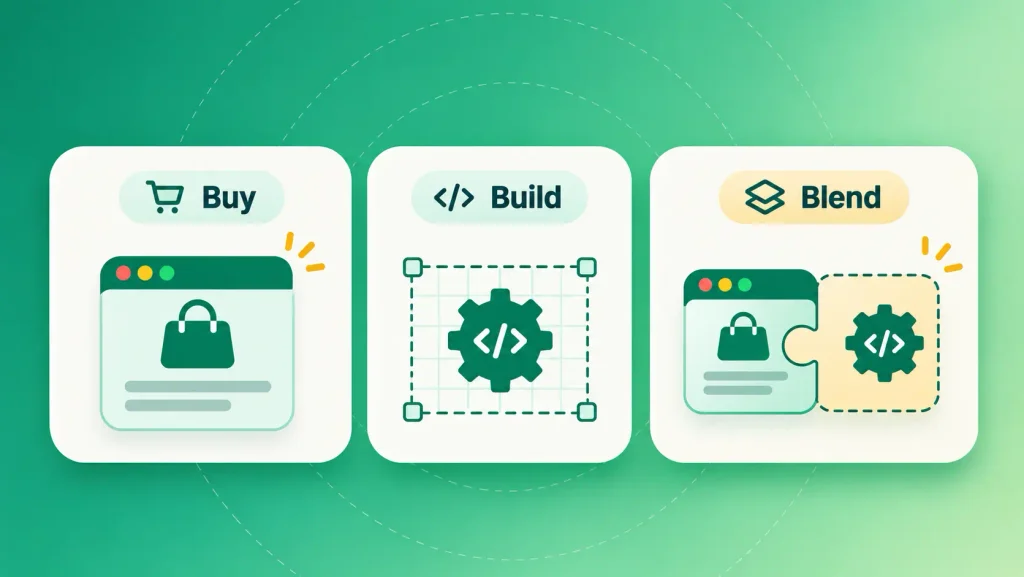
Here’s how the three paths compare:
| Path | Fits when | Trade-off |
| Buy | Your process is standard and lives in one CRM | Fast, but you work within the tool’s limits |
| Build | Your data spans systems or your rules are unique | Exact fit, but more time and upfront cost |
| Blend | A platform covers most jobs but misses one | Buy the common parts, build the gap |
Whichever path you pick, start narrow. Gartner predicts over 40% of agentic AI projects will be canceled by the end of 2027, citing rising costs, unclear value, and weak risk controls. A tight first use case with a clear metric avoids all three.
If you lean toward building, the next decision is whether to build it in-house or with an outside team.
Not sure which path fits your pipeline? Tell us your stack and your biggest bottleneck, and you’ll get a straight answer on whether to buy, build, or blend, plus a rough estimate. Get a free AI agent assessment.
How Boomdevs Fixes Sales Agents That Don’t Fit Your Process
When off-the-shelf AI sales agents can’t see your data or follow your rules, the fix is an agent built around your process. That’s the work Boomdevs does.
A typical engagement looks like this:
- Map the bottleneck. You pick the one sales step to fix and the metric that proves it worked.
- Connect the data. The agent gets least-privilege access to your CRM, ERP, inbox, or warehouse, only where it’s needed.
- Build with approval gates. Drafting runs on its own; sending and pricing stay behind a person until the logs say otherwise.
- Pilot, then expand. A small group of reps uses it first, and every decision gets logged for review.
With 10+ years and 3.5K+ projects behind the team, the focus stays on agents that hold up on real data, not demo data. You can see how Boomdevs approaches custom AI agent development for sales, support, and operations teams.
Ready to stop forcing your process into someone else’s tool? Book a free call with a Boomdevs AI engineer and leave with a scoped plan for your first sales agent.
Frequently Asked Questions
What Is the Best AI Agent for Sales?
There’s no single winner among the best AI agents for sales, because each one fixes a different step. If you live in one CRM, start with its native agents. For outbound, look at Artisan or Apollo; for inbound speed, Drift or Conversica; for deal risk and forecasting, Gong or Clari.
How Much Do AI Sales Agents Cost?
It depends on the pricing model more than the tool. Some charge per seat, some by credits or per conversation, and CRM-native agents are tied to premium editions. A custom agent swaps recurring fees for a one-time build plus hosting and model usage.
Will AI Agents Replace Sales Reps?
Not for complex deals. AI agents for sales mostly take over research, data entry, and first-touch follow-up, which is where reps lose most of their time. Discovery, negotiation, and relationships still need a person, and McKinsey found only 23% of organizations are scaling agentic AI anywhere in the business so far.
Is an AI SDR the Same as an AI Sales Agent?
An AI SDR is one kind of AI sales agent. It handles prospecting, first-touch outreach, and inbound qualification. Other sales agents cover meeting prep, CRM upkeep, quoting, and forecasting.
Are AI Sales Calls Legal?
They can be, but consent comes first. In the U.S., AI-generated voices count as artificial under the TCPA, so many calls need prior express consent. Rules vary by country and state, so check with counsel before launching any AI calling.