


- 1. Key Takeaways
- 2. What Is White Label Software Development?
- 3. How Does White Label Software Development Work?
- 4. White Label vs Outsourcing vs Staff Augmentation
- 5. Which Engagement Model Fits: Project, Retainer, or Dedicated Team?
- 6. What Does White Label Software Development Cost?
- 7. Benefits and Risks of White Label Development
- 8. Contracts That Protect a White Label Arrangement
- 9. How to Choose a White Label Software Development Partner
- 10. When White Label Is the Wrong Call
- 11. How Boomdevs Solves the Agency Capacity Gap
- 12. Frequently Asked Questions
Summarize with
Your best client asked for a custom customer portal. You said yes on the call. Now you’re staring at a team of designers and marketers, and nobody on it writes production code.
Hiring a developer takes months you don’t have. Turning the work down hands your client to a competitor.
White label software development closes that gap. A partner writes the code, and you deliver under your brand. Here’s how it works, what it costs, and how to stay protected.
Key Takeaways
- White label software development means a partner builds software that you sell to your client under your own name. The client never deals with the partner.
- Your margin is the gap between what you bill and what the partner charges, so the engagement model matters more than the hourly rate.
- Four contract pieces protect you: an NDA, a non-solicitation clause, a written IP assignment, and an SLA. Add a data processing agreement if personal data is involved.
- Run a small paid pilot before you hand over a big project. It shows you how the partner handles quality and brand leaks.
- Skip white label for your own flagship product or for client contracts that restrict subcontracting.
What Is White Label Software Development?
With white label software development, one company writes the software and another sells it as its own. You own the client, the brand, and the invoice. The partner writes the code and stays out of sight.
Your client sees your proposal, project manager, and demo. The partner’s name never appears. It’s like a store-brand product made in someone else’s factory, applied to code.
Agencies use it most, but they aren’t the only buyers. Consultancies, design studios, and SaaS founders who need a build they can’t staff all use the same model. If your focus is websites rather than custom applications, our white label web development services cover that side in more depth.
The Two Things People Mean by White Label Software
The phrase covers two different deals, and most guides only describe one. The first is a service: a partner builds custom work that you resell. The second is a product: you license finished software, put your logo on it, and resell access.
Here’s how the two compare:
| Meaning | What you buy | Who owns the code | Typical buyer |
| White label development service | Custom build to your client’s spec | You or your client, by contract | Agencies, consultancies, studios |
| White label software product | A license to rebrand an existing platform | The original provider | Resellers, franchises, service firms adding a tool |
This article focuses on the service model. If you’re weighing a licensed product instead, the trade-offs look a lot like the ones in custom software vs off-the-shelf: speed and a lower upfront cost against limited control.
White Label vs Private Label vs Custom Development
These three terms get swapped around in sales calls, and the difference affects what you can promise your client. The real dividing line is who designs the product and who owns what comes out.
The table below separates them:
| Model | Branding | Customization | Speed | Best for |
| White label | Your brand, partner’s build | Low to high, by contract | Fast | Reselling builds without hiring |
| Private label | Your brand, your spec | High | Moderate | A product line that’s yours alone |
| In-house custom | Your brand, your team | Full | Slowest | Core products you must control |
If your client expects exclusive, fully owned software, make sure your contract delivers exactly that. “White label” on its own doesn’t guarantee it.
How Does White Label Software Development Work?
You run the client relationship, and the partner runs delivery underneath it. Work flows up to your brand. Questions and payments flow down to the partner.
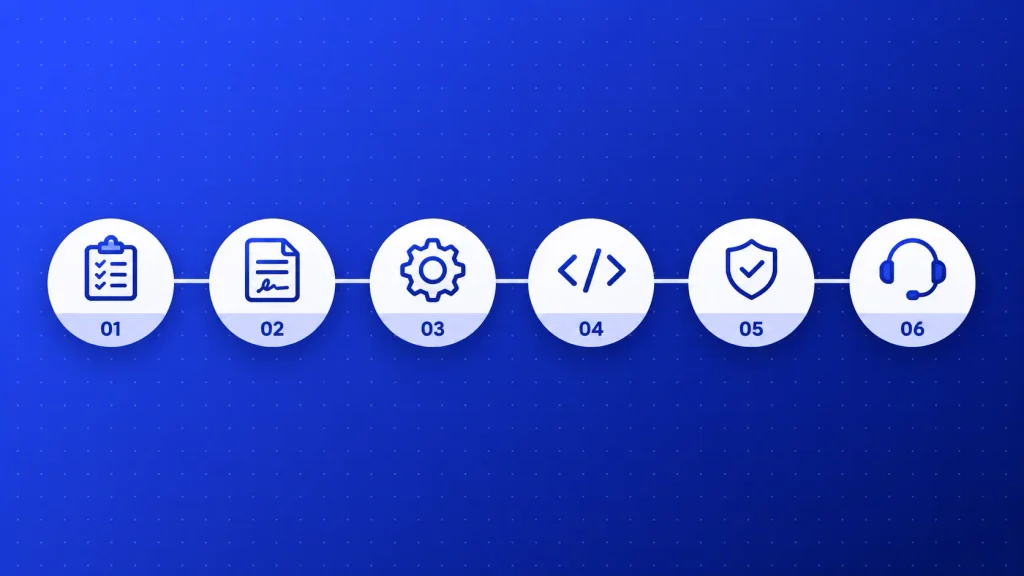
A typical engagement moves through six stages:
- Scoping: you gather requirements from your client and agree the scope, timeline, and price with your partner.
- Contracting: you sign your client agreement and a separate partner agreement, with the protections covered later in this article.
- Setup: the partner works inside your tools, such as your repo, your project board, and your email domain.
- Build: the partner develops in sprints while you review progress and relay feedback.
- QA and handoff: the partner tests, you review, and you present the result to your client as your own work.
- Support: someone fixes bugs and ships updates after launch, and your contract should say who.
That last stage is where most arrangements get vague. Settle it before kickoff, not after your client’s first bug report.
Communication rhythm matters just as much as the build itself. Agree with your partner on a weekly update format, a single channel for urgent questions, and a clear owner for every client request.
When those basics are written down, small issues get fixed before your client ever notices them. Teams that treat white label software development as a shared process, rather than a handoff, usually deliver faster and argue less. Clear routines also make switching or scaling the partnership easier later, because nothing important lives only in someone’s head.
What Must Stay Invisible to Your Client
Client invisibility is the whole point of white label software development, and it usually breaks in small places. A partner can promise discretion and still leak its name through a footer or a commit log.
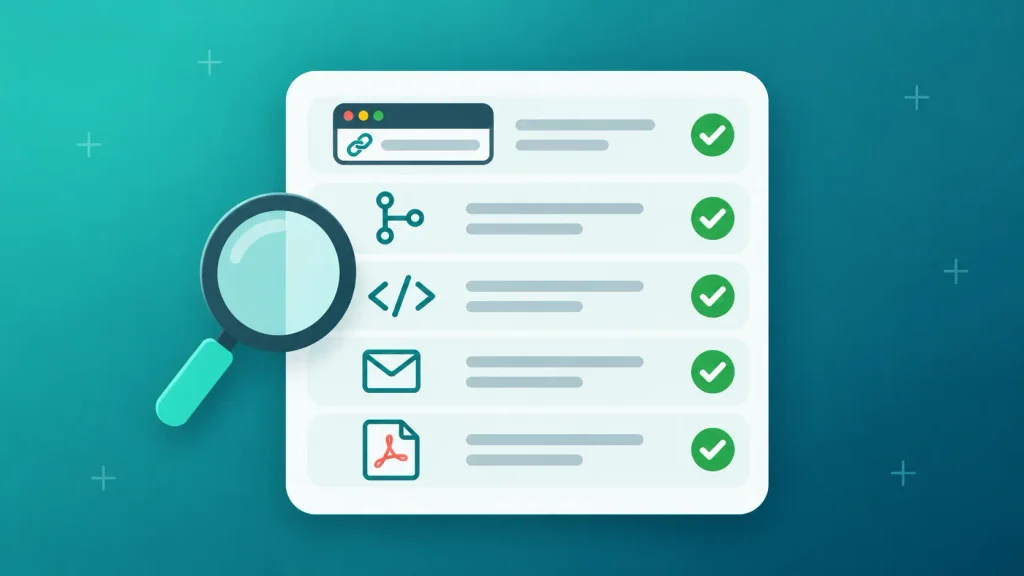
It’s worth checking these spots on every delivery:
- Staging and preview URLs: they should sit on your domain or a neutral one, never the partner’s.
- Repository history: commit authors, branch names, and README files can name the partner.
- Code comments and metadata: look for copyright headers, package author fields, and file properties.
- Email and calendar invites: anyone your client talks to should use your domain.
- Documents and exports: PDFs, invoices, and test reports often carry another company’s template.
I’d suggest adding this list to your acceptance criteria. Your partner should pass it before you ever forward a link.
White Label vs Outsourcing vs Staff Augmentation
All three bring in outside developers. They differ on two things: who manages the daily work and whose name your client sees.
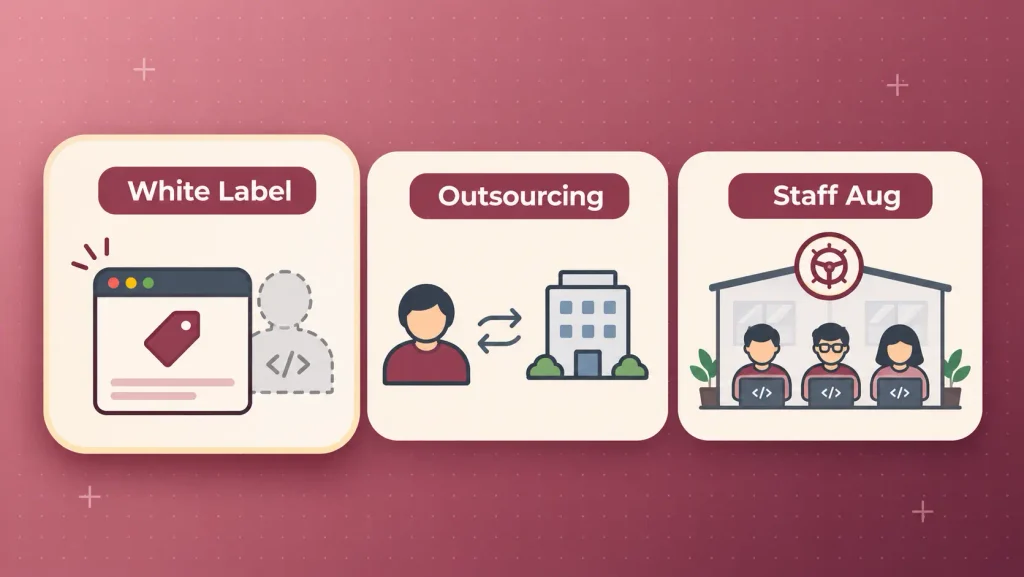
Here’s the side-by-side:
| Model | Who manages the work | Whose brand the client sees | Best for |
| White label | Partner, behind you | Yours | Reselling builds to your clients |
| Traditional outsourcing | Partner, openly | Often the partner’s | Your own internal projects |
| Staff augmentation | You | Yours | Filling skill gaps on a team you already run |
The honest trade-off is control. White label software development takes delivery work off your plate, but you’re trusting someone else’s process. With software developer staff augmentation, you keep full control and take on the management load yourself. We compare the build-or-buy side of this decision in in-house vs outsourced AI development, and the same logic applies outside AI.
Which Engagement Model Fits: Project, Retainer, or Dedicated Team?
The engagement model decides your margin more than the rate card does. A cheap hourly price can still lose money if scope creeps and you quoted your client a fixed fee.
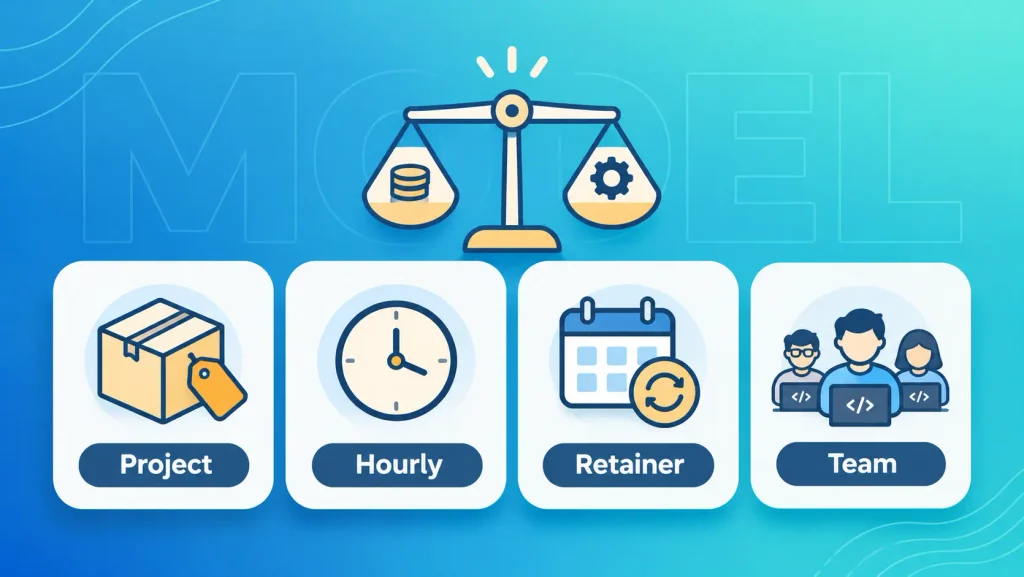
Most white label software development partners offer these:
| Model | How it’s priced | Best for | Margin implication |
| Per project | Fixed fee per build | One-off, well-scoped work | Easy to quote, thin if scope grows |
| Hourly | Time and materials | Unclear or evolving scope | Flexible, hard to resell at a fixed price |
| Retainer | Set capacity each month | Steady flow of client work | Predictable cost, steadier margin |
| Dedicated team | Named developers reserved for you | Continuous delivery | Strongest control and continuity |
I’d suggest matching the partner’s pricing to the way you bill your client. If you sell fixed-price projects, buy fixed-price projects. Mismatches are where agencies quietly lose their profit.
What Does White Label Software Development Cost?
There’s no single price, because you’re buying someone else’s development time. Your cost tracks scope, seniority, and location, just like any custom build, and your margin comes from what you add on top.
What Drives the Price
These factors move the number most:
- Scope and complexity: integrations, user roles, and admin panels add more than screens do.
- Seniority: architects and specialists cost more than generalists, and you’ll want at least one on anything complex.
- Team location: offshore teams typically charge less per hour than onshore ones, with less time-zone overlap.
- What’s bundled: QA, project management, and post-launch support are sometimes included and sometimes billed separately.
For a sense of what drives build cost itself, see our breakdown of custom web app development cost. The partner’s quote sits inside those same ranges.
A Worked Margin Example
These numbers are illustrative, not market rates. Say you quote your client $30,000 for a customer portal. Your partner quotes $20,000 to build it.
That leaves $10,000 before your own costs. Now subtract your project manager’s hours, client meetings, and QA review. If those take 50 hours at an internal cost of $60 an hour, that’s $3,000, which leaves you $7,000.
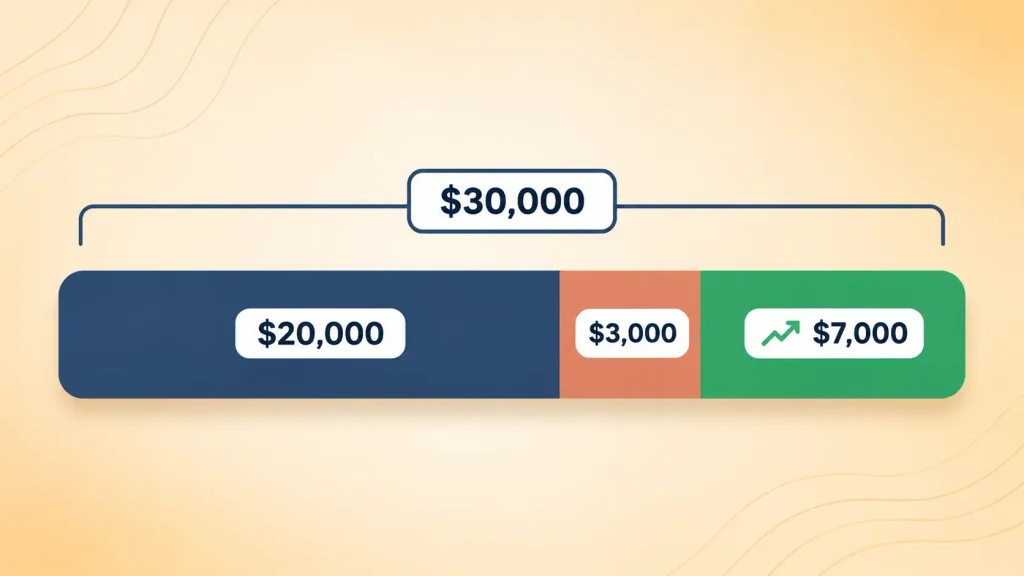
Your real margin is the markup minus your own management time, so a partner who needs heavy supervision costs more than its quote suggests.
Benefits and Risks of White Label Development
White label software development gives you delivery capacity without a hiring cycle.
The trade is dependence on a partner whose mistakes land on your brand.
Why More Teams Use It Now
Hiring developers keeps getting harder. In Robert Half’s research, 65% of technology hiring managers said skilled talent is harder to find than a year earlier. The same report found 71% of technology leaders had projects delayed by skills shortages, and 49% had projects cancelled outright.
Companies are responding by buying capacity instead of building it. Deloitte’s 2024 survey found 80% of executives plan to maintain or increase their investment in third-party outsourcing.
For you, the practical upside looks like this:
- You say yes to more work without waiting months to hire.
- Your fixed costs stay flat because you pay for capacity only when a project needs it.
- You can sell new services, like custom apps or SaaS builds, before you have the in-house skills.
The Risks Nobody Puts in the Sales Deck
The same Deloitte survey has a less flattering number. 70% of executives selectively insourced work they had previously handed to a third party in the last five years. Outside partners don’t always work out, and you’ll want a plan for when one doesn’t.
These are the risks worth planning for:
- Brand leaks: one exposed staging link and your client knows who built their product.
- Quality you didn’t check: if you don’t review the code, you’re vouching for work you haven’t seen. Independent software testing before handoff is cheap insurance.
- Unreviewed AI-generated code: ask how the partner reviews code produced with AI assistants. Unchecked output can carry security gaps and hard-to-maintain shortcuts.
- The support burden: your client calls you, not the partner, when something breaks at 9 p.m. Without a support SLA, you’re stuck in the middle.
- Lock-in: if only the partner understands the codebase, switching later gets expensive. Insist on documentation as a deliverable.
None of these are reasons to avoid white label software development. They’re reasons to write the contract carefully.
Contracts That Protect a White Label Arrangement
In white label software development, protection lives in two agreements: one with your client and one with your partner. They have to line up, especially on who owns the code.
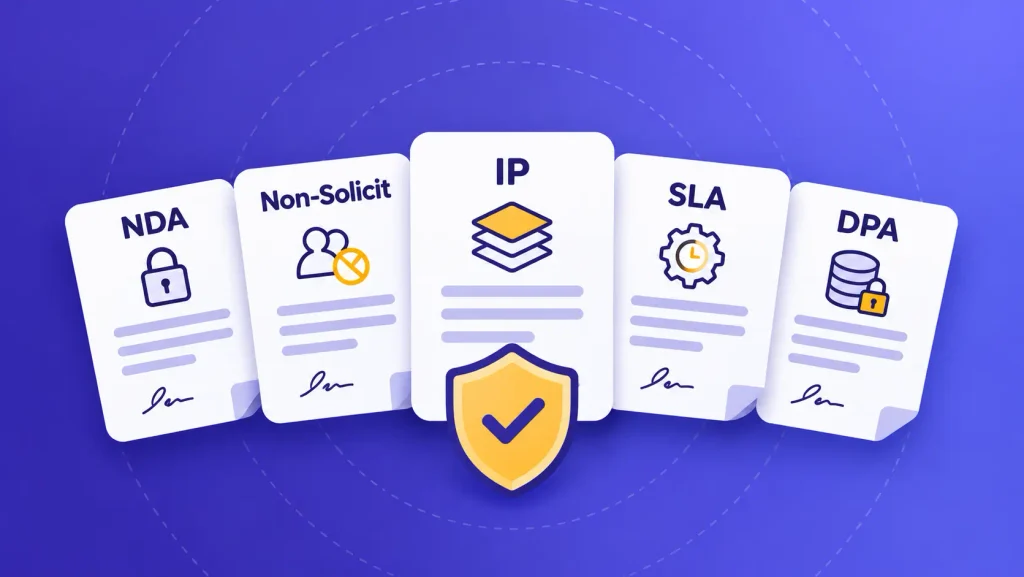
Your partner agreement should cover at least these:
- Mutual NDA: keeps your client’s identity, data, and business details confidential.
- Non-solicitation: stops the partner from approaching your client directly, during the project and for a set period after.
- IP assignment: transfers all code and work product to you on payment, so you can pass ownership to your client.
- SLA: sets response times, delivery standards, and post-launch support terms.
- Data processing agreement: required if the build handles personal data under laws like GDPR.
The IP chain is where agencies get caught most often. If the partner’s developers don’t assign their work to the partner, and the partner doesn’t assign it to you, your client’s ownership has a gap. If your client handles sensitive data, align security expectations too, starting with the basics in our guide to web application security best practices.
How to Choose a White Label Software Development Partner
You’ll get the best result by choosing the way you’d hire a senior employee: on evidence, not the lowest quote. A partner who fails a capability check costs more than any discount saves.
Questions to Ask Before You Sign
You can work through these on a first call:
- Can you show work you’ve delivered under another company’s brand, with permission?
- How do you keep your name out of repos, staging sites, and documents?
- Who will actually work on my project, and what happens if someone leaves?
- How do you review code, including code written with AI tools?
- What does post-launch support include, and what are your response times?
- Will you sign IP assignment, non-solicitation, and NDA terms before work starts?
It’s worth paying attention to how specific the answers are. Vague answers on question two usually mean they’ve never thought about it. If you need help judging technical answers, a short engagement with an independent advisor can help, which we cover in software development consulting.
Run a Paid Pilot Before the Big Project
A pilot tells you more than any sales call. Give the partner a small, real piece of work, paid and time-boxed, before you trust them with a client’s flagship build.
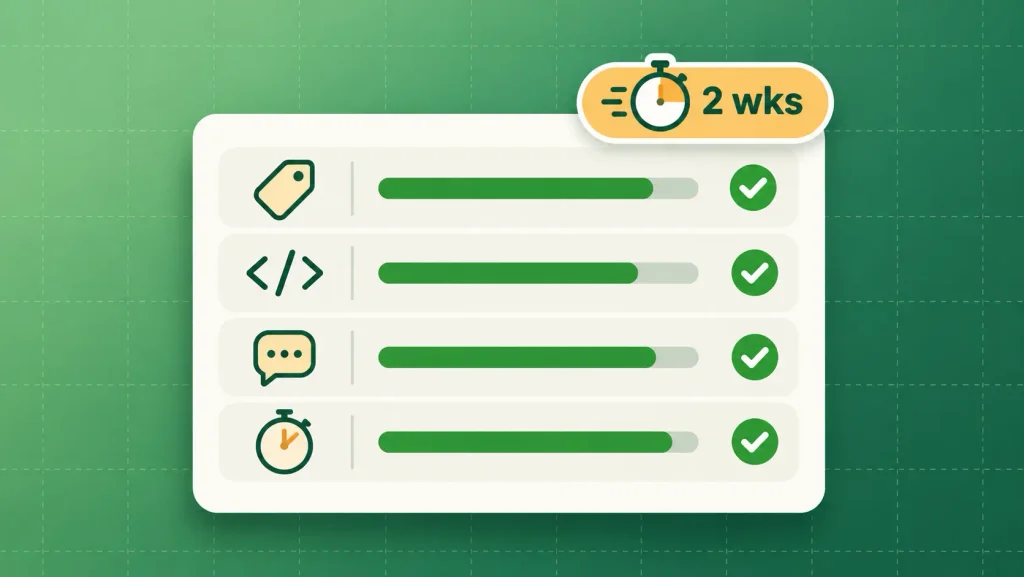
You can score the pilot on these points:
- Brand hygiene: did anything in the deliverable name the partner?
- Code quality: does a second developer find the code readable and tested?
- Communication: did questions get answered within the time they promised?
- Estimate accuracy: did they finish close to their own quote?
A partner who struggles on a two-week pilot won’t improve on a four-month project. It’s a small spend that protects a much bigger relationship.
If you want a partner you can test on a small project first, book a free strategy call with Boomdevs and scope your first build together.
When White Label Is the Wrong Call
White label software development suits client work you resell. It’s a poor fit in a few situations, and saying so plainly will save you trouble later.
You’ll want to think twice in these cases:
- Your own flagship product: if the software is your company’s main asset, you’ll want an in-house team or a transparent partnership, not a hidden one.
- Data you can’t oversee: if you can’t verify how a partner handles sensitive client data, you can’t vouch for it either.
- Contracts that restrict subcontracting: some client agreements require approval before any work goes to a third party. Check yours before you promise invisibility.
- One-hour fixes: for tiny tasks, the overhead of managing a partner costs more than the work itself.
In those cases, a custom software development partner who works with you openly is often the cleaner choice.
How Boomdevs Solves the Agency Capacity Gap
Boomdevs does white label software development for web builds, custom software, and SaaS platforms. You keep the client relationship, the pricing, and the credit. Our team handles design, development, testing, and post-launch support inside your tools.
We’ve built white-label software before. For World Wide Mobility, Boomdevs built white-label mobility-as-a-service software, a platform that has since onboarded 20+ enterprise clients. With 10+ years of delivery and 50+ full-time experts, we can scale up when your pipeline does.
If a client project is waiting on capacity you don’t have, explore our white label web development services or book a free strategy call to scope your first build.
Frequently Asked Questions
Is White Label Software Development Legal?
Yes. Reselling development work under your own brand is a standard business practice. The legal care sits in your contracts: clear IP assignment, confidentiality terms, and compliance with any data protection laws your project touches.
Will My Clients Know I Use a White Label Partner?
Not if the arrangement is set up properly. The partner works under your brand, uses your domain and tools, and never contacts your client. Check deliverables for leaks like staging URLs and commit history before you share them.
Who Owns the Code in a White Label Project?
You should, and then your client, through a chain of written IP assignments. The partner’s developers assign to the partner, the partner assigns to you, and you assign to your client. If any link is missing, ownership can be challenged.
What’s the Difference Between White Label and Outsourcing?
White label software development is a form of outsourcing where the partner stays invisible. In traditional outsourcing, your client may know a third party is doing the work. In white label, everything carries your brand.
Can You White Label a SaaS Product?
Yes. You can license an existing SaaS platform and rebrand it, or commission a partner to build one you own. Licensing is faster, while a custom build gives you full control over features and pricing.