


- 1. Key Takeaways
- 2. What Is a White Label WordPress Agency?
- 3. What a White Label WordPress Agency Should Handle for You
- 4. When Does Your Agency Need a White Label WordPress Partner?
- 5. How to Choose a White Label WordPress Agency
- 6. How White Label WordPress Agencies Price Their Work
- 7. Contract Terms That Protect Your Agency
- 8. How Boomdevs Solves the Agency Capacity Problem
- 9. Frequently Asked Questions
- Will my clients know I use a white label WordPress agency?
- Is it ethical to white label WordPress work?
- Who owns the code in a white label WordPress project?
- Is a white label WordPress partner worth it for a small agency?
- Can a white label WordPress agency handle WooCommerce stores?
- How much does a white label WordPress agency charge?
Summarize with
You just signed two new WordPress builds. Your only developer is booked for six weeks. Saying no feels like handing the client to someone else.
A white label WordPress agency lets you say yes without hiring. The right one stays invisible and ships work you’re proud to sign. The wrong one costs you the client and the margin.
Here’s how to tell them apart, what to pay, and what to sign first.
Key Takeaways
- A white label WordPress agency builds and maintains WordPress sites that you deliver under your own brand. Your client only ever sees you.
- It makes the most sense when your WordPress pipeline swings month to month, or when a project needs skills your team doesn’t keep year-round.
- Judge partners on QA, white-label discipline, and who actually writes the code. A polished portfolio tells you far less.
- Pricing comes in four shapes: fixed project, hourly, monthly hour blocks, and a dedicated developer. Match it to your pipeline, not the lowest rate.
- Before the first brief, get the NDA, code and license ownership, and a security response window in writing.
What Is a White Label WordPress Agency?
A white label WordPress agency builds your clients’ WordPress sites while your name goes on the work. You own the client, the brand, and the price. The partner never shows up in an email, an invoice, or a code comment.
Why do agencies lean on one? Because WordPress demand rarely slows down. It runs 57.5% of all websites with a known CMS, or 38.5% of the whole web, as of November 2026.
Your clients keep asking for it, even in the months your team can’t take it on. That’s the gap a partner fills.
How a White Label Engagement Works, Step by Step
Most partnerships follow the same rhythm, whether it’s one landing page or a 40-page rebuild. You stay in front, and the partner stays behind you at every step:
- Brief and scope: you collect the client’s requirements, then hand the partner a written brief with designs, page count, plugins, and deadlines.
- NDA and quote: the partner signs your confidentiality terms and returns a fixed quote or an hour estimate.
- Build: the partner develops on a staging site and reports only to you, inside your project tool.
- QA and review: the partner tests the build, then you review it against your own checklist.
- Delivery: you present the finished site to the client as your agency’s work.
- Ongoing support: updates, fixes, and small changes flow through you, under your brand.
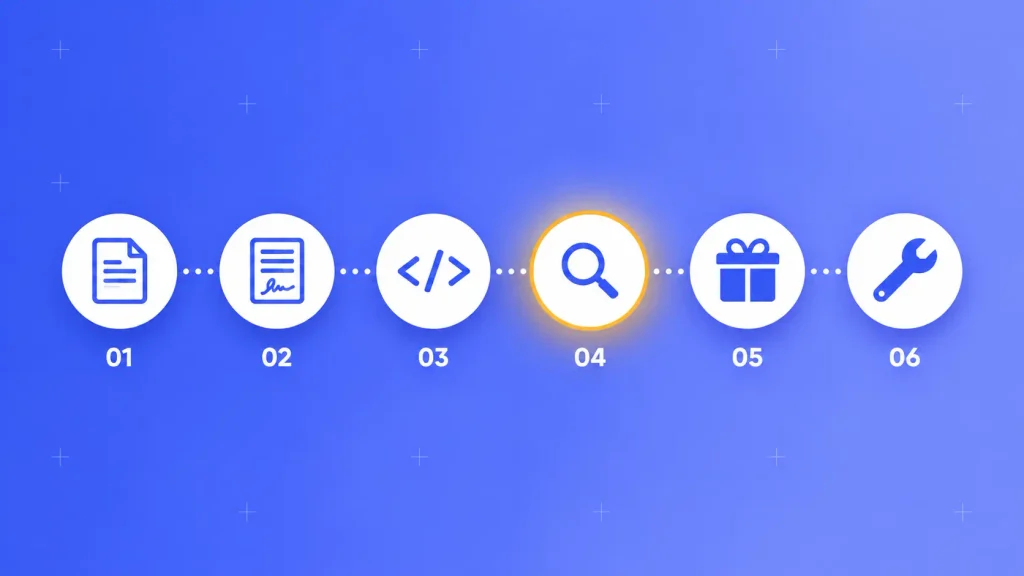
Step four is where most partnerships break. If the partner’s QA is thin, you end up testing everything yourself, and the time you saved disappears.
You can avoid that with a structured custom web design process that puts review gates on both sides of the handoff.
White Label Agency vs Freelancer vs In-House Developer
A white label WordPress agency isn’t your only option. You could also hire a freelancer or bring a developer in-house. Each model changes who your client sees and how your costs behave:
| Model | Who your client sees | Cost shape | Best for |
| White label agency | Only your agency | Variable, per project or per month | Uneven pipelines, specialist builds |
| Freelancer | Often the freelancer | Variable, per task | Small, one-off overflow |
| In-house developer | Only your agency | Fixed salary, busy or not | Steady, predictable WordPress volume |
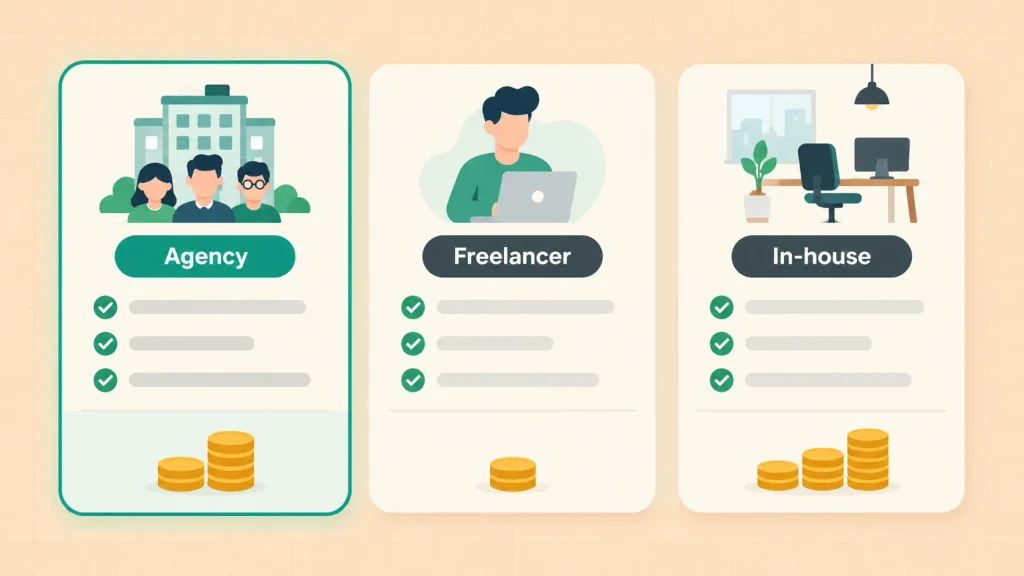
The in-house route costs more than it looks. The median US web developer earned $92,650 a year in May 2025, and you keep paying that through slow months.
If you’re weighing the same trade-off for other build work, our breakdown of in-house versus outsourced development walks through the hidden costs on each side.
What a White Label WordPress Agency Should Handle for You
A capable partner covers more than page builds. You want a team that can take a project from design file to maintenance plan without you filling the gaps in between. At minimum, that means:
- Custom theme builds: turning Figma files into lightweight WordPress themes instead of bending a heavy multipurpose theme.
- WooCommerce stores: product setup, checkout changes, and payment integrations.
- Custom plugins: features no off-the-shelf plugin covers, written to WordPress coding standards.
- Migrations: moving sites from another CMS or host without losing URLs or rankings.
- Care plans: updates, backups, uptime checks, and security monitoring, billed monthly.
E-commerce deserves a closer look. If online stores make up a big share of your client base, test the partner’s depth on WooCommerce and e-commerce builds separately, since a broken checkout costs your client real money.
Design depth matters too. A partner who defaults to templates will quietly cap what you can sell. It’s worth seeing how custom design versus a ready-made template changes the result before you agree on a build approach.
Match the Partner to Your Page Builder Stack
Your partner should work in the tools you already use. Otherwise every handoff turns into a rebuild.
Elementor runs on 31.5% of WordPress sites and WooCommerce on 19.7%, so most partners know both well. The gaps tend to show up with less common builders, such as Bricks, Oxygen, or Divi.
Before you shortlist anyone, list the builders, themes, and premium plugins across your active client sites. Then ask each partner which ones they’ve shipped real projects on. A mismatch here costs you on every job, not just the first.
When Does Your Agency Need a White Label WordPress Partner?
You need a white label WordPress partner when demand outruns your team, and hiring would leave you paying for idle time later. That moment usually shows up as a pattern, not a single crisis. Watch for these signals:
- You’re turning down or delaying WordPress work because your developers are fully booked.
- Your pipeline swings between packed months and quiet ones.
- A project needs skills you don’t keep on staff, like WooCommerce customization or headless WordPress.
- Maintenance requests pile up behind new builds, and existing clients start to notice.
If two or more sound familiar, a partner will likely pay for itself quickly. If your WordPress volume is steady and growing, though, a full-time hire may still win over the long run.
Plenty of agencies run both. One in-house developer handles core clients, while outsourced WordPress development covers the overflow.
How to Choose a White Label WordPress Agency
Choose a white label WordPress agency on how it tests, communicates, and stays invisible, not on how its portfolio looks. Every serious partner can show nice websites. Far fewer can prove their process holds up while your client waits on a launch date.
The 8-Point Vetting Checklist
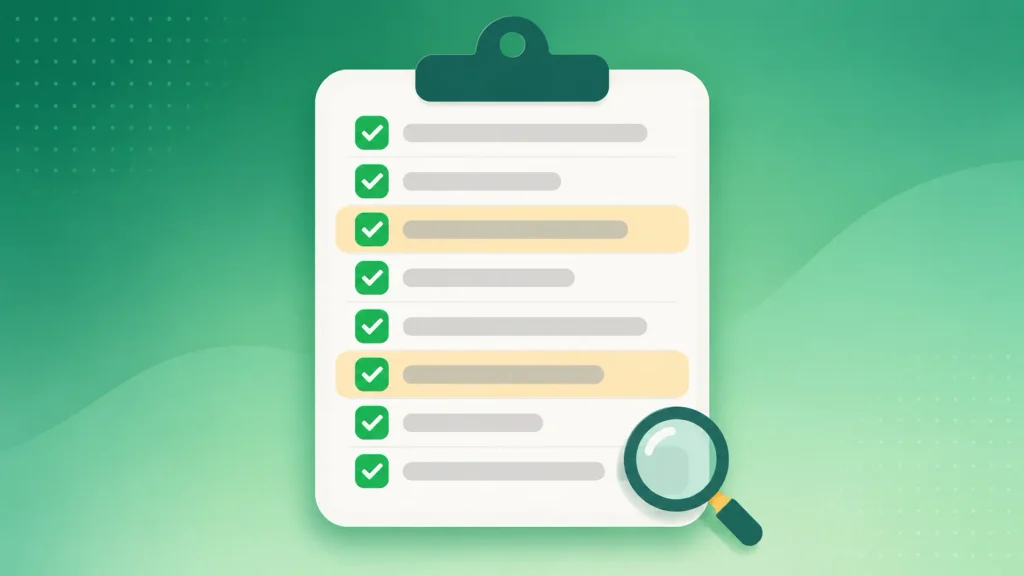
Score each candidate against the same list, so you compare processes instead of sales pitches:
- WordPress depth: is WordPress their main work, or one of many platforms they juggle?
- A real code sample: ask for a theme or plugin they built, and have someone you trust review it.
- Documented QA: a written test checklist covering browsers, devices, forms, and speed.
- Communication and time zone overlap: your point of contact, the tools they use, and how many working hours you share.
- White-label discipline: no partner branding in emails, code comments, admin screens, or invoices.
- A security standard: how they choose plugins, apply updates, and respond to new vulnerabilities.
- Builder and stack fit: proven projects on your page builders and premium plugins.
- Who does the work: the developers on your project, their seniority, and whether that team stays the same.
Points five and eight are the ones agencies skip most, and they cause the most damage.
The same instinct helps when vetting a design agency: ask to meet the people doing the work, not just the people selling it.
Questions to Ask Before You Sign
Good partners answer these quickly and in writing. Vague answers are an answer too:
- How fast can you start a new project, and what’s your capacity right now?
- Who owns the code, the repository, and the plugin licenses at handover?
- How do you handle revisions, bugs found after launch, and urgent fixes?
- What’s your response time when a plugin vulnerability hits a site you maintain?
- Will you sign our NDA and a non-solicitation clause?
- Can you join a client call under our agency’s name if we need technical backup?
The last question tells you a lot. A partner who can’t support you in front of a client will leave you exposed when a hard technical question comes up.
Red Flags That Should End the Conversation
Some warning signs predict trouble so reliably that you can end the call there. Walk away if you see any of these:
- They hesitate to sign your NDA, or push their own one-sided version.
- Their sales replies are slow. That’s the fastest they’ll ever respond.
- They can’t name who will build your project.
- Pricing shifts every time you ask a follow-up question.
- They want to keep the repository or admin access after handover.
None of these are minor. Each one tends to grow once a real deadline and a real client are involved.
Run a Paid Pilot With Clear Pass/Fail Criteria
A paid pilot is the most reliable test you can run on a white label WordPress agency. Pick one small, real project, pay for it, and judge it against criteria you wrote down before work started.
“It looked fine” is not a criterion. Set pass marks you can check yourself:
| Check | Pass mark |
| Brand leakage | Zero partner names in code, emails, admin, or files |
| Core Web Vitals | Passes on mobile in PageSpeed Insights |
| Plugins | Only those in the brief, all actively maintained |
| Accessibility | Keyboard navigation works and every image has alt text |
| Deadline | Delivered on the agreed date, with no surprise extensions |
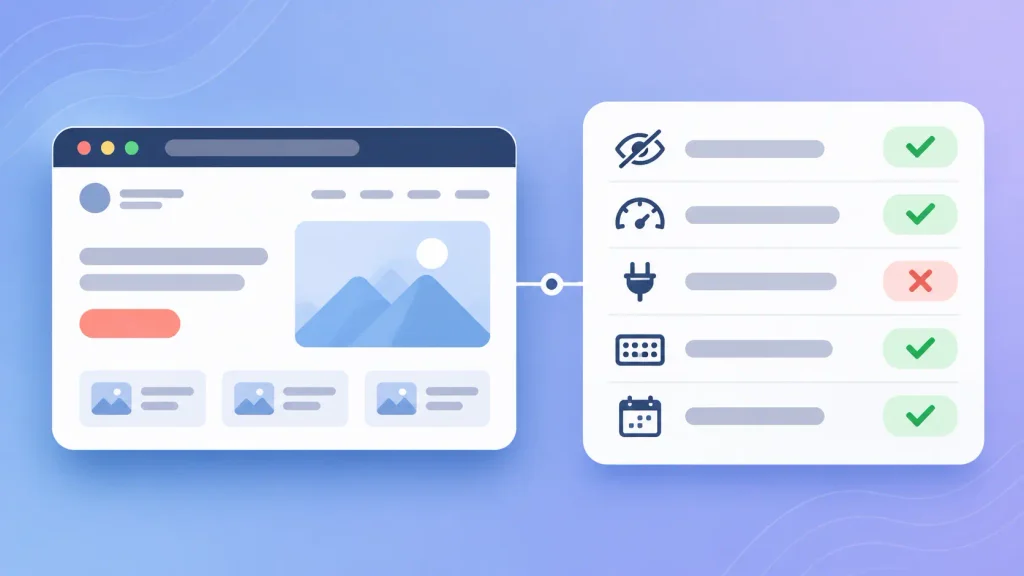
If the pilot fails two or more checks, don’t renegotiate. Move to the next partner on your list. A pilot costs far less than losing a client over a launch that slips.
How White Label WordPress Agencies Price Their Work
White label WordPress agencies usually price work in four ways: fixed project, hourly, monthly hour blocks, or a dedicated developer. With white label WordPress pricing, the right model depends on the shape of your pipeline, not on which rate looks lowest on paper:
| Model | How it’s billed | Best for | Watch out for |
| Fixed project | One quote per scoped build | Well-defined sites | Every scope change becomes an extra |
| Hourly | Pay for time used | Ad-hoc fixes, unpredictable work | No volume discount |
| Monthly hour block | Set hours each month | Steady but variable demand | Unused hours often expire |
| Dedicated developer | Flat monthly fee per person | High, consistent volume | Paying through slow weeks |
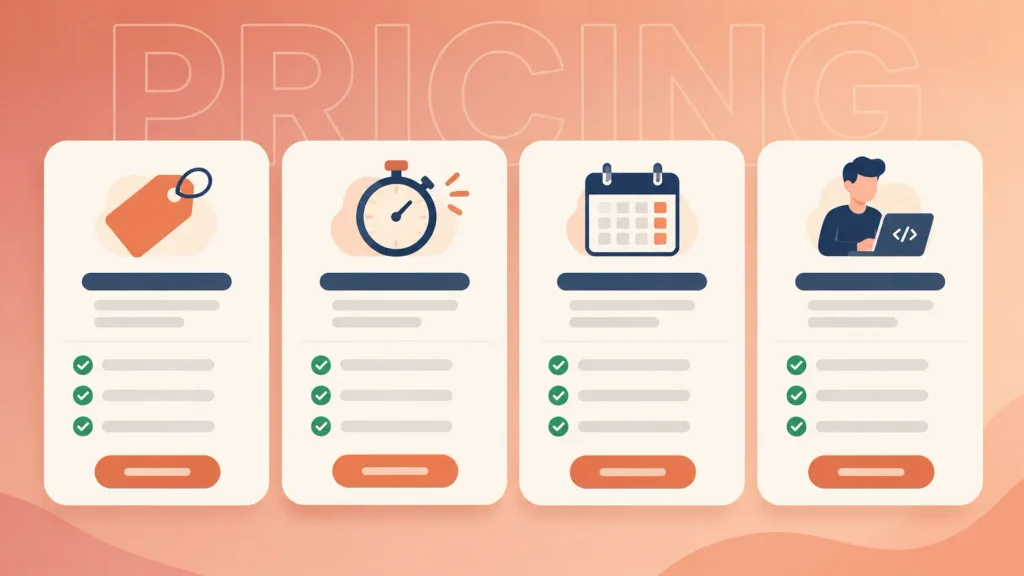
The dedicated model works a lot like having a dedicated web developer embedded in your team, minus the hiring cycle. It only pays off once you can keep that person busy most of the month.
How to Protect Your Margin When You Resell
Your margin lives in the gap between what your white label WordPress agency charges and what your client pays. Scope creep is what quietly closes that gap. Most margin leaks don’t start in the original quote. They start with small “quick changes” nobody priced.
You can stop that with a three-way change flow, agreed before kickoff:
- Your client requests every change through you, never directly with the partner.
- You get a written estimate from the partner within an agreed time.
- You quote the client your own price, then approve the partner only after the client signs off.
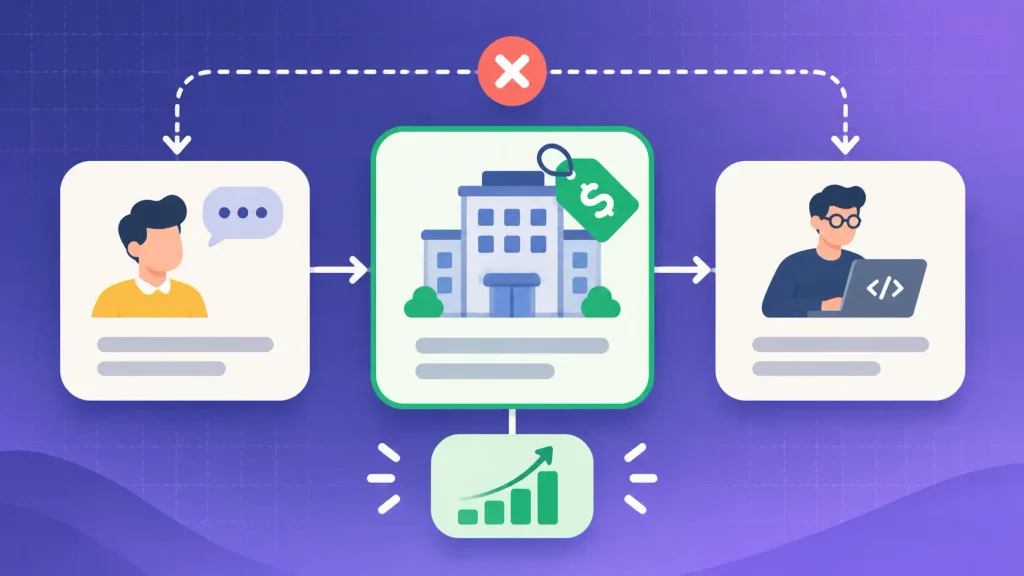
Then add a recurring layer. Bundling the build with ongoing maintenance and support plans turns a one-off project into monthly revenue, while the partner handles the technical work behind your brand.
Not sure a partner’s quote leaves you enough room? Book a free strategy call and walk through it with our team before you sign.
Contract Terms That Protect Your Agency
A solid contract with your white label WordPress agency covers three things: confidentiality, ownership, and response times. Get all three in writing before the first brief. Handshake agreements fall apart the first time something goes wrong.
NDA and Non-Solicitation
The NDA keeps the partner silent about your clients and projects. That’s the baseline. The non-solicitation clause matters just as much, because it stops the partner from pitching your clients directly, during the contract and for a set period after.
Add one more clause that bars the partner from showing your clients’ work in its own portfolio. If you can’t control where your projects appear, the arrangement isn’t truly white label.
Who Owns the Code, Plugin Licenses, and Hosting?
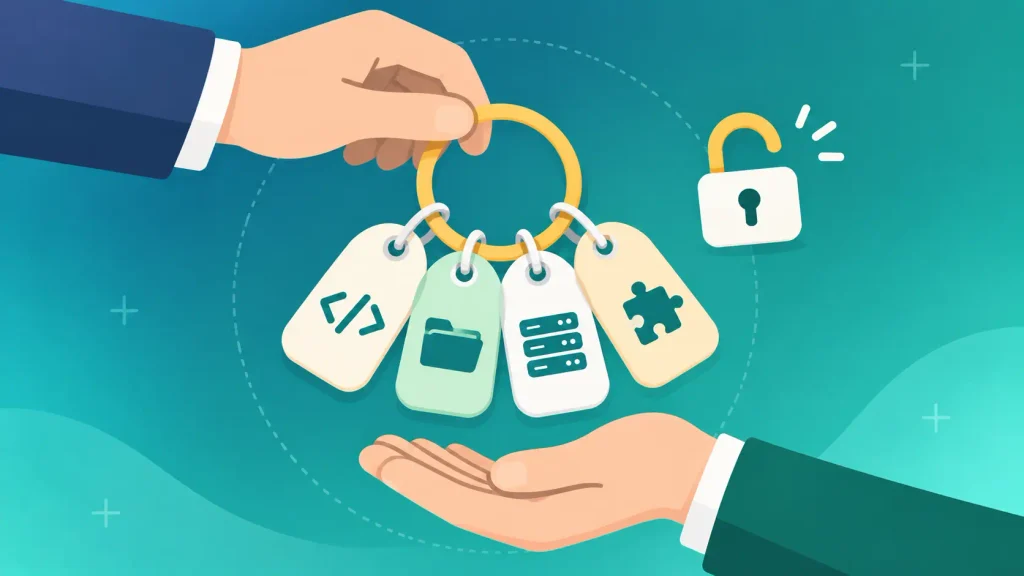
Your agency should own everything at handover: the code, the repository, the hosting account, and every premium plugin and theme license. Register each one in your name or your client’s name from day one, not the partner’s.
Licenses get overlooked most, and they carry real security weight. Patchstack found that premium WordPress components had three times more known exploited vulnerabilities than free ones in 2025. If a license sits in the partner’s account and the partnership ends, updates stop reaching your client’s site.
A simple test helps here. If you can’t log in and update it yourself, you don’t own it yet.
Security SLAs and Offboarding
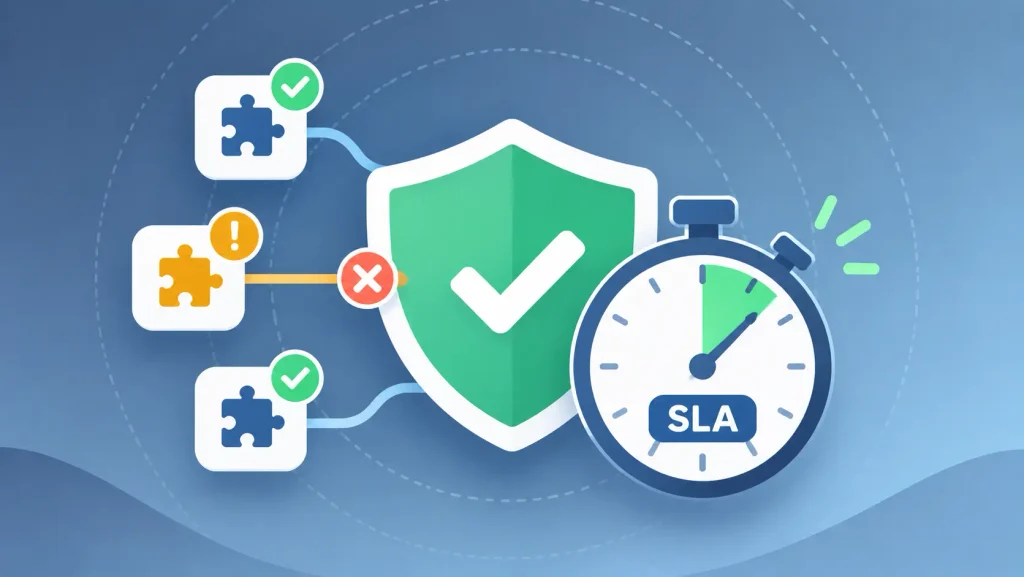
Your service-level agreement should state how fast the partner responds to a security issue, not just to routine support tickets. Attackers move quickly, and plugins are where they aim.
The same Patchstack report counted 11,334 new WordPress vulnerabilities in 2025, with 91% of them in plugins. For heavily targeted flaws, the weighted median time to mass exploitation was five hours. And 46% of vulnerabilities had no fix ready when they went public.
So a “next business day” window isn’t enough for a site you maintain. I’d suggest a same-day response for critical vulnerabilities, plus a plan for flaws with no patch yet, like disabling or replacing the plugin. Hold the partner to the same web application security practices you’d expect from your own team.
Offboarding needs its own clause too. It should spell out how credentials, code, documentation, and unfinished work come back to you if the partnership ends. You’ll hope never to use it, which is exactly why it belongs in the contract.
How Boomdevs Solves the Agency Capacity Problem
Boomdevs works as a white label WordPress partner for agencies that need more capacity without more hires. We build and maintain WordPress sites under your brand, while you keep the client, the relationship, and the margin.
Behind that is 10+ years of building websites and software, with 50+ full-time experts across offices in New York, Dhaka, and Bogura. Clients have trusted us with WordPress overhauls, ongoing site support, and lead generation sites shipped on tight timelines. Clutch also named us a Clutch Champion in Fall 2024.
If you’re ready to stop turning down WordPress work, see how our white label WordPress development services could fit your pipeline, starting with one pilot project.
Frequently Asked Questions
Will my clients know I use a white label WordPress agency?
No, not if the partner does its job. A true white label partner never contacts your clients, keeps its name out of the code and admin area, and sends every update through you. Check this during your pilot, since one stray email signature can expose the arrangement.
Is it ethical to white label WordPress work?
Yes. Agencies have long used specialists behind the scenes, much like a general contractor uses subcontractors. You stay accountable for the result, so the ethics depend on how well you manage quality, not on who writes the code.
Who owns the code in a white label WordPress project?
Your agency should, or your client, depending on your client contract. Write it into the partner agreement: code, repository, hosting, and premium licenses transfer at delivery. Never accept a setup where the partner keeps the only admin access.
Is a white label WordPress partner worth it for a small agency?
Often, yes. Small agencies feel capacity swings the hardest, and a partner turns a fixed salary into a cost you pay only when work comes in. Start with one paid pilot so you can measure quality before you depend on anyone.
Can a white label WordPress agency handle WooCommerce stores?
Most can handle a standard WooCommerce setup. Fewer can handle custom checkouts, subscriptions, or complex payment integrations. Ask for live WooCommerce examples, and test that skill in your pilot if e-commerce matters to your clients.
How much does a white label WordPress agency charge?
It depends on the pricing model and the scope. Small fixes are usually billed hourly, while full site builds are quoted as fixed projects. Agencies with steady demand often save more with a monthly hour block or a dedicated developer. Ask for a written quote on one real project, then compare the total cost, not just the hourly rate. If one quote comes in far below the others, ask what’s been left out of the scope.