


- 1. Key Takeaways
- 2. What Are the Biggest Enterprise AI Adoption Challenges?
- 3. Why Agentic AI Makes These Challenges Harder
- 4. Which Enterprise AI Adoption Challenge Should You Fix First?
- 5. How to Overcome Enterprise AI Adoption Challenges
- 6. Should You Build In-House, Buy, or Bring in a Partner?
- 7. How Boomdevs Solves Enterprise AI Adoption Challenges
- 8. Frequently Asked Questions
Summarize with
Your AI pilot nailed the demo, and the board loved it. Six months later, it still lives in one team’s sandbox. Nobody can say what it’s worth.
That stall is the most common of all enterprise AI adoption challenges. The model is rarely the problem. Your data, old systems, missing owners, and wary teams usually are.
Here’s each blocker, the order to fix them in, and how to move your AI pilot to production.
Key Takeaways
- Most enterprise AI adoption challenges are organizational, not technical. Unclear goals, messy data, and missing owners stall more projects than weak models do.
- The usual blockers are data readiness, legacy integration, the pilot-to-production gap, unproven ROI, skills, security, governance, user adoption, and rising run costs.
- Fix them in order. Start with a named business problem and a baseline, then data, then integration, then governance and people.
- Agentic AI raises the stakes, because agents act on your systems instead of just answering questions.
- Working with an experienced partner tends to beat going it alone. Research from MIT found partner-led projects succeed about twice as often as internal builds.
What Are the Biggest Enterprise AI Adoption Challenges?
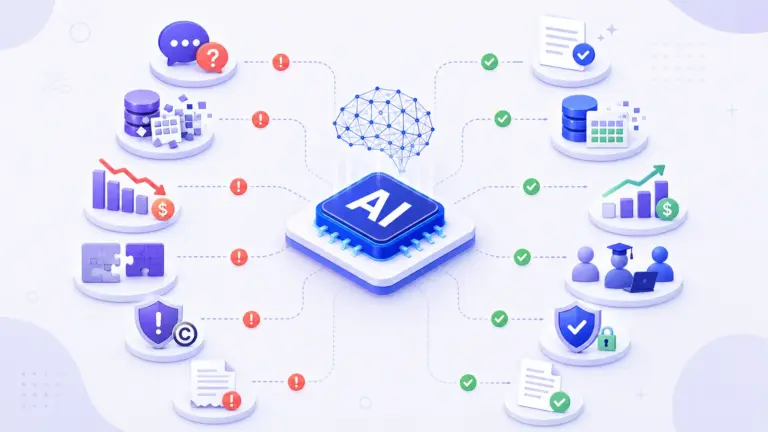
The biggest enterprise AI adoption challenges are unready data, legacy systems that can’t connect to AI, pilots that never reach production, and ROI nobody can prove. Close behind come skills gaps, security risk, weak governance, low user adoption, and costs that keep growing after launch.
You’re not alone in hitting these AI adoption challenges. WRITER’s 2026 enterprise survey found that 79% of organizations face challenges adopting AI. That’s even though 59% are spending more than $1 million a year on it.
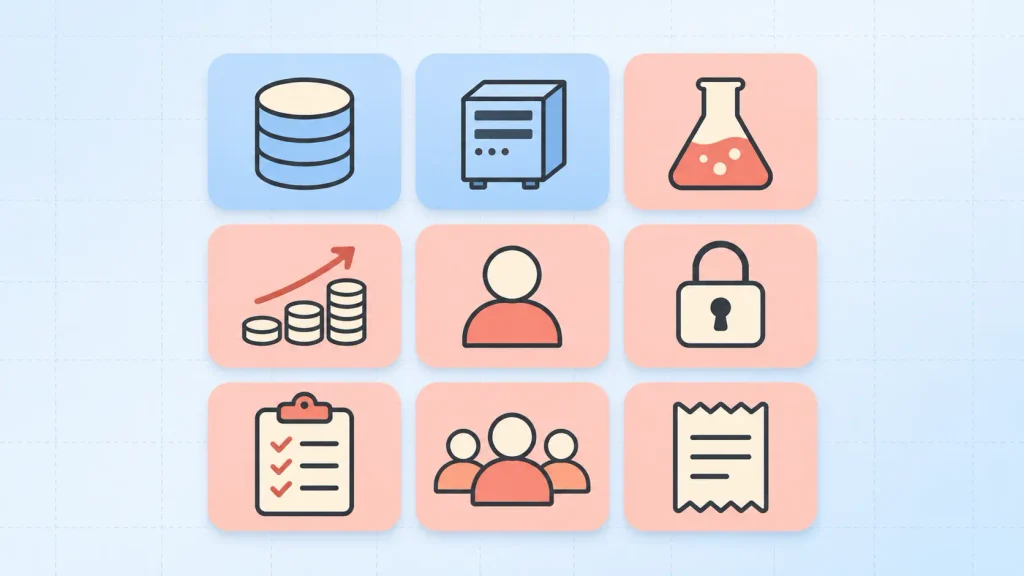
Here’s how the nine blockers show up, and the first move for each:
| Challenge | What it looks like | First fix |
| Data readiness | Pilot works on a clean sample, fails on live data | Certify one dataset for one workflow |
| Legacy integration | AI output gets copied by hand into the ERP | Map every system the workflow touches |
| Pilot-to-production gap | Demo approved, no rollout date | Set an exit date and a go/no-go owner |
| Unproven ROI | “Teams love it,” but no numbers | Measure the baseline before launch |
| Skills and ownership | Nobody owns the model after go-live | Name an operator for every live system |
| Security and privacy | Staff paste client data into public tools | Approve tools and lock down data access |
| Governance | A policy exists, nobody follows it | Build checks into the pipeline |
| User adoption | Licenses bought, tools unused | Train managers first |
| Run costs | Monthly bill doubles after scale-up | Budget for monitoring and retraining |
Notice that only two of the nine are purely technical. The rest are barriers to AI adoption rooted in decisions, ownership, and people. Let’s take them one at a time.
Data That Isn’t Ready for AI
Your data is probably less ready than your dashboards suggest. Customer records sit in the CRM, orders sit in the ERP, and half the context lives in email threads and PDFs. Data readiness is where most AI adoption challenges start.
A pilot hides this, because someone hand-picks a clean sample. Production doesn’t. Once the model meets live data with duplicate records, missing fields, and conflicting definitions, accuracy drops and trust drops with it.
RAND’s study of AI project failures named a lack of the right data as one of the five root causes behind failed projects. The fix isn’t “clean all the data first,” because that project never ends.
You’ll get further by picking one workflow. Certify the data it needs, and name a person who owns that dataset.
Large language models push the data problem further, because hallucinations and stale context are among the most common generative AI challenges once a model meets your real documents.
Legacy Systems That Can’t Talk to AI Models
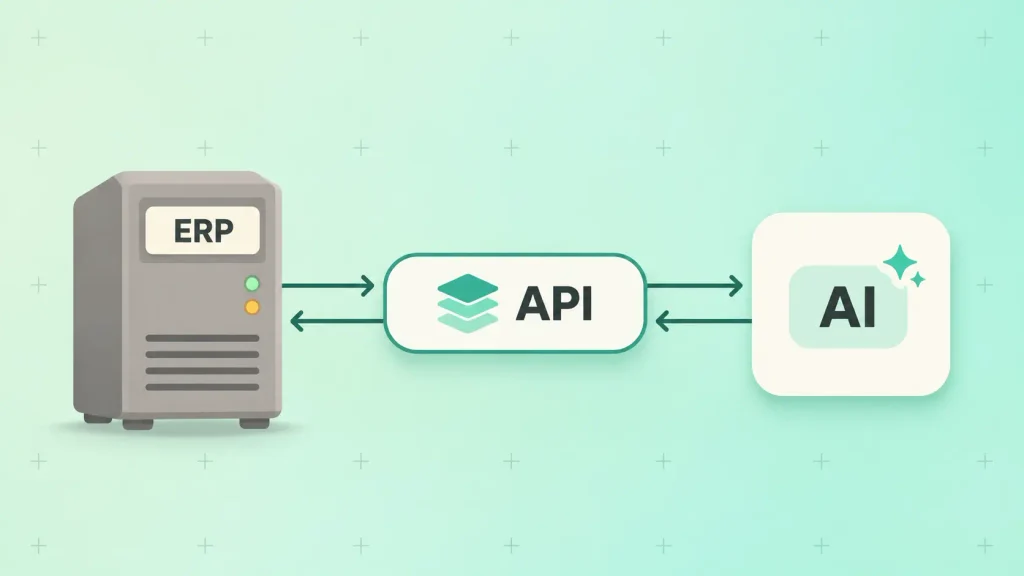
Most of your core workflows run on software built long before modern AI existed. Those systems often lack clean APIs, real-time data access, or modern authentication.
So the AI sits next to the workflow instead of inside it, one of the classic AI implementation challenges. A team exports a report, runs it through the model, and pastes the result back.
That works for a demo. It falls apart at scale, because every manual hop adds delay and errors.
You usually don’t need to rip out the old system. Most AI integration services use middleware and API layers to connect the model to it without breaking what already works. Where the old system truly can’t carry the load, a phased plan for legacy application modernization beats a big-bang rebuild.
The Pilot-to-Production Gap
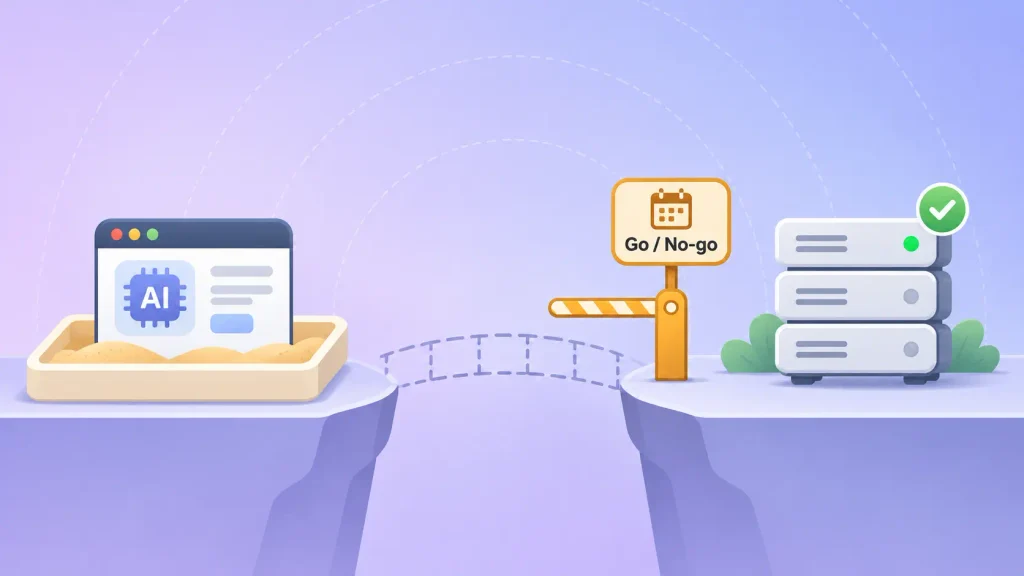
Of all the enterprise AI adoption challenges, this is where most projects quietly die. The pilot succeeds in a sandbox, then sits in limbo because nobody planned the integration, monitoring, and ownership it needs to go live.
The numbers are blunt. Gartner’s prediction on abandoned generative AI projects said at least 30% would be dropped after proof of concept by the end of 2025. It blamed poor data quality, weak risk controls, rising costs, and unclear business value.
MIT NANDA’s research, as reported by Fortune, went further. It found that about 95% of generative AI pilots at companies weren’t delivering measurable impact on profit and loss.
A well-scoped AI proof of concept answers one question by a fixed date. Before you start, write down what result counts as a yes, who makes the call, and what happens if the answer is no. That way the pilot is built to graduate, not to impress.
No Baseline, No Provable ROI
You can’t prove AI saved time if nobody measured the time before. Yet that’s how most rollouts start: budget approved, tools shipped, “let’s check back in a quarter.”
Three months later, the CFO and the CTO look at the same project and reach opposite conclusions. Without a baseline, ROI becomes an opinion.
Before launch, record a handful of numbers for the target workflow:
- Time per task: how long the work takes today, end to end.
- Volume: how many tasks run per week or month.
- Error or rework rate: how often output gets sent back.
- Cost per task: labor plus any outsourced spend.

After launch, you track the same numbers at fixed intervals. Even a modest, proven gain wins more budget than a big, vague promise.
Skills Gaps and No Clear Owner
The skills gap is one of the better-known enterprise AI adoption challenges, but the ownership gap often does more damage. A model goes live, the project team moves on, and nobody is watching it when accuracy slips.
You’ll need a few distinct roles, even if one person covers two of them at first. A business owner defines success, and a model operator watches performance and handles incidents. Someone in security or compliance signs off before launch.
On skills, don’t wait to hire a full in-house AI team. Train the people who already know the workflow, and bring in outside specialists for the deep technical work until your own team can take it over.
Security and Data Privacy Risk
Your employees are probably already using AI, whether you approved it or not. When there’s no sanctioned tool, people paste client data, contracts, and code into whatever chatbot is open in their browser. That’s shadow AI, one of the riskiest AI adoption challenges.
Banning it rarely works. It just pushes usage further out of sight.
A better approach is to give people an approved tool that’s actually useful, then control what data it can reach. That means classifying sensitive data, setting role-based access, logging usage, and confirming in writing that your provider won’t train on your inputs. It pays to do this before the rollout, because retrofitting security onto a tool people already depend on is slower and more expensive.
Governance That Lives Only on Paper
Many companies have an AI policy. Far fewer have one that shapes daily work. A PDF in a shared drive doesn’t stop anyone from connecting a new tool to customer data.
Regulation makes this more than a box-ticking exercise. Under Article 99 of the EU AI Act, using a prohibited AI practice can cost up to €35 million or 7% of worldwide annual turnover. Breaching other obligations, including those that apply to companies deploying AI, can cost up to €15 million or 3%.
Governance holds up when it’s built into the work itself. Approval checks run in the deployment pipeline, access rules travel with the data, and every model has an owner and an audit trail. Policy then describes what the system already enforces.
Teams That Don’t Use the Tools
You can buy every license and still get almost no adoption. Low usage is one of the quietest barriers to AI adoption. People skip tools they don’t trust, weren’t trained on, or can’t fit into their day.
Managers are usually the missing link. In the same WRITER survey, only 35% of employees said their manager champions AI. Without that, staff hear “use AI” from the top and silence from the person who sets their priorities.
Watch for these warning signs early:
- Usage drops after the launch week. The novelty fades and old habits return.
- People double-check every output by hand. They don’t trust the results yet.
- Teams build their own workarounds. The tool doesn’t fit the real workflow.
- Nobody can name a win. Value isn’t being shared, so momentum stalls.
Each one points to a fix: better training, a tighter use case, or a visible early result. None of them is fixed by sending another all-hands email.
Costs That Keep Growing After Launch
AI isn’t a one-time purchase. It’s closer to a utility bill that grows as usage grows.
Pilots run on small volumes, so the bill looks harmless. Cost creep is the easiest of the enterprise AI adoption challenges to miss. At scale, you pay for model usage, cloud infrastructure, monitoring, retraining, and the people who keep it all running. Models also drift as your data changes, so performance needs constant checks.
You’ll want to budget for the full life of the system, not just the build. That means run costs per month, a monitoring plan, and a retraining schedule. If you bring in outside help, AI consulting fees belong in that same budget, weighed against what another quarter of a stalled pilot costs you.
Why Agentic AI Makes These Challenges Harder
Agentic AI raises the stakes on all these AI implementation challenges, because agents don’t just answer questions. They take actions inside your systems, often across several steps, without a person approving each one.
That changes the risk. A wrong chatbot answer is embarrassing. A wrong agent action can update a customer record, send an email, or trigger a payment.
Gartner’s forecast on agentic AI cancellations expects more than 40% of agentic AI projects to be canceled by the end of 2027. It points to rising costs, unclear business value, and weak risk controls. It also notes that wiring agents into legacy systems can be technically complex and disruptive.
Before an agent touches production, you’ll want these controls in place:
- Its own identity: each agent gets a distinct account with the narrowest permissions it needs.
- Scoped actions: a written list of what the agent can and can’t do, enforced in code.
- Human approval for high-risk steps: payments, deletions, and customer messages wait for a person.
- Full action logs: every step is traceable back to an input and a decision.
- A rollback path: you can undo what the agent did, quickly.
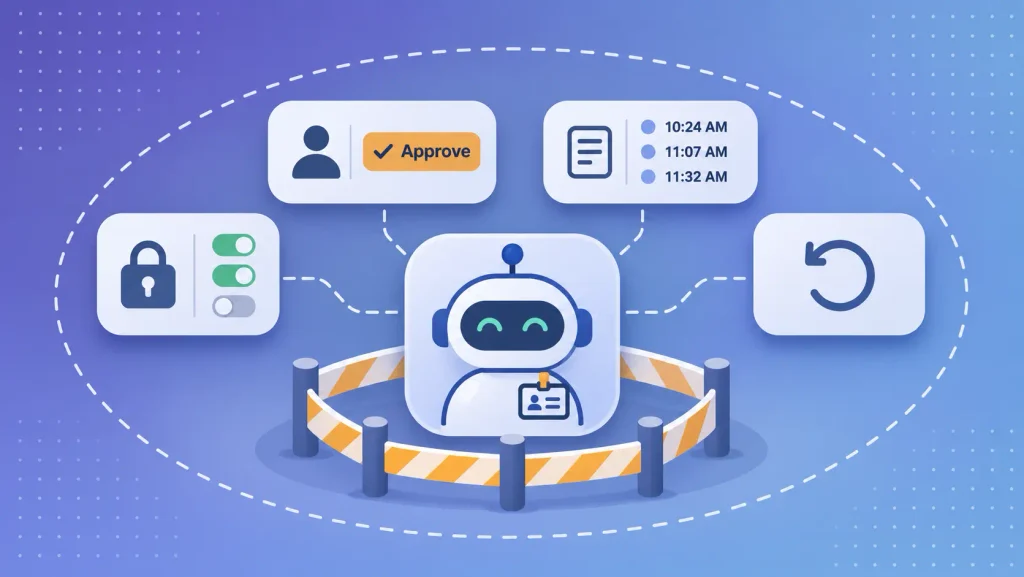
Start agents on one narrow, well-defined task, with guardrails built into the agent’s design from day one. Then expand their autonomy only as they earn it.
Which Enterprise AI Adoption Challenge Should You Fix First?
Fix these AI adoption challenges in dependency order. Start by naming the business problem and an owner, because every other fix depends on knowing what success looks like.
This order matters more than most teams expect. RAND’s research found that misunderstanding or miscommunicating the problem to solve was the most common root cause of AI project failure. Its data also puts the failure rate above 80% by some estimates, about twice that of IT projects without AI.
Work through the blockers in this sequence:
- Name the problem and the owner. One workflow, one measurable outcome, one accountable person.
- Take the baseline. Record time, volume, errors, and cost before anything changes.
- Fix data for that workflow only. Certify the datasets it needs and assign owners.
- Map the integration points. List every system the AI must read from or write to.
- Set security and governance controls. Access, logging, and approval checks go in before users do.
- Prepare managers, then teams. Train the people who set priorities first.
- Plan run costs and monitoring. Budget for drift checks, retraining, and support.
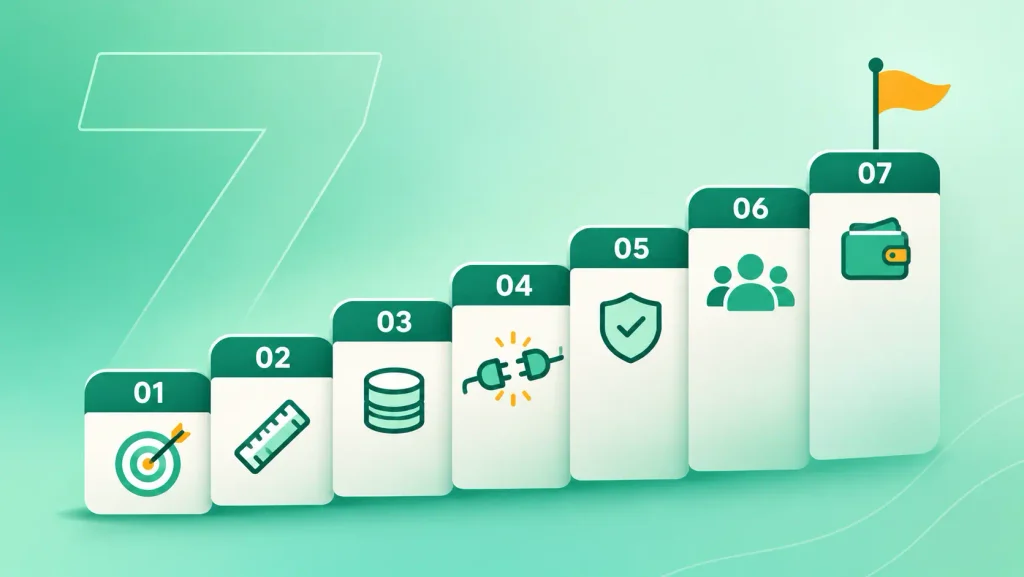
Skipping ahead is the classic mistake. Teams jump to step four because integration feels like real progress, then discover nobody agreed on what the AI was supposed to achieve.
Not sure where you stand? Answer these honestly:
- Can you name the single workflow your AI project is meant to improve?
- Do you know how that workflow performs today, in numbers?
- Does one person own the result, with authority to stop the project?
- Can the AI reach the data it needs without manual exports?
- Would you know within a week if the model’s accuracy dropped?
- Do your team’s managers use the tool themselves?
Every “no” marks your next bottleneck. For a wider view, an AI consulting engagement runs the same check across all your systems before you commit more budget.
How to Overcome Enterprise AI Adoption Challenges
You overcome enterprise AI adoption challenges by shrinking the scope, measuring early, and building controls into the system instead of around it. These five moves address the root causes behind most barriers to AI adoption.
Start with One Workflow and a Measured Baseline
It’s worth picking the boring, expensive workflow over the flashy one. The use case that wins budget in a slide deck is rarely the one draining the most hours every week.
Fortune’s coverage of the MIT research noted that more than half of generative AI budgets go to sales and marketing tools. Yet the biggest returns showed up in back-office automation. That’s a good place to look for your first workflow.
Give Every Pilot an Exit Date and a Named Owner
A pilot without a deadline becomes a permanent experiment. The deadline is what pushes an AI pilot to production. You’ll want a fixed timeline in weeks, success criteria agreed in writing, and one named person who makes the go or no-go call.
If the answer is no, shut it down and keep the lessons. A clean “no” is far cheaper than a pilot that drifts for a year.
Fix Data Access Before You Pick a Model
Model choice gets most of the attention, but data access decides most outcomes. A strong model can’t help if it can’t reach the right records at the right time.
Once you know where the data lives, who owns it, and how the AI will reach it, you can choose the model that fits that setup.
Build Governance into the Pipeline, Not a Policy Binder
Rules that live in documents get skipped. Rules that live in your deployment pipeline get enforced.
It’s worth automating the checks that matter most: who can access which data, what a model must pass before release, and what gets logged. A lighter process for low-risk tools keeps governance from becoming the reason nothing ships.
Bring Managers Along Before the Wider Rollout
Your managers decide whether AI becomes part of the job or an optional extra. So it helps to train them first, give them early wins to share, and let them shape how the tool fits their team’s work.
Adoption follows when the people setting priorities use the tool themselves.
Should You Build In-House, Buy, or Bring in a Partner?
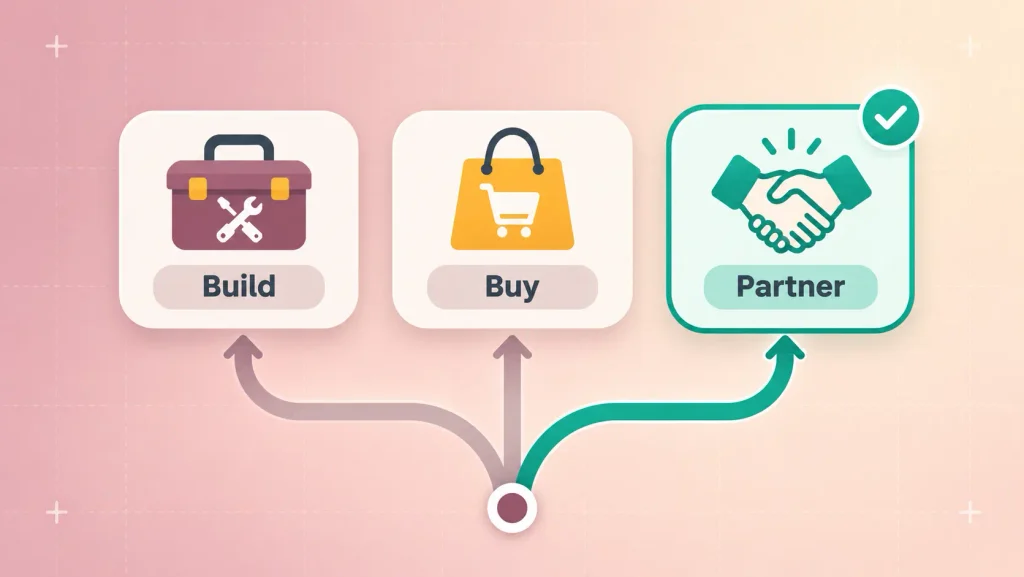
For most enterprises, buying a proven tool or working with a specialist partner reaches production faster than building everything in-house. Building makes sense only where AI gives you a real competitive edge and you have the team to run it long term.
The research leans clearly one way. Fortune’s report on the MIT findings said tools bought from specialized providers, or built through partnerships, succeeded about 67% of the time. Internal builds succeeded only about a third as often.
Here’s how the three options compare:
| Option | Best when | Main risk |
| Build in-house | AI is core to your product or edge | Slow hiring, high upkeep |
| Buy off the shelf | The use case is common and standard | Poor fit with your workflows |
| Partner | You need custom integration, fast | Picking the wrong partner |
Most companies end up mixing all three, and the cost, control, and speed trade-offs of in-house vs outsourced AI development decide where each piece goes. If you take the partner route, the main risk in the table is real, so choosing an AI consultancy on its record of production launches matters more than its pitch deck.
How Boomdevs Solves Enterprise AI Adoption Challenges
Boomdevs starts with an assessment, not a pitch. Before anything is built, the team audits your data, infrastructure, access controls, and integration constraints, so you know what’s ready and what isn’t.
From there, the work tackles enterprise AI adoption challenges in the order above. Middleware and API layers connect AI to your existing systems without a full rebuild. Governance, access controls, and audit trails go in from the first line of architecture. After launch, monitoring catches model drift before your users do.
With 50+ full-time experts and 3.5K+ projects delivered, Boomdevs has seen most of the AI implementation challenges that stall projects. If your pilot is stuck, the Boomdevs AI integration team can map exactly what it needs to reach production.
Frequently Asked Questions
What Is the Biggest Challenge in Enterprise AI Adoption?
Among enterprise AI adoption challenges, the biggest is usually organizational, not technical. Unclear goals, missing owners, and unready data stall more projects than model quality does. Most teams that struggle never agreed on the specific problem the AI was meant to solve.
Why Do Most Enterprise AI Projects Fail to Scale?
Most projects fail to scale because pilots are built to impress, not to graduate. They run on clean sample data, skip integration with core systems, and lack an owner after launch. When the pilot ends, nobody has planned the work needed to go live.
How Long Does Enterprise AI Adoption Take?
It depends on your data, systems, and scope. A single, well-scoped workflow can move from pilot to production far faster than a company-wide program. The best way to get a realistic timeline is to assess your data and integration points before you commit.
How Do You Measure ROI on Enterprise AI?
Measure the target workflow before launch, then track the same numbers after. Time per task, volume, error rate, and cost per task are a solid starting set. Without that baseline, ROI turns into opinion.
What Is Shadow AI, and Why Does It Matter?
Shadow AI is when employees use AI tools the company hasn’t approved, often by pasting in sensitive data. It matters because that data can leave your control without anyone knowing. The fix is a useful approved tool plus clear data access rules, not an outright ban.