


- 1. Key Takeaways
- 2. Should My Business Build a dApp? The Short Answer
- 3. dApp vs Traditional App: What You Gain and What You Give Up
- 4. 5 Signs a dApp Fits Your Product
- 5. 5 Signs a Regular App Will Serve You Better
- 6. The Middle Ground: Blockchain Features Without a Full dApp
- 7. The Real Costs and Risks Before You Build a dApp
- 8. Which Blockchain Fits Your Business?
- 9. A 7-Step Checklist Before You Build
- 10. How Boomdevs Solves the dApp-or-Not Decision
- 11. Final Thoughts
- 12. Frequently Asked Questions
Summarize with
You’ve heard a competitor is “going Web3.” Now you’re asking yourself: should my business build a dApp? It’s a fair question. It’s also an expensive one to get wrong.
Here’s the uncomfortable part. Most dApp guides are written by teams who sell dApp builds. This one also shows you when to build a dApp and, just as important, when not to.
You’ll get a three-question test, the real trade-offs, and a middle path most founders miss, so you can decide before you spend a dollar.
Key Takeaways
- The simple rule for when to build a dApp: only when several parties who don’t fully trust each other must share the same records, and no single company, including yours, should control them.
- Strong fit signals: ownership is the product, rules must run without anyone overriding them, or your product needs on-chain money.
- Weak fit signals: you already act as the trusted operator, you must edit or delete user data, or your users have never touched a crypto wallet.
- Many products need one blockchain feature, not a full dApp. Stablecoin payouts or tokenized tickets can sit inside the app you already have.
- Budget for security from day one. Audits, key management, and wallet onboarding are where dApp projects get expensive.
Should My Business Build a dApp? The Short Answer
Your business should build a dApp only if your product runs on shared records that several parties write to, and nobody should be the one in charge of them. If you can name a trusted operator who could run the system, a regular app will almost always be cheaper, faster, and easier to change.
That sounds blunt. It’s meant to. The rest of this guide helps you figure out which side of that line you’re on.
The Three-Question Blockchain Test
Two researchers at ETH Zurich, Karl Wüst and Arthur Gervais, published one of the most cited decision methods on this topic. Their research paper, Do You Need a Blockchain?, was presented at the 2018 Crypto Valley Conference and compares blockchains against a plain, centrally managed database.
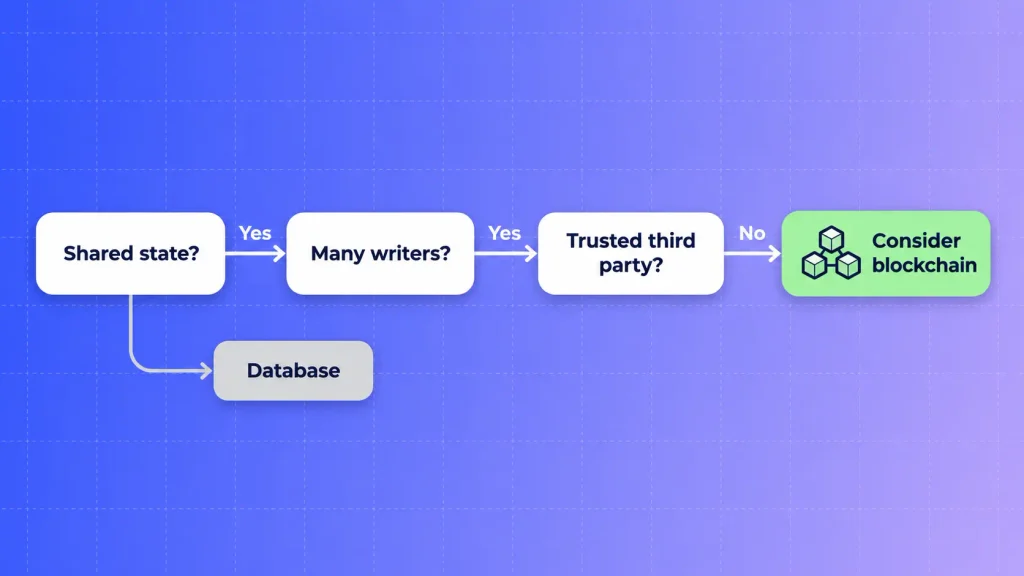
You can boil their flowchart down to three questions that answer do you need a blockchain? in a single meeting:
- Do you need to store shared state? That means records like balances, ownership, or the status of a deal.
- Do several independent parties write to those records? Not just your team, but customers, partners, or other companies.
- Can you rely on an always-online trusted third party? If one exists and everyone accepts it, you don’t need a blockchain.
If your answers are yes, yes, and no, a blockchain earns a serious look. The paper goes one step further. If every writer is known and trusted, a normal database still wins, and only the need for public verification pushes you toward a public or a permissioned chain.
Most founders fail question three. Usually, the trusted party is you. And if it is, the honest answer to should my business build a dApp? is usually no.
What a dApp Changes in Your Product
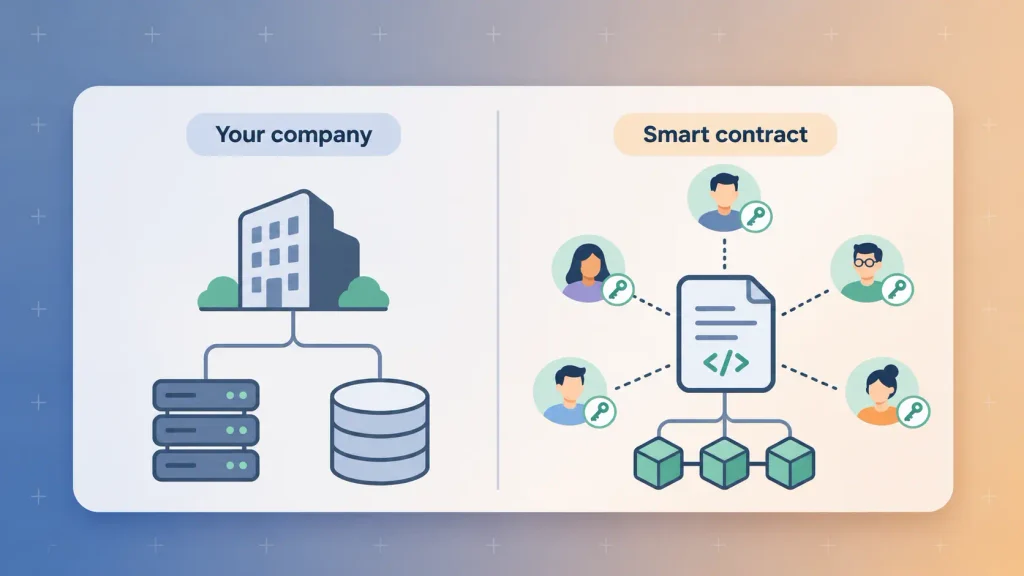
In a dApp, the rules that matter live in smart contracts on a blockchain. Your users approve actions with their own wallet instead of asking your server for permission.
Everything else can still feel familiar. Screens, search, notifications, and support often run on normal infrastructure. What changes is who holds the final say over money and ownership. That shift is the real difference in any dApp vs traditional app decision, and it’s the whole point.
dApp vs Traditional App: What You Gain and What You Give Up
A dApp trades control and speed for verifiable trust. Before you commit, it helps to see that trade line by line:
| Factor | Traditional app | dApp |
| Who’s in control | Your company | Smart contract rules |
| User login | Email, password, social | Wallet signature or embedded wallet |
| Changing records | Edit anytime | Permanent once on-chain |
| Shipping a fix | Deploy in minutes | Upgrade pattern plus re-audit |
| Cost per user action | Server cost you absorb | Gas fee per transaction |
| Biggest security risk | Server and database breaches | Contract bugs and stolen keys |
| Time to first launch | Shorter | Longer, due to testing and audits |
In any dApp vs traditional app comparison, read the right-hand column as a list of costs you accept for one benefit: your users don’t have to trust you. If that trust isn’t worth paying for in your market, the left column wins.
5 Signs a dApp Fits Your Product
A dApp fits when trust, ownership, or neutral rules sit at the center of your product, not at the edge. If you recognize three or more of these signs, you likely have your answer to should my business build a dApp?, and the decentralized route deserves real budget.
Trust Between Parties Is Your Bottleneck
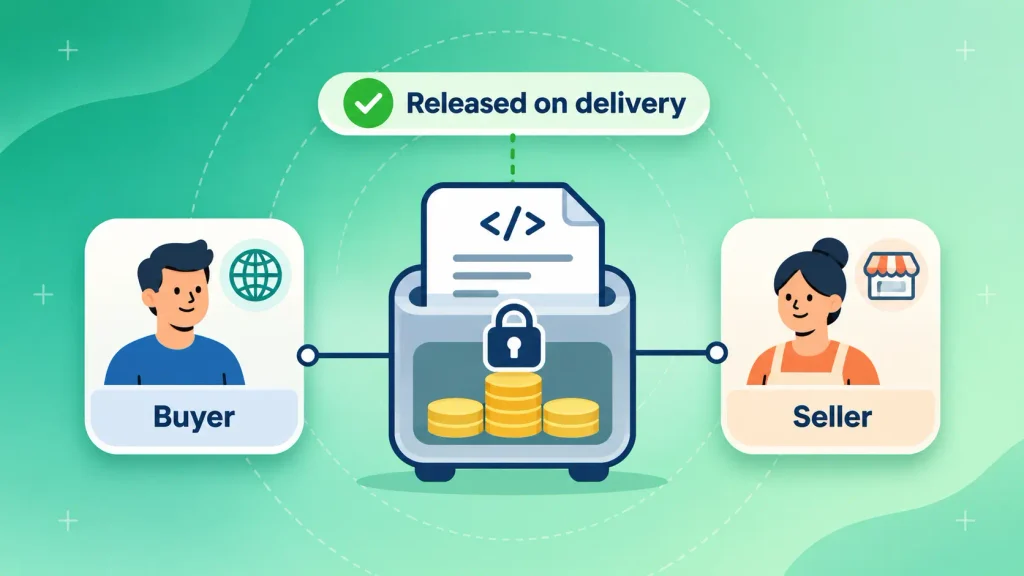
Deals stall because nobody wants to hold the other side’s money. Think of buyers and sellers in different countries, or several companies settling payments with each other every week.
A smart contract can act as the neutral middle. It holds funds and releases them when agreed conditions are met, so nobody has to trust anyone’s back office.
Ownership Is the Product
Some products only matter if users truly own what they buy. Event tickets, in-game items, memberships, and tokenized real-world assets all fall here.
In a regular app, “ownership” is a row in your database that you can change. On-chain, your users can hold, resell, or move the asset without asking you, and that portability is often what they’re paying for.
Rules Must Run Without Anyone Overriding Them
Some promises lose their value the moment one party can quietly edit them. Common examples include:
- Vesting schedules that release tokens or shares on fixed dates.
- Revenue splits paid out automatically to creators or partners.
- Reward programs where users need proof that the rules won’t change mid-game.
- Escrow releases tied to delivery or milestone confirmation.
If your users have ever asked, “What stops you from changing this later?”, you’re in dApp territory.
You Need On-Chain Money or Liquidity
Your product may need to move stablecoins, settle around the clock, or plug into existing DeFi protocols. In that case, building on-chain isn’t a branding choice. It’s where the money already lives.
Composability helps here too. You can connect to existing protocols and wallets rather than building every financial piece yourself.
Your Users Already Live On-Chain
Crypto-native users expect to connect a wallet, not create another password. DappRadar recorded an average of 16 million daily unique active wallets using dApps in October 2025.
Wallets aren’t people, since one person can hold several. Still, it’s a real audience. DappRadar also noted that users were growing more selective, sticking with dApps that deliver steady utility rather than hype.
If most of these signs describe you, a dedicated dApp development team can help you turn them into an architecture before any code is written.
5 Signs a Regular App Will Serve You Better
In most dApp vs traditional app decisions, the regular app wins when you’re the trusted operator anyway, or when your users would pay a price for decentralization they never asked for. Watch for these signals:
- You already run the system. If customers trust your company to manage records today, a blockchain adds cost without removing a real trust problem.
- You must edit or delete user data. Privacy rules like the GDPR’s right to erasure can require deleting personal data on request, and data written to a public chain can’t be erased.
- You need high-volume, near-free writes. Analytics events, chat messages, or sensor logs belong in a database, not in a transaction someone pays gas for.
- Your users have never used a wallet. Every extra step at signup costs you conversions, and mainstream users rarely want to manage keys.
- “Blockchain” is mainly a pitch-deck goal. Investors and users notice quickly when decentralization solves nothing.
None of these signs rule out blockchain completely. They just mean a full dApp is the wrong shape for your product. Before you drop the idea, ask a narrower question: do you need a blockchain for one feature, not the whole app? The middle ground below is often the better fit.
The Middle Ground: Blockchain Features Without a Full dApp
You don’t have to choose between “pure Web2” and “fully decentralized.” This is where blockchain for business often works best. Many products get the benefit they need by adding one on-chain feature to the app they already run.
Stablecoin or Crypto Payments in Your Existing App
If your real need is cheaper cross-border payouts or 24/7 settlement, you can add stablecoin payments without rebuilding your product. Your app, accounts, and support stay the same, and only the payment rail changes.
It’s still payments work, with the same reliability and reconciliation needs as any checkout. If you’ve built a card flow before, the guide to building a payment gateway covers much of the groundwork. For licensing and compliance questions, fintech consulting is the safer first step.
Tokenized Assets, Tickets, or Loyalty Points
Sometimes users only want to own one thing. You can issue that one asset on-chain, such as a ticket, a membership pass, or loyalty points, while everything else runs on your current stack.
This is blockchain for business at its simplest. You get resale, transfer, and proof of ownership without moving your whole business onto a blockchain.
Hybrid Architecture: On-Chain Only Where Trust Matters
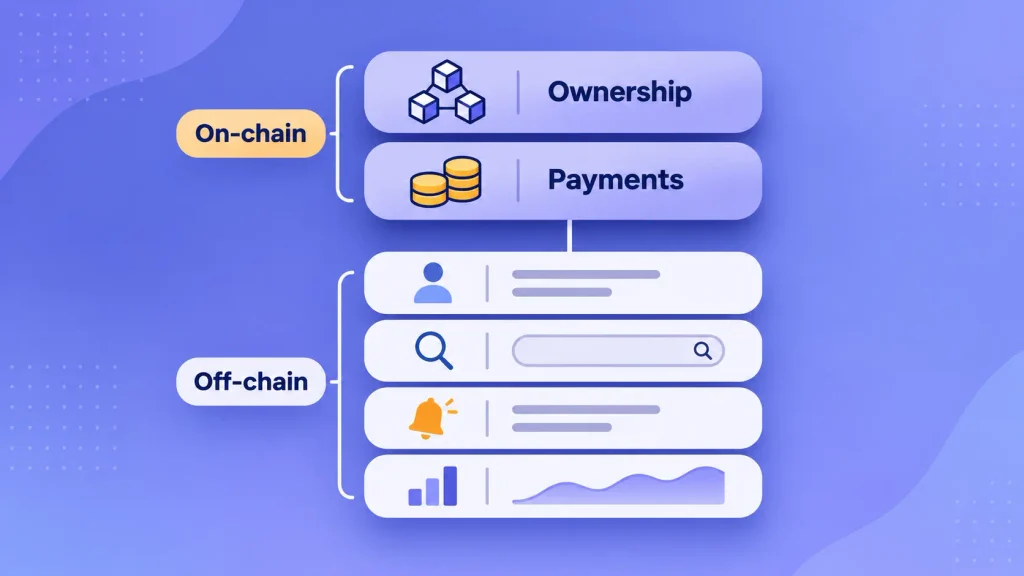
Many production dApps work as hybrids. They keep only the trust-critical layer on-chain and run the rest like any modern app. Here’s how that split usually looks:
| Layer | Where it usually lives | Why |
| Ownership and balances | On-chain | Must be verifiable by users |
| Payment settlement | On-chain | Final and auditable |
| User profiles and personal data | Off-chain | Must be editable or deletable |
| Search, feeds, notifications | Off-chain | Speed and cost |
| Files and media | Decentralized storage or cloud | Too heavy for a chain |
| Admin tools and analytics | Off-chain | Internal use only |
The fewer layers you put on-chain, the less you audit, the less you pay in gas, and the faster you ship. The hard part is making both halves talk reliably, which is mostly a software integration problem, not a blockchain one.
The Real Costs and Risks Before You Build a dApp
A dApp’s biggest costs rarely show up in the first estimate. They come from security, onboarding, and the fact that you can’t quietly patch code once it’s live.
Smart Contract Security
On-chain losses tend to be instant and final. Chainalysis reported over $2.17 billion stolen from crypto services in the first half of 2025, already more than all of 2024. A single $1.5 billion exchange hack made up about 69% of that.
That headline case was an exchange, not a dApp. The lesson still applies to you: attackers go where the money sits, and Chainalysis itself flags smart contract vulnerabilities as a growing attack vector. Here’s what I’d budget for before launch:
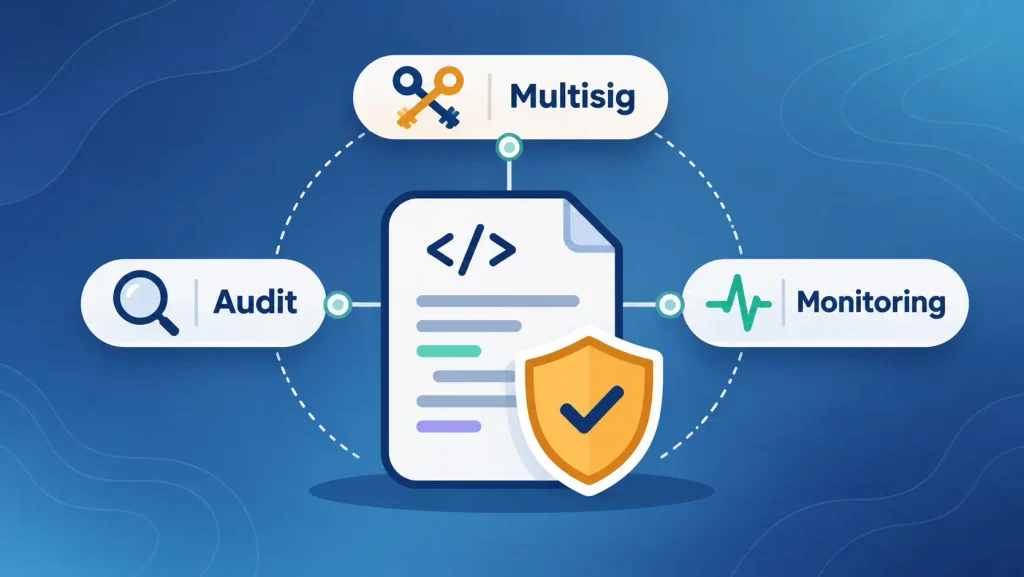
- An independent audit of every contract before it touches mainnet, plus a re-audit after major changes.
- Multisignature admin keys, so one stolen laptop can’t drain your treasury.
- Live monitoring and an incident plan for pausing contracts if something looks wrong.
- A bug bounty, so honest researchers have a reason to report problems to you first.
Your frontend and backend still need the usual protection too. The same web application security practices apply to every off-chain piece of your dApp.
Wallet and Onboarding Friction
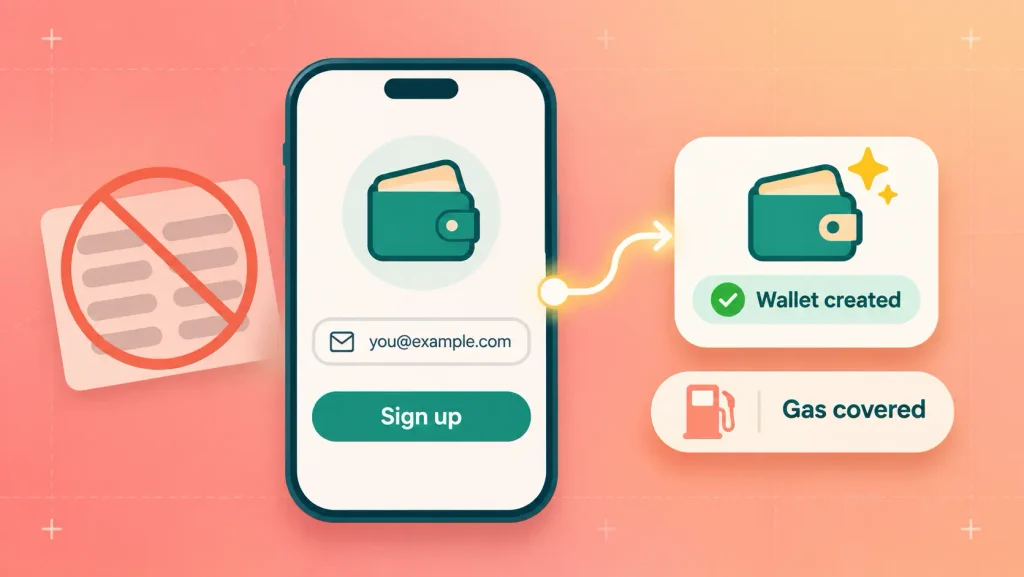
Asking new users to install a wallet, save a seed phrase, and buy tokens for gas loses people fast. If your audience isn’t crypto-native, this is where your funnel will leak.
Two approaches soften it. Embedded wallets create a wallet in the background when someone signs up with an email. Account abstraction, defined in the ERC-4337 standard on Ethereum, lets you pay gas on your users’ behalf.
Security also shifts toward your users. Chainalysis found that personal wallet compromises made up 23.35% of stolen funds in the first half of 2025. Clear warnings and recovery options matter, which is why UI/UX design deserves as much attention as the contracts.
Upgrades, Compliance, and Ongoing Gas Costs
Launch day isn’t the finish line. Plan for these running costs from the start:
- Upgrades need a proxy pattern or a migration plan, and each change needs fresh review.
- Compliance may involve KYC, sanctions screening, or licensing, depending on your country and whether you move money.
- Gas is paid per transaction, so every popular feature has a usage cost attached.
- Indexing and hosting for the off-chain parts still sit on your monthly bill.
The claim that dApps “have no server costs” is misleading. You swap some server costs for gas, audits, and infrastructure that reads blockchain data.
What Drives dApp Cost and Timeline
No honest team can quote a dApp before scoping it, because a few choices move the number more than anything else:
- How many smart contracts you need, and how much money they hold.
- Which chain you build on, since tooling and languages differ.
- Audit scope, which grows with contract complexity.
- Wallet and onboarding UX for non-crypto users.
- Integrations with your existing systems, payments, or data.
If someone gives you a fixed price after a 20-minute call, ask what they assumed about each of these.
Which Blockchain Fits Your Business?
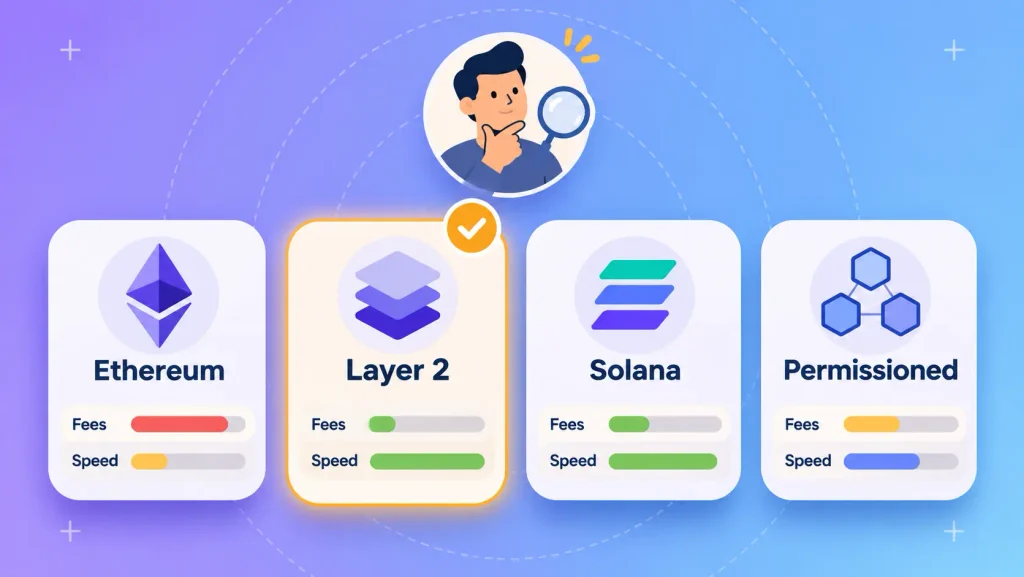
The right blockchain for business use depends on your users, your transaction volume, and how much the money involved is worth. Here’s a quick starting map:
| Option | Best for | Trade-off |
| Ethereum mainnet | High-value assets, deepest DeFi ecosystem | Higher fees per transaction |
| Ethereum Layer 2s | Consumer apps needing lower fees and Ethereum tools | Bridging adds steps for users |
| Solana | High-volume trading and fast consumer apps | Different language and tooling than Ethereum |
| Polygon PoS | Low-cost apps using Ethereum tooling | Separate security model from Ethereum mainnet |
| BNB Chain | Low-fee apps on Ethereum-compatible tooling | Smaller validator set than Ethereum |
| Permissioned chain | Consortiums of known companies | Not public, fewer Web3 integrations |
Pick the chain the way you’d choose a tech stack for a web app: start from your users and your workload, not from what’s trending this quarter.
A 7-Step Checklist Before You Build
If you’ve read this far and still lean toward a dApp, this checklist confirms when to build a dApp and turns the idea into a decision you can defend to your board or co-founder:
- Write the trust problem in one sentence. Who doesn’t trust whom, and what does it cost them today?
- Run the three-question test honestly. Ask yourself, do you need a blockchain?, and if a trusted operator exists, say so out loud.
- Map every feature to on-chain or off-chain. Most should land off-chain.
- Describe your first 1,000 users. Do they already hold wallets, or will you need embedded wallets?
- Choose your chain from that user profile. Fees, speed, and ecosystem should match who you’re serving.
- Budget audits and monitoring before writing code. Treat security as part of the build, not an add-on.
- Launch small. Start on a testnet, then a limited mainnet release with caps on how much money contracts can hold.
It’s the same build-or-buy discipline you’d use when weighing custom software against off-the-shelf tools, just with higher stakes, because mistakes on-chain are hard to undo.
Want a second opinion on your answers? You can book a free strategy call and walk through the checklist with a team that has shipped live on-chain products.
How Boomdevs Solves the dApp-or-Not Decision
Boomdevs starts every dApp engagement with the same question you’ve been asking: should my business build a dApp at all? Chain selection, wallet strategy, and compliance needs get settled before development begins, and sometimes the honest answer is a hybrid or a regular app.
When a dApp is the right call, you get one team for the whole journey:
- A fit check first, using the same trust test you just ran.
- Hybrid architecture that keeps only the trust-critical layer on-chain.
- Audit-first smart contracts, with independent review before mainnet.
- Wallet onboarding designed for people new to Web3.
- Post-launch support for upgrades, monitoring, and gas optimization.
The longest-running example is Flash.trade, a perpetual trading platform on Solana with over 1 million daily active users. Boomdevs has worked with the team for more than four years on brand identity, website design and development, and blockchain app development. You can read the Flash.trade case study for the full story.
With 10+ years in product engineering and 3.5K+ projects delivered, the goal is the same every time: a product people actually use, not just a contract that compiles. You can see what that looks like in Boomdevs’ dApp development services.
Final Thoughts
So, should my business build a dApp? Only if trust between parties is a real cost in your market and no single operator should hold the keys. If that’s you, build the smallest trust-critical layer on-chain, secure it properly, and keep everything else simple.
If it’s not you, that’s a good outcome too. You just saved months and a large budget.
Not sure which side you’re on? Talk through your idea on a free call and get a straight answer before you commit.
Frequently Asked Questions
Should My Business Build a dApp or a Regular App?
Build a dApp only if several parties who don’t fully trust each other share the same records and no one should control them. In most dApp vs traditional app decisions, a regular app is cheaper, faster to ship, and easier to change, so start there unless trust is your real bottleneck.
Is a dApp More Secure Than a Regular App?
Not automatically. A dApp removes some risks, like a single company secretly editing records, but adds new ones, like contract bugs and stolen private keys. Security depends on audits, key management, and monitoring, not on the word “decentralized.”
How Much Does It Cost to Build a dApp?
It depends on the number of smart contracts, the chain, audit scope, wallet onboarding, and integrations with your existing systems. A small hybrid feature costs far less than a full DeFi protocol. Any honest estimate starts with a scoping session, not a price list. A good one also checks whether this is the right time and reason to build at all, since knowing when to build a dApp saves more money than any discount.
Can I Turn My Existing App Into a dApp?
Usually you don’t convert the whole app. You move one trust-critical layer on-chain, such as payments, ownership, or payouts, and keep the rest of your product as it is.That hybrid approach is faster and cheaper to secure, and for most companies it’s the most practical way to use blockchain for business.
Do My Customers Need a Crypto Wallet to Use My dApp?
Not necessarily. Embedded wallets can be created automatically when someone signs up with an email. With account abstraction, you can also pay gas fees on their behalf, so they never need to buy tokens first.
Does Every dApp Need Its Own Token?
No. Many dApps run on stablecoins or the chain’s native currency without issuing a token. Launching your own token adds economic design work and regulatory questions in many countries, so it should solve a real problem in your product.