


- 1. The Short Version
- 2. How Cloud Computing Evolved From Mainframes to the Internet
- 3. The Building Blocks: Virtualization, Client-Server, and Early SaaS
- 4. The Hyperscaler Era: AWS, Azure, and Google Cloud
- 5. Cloud Computing Goes Mainstream (2010s-2020)
- 6. How Cloud’s Evolution Reshaped Fintech, Healthcare, and Retail
- 7. What’s Next: AI-Native Cloud and the Road to 2030
- 8. A glance at the 70-year evolution of cloud computing: then and now
- 9. How Boomdevs Solves Legacy Modernization for the AI-Native Cloud Era
- 10. Frequently Asked Questions
Summarize with
You likely see cloud computing as something invented only recently, thanks to companies like Netflix, Google Drive, and Zoom.
The evolution of cloud computing, in fact, spans almost seventy years; it began well before the term ‘the cloud’ was coined. Mainframes, ARPANET, and IBM’s early virtual machines laid the foundation.
That history shapes your AWS bill, the problems you’ve had with multiple clouds, and the current discussions about AI infrastructure. Below is the complete timeline, tracing the journey from mainframes to AI-native platforms.
The Short Version
- The evolution of cloud computing traces back to mainframe time-sharing in the 1950s and to ARPANET in 1969, not to the 2006 launch of AWS, which most people think of.
- The technical and business models that the cloud is based on were established by virtualization (IBM’s VM, 1972) and early application service providers.
- AWS, Google App Engine, and Microsoft Azure were responsible for turning the concept of ‘computing as a utility’ into the IaaS, PaaS, and SaaS categories now in use.
- Within a single decade, cloud infrastructure went from an optional choice to the default because of containers, Kubernetes, and the COVID-19 pandemic.
- In 2026, AI workloads and sovereign cloud rules are reshaping infrastructure again, with Gartner tracking data center and IaaS spending as the fastest-growing part of a $6.37 trillion global IT market.
How Cloud Computing Evolved From Mainframes to the Internet
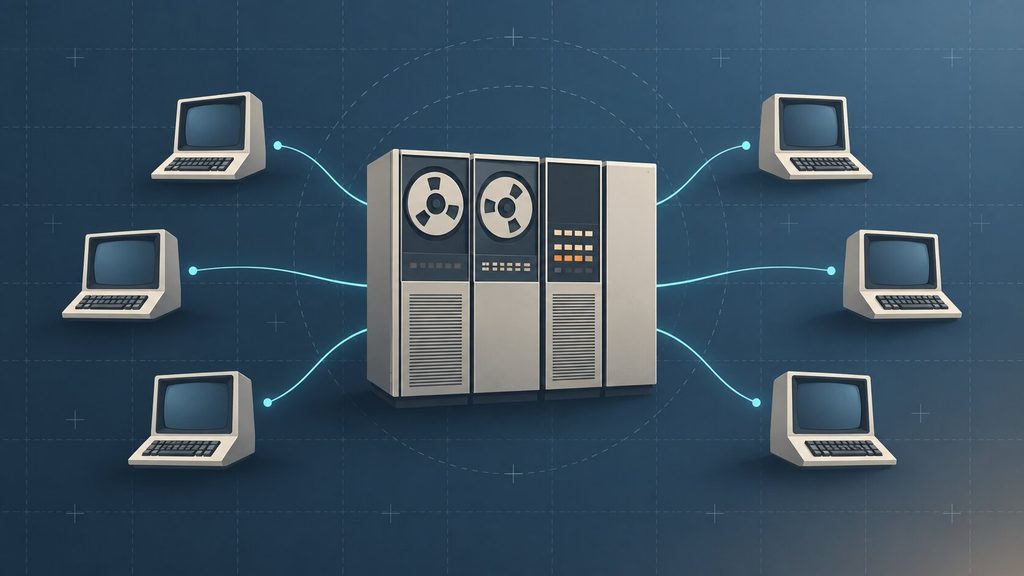
Cloud computing began in the 1950s, seven decades before AWS existed. Mainframes first introduced the concept the cloud is built on: many users sharing a single machine rather than each having their own.
The Mainframe and Time-Sharing Era (1950s-1960s)
The evolution of cloud computing started with the mainframe, without the internet; a single machine served the whole organisation because owning a computer wasn’t realistic at the time.
In the 1950s, mainframes cost millions of dollars, and businesses shared one among dozens of employees using ‘dumb terminals’, screens with no processing power of their own.
In 1961, John McCarthy, a computer scientist at MIT, made a truly prophetic suggestion in a speech to his colleagues. He suggested that computing power would one day be sold like electricity or phone service, with customers charged by usage rather than having to own it. That is the pay-as-you-go pricing model on which AWS would build its business, forty-five years later.
ARPANET and the Networking Foundations (1960s-1980s)
When ARPANET was launched in 1969, it gave computers the means of communicating with each other over long distances, and that was the other element needed for cloud computing.
Funded by the US Department of Defense’s Advanced Research Projects Agency, ARPANET connected four university computers across the country:
- UCLA
- Stanford Research Institute
- UC Santa Barbara
- University of Utah
It was not designed with cloud computing in mind; instead, it was created so that researchers could share among institutions the limited and costly computing resources, thereby solving the same problem that cloud computing addresses today, merely on a completely different scale.
Time-sharing provided the economic advantage of dividing one machine among many users, while ARPANET enabled that sharing from any location. The one element still missing was software that would show you how to divide a single computer into several for different customers safely. That is exactly where virtualization comes in.
The Building Blocks: Virtualization, Client-Server, and Early SaaS
From the 1970s through the 1990s, virtualization, the client-server model, and early rented software quietly became the technical foundation for the evolution of cloud computing.
Virtualization and the Rise of the Virtual Machine
Virtualization lets a single physical computer appear as several separate computers, and it is the most important element of cloud computing.
IBM commercially launched it in 1972 with its VM operating system, which enabled one mainframe to run multiple separate environments at the same time, each acting as its own independent machine. That’s the same principle Amazon uses today when it sells you a small portion of a large server rather than the entire server. The possibility of virtualization made all that which came after possible:
- Running multiple operating systems on one physical machine
- Isolating workloads so one customer’s crash can’t touch another’s
- Selling a fraction of a server instead of the whole box
- Spinning up a new environment in minutes instead of weeks
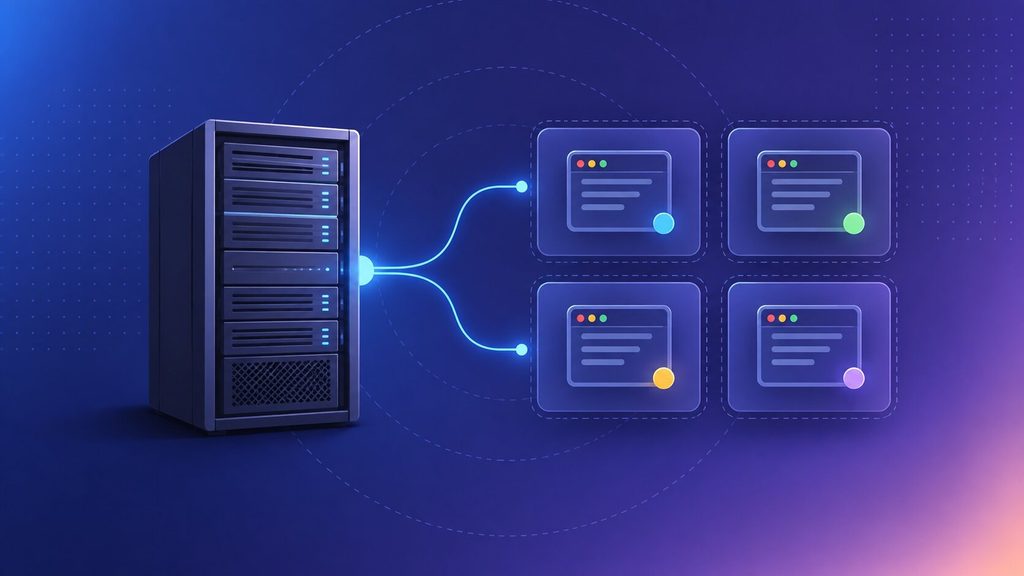
The cloud’s pricing model wouldn’t be possible without it.
Application Service Providers and the Client-Server Shift
Application Service Providers, or ASPs, were essentially SaaS long before the term SaaS existed. In the late 1990s, companies began to rent business software over the internet rather than selling copy versions that could be installed.
A major change in architecture accompanied this. Instead of having one central mainframe, computing shifted to a client-server model in which personal computers (“clients”) asked the separate server for data and processing power. This client-server arrangement remains the fundamental structure of almost every cloud application built today, whether you notice it or not.
Salesforce and the Birth of SaaS (1999)
Salesforce, founded in 1999, is generally regarded as the company that transformed the cumbersome ASP concept into modern SaaS.
Rather than having them install customer relationship management software on each employee’s machine, Salesforce made the entire product available through a browser on a subscription basis. That seems unremarkable now.
In 1999, it was a bet that businesses would put their customer data on a server they did not own or control. That bet made “software as a service” the standard way software is sold, rather than a niche alternative. The same shift is happening again with AI SaaS, where the software does the work the user used to do by hand.
At that stage, all the necessary components were there: shared machines, networked access, virtualization, and software available on a subscription basis. The only thing missing was someone willing to rent the entire system at scale to anyone with a credit card.
The Hyperscaler Era: AWS, Azure, and Google Cloud
The era of the hyperscalers began in 2006, when Amazon started renting out spare server capacity and, roughly by accident, created the cloud computing industry as we know it today.
Amazon Web Services and the IaaS Model
To handle the peaks in its own retail traffic, Amazon had built up a huge amount of server capacity, particularly around the holidays. Most of this capacity went unused outside those periods. In 2006, the company introduced Amazon S3 as a storage service and Amazon EC2 as a computing service, allowing any business to rent virtual servers on an hourly basis rather than buy physical hardware.
That was the very first Infrastructure as a Service (IaaS) offering, and it is still the area in which AWS takes the lead, which is the reason why “spin up a server” now involves just a few clicks rather than submitting a purchase order.
Google App Engine, Microsoft Azure, and the PaaS Race
In 2008, Google introduced Google App Engine, a Platform as a Service (PaaS) that let developers deploy applications without managing any servers, making it the first mainstream PaaS. Microsoft then launched Azure, announced in 2008 and launched in 2010, bringing its large enterprise customer base into the cloud market almost overnight.
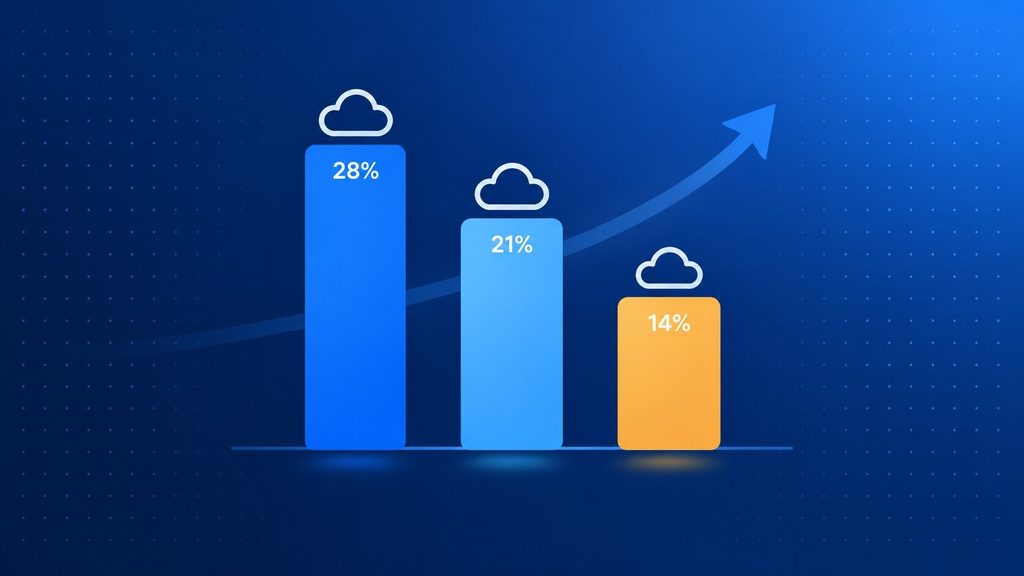
By the early 2010s, AWS, Azure, and Google Cloud had settled into roughly the structure that still defines the market. As of Q1 2026, Synergy Research Group data reported by DataCenterDynamics put AWS at 28% of global cloud infrastructure spending, Microsoft Azure at 21%, and Google Cloud at 14%, out of a market that hit $129 billion for the quarter, up 35% year over year.
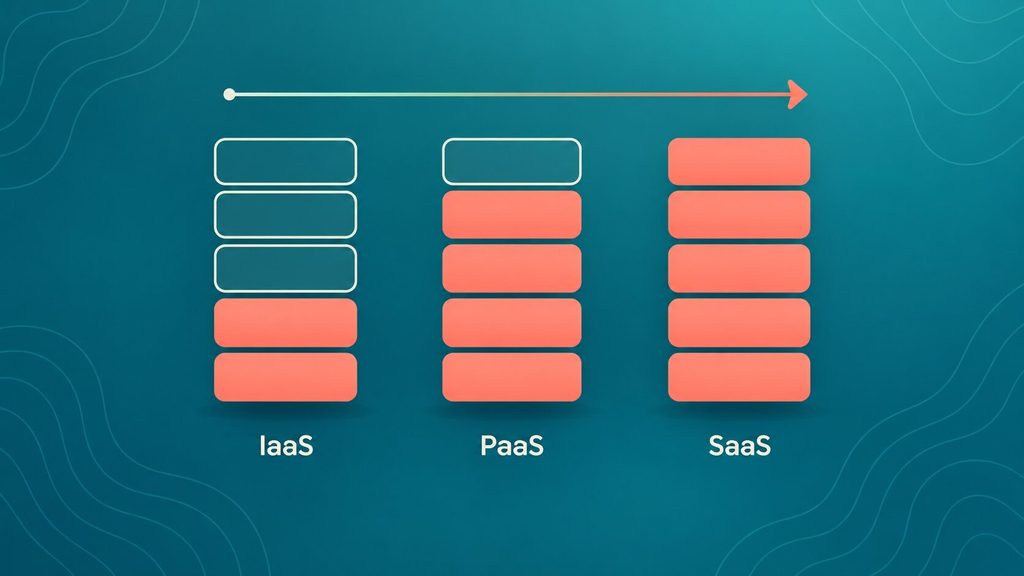
IaaS vs. PaaS vs. SaaS, Explained
Once you move past the history and get on to using the cloud, you’ll come across these three acronyms all the time. The difference that really matters is:
| Model | What you manage | What the provider manages | Good example |
| IaaS | OS, apps, data, runtime | Physical servers, networking, storage | Amazon EC2 |
| PaaS | Apps and data only | OS, runtime, servers, scaling | Google App Engine |
| SaaS | Just your data and settings | Literally everything else | Salesforce |
The pattern is straightforward: the higher up the stack you go, the more control you give up and the more convenience you get. Most companies end up using a combination of all three rather than sticking with just one.
Cloud Computing Goes Mainstream (2010s-2020)
In the 2010s, cloud computing shifted from something startups used to something everyone used, driven first by containers and then by an unexpected pandemic.
Containers, Docker, and Kubernetes
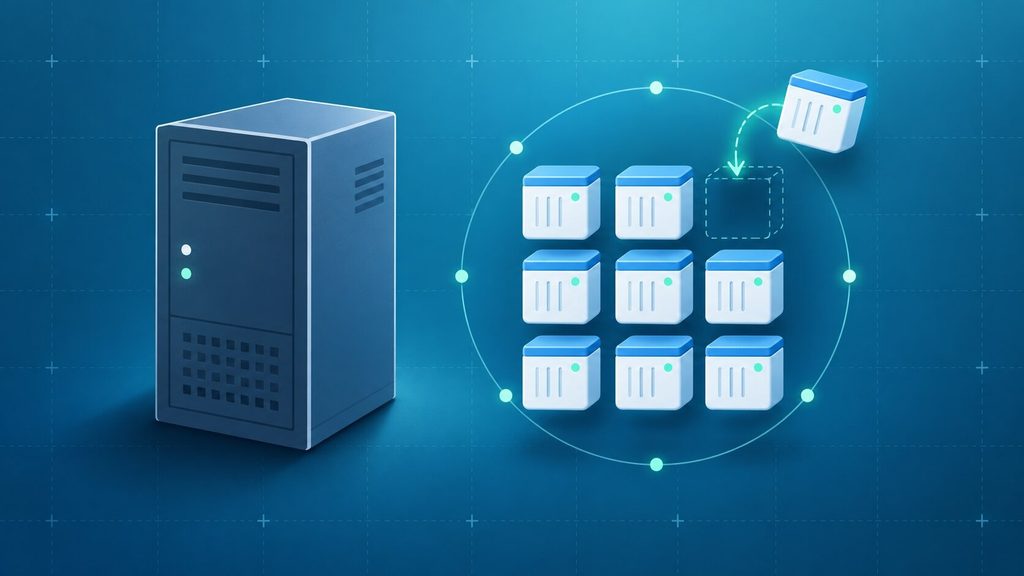
With containers, an application bundles all the components it needs, so it runs the same way whether it’s on your laptop or on a server somewhere around the world. Docker made this format well known from 2013 on, and it solved a problem virtualization couldn’t: full virtual machines are heavy and take a long time to start up, whereas containers are lightweight and start in just a few seconds.
Google made Kubernetes available in 2015 to automatically manage large numbers of containers by restarting failed ones, distributing the workload, and scaling up or down as needed. Soon after, orchestrating containers stopped being a specialized skill and became a basic requirement for any serious cloud deployment.
Hybrid and Multi-Cloud Strategies
Hybrid and multi-cloud are not the same, even though people often use the terms interchangeably. A hybrid cloud combines a public cloud with your own private infrastructure. Multi-cloud, by contrast, means using more than one public cloud provider, usually to avoid relying entirely on any one.
In the 2010s, both approaches gained popularity because companies suffered when they put all their workloads in a single location. The Flexera 2026 State of the Cloud Report shows that 73% of organizations currently have hybrid cloud environments, and multi-cloud usage continues to increase. This is not indecision; it is risk management that the industry took about a decade to recognize as necessary.
How COVID-19 Accelerated Cloud Adoption
The pandemic did not cause the need for cloud computing; it squeezed several years’ worth of planned migration into just a few months.
In 2020, when offices closed down almost overnight, companies immediately needed remote access, video conferencing and collaboration tools rather than waiting until the end of an eighteen-month migration programme. Projects that had been waiting in a ‘someday’ backlog for years got the go-ahead in one meeting. Cloud computing stopped being a modernisation project to be dealt with gradually and became the essential thing keeping the business going that week.
How Cloud’s Evolution Reshaped Fintech, Healthcare, and Retail
The evolution of cloud computing is the same everywhere: it started with mainframes, then moved to virtualization, and later to the hyperscalers. How each industry has used it, however, differs entirely.
Fintech: From Core Banking Servers to Real-Time, Compliant Platforms
For decades, financial services have relied on mainframes for core banking operations. These systems were costly, slow to change, and vulnerable during demand spikes.
Cloud infrastructure reversed that situation. Today’s fintech platforms can process payments in real time, carry out fraud detection at the transaction level, and scale up instantly either around tax season or when a new product is launched, without having to give up the compliance controls that a bank would have to set up manually if it were running its own data centre.
Healthcare: Interoperable Records at Scale
The cloud aspect of healthcare is in fact about interoperability. In the past, electronic health records were kept in the system that a particular hospital had purchased. A patient’s medical history usually did not go with them when they changed providers.
Cloud platforms, along with data-sharing standards, changed the maths behind that: they made it feasible to transfer records, images, and lab results between systems that were never designed to communicate, without each hospital having to rebuild its entire infrastructure from the beginning.
Retail and E-Commerce: Elastic, Global Storefronts
Retail has shown everyone else what cloud economics entails. A store using fixed, on-premises servers has only two bad choices: buy excess capacity it barely uses for eleven months of the year, or suffer on the twelfth.
Cloud infrastructure removes that trade-off; a retailer can increase resources for one weekend during a sale and then reduce them the next Monday, paying for the surge rather than bearing the cost all year long.
What’s Next: AI-Native Cloud and the Road to 2030
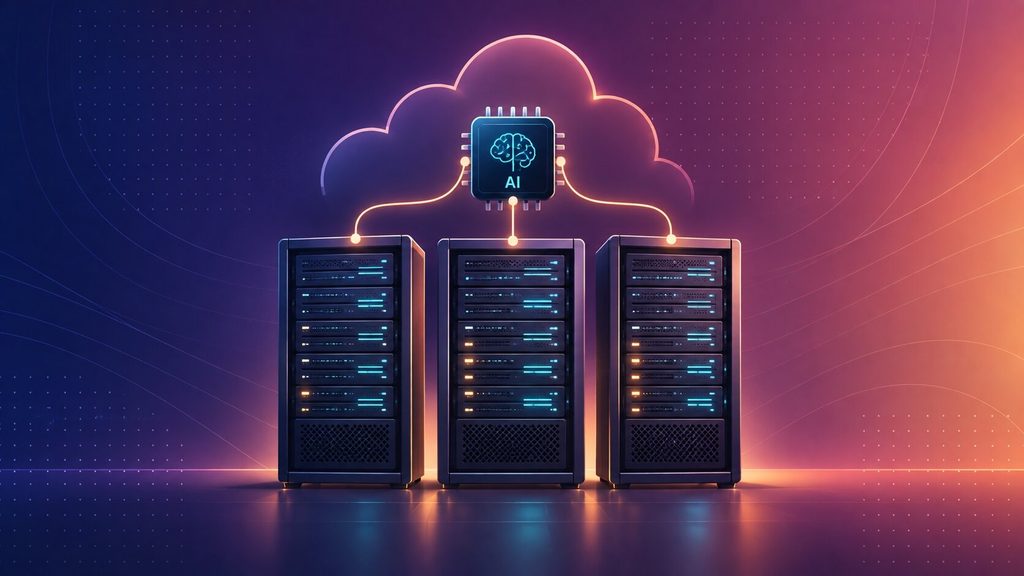
The next phase of cloud computing is no longer primarily about storage or servers; instead, it is about which provider can run AI workloads fastest, at the lowest cost, and closest to the data that feeds them. That shifts how new systems get designed, not just where they run, so cloud development now starts with the workload instead of the server.
AI Infrastructure Becomes the New Baseline
AI is no longer something cloud providers have to support; it is the main reason so much cloud infrastructure is built from the start. For the teams building on top of it, that changes AI product development as much as it changes the hosting bill.
Gartner predicts that global IT spending will amount to $6.37 trillion in 2026, representing a year-on-year increase of 14.2 percent. The fastest-growing areas are data centre systems and infrastructure as a service, a trend driven by demand for AI infrastructure. Regarding usage, Flexera’s 2026 report showed that the adoption of generative AI within public cloud services rose from 50% to 58% of respondents over the course of one year.
The financial case backs this up. McKinsey’s research on cloud value estimates that cloud could generate roughly $3 trillion in EBITDA by 2030, with potential uplift averaging 20 to 30% over baseline across sectors, varying significantly by industry.
Sovereign Cloud, Edge, and Sustainability Pressures
It isn’t all about AI in the cloud trends of 2026; data sovereignty, where governments and regulated industries want data to remain physically within a country’s borders, is becoming a real design constraint, not just a compliance footnote.
Gartner expects global spending on sovereign cloud infrastructure to reach $80 billion by 2026, which represents an increase of 35.6% compared to 2025, largely due to geopolitical tensions and the desire for technological independence.
If you add edge computing, this involves carrying out processing much nearer to the point where the data is generated, and taking into account the increasing pressure on providers to take account of the energy that is actually used in training AI, you end up with a cloud environment that seems less like ‘one huge data centre in the sky’ and more like a dispersed, regulated and energy-aware network. The evolution of cloud computing hasn’t ended; it’s accelerating.
A glance at the 70-year evolution of cloud computing: then and now
| 1950s-1990s (Then) | 2020s (Now) | |
| Setup time | Weeks to months, physical hardware | Minutes, a few clicks |
| Cost model | Massive upfront capital expense | Pay-as-you-go operating expense |
| Who manages hardware | Your own IT team | The cloud provider |
| Scaling | Buy more physical machines | Automatic, on demand |
| Primary workload | Batch processing, internal reporting | Real-time apps, AI training and inference |
The line drawn across each row is that cloud computing involves exchanging ownership for access. This exchange began with time-sharing a mainframe in the 1950s and is the same deal you enter into today when you rent GPU capacity hourly rather than purchasing it.
How Boomdevs Solves Legacy Modernization for the AI-Native Cloud Era
If your infrastructure still resembles the “then” column more than the “now” column, it’s not because you’ve made a deliberate choice. The majority of legacy systems were constructed in a world when elastic scaling, containers, and AI workloads had not yet come into existence, and getting them unlinked requires genuine engineering judgment, not just the use of a simple lift-and-shift migration script.
For more than ten years, Boomdevs has built and updated software for both startups and enterprises, with legacy application modernization as one of its principal services, alongside custom software development and AI integration. This kind of work generally begins the same way: you first have to understand what your current system depends on before making changes, so when you modernize it, the parts that are working will not be disrupted.
If, in the coming decade, cloud computing is truly going to be about AI-native infrastructure, then the systems that cannot operate on it are the ones that deserve to be examined first.
Frequently Asked Questions
When did cloud computing actually start?
The origins of cloud computing go back to the 1950s, when mainframe time-sharing enabled multiple users to share a single costly computer. The technology and terminology we now call “cloud computing” gradually developed between the 1990s and 2006, when Amazon Web Services introduced the first mainstream Infrastructure as a Service offering.
Who invented cloud computing?
Cloud computing wasn’t invented by any one individual or company; it emerged from John McCarthy’s idea of utility computing in the early 1960s, the networking principles established by ARPANET, IBM’s work on virtualization in the 1970s, and Amazon’s decision to rent out spare server capacity from 2006 onward.
What’s the difference between cloud computing and virtualization?
Virtualization is the technology that allows a single physical machine to function as multiple separate, isolated environments. Cloud computing is a more general service based on virtualization: it provides on-demand, self-service access to computing resources over the internet, with charges usually based on usage. Modern cloud computing is impossible without virtualization, but virtualization by itself does not constitute cloud computing.
What are IaaS, PaaS, and SaaS?
The three primary cloud service models can be identified according to the extent of self-management involved. With IaaS (for example, Amazon EC2), you get access to bare infrastructure and are responsible for all the components above that. In PaaS (such as Google App Engine), the provider manages the infrastructure and runtime; you manage only the application and the data. In SaaS (for instance, Salesforce), the provider manages the whole stack, and all you do is use the software.
What is the future of cloud computing after AI?
AI infrastructure is driving the current wave of cloud investment, but sovereign cloud requirements, edge computing, and energy-consumption pressure are shaping the next few years just as much. Expect the evolution of cloud computing to keep moving toward distributed, regulated infrastructure, rather than settling into a single, static architecture.