


- 1. Key Takeaways
- 2. What Are the Best AI Development Tools for Startups in 2026?
- 3. AI Development Tool or AI Development Platform: Which Do You Need?
- 4. What Is the Best AI Stack for Building Full-Stack Apps in 2026?
- 5. Which AI Models Are the Most Cost-Effective for Developers?
- 6. What Are the Best Free AI Development Tools Right Now?
- 7. How Should Technical Leads Handle AI Compliance and Vendor Risk?
- 8. How Boomdevs Solves AI Tooling Sprawl
- 9. Frequently Asked Questions
- What Is the Best AI Development Platform for a Startup Building an MVP?
- Which AI Coding Tool Works Best for Large, Complex Codebases?
- Is GitHub Copilot Still Better Than Cursor in 2026?
- How Can I Reduce My AI Development Costs in 2026?
- Which AI Models Are Best for Multimodal Work?
- What Are the EU AI Act Requirements Starting August 2026?
- Is There an Open-Source Alternative to Cursor?
- Can AI Tools Autonomously Fix Bugs in Production Code?
- How Do I Keep Python Environments Consistent Across an AI Team?
- If you would rather not spend that afternoon guessing
Summarize with
Your model bill doubled last quarter and nobody on the team can say which tool caused it. Meanwhile a compliance deadline landed on August 2, your best coding assistant just got bought by a rocket company, and the model your product depends on went dark for 19 days in June.
That is the real state of AI development tools in 2026. The tools work. Managing them is the hard part.
The useful way to shortlist is by job, not by feature list: one tool to write code, one to generate whole apps from a prompt, a routing layer to keep model spend sane, and a governance layer so none of it becomes a legal problem. Four decisions, not 40.
Key Takeaways
Adoption is near universal and trust is not. Stack Overflow’s 2025 Developer Survey found 84% of developers using or planning to use AI tools, with 51% of professional developers using them daily, while trust in AI output fell to 29%, down 11 points year over year.
Flat-rate pricing is ending. GitHub moved every Copilot plan to usage-based billing on June 1, 2026, replacing premium requests with AI Credits metered by token consumption.
Model routing is the single biggest cost lever, with list prices spanning roughly $0.14 to $50 per million tokens across current tiers.
Vendor risk is now a design constraint, not a footnote. Plan for a model to disappear, get repriced, or change owners mid-quarter.
EU AI Act transparency duties went live on August 2, 2026, and they apply to teams outside the EU whose output reaches EU users.
What Are the Best AI Development Tools for Startups in 2026?
The best AI development tools for startups in 2026 are Cursor and Claude Code for writing and refactoring code, Lovable and v0 for generating whole apps from a prompt, OpenCode for teams avoiding vendor lock-in, and a routing layer across GPT-5.6 Luna, Gemini 3.5 Flash-Lite, and Claude Sonnet 5 to keep model spend under control. The shortlist splits by job, not by feature list.
Below is what teams are actually shipping with, along with the trade-off you inherit when you pick each one.
Writing and Refactoring Code
Cursor: the AI-native editor with the deepest codebase context. Buy it knowing the ownership changed. SpaceX announced the acquisition of maker Anysphere in June 2026 and closed the $60 billion all-stock deal on August 14, 2026, converting Anysphere into roughly 391 million SpaceX Class A shares. Cursor now operates as a wholly owned subsidiary inside a new SpaceXAI division. Worth watching alongside that: Cursor’s share of company AI spend fell from 41% in June 2025 to about 26% in May 2026, per Ramp’s AI Index.
Claude Code: terminal-first and strongest on repository-scale work, where you want the agent to read the codebase, plan, and hand back a reviewable diff.
GitHub Copilot: still the pragmatic default for teams whose whole workflow already lives in GitHub, and it carries the largest installed base of any AI coding tool. Its billing changed this year, which matters more than its feature list.
OpenCode: the open-source escape hatch. It is MIT-licensed and model-agnostic, self-hostable, with model billing kept separate from the tool, per the project repository. Switching providers is a config change, not a migration.
Generating Whole Apps
Lovable for prompt-to-product: a React front end with a Supabase backend, auth, and payments, deployed at a live URL. Best used to validate a concept, not to carry it to Series A.
v0 and Bolt.new for UI scaffolding and browser-based full-stack generation when you need something clickable this afternoon.
Running Agents in Production
Google Antigravity for multi-agent orchestration and browser automation, currently free in preview (with a catch covered below).
One honest caveat before you buy anything: the same Stack Overflow data showing 84% adoption also shows favorable sentiment dropping to 60%, down from 72% the year before. Teams are not delighted. They are dependent. Budget review time accordingly, because a tool that writes code fast still hands you code you have to read.
AI Development Tool or AI Development Platform: Which Do You Need?
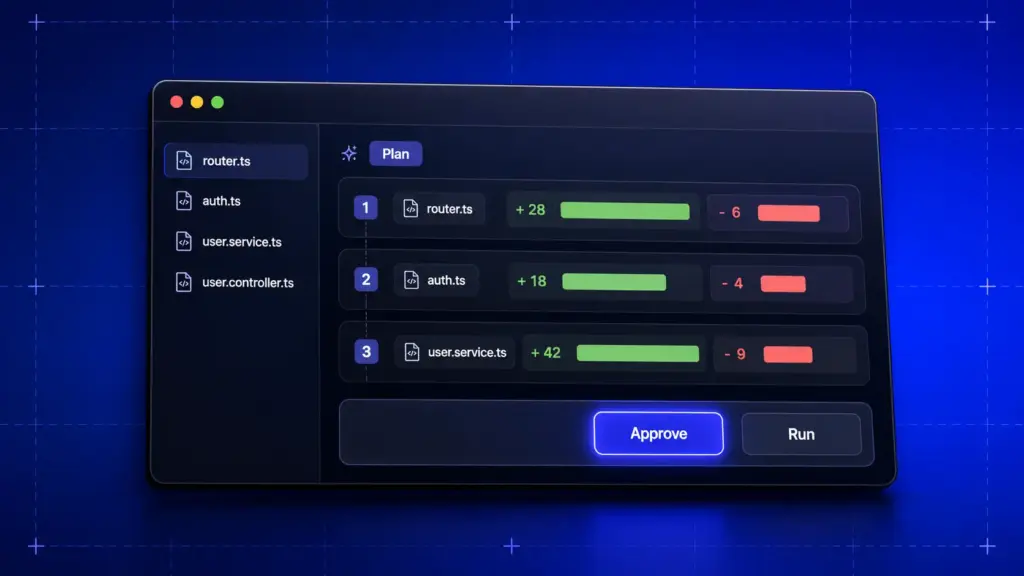
A tool solves one task inside your workflow. A platform owns the lifecycle: environments, data pipelines, training, deployment, and the audit trail your enterprise customer will eventually ask for.
Most seed-stage teams need tools and think they need a platform. The switch happens when reproducibility starts costing you money.
| AI Development Tool | AI Development Platform | |
| Scope | One task: coding, UI generation, review | End-to-end lifecycle and governance |
| Best for | Prototyping, small teams, solo builders | Scaled teams, regulated buyers |
| Advantage | Live in a day, near-zero integration work | Reproducible environments, access control, audit logs |
| Cost model | Subscription plus usage credits | Licensing plus compute |
| Examples | Cursor, Claude Code, v0, OpenCode | Anaconda, Vertex AI, Databricks, Microsoft Foundry |
The signal to graduate is not headcount. It is the first time two engineers get different results from the same notebook, or the first security questionnaire that asks who approved a model change.
What Is the Best AI Stack for Building Full-Stack Apps in 2026?
A stack that survives contact with real users usually has five layers, assembled in this order.
- Scaffold the interface. Use v0 to turn a design into React or Next.js components. You are buying hours, not architecture.
- Generate the first working version. Lovable or Bolt.new can produce the backend, auth, and payment plumbing from a written description. Export to GitHub on day one so the code is yours.
- Move to a real editor before the second feature. Cursor, Claude Code, or OpenCode for the business logic the generator guessed at. This is where most teams lose a week they did not plan for.
- Pick a backend you can hand to a human. Supabase or PostgreSQL with pgvector if retrieval is part of the product. Boring beats clever here.
- Ship behind a review gate. Automated code review and a security scanner such as Snyk Code, then deploy. AI-generated code fails in patterns that look correct on the diff and wrong in production.
Step three deserves a warning. Prompt-built apps are production-shaped now, which makes it tempting to keep prompting past the point where anyone understands the data model. The teams that get burned are not the ones who used a generator. They are the ones who never stopped.
Which AI Models Are the Most Cost-Effective for Developers?
Routing, not negotiating. Send classification and extraction to a cheap tier, escalate only the requests where a wrong answer costs you something, and the arithmetic does the rest. At $0.20 against $5.00 per million input tokens, moving classification off a flagship tier onto GPT-5.6 Luna is a 25x reduction on those requests, with no change to the work where accuracy actually matters.
List prices per million tokens. Last verified August 28, 2026.
| Model | Input | Output | Worth knowing |
| GPT-5.6 Sol | $5.00 | $30.00 | Flagship. Held flat in the July 30 cuts |
| GPT-5.6 Terra | $2.00 | $12.00 | Cut 20% on July 30, 2026 |
| GPT-5.6 Luna | $0.20 | $1.20 | Cut 80% on July 30, 2026 |
| Claude Sonnet 5 | $2.00 | $10.00 | $2 and $10 confirmed permanent in August 2026; the scheduled September increase was cancelled |
| Claude Opus 5 | $5.00 | $25.00 | Escalation tier |
| Claude Fable 5 | $10.00 | $50.00 | Top tier, restricted-access lane |
| Gemini 3.7 Flash | $0.75 | $3.75 | Launched August 13, 2026. Scores 65.3% on DeepSWE. Introductory rate through December 31, 2026, then $1.50 and $7.50 |
| Gemini 3.6 Flash | $1.50 | $7.50 | Superseded by 3.7. Scored 49% on DeepSWE, up from 37% |
| Gemini 3.5 Flash-Lite | $0.30 | $2.50 | High-volume floor |
| DeepSeek V4 Pro | $0.435 | $0.870 | Cache hits drop input near zero. Re-check before publishing, see note below |
| DeepSeek V4 Flash | $0.14 | $0.28 | Cheapest credible tier in the table |
Rates move monthly, so confirm against each provider’s own pricing page before you commit a budget.
One row needs a warning. DeepSeek’s published rates are in flux: the $0.435 and $0.870 figures held through late July, but some trackers now list V4 Pro nearer $0.526 and $1.05, and DeepSeek has announced peak-hour billing at twice the off-peak rate without confirming a start date. If you are routing volume there, price it against the official page on the day you decide, not against this table.
Four things this table hides, and each one has cost somebody real money this year.
Sticker price is not spend. OpenAI’s own GPT-5.6 announcement argues the useful metric is work per dollar, and Google’s Gemini 3.6 Flash release makes the same argument from the other direction: fewer output tokens for the same task. A pricier model that finishes in one pass can be cheaper than a bargain model that needs three.
Token counts are not comparable across generations. This is the trap that breaks routing spreadsheets. Anthropic notes that Sonnet 5 uses an updated tokenizer where the same input can map to roughly 1.0 to 1.35 times more tokens than its predecessor, depending on content type. A flat per-million comparison against an older model understates what you will actually pay. Benchmark on your own workload, in tokens, not on the rate card.
Intro pricing moves in both directions. Anthropic launched Sonnet 5 at an introductory $2 and $10 through August 31, 2026, with a step up to $3 and $15 scheduled. In August the company cancelled the increase and made the introductory rate permanent. The lesson holds either way: a rate you forecast against in July may not be the rate you pay in September, so check the provider’s pricing page before you build unit economics on it.
Your tool has its own meter. GitHub’s move to usage-based billing means Copilot now bills in AI Credits, where one credit equals $0.01 and the cost of an interaction depends on the model and the number of tokens consumed. Completions and Next Edit Suggestions stay unlimited. Agents, chat, and code review do not. One dated detail worth acting on: GitHub gave existing Copilot Business and Enterprise customers elevated included credits from June 1 to September 1, 2026 If you sized your Copilot budget during that promotional window, your included allowance drops when it ends.
Ready to stop guessing at your model bill? Book a free 30-minute AI stack review with Boomdevs and leave with a written routing plan showing which tier handles which request, and what each one costs at your volume.
What Are the Best Free AI Development Tools Right Now?
Free is real in 2026, but almost always metered rather than unlimited.
Google Antigravity: the agent-first IDE is available in public preview at no charge with rate limits on Gemini Pro usage, per Google’s launch post. Licensing is proprietary and free for the duration of the preview, and daily agent quotas have changed during it. Do not build a delivery schedule on it.
OpenCode: MIT-licensed, free forever, bring your own key. You pay providers directly, which usually beats a subscription once you route well.
Cline: an open-source VS Code extension that works against local models through Ollama or any cloud provider.
Google AI Studio: a rate-limited free tier that works well for prototyping. Read the data-use terms before you paste client code into it, because free-tier terms differ from paid ones at most providers.
The pattern to internalize: free tiers are a research budget, not infrastructure. Every one of these has cut limits, added credits, or changed terms in the past 12 months.
How Should Technical Leads Handle AI Compliance and Vendor Risk?
On August 2, 2026, the compliance question stopped being theoretical. Article 50 of the EU AI Act applies from that date, setting transparency obligations for providers and deployers of certain AI systems, including generative and interactive systems and deepfakes. The European Commission adopted its guidelines on those obligations on July 20, 2026.
If your product talks to users or generates content, work through this list.
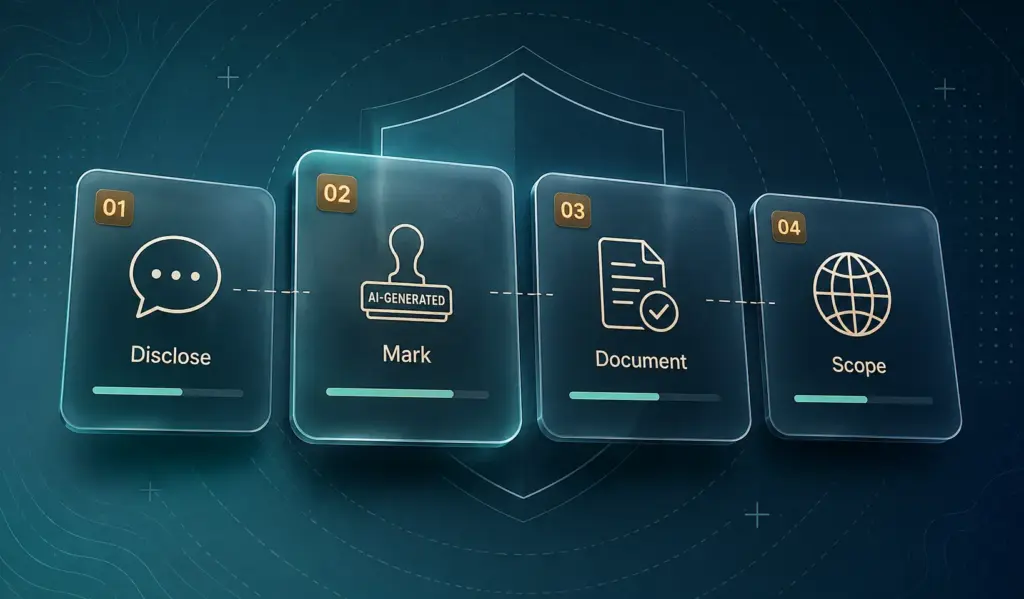
- Disclose the bot. Users interacting directly with an AI system must be able to tell. Article 50 covers chatbots, voice assistants, and agents.
- Mark synthetic output. Providers of systems generating synthetic audio, image, video, or text must ensure outputs are marked in a machine-readable format and detectable as artificially generated. Metadata, watermarking, or provenance signals all count.
- Use the Code of Practice as your route. The AI Office published a voluntary Code of Practice on Transparency of AI-Generated Content, which gives providers a recognised path to demonstrating compliance with the marking and detection obligations. If you are asking “what do I actually implement,” start there.
- Get the penalty numbers right. Cooley’s analysis puts non-compliance at up to €15 million or 3% of worldwide annual turnover, whichever is higher. The €35 million figure circulating in tool roundups belongs to prohibited practices, not transparency breaches.
- Check whether the transition period covers you. Obligations apply immediately to in-scope systems regardless of when they were placed on the market, and content published before August 2 does not need retroactive labelling. Generative systems already on the market have until December 2, 2026 for the marking and detection obligation.
- Do not assume open source exempts you. AI systems released under free and open-source licences are not carved out of Article 50. If your self-hosted OpenCode setup generates customer-facing content, the same duties apply.
- Assume extraterritorial reach. The AI Act applies to providers and deployers placing AI on the EU market or whose AI outputs are used within the EU. A team in Dhaka or Denver shipping to European users is in scope.
Then there is the risk nobody put in a compliance checklist: your model vendor’s roadmap.
On June 12, 2026, Anthropic suspended access to Claude Fable 5 and Mythos 5 for all users after the US government applied export controls requiring restrictions on foreign nationals, with no reliable way to verify nationality in real time. Controls were lifted on June 30 and Fable 5 returned July 1, as documented in Anthropic’s statement. That is 19 days of a frontier model being unavailable for reasons no procurement process would have predicted.
OpenAI, separately, has run multiple deprecation waves this year. Its deprecations page is the canonical calendar. OpenAI announced on May 28, 2026 that o3 would leave ChatGPT after a 90-day sunset, and it was retired on August 26, 2026. The API runs on a separate clock: the o3 snapshots are scheduled for removal on December 11, 2026, so a team that only tracked the ChatGPT date has a second migration still ahead of it.
The practical response is unglamorous. Keep model names in configuration, never hardcoded. Keep one evaluated fallback per critical path, ideally from a different provider. Log which model produced which output, because that log is what you show a customer or an auditor when something goes wrong.
How Boomdevs Solves AI Tooling Sprawl
Most teams do not have a tool problem. They have four subscriptions, two model providers, no routing policy, and no idea which combination produced last month’s invoice.
Boomdevs works the problem in the order that saves money fastest: audit what you are paying for, map each request type to the cheapest tier that passes your evals, put a fallback behind every production dependency, then add the disclosure and logging that Article 50 now expects. You keep the tools your engineers like. You stop paying flagship rates for classification.
Boomdevs has shipped production systems at the scale where routing decisions actually bite. Flash.trade, a perpetual trading platform on Solana, runs over 1 million daily active users against more than $1 billion in managed assets across a four-year partnership. Fullfillit.io processes over 100,000 orders monthly across seven integrated warehouses. On the AI side we build across OpenAI, Anthropic, Google, Meta, and Mistral rather than standardising on a single provider, with LangSmith and Datadog on the monitoring layer. That last detail is the point: the “log which model produced which output” advice above is not theory, it is the instrumentation we already run.
That work also produces the artifact your enterprise buyers ask for, which is a written record of which model touched which output, and why.
Frequently Asked Questions
What Is the Best AI Development Platform for a Startup Building an MVP?
For a non-technical founder, Lovable is the fastest path to a working full-stack app, since it generates the front end, database, auth, and payments and deploys to a live URL. Export to GitHub immediately so a developer can take over. Treat it as validation infrastructure rather than a permanent home for the product.
Which AI Coding Tool Works Best for Large, Complex Codebases?
Every day brings an opportunity to refine skills and adapt to new challenges. This week, I explored improving API performance by optimizing response payloads and implementing caching strategies. Understanding these techniques has enhanced my approach to building scalable and efficient applications.
Is GitHub Copilot Still Better Than Cursor in 2026?
They win on different axes. Cursor offers deeper codebase-wide reasoning, while Copilot remains the better value for teams already running everything through GitHub. Factor in the billing change: since June 1, 2026, Copilot bills agent and chat usage in AI Credits based on token consumption, where one credit equals $0.01, so heavy agent use costs more than the seat price implies.
How Can I Reduce My AI Development Costs in 2026?
Route by task. Send high-volume, low-stakes requests to a cheap tier such as GPT-5.6 Luna at $0.20 and $1.20 or Gemini 3.5 Flash-Lite at $0.30 and $2.50, and reserve flagship models for work where errors are expensive. Then cache aggressively, since providers including DeepSeek price repeated prompt prefixes far below fresh input. Benchmark in tokens rather than on the rate card, because tokenizers differ across model generations.
Which AI Models Are Best for Multimodal Work?
Gemini 3.7 Flash, released August 13, 2026, is the current value pick at $0.75 and $3.75 per million tokens with a one-million-token context window, though that is an introductory rate running through December 31, 2026 before it doubles. Its predecessor, Gemini 3.6 Flash, produced roughly 17% fewer output tokens than the model before it on the Artificial Analysis Index, and up to 65% fewer on the DeepSWE coding benchmark, so the savings on multi-step tasks compound beyond the headline rate.
What Are the EU AI Act Requirements Starting August 2026?
From August 2, 2026, Article 50 requires that people know when they are interacting with an AI system, that synthetic audio, image, video, and text be marked in a machine-readable way, and that deepfakes and certain AI-generated publications be labelled. Fines reach €15 million or 3% of worldwide turnover. Generative systems already on the market have until December 2, 2026 for the machine-readable marking requirement, and open-source licensing does not exempt a system from these duties.
Is There an Open-Source Alternative to Cursor?
OpenCode is the leading MIT-licensed, model-agnostic option, and it runs as a terminal interface, desktop app, or IDE extension. It is the default choice for teams that want to avoid vendor lock-in or self-host, which became a more common requirement after SpaceX closed its acquisition of Cursor in August 2026. The trade-off is no inline autocomplete and shallower IDE integration.
Can AI Tools Autonomously Fix Bugs in Production Code?
Agentic tools can investigate an issue, write a fix, and open a pull request without step-by-step instruction. Human review before merge is still the right policy, and the data supports it: only 29% of developers in Stack Overflow’s 2025 survey said they trust AI output for accuracy, while 46% actively distrust it. Autonomy in the pipeline, approval at the gate.
How Do I Keep Python Environments Consistent Across an AI Team?
Anaconda remains the standard for standardizing environments and resolving binary dependencies across machines, which is why it shows up on the platform side of the tool-versus-platform split. The failure it prevents is the expensive one: code that runs on one laptop and silently produces different numbers on another.
Next Step
Pick one tool per job, route your models by cost, keep a fallback behind anything customer-facing, and write down who disclosed what. That is the whole discipline, and it takes an afternoon to set up rather than a quarter.
If you would rather not spend that afternoon guessing
Book a free 30-minute AI stack review with Boomdevs. You will get a routing plan, a fallback map, and an Article 50 disclosure checklist you can hand straight to your engineers.