


- 1. What Is the AI Product Development Process?
- 2. What Are the 9 Steps to Build an AI Product?
- 3. Step 1: How Do You Frame a Business Problem for AI?
- 4. Step 2: How Do You Know If Your Data Is Ready for AI?
- 5. Step 3: Should You Use an API, RAG, or Fine-Tuning?
- 6. Step 4: What Is a Proof of Value in AI?
- 7. Step 5: How Do You Build an AI MVP That Scales?
- 8. Step 6: How Do You Test an AI Product for Reliability?
- 9. Step 7: What Does Production Integration Actually Require?
- 10. Step 8: How Do You Prevent Model Drift and Govern AI in Production?
- 11. Step 9: How Do You Build a Data Flywheel and a Real Moat?
- 12. How Long Does the AI Product Development Process Take?
- 13. Should You Build In-House or Hire an AI Product Development Company?
- 14. How Boomdevs Fixes the Demo-to-Production Gap
- 15. How Much Does AI Product Development Cost in 2026?
- 16. How Do You Control AI Inference Costs and Protect Margin?
- 17. What Compliance Rules Apply to AI Products in 2026?
- 18. Frequently Asked Questions About AI Product Development
- How Long Does the AI Product Development Lifecycle Take?
- Why Do So Many AI Projects Fail?
- What Is the Difference Between a Proof of Concept and a Proof of Value?
- Do You Need an ML Engineer to Build an AI MVP?
- What Is Model Drift and How Do You Fix It?
- Can You Build an AI Product With No Code?
- How Do You Differentiate From an LLM Wrapper?
- What Are the Main Risks of Running AI in Production?
- Does the EU AI Act Affect a Small Startup?
- 19. Where to Start
Summarize with
Your demo works. The board liked it, a few pilot users said nice things, and now someone asks when it ships. That is the moment most AI products stall.
The AI product development process exists to close that gap between a demo and a product real users trust. This guide covers AI product development for software, not using AI to design physical goods.
You get the nine stages of the AI product development lifecycle, how long each takes, who owns it, and what it costs.
Key Takeaways
- The AI product development process runs in nine stages: problem framing, data readiness, approach selection, proof of value, MVP, reliability testing, production integration, MLOps and governance, then the data flywheel.
- Failure is the default, not the exception. More than 80% of AI projects fail per RAND, and only 39% of organizations report any enterprise-level EBIT impact from AI per McKinsey’s 2025 State of AI survey.
- Skip fine-tuning at the start. Prompt engineering, then retrieval, then fine-tuning only after the first two plateau, is the sequence that wastes the least money.
- Budget for inference as a cost of goods sold, not a rounding error. ICONIQ’s 2026 State of AI report projects AI product gross margins of 53% this year, well under the 75% to 85% traditional SaaS baseline.
- Plan for four to eight months from problem definition to stable production. The MVP alone usually takes eight to 16 weeks.
- The EU’s high-risk AI deadline moved to December 2, 2027, but most Article 50 transparency rules landed on August 2, 2026. Both dates belong on your roadmap.
What Is the AI Product Development Process?
The AI product development process is the loop of framing a business problem, validating your data, choosing an architecture, and building the smallest useful version. You then measure it against a business metric and feed live results into the next round.
The AI product development process differs from traditional software in one structural way. You cannot fully specify the system’s behavior in advance, so you improve it with evidence from real use.
That is also why so many projects die. RAND interviewed 65 experienced data scientists and engineers and reported that, by some estimates, more than 80% of AI projects fail. That is roughly twice the failure rate of IT projects without AI.
The models were rarely the issue. Fuzzy problem definitions, unready data, and nobody owning what happens after launch were the killers.
Teams that treat the AI product development lifecycle as a waterfall with a launch date at the end tend to find their data problems in week nine, when the budget is half gone. The nine stages below are a sequence, but the arrows point both ways:
- Reliability testing often sends you back to your retrieval design.
- Live usage sends you back to your problem definition.
- Cost reviews send you back to your model choice.
If you plan for those loops from day one, they stop feeling like setbacks.
How AI Product Development Differs From Traditional Software
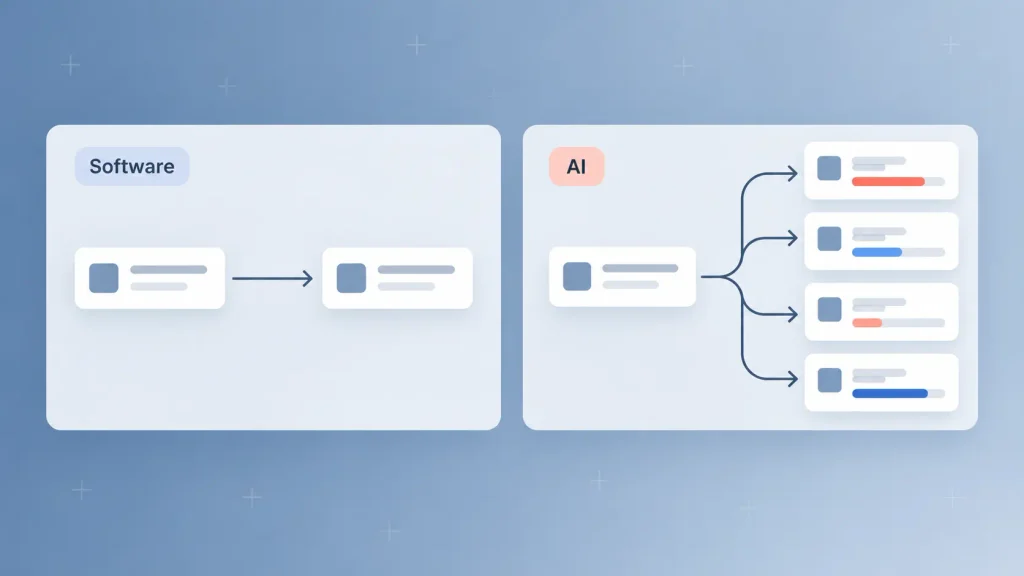
A payment form does the same thing on every request. A model produces a range of plausible answers, so “correct” becomes a judgment call you have to define and measure.
Here is how that plays out across the build:
| Aspect | Traditional Software | AI Product |
| Behavior | Same output for the same input | A range of plausible outputs |
| Main risk | Bugs in the code | Unready data and quality drift |
| Testing | Pass or fail against a spec | Scored against an evaluation set |
| Cost after launch | Mostly hosting, fairly flat | Inference on every request |
| Done means | Shipped and stable | Shipped, monitored, still improving |
The short version: traditional software is specified up front, while an AI product is measured into shape. Your plan, budget, and team should reflect that.
What Are the 9 Steps to Build an AI Product?
Each stage of the AI product development lifecycle has its own exit criteria. You will save money if you hold yourself to one rule: do not advance until you can state yours.
- Problem framing and validation. Pin down the specific decision or workflow where inference beats rules, and define the metric that proves it.
- Data readiness assessment. Inventory what you have, find the gaps, and confirm you hold the legal right to use it.
- Approach selection. Choose between a managed API, retrieval-augmented generation (RAG), or fine-tuning, based on time to market and how much defensibility you need.
- Proof of value. Spend two to four weeks proving the business case on real data, not the technical possibility.
- MVP development. Ship the smallest useful version with an interface, an evaluation harness, and a feedback loop.
- Reliability and safety testing. Benchmark accuracy, probe for failure modes, and red-team the system before users find the holes.
- Production integration. Embed the model in a real workflow with proper serving, fallbacks, and cost controls.
- Governance and MLOps. Monitor for drift, track quality in production, and automate retraining.
- Continuous iteration and the data flywheel. Turn live usage into training signal that competitors cannot copy.
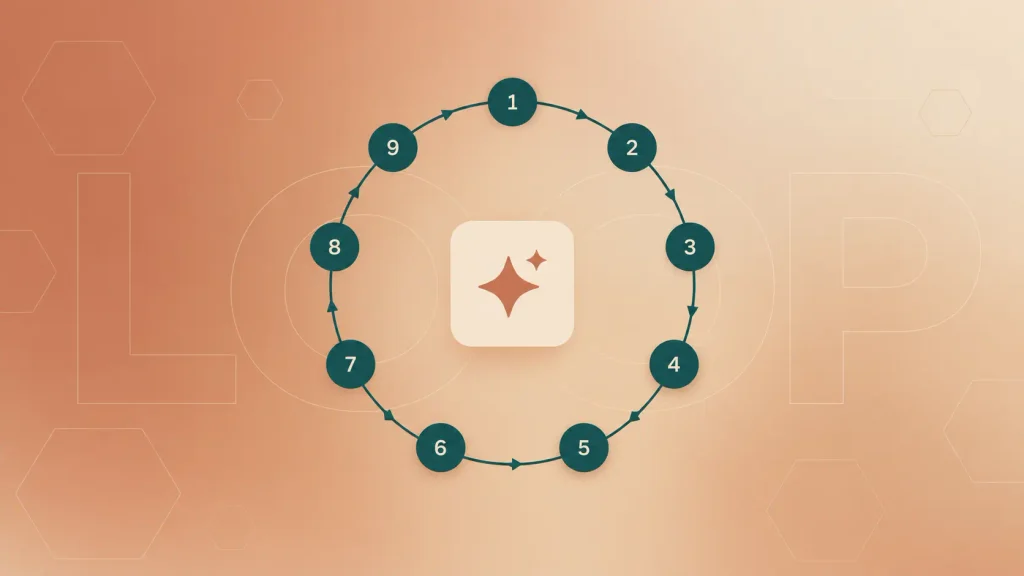
Each section below covers what to do at that stage and, more usefully, what tends to go wrong.
Step 1: How Do You Frame a Business Problem for AI?
In the AI product development process, good framing names one decision, one user, and one number that has to move. “Reduce time to first response on billing tickets from 14 hours to under two” is a frame. “Add AI to support” is a wish.
The test we apply on Boomdevs feasibility audits is simple. Could a competent human do this task in under two minutes with no context? If yes, you probably want rules or a lookup, not a model.
AI earns its cost on tasks that are all three of these at once:
- Repetitive: the same kind of decision, many times a day.
- Judgment-heavy: a rule would break on the edge cases.
- Data-rich: you have past examples of the right answer.
RAND’s researchers put leadership-driven failure at the top of their list, and misframed problems sit right at the center of it. Models get optimized for the wrong metric, or they solve something real that does not fit the workflow anyone uses.
I’d suggest writing down the baseline before you build. If you cannot state today’s number, you will never prove the AI improved anything, and that is exactly the conversation that kills projects at the first budget review.
Step 2: How Do You Know If Your Data Is Ready for AI?
Your data is ready when you can point to enough correct, recent, legally usable examples of the thing you want the model to do. Not “we have a lot of data.” Specific examples, with labels or ground truth you trust.
Data problems were the second most common failure cause in RAND’s interviews. One participant put it bluntly: most of AI is the unglamorous work of data engineering, and mistakes there poison everything downstream.
So budget for it. In most AI product development, building a clean data pipeline takes more of the schedule than the model work does.
A practical audit covers four things:
- Inventory. What lives in your CRM, transaction logs, support tickets, and documents, and which systems disagree with each other?
- Gaps. Where is history missing, and can synthetic or purchased data fill it honestly?
- Quality. How many critical fields are empty, stale, or duplicated? Set your threshold before you look, so you are not tempted to move it.
- Rights. Do your terms of service and provider contracts permit training or retrieval on this data? It’s worth checking residency rules under GDPR or HIPAA now, not during a security review.
One warning about metric definitions. If sales and finance define “active customer” differently, your model will learn the disagreement and produce answers both teams reject.
Reconcile the definitions first. It is boring, and it saves a rebuild.
Step 3: Should You Use an API, RAG, or Fine-Tuning?
Start with a managed API, add retrieval when the model needs your knowledge, and fine-tune only when the first two have measurably plateaued. That order is not a compromise. It is the cheapest path to a working product.
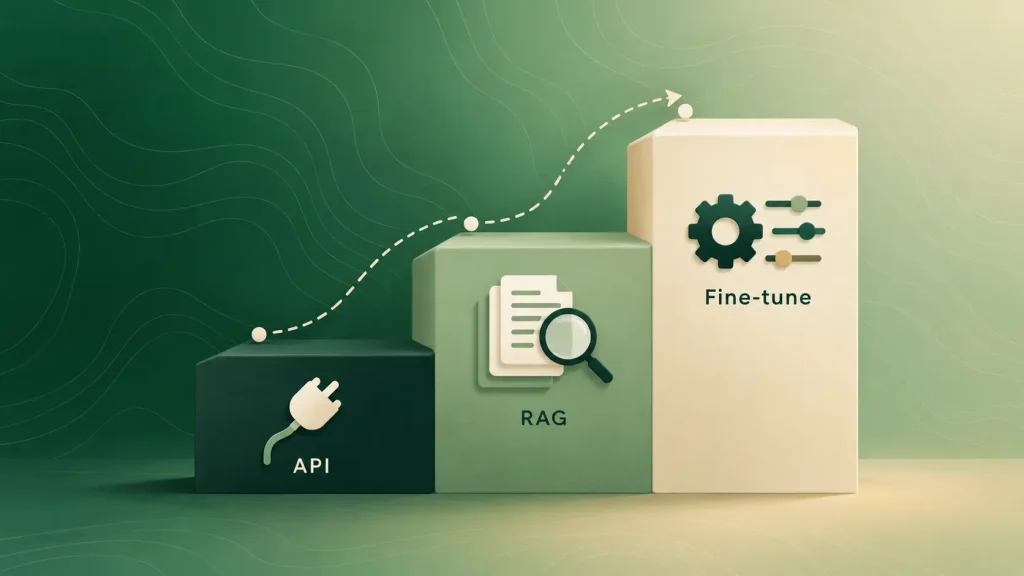
| Factor | Managed API | RAG | Fine-Tuning |
| Best for | Summarizing, classifying, drafting | Answering from your internal knowledge | Narrow tasks needing a set format or behavior |
| Data needed | Almost none | Medium, mostly documents | High, thousands of labeled examples |
| Time to first version | Days to weeks | Four to 10 weeks | 10 to 24 weeks |
| Defensibility | Low | High, your corpus is the moat | Highest, if you keep feeding it |
| Main risk | Thin wrapper, easily copied | Bad retrieval returns wrong context | Expensive fluency in wrong answers |
That last risk deserves a flag. Fine-tuning teaches a model how to respond, not what is true.
Teams routinely spend five figures making a model sound perfectly on-brand while it stays wrong, because the knowledge it needed was sitting in a wiki nobody connected. Custom AI model development makes sense when the behavior itself is the product, not when the facts are.
Hybrid is now the common production pattern in AI product development anyway: retrieval for current facts, a light fine-tune or a well-engineered prompt for consistency, and routing between foundation model sizes for cost. When the wrong pick has already been made, our breakdown of AI product development challenges shows where those builds stall.
More on routing in a moment, because it turns out to be a margin decision as much as an engineering one.
Step 4: What Is a Proof of Value in AI?
A proof of value (PoV) tests the business case, not the technology. It succeeds or fails on a number written in money or minutes, not on a model metric.
A well-run PoV usually looks like this:
- Duration: two to four weeks.
- Data: your real data, not a cleaned-up sample.
- Users: 10 to 30 real users doing their actual job.
- Success metric: money saved, minutes saved, or tickets resolved.
- Kill criterion: the result that would make you stop, agreed before you start.
The distinction from a proof of concept (PoC) matters more than it sounds. “The model achieved 91% accuracy” is a PoC result.
“Agents resolved these tickets 40% faster with no drop in satisfaction” is a PoV result. Only the second one survives a finance review.
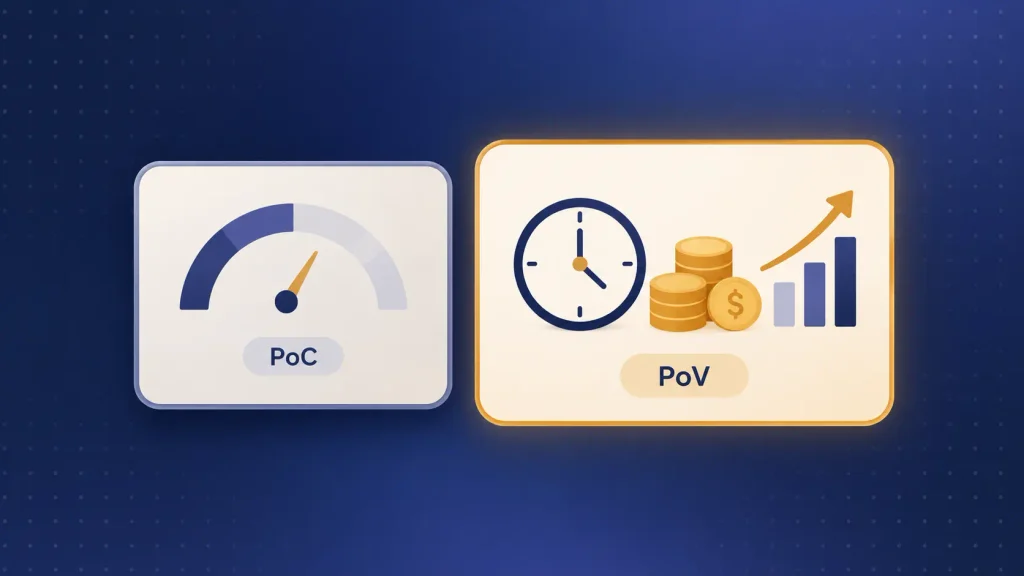
Gartner’s June 2025 forecast that over 40% of agentic AI projects will be canceled by the end of 2027 names three causes: escalating costs, unclear business value, and inadequate risk controls. All three are scoping failures, and all three show up in a properly designed PoV.
That kill criterion is the cheapest insurance in this entire process. Deciding in advance what would make you stop keeps a weak idea from eating a quarter.
Step 5: How Do You Build an AI MVP That Scales?
An AI MVP needs three parts working together: the model pipeline, an interface a real user can operate, and a way to capture whether the output was any good. Ship all three, or you have a demo.
The evaluation harness is the part of the AI product development process teams skip and later regret. Without a systematic way to score outputs, every “is it better now?” conversation turns into opinion.
With one, you can change a prompt, a retrieval strategy, or a model and know within an hour whether you improved things.
Trust is the other half of the build. Users abandon accurate systems that feel opaque, so it’s worth showing your sources, exposing confidence where it is honest, and making correction easy. If you are shaping the interface for that trust, here is the UI/UX design process we follow.
McKinsey’s March 2025 State of AI survey found that fundamental workflow redesign correlated most strongly with EBIT impact. Yet only 21% of organizations using generative AI had redesigned any workflows.
Defining where a human validates model output is part of that redesign. A human-in-the-loop step is not a failure of automation. It is what makes the automation adoptable.
What Goes Into an AI MVP Stack?
You do not need a large platform to ship version one. You need five layers, each doing one job:
- Model access: a managed foundation model API, so you are not running GPUs on day one.
- Retrieval: a vector store or search index over your documents, if the product answers from your knowledge.
- Evaluation: a fixed test set with scoring, run on every change.
- Logging and monitoring: every input, output, cost, and user correction, stored from the first request.
- Interface: the screen, chat, or workflow step where your user acts on the output.
The tool choice inside each layer matters less than having all five. Evaluation and logging are the two that are painful to bolt on later.
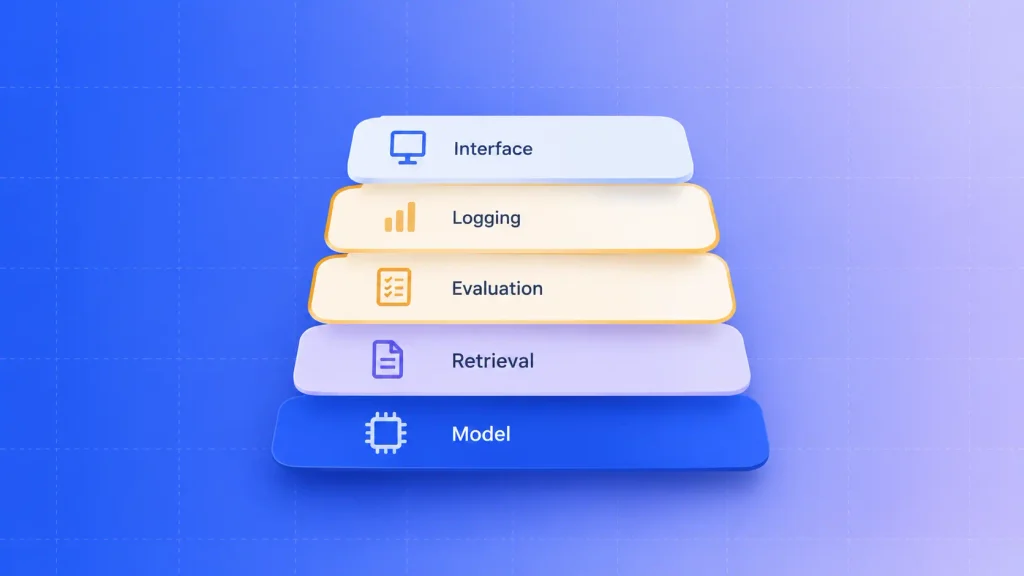
If you want a second pair of eyes on scope, see how our MVP design and product strategy team approaches it. For timing, Netguru’s 2026 cost guide says an MVP on LLM APIs with a light RAG layer can ship in eight to 12 weeks. Compliance-heavy work runs longer.
Step 6: How Do You Test an AI Product for Reliability?
Reliability testing means measuring output quality against a fixed evaluation set, then deliberately attacking the system to find where it breaks. Three layers cover it:
- Performance against your Step 1 metric.
- Edge-case and adversarial testing, so you know how it fails.
- User testing on whether people trust and act on the output.
Inaccuracy is not a theoretical risk in AI product development. It erodes adoption fastest, and it rarely announces itself, because a confidently wrong answer looks exactly like a correct one until someone checks.
Your red-team pass should cover at least these:
- Prompt injection that hijacks the system’s instructions.
- Data leakage across tenants or users.
- Jailbreaks that pull the system outside its intended scope.
- Regulated advice the product is not licensed to give, if you work in finance, health, or law.
I’d suggest building a regression suite from every failure you find. Real reliability comes from never shipping the same bug twice.
Step 7: What Does Production Integration Actually Require?
Production means the model sits inside a workflow people already use, with the scaffolding that keeps it upright. Moving from prototype to production usually means adding these pieces:
- A serving layer that holds up under real load.
- Timeouts and fallbacks for when the model or provider is slow.
- Rate limits so one user or one bug cannot run up your bill.
- Structured logging of inputs and outputs.
- Per-tenant cost attribution, so you know which customers are profitable.
That scaffolding is what AI integration work actually consists of.
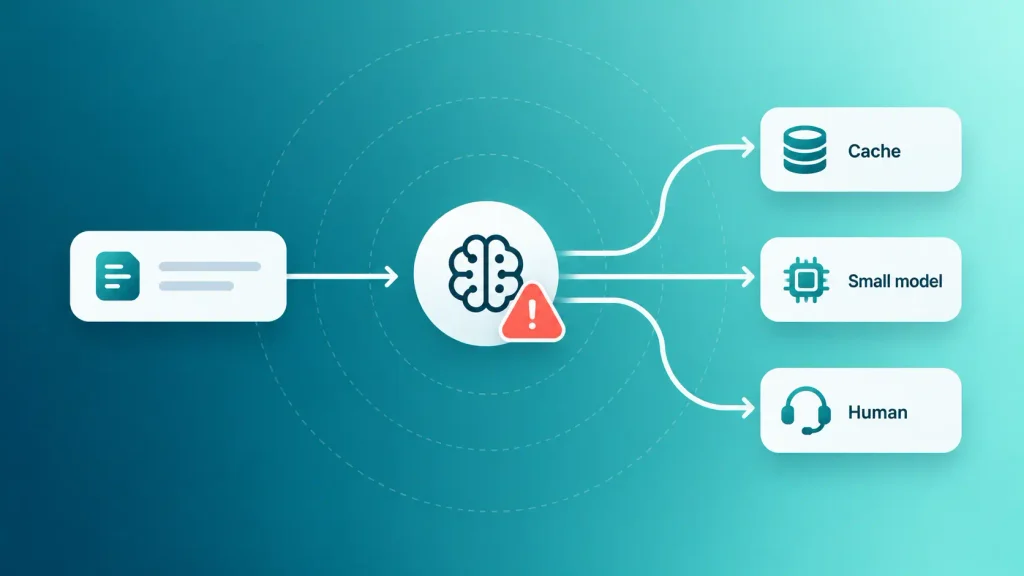
Fallback design is the underrated piece. When the provider degrades or a request times out, what does your user see?
You have a few honest options:
- A cached answer for questions you have seen before.
- A cheaper model that gives a simpler but safe response.
- A graceful message with a human handoff.
Decide deliberately, because the default is an error page and a churned customer.
It also helps to treat launch as a product launch rather than a technical handoff. That means onboarding, documentation, an internal owner, and a support path for when the output is wrong.
Already Building and Worried About Where the Architecture Will Strain?
Book a free 45-minute AI architecture review with Boomdevs and leave with a written risk list covering serving, fallbacks, and cost controls.
Step 8: How Do You Prevent Model Drift and Govern AI in Production?
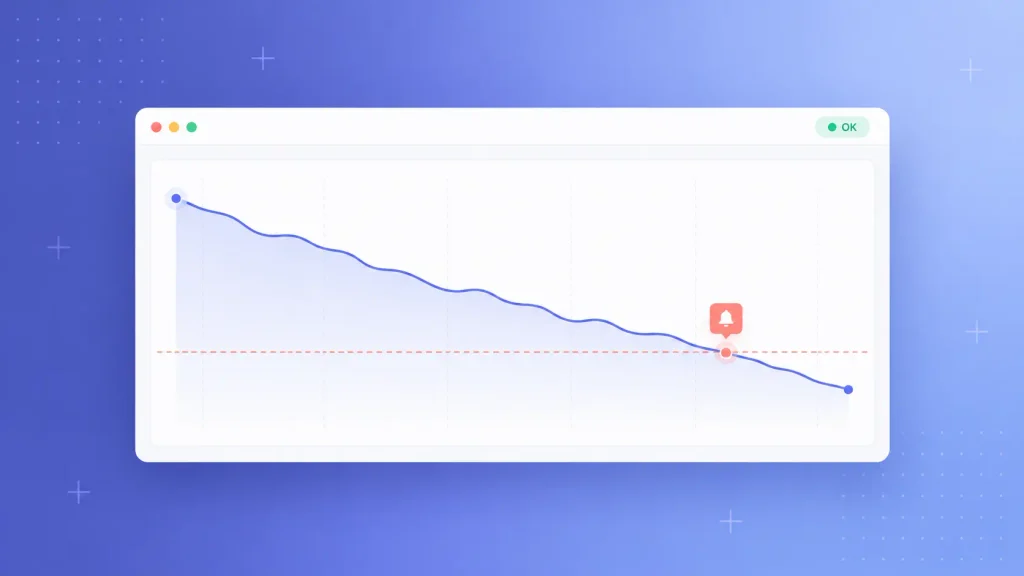
Drift is what happens when the world changes and your model does not. Prices shift, vocabulary shifts, user behavior shifts, and accuracy decays quietly while your dashboards stay green.
You catch it by watching three signals together: input distributions, output distributions, and business outcomes. Any one of them alone will miss something.
This is where the AI product development lifecycle stops being a diagram and becomes a routine. A minimum viable MLOps setup covers four things:
- Versioning for prompts, models, and datasets.
- Automated evaluation on every change.
- Drift alerts on both inputs and quality.
- A documented retraining trigger, so nobody argues about when to act.
Governance is the same discipline pointed at accountability. Who signs off on a model change? Where is the record of what data trained it? How does a user contest a decision?
Answering those questions early is cheaper than answering them during due diligence, and much cheaper than answering them for a regulator.
Step 9: How Do You Build a Data Flywheel and a Real Moat?
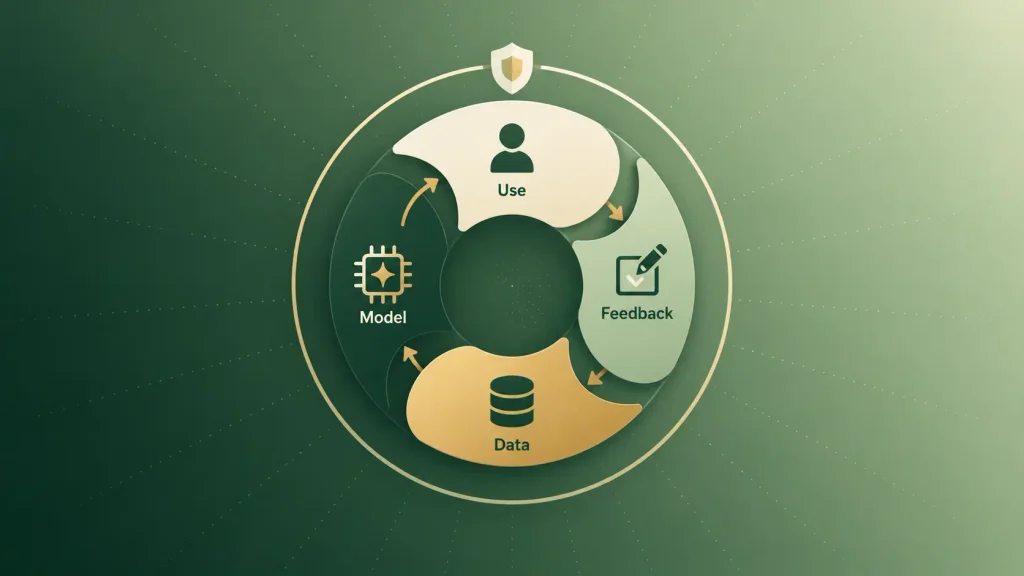
A data flywheel turns product usage into training signal. Users correct outputs, accept or reject suggestions, and reveal preferences. You capture that as labeled data, the model improves, and more users come.
Each turn makes the product harder to copy. This is also where the “LLM wrapper” question resolves itself.
Anyone can call the same API you call. Nobody else has your correction history, your workflow-specific evaluation set, or your record of what your customers consider a good answer.
Three things make a flywheel real rather than aspirational:
- Capture by default. Instrument accept, reject, and edit events from day one. Retrofitting this is painful.
- Close the loop. Corrections have to reach retraining or retrieval, not just a log nobody reads.
- Keep the rights. Your terms of service need to permit learning from customer interactions, with a clear opt-out. It’s worth getting counsel on this before launch.
MIT’s Project NANDA reported in The GenAI Divide: State of AI in Business 2025 that roughly 95% of enterprise generative AI pilots showed no measurable profit-and-loss impact.
Treat the exact number with care. The study drew on 52 interviews and 153 survey responses and was not peer-reviewed.
The diagnosis still matches everything else in the evidence: tools that do not learn from context get dropped by the second week.
How Long Does the AI Product Development Process Take?
So, how long does it take to build an AI product? Most take four to eight months from problem definition to stable production. The MVP is the biggest single block at eight to 16 weeks, and API-first builds land at the short end.
That range only helps if you know where your time goes across the AI product development process. The rest of this section breaks it down by stage, by person, and by risk.
Timeline by Stage
Here is how the nine stages usually map to calendar time:
| Stage | Typical Duration | Exit Criteria |
| 1 to 2. Framing and data readiness | About two weeks, as one feasibility audit | A baseline number and a clear yes or no on the data |
| 3. Approach selection | Decided inside the audit | API, RAG, or fine-tuning chosen, with the reason written down |
| 4. Proof of value | Two to four weeks | A result in money or minutes, judged against the kill criterion |
| 5 to 7. MVP, testing, integration | Eight to 16 weeks | Evaluation passing, fallbacks live, cost per request known |
| 8 to 9. Governance and flywheel | Ongoing after launch | Drift alerts on, corrections feeding retraining |
Outside benchmarks line up with this. Netguru’s 2026 cost guide puts a proof of concept at three to six weeks and a mid-market production system at three to six months.
Fine-tuning is the main exception. If Step 3 lands on custom AI model development, add 10 to 24 weeks to reach a first version.
Who You Need at Each Stage
You do not need a full AI department to start. You need the right owner at each stage, and you add specialists only when the work calls for them:
| Stage | Owner | When to Add a Specialist |
| Framing and proof of value | Product lead or founder | Rarely; this is business work |
| Data readiness | Data engineer | When labels or training data must be built |
| MVP and integration | Full-stack engineer with AI experience | When you move past APIs and retrieval |
| Reliability testing | Engineer plus QA | When evaluation gets complex or regulated |
| Governance and MLOps | A named internal owner | When you retrain models yourself |
The point most teams miss is the internal owner. A partner can build every layer, but someone on your side has to own the metric after launch.
What Stretches the Timeline
A few things add more weeks than everything else combined:
- Data problems found mid-build. These are the most common cause of overruns, and they are why Step 2 comes before any code.
- Compliance work in regulated industries such as health, finance, and hiring.
- Fine-tuning chosen too early, before an API or RAG approach has been tested.
- No internal owner, so decisions wait for meetings instead of happening in a day.
If you catch these in the first two weeks, they cost days. If you find them in month three, they cost the quarter.
Should You Build In-House or Hire an AI Product Development Company?
Build in-house when AI is your core differentiator, and you plan multi-year investment. Partner with an AI product development team when you are validating a product, moving on a deadline, or need capability you cannot hire fast enough.
| Factor | Build In-House | AI Development Partner | Off-the-Shelf AI Tool |
| Time to version one | Six to 12 months, including hiring | Weeks to three months | Days to weeks |
| Cost shape | High fixed, salary-loaded | Project-based | Subscription |
| Customization | High | High | Low |
| Retains IP knowledge | Yes | Depends on the contract | No |
| Best fit | Core, ongoing product IP | Validating and shipping version one | Commodity tasks |
It’s worth running the arithmetic yourself rather than trusting a rule of thumb. Take your local fully loaded cost for a senior AI engineer, including benefits, equipment, and recruiting.
Multiply that by the smallest team that could realistically ship and maintain your system, usually two to four people. Then compare the annual figure against a fixed-scope partner quote for the same deliverable.
The crossover point moves with your local salary market, but the shape holds. Below roughly a year and a half of continuous work, a partner usually costs less and moves faster. Above it, you are renting something you should own.
If you do partner, insist on two contract terms:
- Your team is in the codebase from week one, not at handover.
- Knowledge transfer is a dated deliverable, not a goodwill gesture at the end.
Our guide to choosing an AI consultancy covers the rest of the diligence list.
How Boomdevs Fixes the Demo-to-Production Gap
Most teams that come to Boomdevs already have something working in a notebook. What they lack is the layer between that and a product customers pay for: evaluation, cost control, fallbacks, monitoring, and a rollout plan.
So the engagement starts with a two-week data and feasibility audit before a line of product code gets written. You get a written verdict on whether your data supports the use case, which architecture fits, and what the realistic timeline is.
If the answer is that AI is the wrong tool, you hear that in week two rather than month five.
From there, the build runs in two-week increments against the metric defined in Step 1, with your team in the repository throughout.
That process comes from 3.5K+ projects delivered over 10+ years, and it is why Clutch named Boomdevs a Clutch Champion in Fall 2024. Our case studies show what those builds look like after launch.
How Much Does AI Product Development Cost in 2026?
Most startups building a first AI feature on a managed API spend $40,000 to $120,000, according to Netguru’s 2026 cost guide. A proof of concept costs less, and a production system with retrieval, fine-tuning, and integrations costs a lot more.
Here are the bands Netguru publishes:
| Project Type | Typical Cost (2026) |
| Proof of concept | $15,000 to $60,000 |
| First AI feature on a managed API (startup) | $40,000 to $120,000 |
| Mid-market system with RAG, fine-tuning, and integrations | $80,000 to $350,000 |
| Enterprise AI platform | $400,000 to $1M+ |
Treat these as market ranges for AI product development, not quotes. The same brief can price very differently depending on data readiness, geography, and how much compliance work is bundled in.
If you are comparing hourly or retainer models instead, our AI consulting cost breakdown covers those separately.
Two line items founders tend to underestimate:
- Data preparation. Netguru names data readiness as one of the two biggest cost drivers, and notes that missing labels, inconsistent formats, and absent governance can double a project’s cost before a model trains. Its phase breakdown puts data preparation at 20% to 25% of the total budget.
- Year-one running costs. Inference, monitoring, and vector storage push the first-year total well past the build number. Netguru puts the year-one total at 1.5 to two times the build cost once inference and monitoring load in.
Here is the worked version of that second point. A feature handling 500,000 requests a month, at 2,000 input and 400 output tokens per request, uses about one billion input tokens and 200 million output tokens every month.
At the mid-2026 GPT-4o rates Netguru cites (about $2.50 per million input tokens and $10 per million output), that is roughly $4,500 a month, or about $54,000 a year. A frontier model costs more; a small model costs far less.
I’d suggest doing that calculation with your own model’s rate card before you set your price, not after your first invoice.
Compute Access Is a Real Constraint Now
If your plan involves renting your own GPUs, it’s worth checking that you can actually get them at a sane price. The rental market tightened through early 2026.
SemiAnalysis’s H100 one-year rental price index shows contract pricing climbing almost 40%, from $1.70 per GPU-hour in October 2025 to $2.35 by March 2026, as on-demand capacity sold out.
For nearly every startup, the answer is to stay on managed APIs and treat self-hosting as a decision you earn at volume. Renting frontier capability per token beats competing with hyperscalers for silicon.
Figures checked October 2026. This market moves quarterly.
How Do You Control AI Inference Costs and Protect Margin?
Inference sits in cost of goods sold, so every request costs you money, and your margin becomes an engineering outcome. ICONIQ’s 2026 State of AI report projects average AI product gross margins of 53% this year, up from 45% in 2025.
That is still far below the 75% to 85% traditional SaaS has trained investors to expect. ICONIQ’s January 2026 snapshot tied margin leadership to model selection and routing strategy, so the gap is closing for teams that engineer for it.
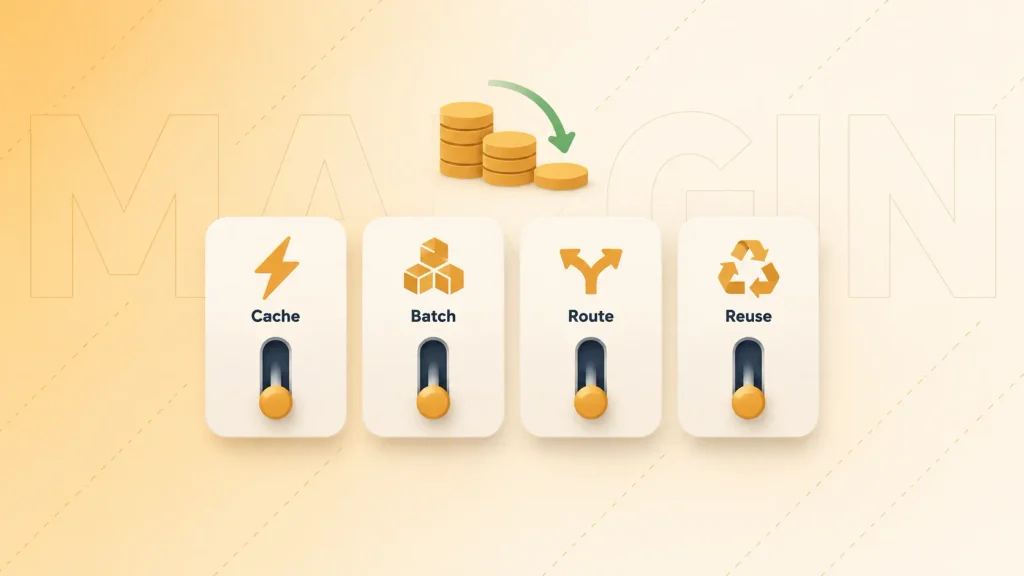
Four levers, in the order to apply them:
- Prompt caching. Put static content (system prompt, tool definitions, retrieved documents) at the front of the prompt and keep it stable. On Anthropic’s published rate card, cache reads bill at 0.1 times the base input rate, while a five-minute cache write costs 1.25 times. Netguru reports caching can cut monthly inference costs by 30% to 50% when the system prompt runs past 2,000 tokens.
- Batch endpoints. Move anything latency-tolerant to batch. Anthropic’s Batch API applies a 50% discount to both input and output tokens in exchange for asynchronous processing, and it stacks with caching.
- Model routing. Send the bulk of traffic to a small model and escalate only complex cases. The price gap between the cheapest and the flagship model in one provider’s lineup is wide, which makes routing the largest single lever most teams have.
- Semantic caching. For repetitive questions, return a stored answer when a new query means the same thing as an old one, and skip the model entirely.
One caveat that gets misreported: prompt caching discounts apply to input tokens only. Output tokens still bill at the standard rate unless a separate discount such as batching applies.
None of these levers are safe without an evaluation harness. Cost optimization that quietly degrades quality is not a saving; it is a deferred churn problem.
Pricing those costs into a subscription is its own decision, and our guide to AI SaaS development covers it.
Rate card structure checked October 2026. Verify against your provider’s live pricing page before modeling.
What Compliance Rules Apply to AI Products in 2026?
If you serve EU users, transparency duties already apply, and the heavier high-risk rules start in December 2027. In the US, state laws set the rules. What follows is general information, not legal advice.
In the EU, the Digital Omnibus on AI passed the European Parliament on June 16 and received the Council’s final green light on June 29, 2026. It moved the high-risk deadlines, per Freshfields’ analysis of the final text, but left the transparency rules in place.
Here is the calendar that matters:
| Date | What Applies | Who It Affects |
| August 2, 2026 | Most EU AI Act Article 50 transparency duties, such as chatbot disclosure | Any EU-facing AI product |
| December 2, 2026 | Machine-readable marking of AI content for systems already on the market, plus a new ban on AI built for non-consensual intimate imagery | Generative AI products |
| January 1, 2027 | Colorado’s replacement AI law (SB 26-189) on automated decisions | Hiring, housing, insurance, health, and education tools |
| December 2, 2027 | EU high-risk obligations for standalone Annex III systems | Hiring, credit scoring, education, and biometrics tools |
| August 2, 2028 | EU high-risk obligations for AI in regulated products (Annex I) | Medical devices, machinery, and similar products |
The extra runway on high-risk requirements is time to prepare, not permission to stop.

In the US, there is still no comprehensive federal AI statute. Executive Order 14365, signed December 11, 2025, pushes for federal preemption of state AI laws, but as White & Case notes, preemption normally flows from Congress rather than an executive order.
State laws remain the operative rules:
- California’s frontier AI transparency law (SB 53) has applied since January 1, 2026, but it targets companies that train frontier models, not most teams building on top of them.
- Colorado’s replacement AI law repealed and reenacted the 2024 act in May 2026 and takes effect January 1, 2027. A federal court stayed enforcement in April 2026, so practical timing may slip.
Practical read for a startup: build the documentation and disclosure layer once, at a standard that satisfies the strictest market you sell into. Retrofitting audit trails onto a live system is one of the most expensive kinds of rework there is.
Frequently Asked Questions About AI Product Development
How Long Does the AI Product Development Lifecycle Take?
Most AI products need four to eight months from problem definition to stable production, with the MVP portion typically running eight to 16 weeks. API-first builds land at the short end. Anything involving messy data, custom models, or regulated workflows lands at the long end, and data problems discovered mid-build are the most common cause of overruns.
Why Do So Many AI Projects Fail?
RAND’s interview study found more than 80% of AI projects fail, and the root causes were overwhelmingly organizational: misaligned problem definitions, underestimated data work, difficulty getting from demo to reliable production, chasing technology instead of outcomes, and fading executive sponsorship. Model quality was rarely the culprit.
What Is the Difference Between a Proof of Concept and a Proof of Value?
A proof of concept asks whether the technology works and reports a model metric such as accuracy. A proof of value asks whether the business case holds and reports a result in money, minutes, or resolved tickets. Finance reviews approve the budget for the second one, so run a PoV even if you have already run a PoC.
Do You Need an ML Engineer to Build an AI MVP?
Usually not for version one. If you are building on foundation model APIs with a retrieval layer, a strong full-stack engineer with AI experience can ship it. You need dedicated ML expertise when you move into custom model training (custom AI model development), complex evaluation, or heavy inference optimization at scale.
What Is Model Drift and How Do You Fix It?
Model drift is the decay in performance that happens when live data stops resembling the data your system was built against. Accuracy falls without anything obviously breaking. The fix is monitoring input and output distributions alongside business metrics, then retraining or updating retrieval on a documented trigger rather than waiting for complaints.
Can You Build an AI Product With No Code?
For internal tools and simple assistants, yes, and it is often the right call for testing an idea in days. No-code platforms hit ceilings on custom retrieval logic, evaluation, access control, and per-tenant cost tracking, which is where customer-facing products live. Prototype no-code, then rebuild what survives.
How Do You Differentiate From an LLM Wrapper?
Three ways that hold up: a proprietary data moat built from user corrections, orchestration of multi-step agentic workflows that would be hard to reproduce, and an interface designed around a specific job rather than a chat box. Notice that none of them depend on which model you call. If you are still defining the product, start with what AI SaaS actually is.
What Are the Main Risks of Running AI in Production?
Inaccurate outputs that erode trust, prompt injection and data leakage, IP exposure through training on material you do not own, cost overruns from unbounded agent loops, and silent quality decay. Circuit breakers and spend caps belong in version one, not in the hardening sprint. We go deeper on these in our roundup of common generative AI challenges.
Does the EU AI Act Affect a Small Startup?
If you serve EU users, yes. Most Article 50 transparency obligations, including chatbot disclosure, apply from August 2, 2026, regardless of company size, with machine-readable marking of AI-generated content following on December 2, 2026, for systems already on the market. High-risk obligations were deferred to December 2, 2027 for standalone Annex III systems. Whether your product is high-risk depends on its use case, not your headcount, so get that classification right early.
Where to Start
If you are at the beginning of this process, do one thing before anything else: write down the decision AI is supposed to improve and the number that proves it worked. Almost every failure documented in the research above traces back to skipping that step.
Then audit your data honestly, and pick the cheapest architecture that could plausibly work.
Ready to Pressure-Test Your AI Plan?
Book a free 45-minute AI feasibility review with Boomdevs. You will leave with an honest read on whether your data supports the use case, which architecture fits, and what a realistic timeline looks like. If AI is the wrong tool for the job, we will tell you that too.