


Summarize with
Licensed merchandise, STEM and educational lines, and a steady stream of new entertainment IP keep pushing toy and game brands to launch more SKUs, chase more shelf space and get into more retail doors.
That growth is why this is a good moment to talk about a cost most finance teams underestimate until it shows up after the holidays: retail deductions. This season’s holiday shipments are generating them now, and they will keep arriving through the first quarter.
The Number Nobody Budgets For
If your brand ships wholesale into any major retailer, Walmart, Target, Costco, Five Below, or Amazon as a vendor, you are, almost by default, losing a slice of revenue to deductions before you ever see the check.
The most commonly cited range comes from SPS Commerce: suppliers lose 5–7% of gross revenue to compliance deductions and chargebacks. That is gross revenue, not gross margin.
In real numbers, that’s $500K–$700K on every $10M of wholesale revenue. For a holiday-weighted toy brand, much of it traces back to the same few months of shipping, and the deductions from those shipments arrive from November through the first quarter.

Retailers Aren’t Being Shy About It Either
This isn’t a hidden or unusual practice, it’s a structural feature of how big retail operates. What’s less publicized is the accuracy problem sitting underneath the deductions retailers issue: practitioners estimate 10–20% of those deductions are invalid (per Talk Business & Politics), but they go unchallenged anyway, because internal teams are stretched thin and dispute windows close fast.
That last part matters more than it sounds. Dispute windows are short and differ by retailer, typically 30 to 90 days (per 3PL Center). Miss the window, valid or not, and the money is gone.
So the math compounds: a real error rate, a real invalid-deduction rate and a hard clock. For a toy brand, the clock on this season’s deductions is running now, while the team is still busy with the season itself.
Why This Hits Toy and Game Brands in a Specific Way
Every category has its own version of the compliance mess. In toys and games it is sharper than most, because of the calendar.
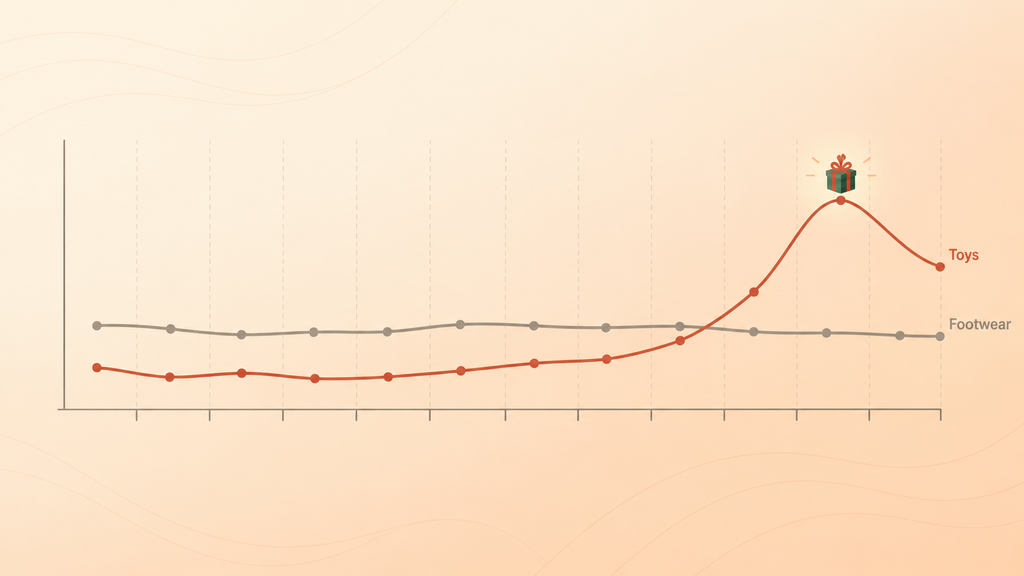
A footwear or activewear brand’s deductions build steadily across the year. A toy brand ships much of its volume ahead of the holidays, so a large share of its deductions arrive together, from November through the first quarter. A bad delivery stretch costs more when so much of the year’s volume rides on it.
Layer on top of that the retail footprint itself:
- Mass retailers (Walmart, Target), the dominant channel, each with its own OTIF program; Walmart’s charges about 3% of cost of goods on a non-compliant shipment, per SPS Commerce
- Club/warehouse (Costco), a genuinely different compliance system, with its own three-way EDI matching and, for toy brands specifically, seasonal pallet and end-cap display programs that carry their own chargeback category.
- Off-price and value (Five Below, TJX, Ross), high volume, tight tolerances
- Specialty toy retailers, smaller, more relationship-driven, but with their own routing quirks
- Amazon Vendor Central, its own chargeback and shortage claim system entirely
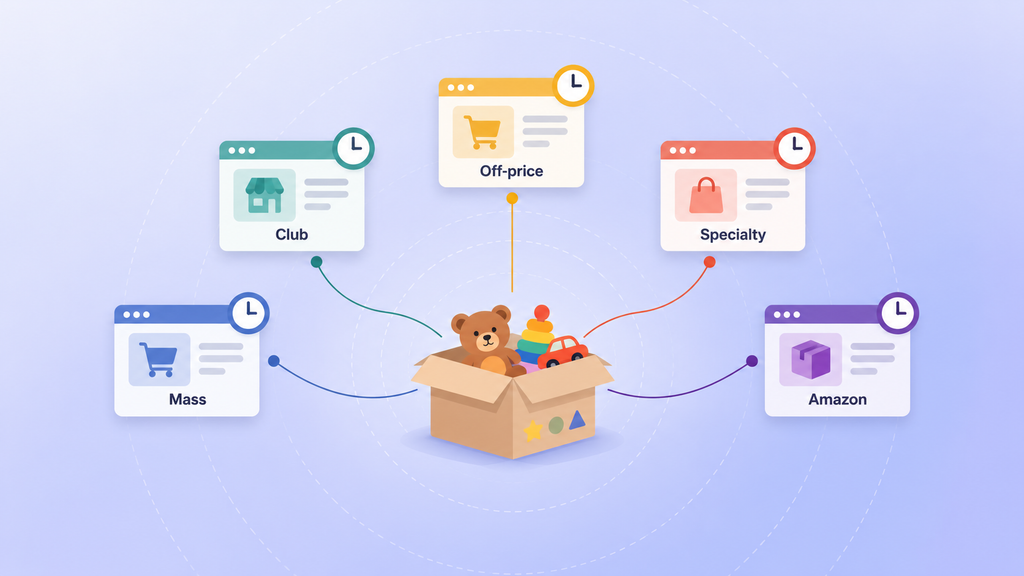
Every one of these is a separate system, with separate rules, separate portals, and a separate dispute clock. A toy brand selling into three or four of these simultaneously isn’t dealing with one deduction problem during one busy season, it’s running three or four different compliance operations in parallel, all peaking at once, usually with the same one or two people trying to keep up with all of them.
This pattern isn’t unique to toys and games. Footwear and activewear brands selling across similarly varied retail mixes face a close version of this problem. What’s different here is the timing: this category doesn’t get to spread the pain out. It gets one shot a year to get it right.
The Part That’s Actually Good News
None of this is inevitable. Compliance deductions are among the most preventable costs in a retail business, and the invalid ones were never owed in the first place, and can be won back if someone files the dispute in time with the right documentation. The brands losing the most aren’t necessarily the ones with the worst operations, they’re often the ones that never built a systematic way to catch, categorize, and dispute deductions before the clock runs out.
A few things worth checking, regardless of what you do next:
- Do you know your actual deduction rate as a percentage of wholesale revenue, broken out by retailer? Most finance teams know the dollar total but not the rate, and the rate is what tells you whether you’re in the 5–7% range SPS Commerce reports or well above it.
- Do you know what percentage of your disputes you’re actually winning, versus what percentage you’re not even filing because the window closed first?
- Is your deduction handling process retailer-by-retailer manual, or does it scale as you add new accounts, and can it keep pace in the months when holiday deductions arrive?
- If you run a Costco seasonal display program, do you have a way to catch display and pallet chargebacks specifically, or are they getting lumped in with everything else and written off?
Most finance teams can’t answer the first question without logging into every retailer portal by hand, which is usually exactly why nobody’s answered it yet. A retailer-by-retailer breakdown is a faster way to get there than pulling every portal yourself.
Growth in toys and games right now is real, and it’s a good problem to have. But it’s worth treating the deduction line the same way you’d treat any other cost that scales with revenue, measured, benchmarked, and actively managed, rather than absorbed as an invisible tax on the one season the whole business is built around.
If you want to see what catching this looks like across your specific mix of mass, club, off-price, specialty, and Amazon accounts, while this season’s dispute windows are still open, get a free written teardown of what’s recoverable for your mix or just reply to the email that brought you here, whichever’s easier.